Home Blog Page 93

Costa Rica Tours

0

Discover the wonders of Costa Rica on our escorted group tours and tailor-made holidays, covering the main sites and a range of activities from canopy zip-lining and white water rafting to river kayaking and snorkelling.

The tiny nation of Costa Rica is a peaceful and staggeringly beautiful oasis located along the narrowest strip of Central America. Bordered by the Caribbean Sea and the Pacific Ocean the country boasts idyllic white-sand beaches with world-class surf waves and colourful marine life. Being one of the most biologically diverse places on earth and nestled between Nicaragua and Panama, the landscape in beautiful Costa Rica varies from smouldering volcanoes, lofty mountains to lush cloud forests and marshy low lands with and a rich variety of flora and fauna as well. With a range of Costa Rica guided group tours departing in 2019 as well as classic private itineraries that include the country’s top sites, we hope to welcome you on holiday soon.

About the Activity:

  • Add the two of Costa Rica famed attractions; volcanoes and beaches to your travel list and partake in this 8 day tour which will take you to experience adventure in a different level.
  • Choose for adrenaline pumping rafting or waterfall rappelling in La Fortuna, explore the beaches and natural beauty of Montezuma.
  • You can opt for more adventurous activities in the cities you are in. Use the chances to find yourself exhilarated.
  • The package includes accommodation in hotels or hostels and transportation during the trip.
Tipping in Costa Rica

As I travel around Costa Rica, I meet so many interesting foreign people, and I learn all about their homelands and their customs. Each culture is different, as I eat, drink and travel with these visitors, there is one topic that I see come up pretty often: when and where to tip, and how much.

Tipping is a fairly new idea in Costa Rica; it has really only been a few decades that it has been part of our culture. My country is beautiful and diverse, and draws many tourists, including those that came and introduced the idea of tipping for services. These days, it is common for there to be some expectation for tipping for certain services in Costa Rica; but this idea is commonly for tourists, as locals do not often tip for most services.

The most accepted idea is that you tip based on how you feel about the level of service you provided, and that you are not required to tip at all if you do not want to. This makes it difficult for tourists, since there is really no standard like in America. However, throughout the years, I have been able to put together some guidelines on our culture and customs for when and where to tip when you are visiting Costa Rica, as well as how much.
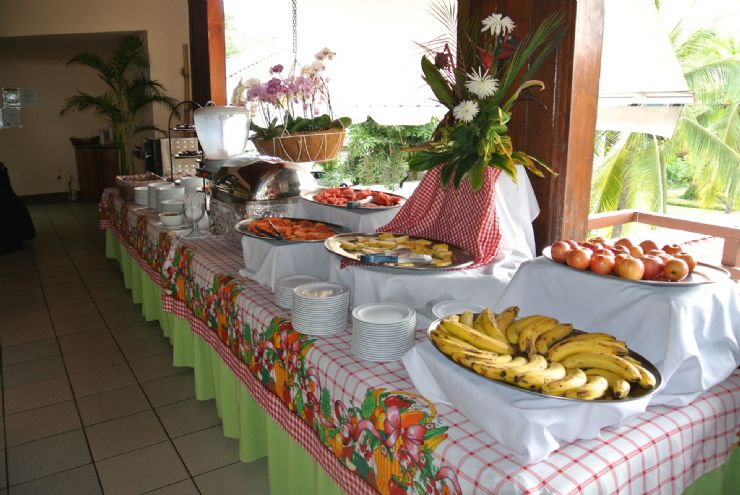
Breakfast buffet at Best Western Jaco Beach

Breakfast buffet at Best Western Jaco Beach

Understanding Food and Beverage Service Laws

One of the things that might be difficult for tourists to understand is why there is a 23% fee added to their food and/or beverage bill. In the United States, it might be common practice for larger parties to have gratuity automatically added, but in Costa Rica it is for every bill that includes food and beverages.

This is not some scheme thought up by restaurant and bar owners as a way to trick unsuspecting tourists; it is actually a law in my country that all establishments that offer food and beverage services must add that fee to the bill.

The breakdown is that 13% of it is tax, and 10% is a service fee.

Now that you understand why you’ll see that fee on your bill, it’s also important to understand how it is applied, and what it means for tipping. This is definitely one of those situations where the locals are not likely to add any additional tip on top of the fee applied.

While it might seem strange Americans who are used to tipping 15% or more not to leave anything more than 10%, you can rest assured that it is common and accepted to pay the bill as is, with no additional tipping. You can pay the bill as is, then return to the same restaurant to eat the next day, and no one will give you a dirty look!

However, you should consider that the tax does not go to the wait staff, and that the 10% service fee is not necessarily for the wait staff either; if it is given to the staff, it is already wrapped into their minimum wage and it is not additional pay that they receive for their service.

If your wait staff were great and took good care of you, you may want to consider leaving an extra 5% to 10%, depending on the size of your party and the service you received.

Again, this is completely up to you and your perception of the service that you received. This is pretty important to keep in mind when you are budgeting for your trip to Costa Rica. You need to factor in the cost of food, along with the 23% fee, and an additional tip if you want.
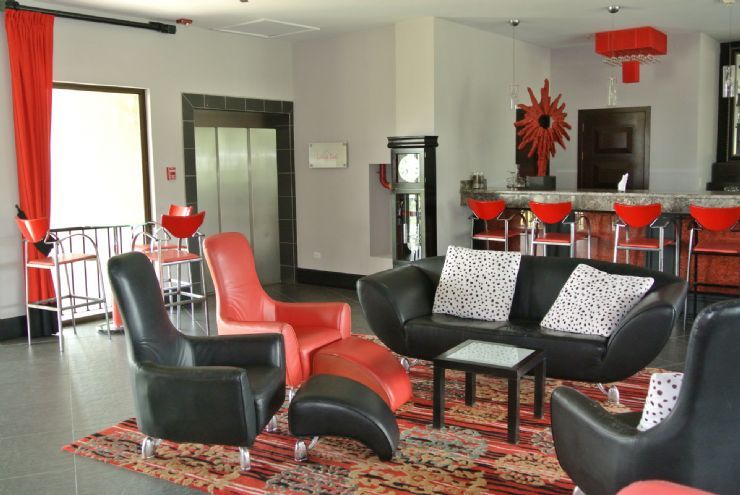
Bar at Royal CorinBar at Royal Corin


Tipping for Other Services

The 23% tax and service fee is only applied at restaurants, not at hotels. Your hotel staff, like maids, bellboys and other attendants, can be tipped as you see fit for their services.

The expected range of tipping also depends on the type of hotel you are staying at; for higher end hotels the expectation might be higher, and there might be more attendants offering more services that require tipping.

For your budgeting purposes, put a little more aside for tipping at nicer accommodations. Here are some of my recommendations:

Bellhops:

Yes, you should tip a bellhop if they handle your luggage. While you can make adjustments depending on how much luggage you have, far they had to transport your luggage, and whether they had to climb any stairs, the standard is to pay about $1 per bag. If you are staying at a higher­end hotel, you might want to bump that up to at least $1.50 per bag. Don’t forget that if they help you check in and check out, you’ll need to tip both times.

Housekeeping:

Yes, the housekeeping staff are commonly tipped in Costa Rica. Most people will leave around $1 to $2 per day for their stay. If you are in a luxury hotel, you should tip on the higher end. I have heard many visitors pass along the tip that you should leave your housekeeping staff a little extra on the first day of your stay, and they will return the favor with the most excellent care of your room.

While these are the most commonly asked about when discussing tipping, there are a few other attendants that shouldn’t be forgotten about:

Hotel Bartenders:

Tipping for bartenders is similar to the standard in the United States, which is about $1 per drink.

Pool Attendants:

If you use the pool attendants’ service for drinks, towels, snacks or anything else, you should consider giving them a $2 tip if the service was good.

Spa Services:

If you stay at a hotel that has a spa, you should budget a tip of about 15% of the total cost of your services.

Room Service:

Room service is an awesome option if you are tired from a day of hiking, but you should factor in a tip to the total cost of your meal. It is common to tip the room service attendant at a rate of about 10% of the total cost of your meal.
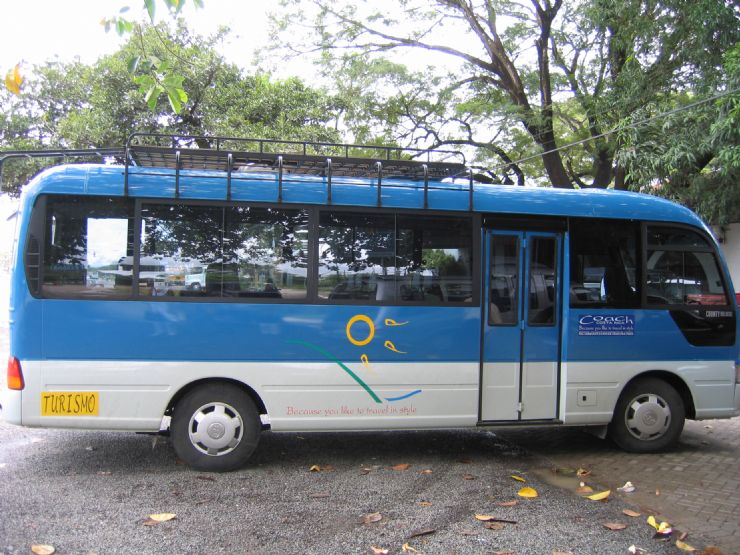
Costa Rica Bus Company - Coach

Costa Rica Bus Company – Coach

Tipping for Transportation

One thing that tourists use a lot while visiting Costa Rica is transportation. From cab drivers to tour bus drivers, there are many drivers, and many different customs regarding tipping them. This is another situation where tipping is not required, but it is often observed. Here’s what I’ve learned in my travels around Costa Rica:

Taxi Cabs

Taxi cabs might be one of the more common forms of transportation used by visitors in Costa Rica. You might hear some say that they do not tip cabs unless the driver provided an extra service (such as loading your luggage into the trunk), but it is more common to tip in all cases.

If you have only been transported a short distance, you can simply round up the meter to the nearest dollar. If you have traveled a longer distance, you can tip anywhere between $1 ­ $5, depending on the distance as well as the service you received.

Tour Buses

Tour bus drivers are usually driving and entertaining, so it is acceptable to tip between $5 ­ $10 for a tour that last all, or most of the, day. Of course, this is also not mandatory.

If you are headed out on the water for an expedition, like fishing, the tipping custom for the captain is actually around $30 ­ $50. While this number might have you scratching your head, you should remember that the overall cost of these types of tours is usually cheap.

If you opt to have a private driver, you might want to budget to tip them about $20 for a full day (or half of that for a half day). If you take a shuttle bus, you could budget to tip the driver a couple of dollars per person in your group.

Tipping for Parking Help

If you do drive, you may find yourself dealing with official and unofficial parking attendants. If you are dealing with an official parking lot attendant at your hotel that helps you, many will tip $1 or $2 for three hours. You may come across some unofficial parking attendants at public locations who help guide you into your parking spot, and also help you get out of your parking spot when you leave. If you want, you can tip these attendants around $0.50 or $1.
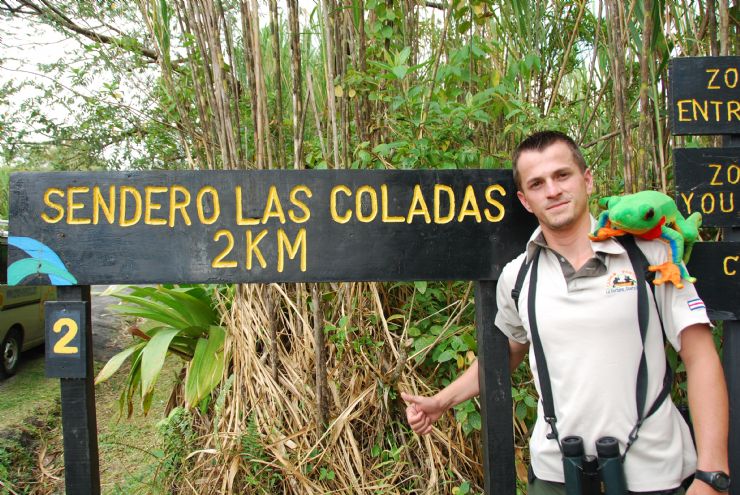
Javi the Frog with guide in Las Coladas trail at Arenal Volcano Natl. Park

Javi the Frog with guide in Las Coladas trail at Arenal Volcano Natl. Park

Tipping for Tour Guides

Tipping your tour guide is not mandatory, but it is customary to show your appreciation. Sometimes when I am on a tour, I get a little confused about who to tip since there might be many guides that I encounter. If there is an obvious guide that is the head guide, or the leader, I’ll leave my tip with that person. If there is a tip jar on the property, I will just leave my tip there for them to divide later. If there is no lead guide and no tip jar, I will either tip the tour guide that I have at the end, or I will split the tips myself and hand them out to each guide individually. Each situation will be a little different, so just do what you feel comfortable with! Here are some of the most commonly accepted levels of tipping tour guides:

Local Tour Guides:

For a half day adventure with a local guide, you may want to budget in a tip of about $10 to $15 for a small to average sized group.

Private Tour Guides:

For private tours, the common tip rate is at $15 to $20 per person per day. If your group is smaller, you might actually want to consider tipping a little more.

River Tour Guides:

The same applies to river guides; if your group is smaller, you may want to budget to tip a little more than the $5 per person average.

Instructors:

For instructors that are giving you surfing, kayaking, snorkeling or horseback riding lessons, plan to budget about $5 per day as a tip. If you have a group, consider tipping at least $20.

I hope my tips help you figure out tipping in Costa Rica! I’ll keep traveling around my country, and I’ll keep sharing everything I learn you with! Hope to see you in Costa Rica soon!

Beach Restaurant at Alma del Pacifico Beach Hotel & Spa

Beach Restaurant at Alma del Pacifico Beach Hotel & Spa

Costa Rica is one of the most beautiful places in the world, so why wouldn’t you want to tie the knot here?! Whether you are having a small, private wedding, or large and luxurious gathering with friends and family, Costa Rica is the place to be. From white-sand beaches and lush forests to towering volcanoes and mountain ranges, you’ll have virtually every backdrop to pick from here.

What’s your wedding style?

Costa Rica is incredibly diverse, giving you the ability to pick whatever kind of ceremony you are in the market for! I haven’t been to too many weddings in Costa Rica, but the ones I have attended have been incredibly beautiful. From laid-back ceremonies to lavish and extravagant parties, you’ll have your pick of wedding types in this tropical paradise.
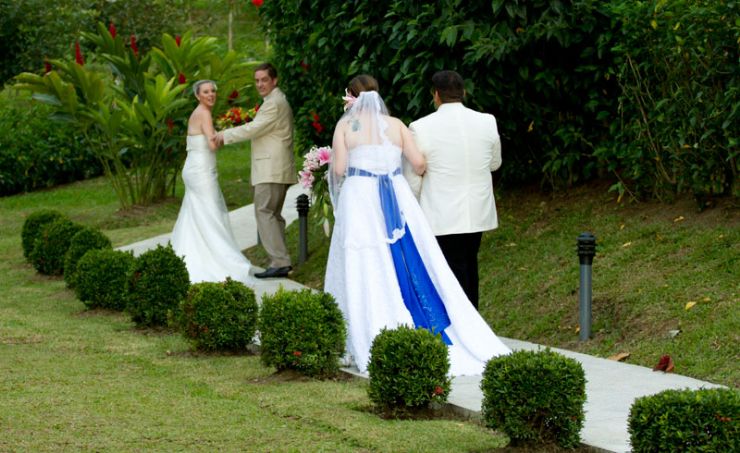
Couples in love walking to the Altar, La Fortuna

Couples in love walking to the Altar, La Fortuna

Beach Wedding

For many couples, getting married on the beach is the ultimate romantic experience – and I agree! With the waves crashing in the background and the sand beneath your toes, a beach wedding will be an unforgettable experience. Just imagine walking off into the sunset or horseback riding along the coastline after you’ve said your “I do’s”. Some of the greatest beaches to get hitched at are Tamarindo Beach, Mal Pais and Langosta. These pristine locations are popular options for people choosing Costa Rica as their wedding destination because they are all semi-secluded and boast unmatched scenery.

For example, Tamarindo has weather that is simply supreme. This area has a shorter rainy season than many other parts of Costa Rica, opening up the availability window for the bride and groom to pick the ideal date. Here you can also choose from a variety of accommodation styles. For instance, there are boutique hotels, villas, condos and beachfront resorts to pick from.
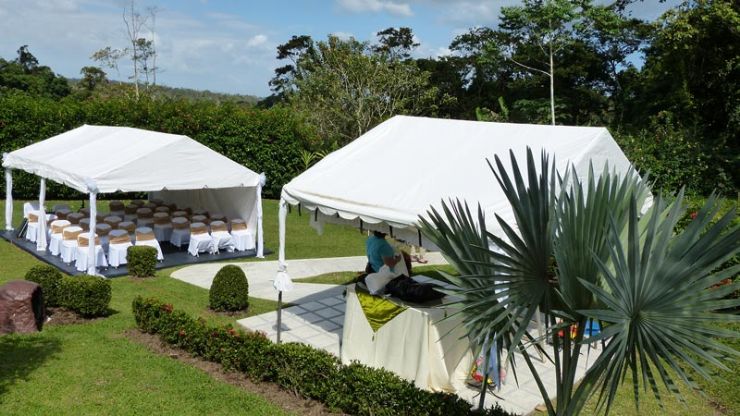
Wedding celebration at Arenal Volcano Inn, La Fortuna

Wedding celebration at Arenal Volcano Inn, La Fortuna

Tropical Wedding

Have you ever dreamed of tying the knot on a mountainside or with a massive volcano in the background? The Arenal area in La Fortuna may be just the place for you! Since this region attracts many visitors, there are plenty of accommodations where you can say your vows. You can take a dip in the hot springs or visit cascading waterfalls in this region pre- or post-nuptials there’s no better way to relax and enjoy your new life together.

Monteverde Cloud Forest is another popular place to tie the knot because the lush, green forest and biodiversity is unlike anywhere else in the country! Imagine your wedding bells being the chirps and calls of native birds and monkeys! This is great place for adventurers because there are hundreds of eco-tours and exciting attractions just minutes away.

Beautiful wedding cake offered by Arenal Volcano Inn

Beautiful wedding cake offered by Arenal Volcano Inn

Church wedding

Since many local Ticos are Roman Catholic, you typically will not have an issue arranging for a traditional church wedding. Boasting a bevy of ancient architecture, Costa Rica is a wonderful place to get married in a church for history buffs. Many of the churches here are in very remote areas, which is super romantic and serene. There is something truly unique about the churches in Costa Rica, so you can check around a bit and find the one that you’ve fallen most in love with and that won’t be problem.

Marriage Legalities

When you’re getting hitched in another country, there are some legalities that you’ll want to keep in mind. U.S. citizens are able to get married here, according to Costa Rican law, and a lawyer can perform the proper legal ceremony so that you and your new spouse are official. You’ll have to head over to the Embassy’s Consular Section with your valid passport and a copy of your birth certificate, which is in San Jose.
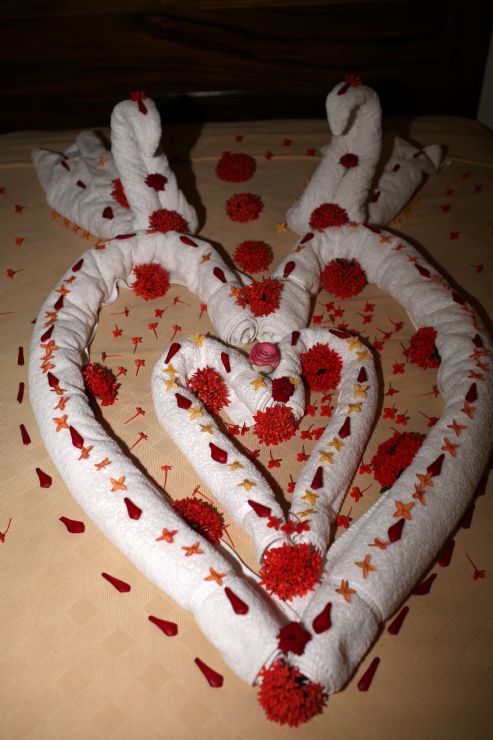
Honeymooner Suite complete with a flower heart

Honeymooner Suite complete with a flower heart

Why Costa Rica?

Sure, I’m just a frog, but I’ve learned a lot about weddings throughout my travels, and I must say they are quite expensive!! Traveling out to Costa Rica may put a dent in your wedding budget, but you really won’t have to worry about paying for decorations. Think about it: with the mountains or the ocean as your backdrop, and floral arrangements surrounding your ceremony in nature, who needs any other d’cor to brighten up the gathering?

Getting married in Costa Rica also gives you, your new spouse and your entire family and friends the opportunity to go on vacation for a few days! Why not plan your wedding and honeymoon in one package? Whether you love lying beach side or enjoy hiking and adventure, you’ll be able to find something to suit your fancy in Costa Rica.

Consider the Weather

All areas of Costa Rica have different rainy seasons, so make sure that you consider this when booking a date. The typical rainy season is from May to November, but this is also dependent on the hurricane season in the Atlantic and Caribbean.

Have you planning a wedding in Costa Rica in the past, or are looking forward to getting hitched here? Share your experiences and tips with everyone else!

Go on an African Safari… in Costa Rica!

The Safari

Once you head out into the safari, you may notice that the reserve is divided into three sections. The outer savannah is where all new animals are initially introduced to the park, but it’s not accessible to travelers and is fenced off. It’s kind of like an adaptation region. The inner savannah is where long-term animals reside, and will be your first stop on the open-air vehicle. I, of course, wasn’t able to participate, but there’s a petting zoo here, too! White-tailed deer, dromedaries and ostriches are here to munch on snacks right from the palm of your hand. Next, you’ll head into the open plains where animals roam freely. The last section of the park is the El Salto waterfall.

Area Wildlife

Africa Mia is home to more than 150 animals and 11 species that are native to Africa. Currently, all of the animals are together on the savanna, so there are no super aggressive species. But I did hear a rumor that they are planning to build a separate area for hippos, who can get a bit crabby once and while. Some of the animals here are warthogs, watusi, Chapman’s zebra, plains zebra, reticulated giraffes, ostriches, gemsbok, bongo, Nilgai antelope, dromedaries and giant eland. At first I was concerned that these animals wouldn’t have a good life away from their home in Africa, but the landscape of Guanacaste is remarkably similar and they all have so much room to run!

Africa Mia is also somewhat of a nature reserve that was created to promote the continuation of threatened species. Currently, there are only herbivores at Africa Mia, so no animals are under the stress of “interacting” with carnivores.
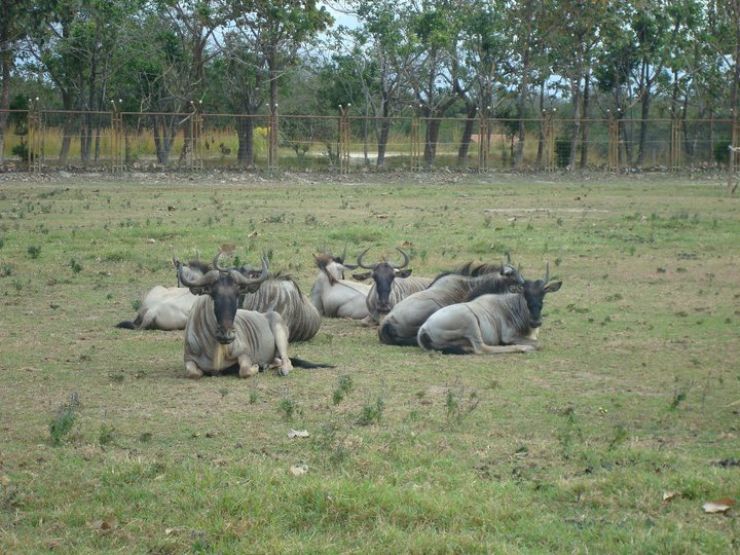
Group of Ñus in Africa Mia, Liberia

Group of Ñus in Africa Mia, Liberia

Added Bonuses

This 250-acre park also features the stunning El Salto Waterfall, which travelers can visit during their visit here. This picturesque waterfall is fed by the Rincon de la Vieja National Park, and is surrounded by a tropical dry forest. You might even catch a glimpse of some wildlife here!

Just like any other zoo, Africa Mia has places to buy souvenirs and other goodies, as well as a place to have a picnic or buy lunch. I’m not keen on human food, but I would recommend having an afternoon picnic on the beautiful grounds.

Africa Mia is one of the most unique places in Costa Rica because it really is like transporting to a whole new place! Have you ever been to a safari before?
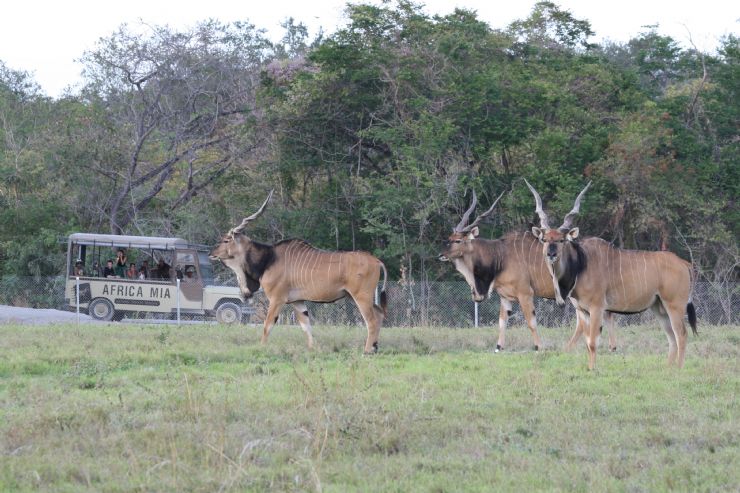
Eland in Savannah at Africa Mia

Top 10 Most Expensive Cigarette Brands in the World 2019

0

Cigarettes are no longer cheap today. In many countries, smoking is now considered an expensive vice, thanks to governments implementing harsher excise taxes on cigarettes. To give you an idea how expensive cigarettes can be today, we came up with a list of the most expensive cigarette brands in the world.

In order to come up with the items on the list, we did our research by checking out recommended online sellers of cigarettes such as CigsSpot.com, CiggiesWorld.ch, and Dutyfree.io. We also looked into some of the comments at the cigarettes sub on Reddit to see which brands are considered premiums in different countries.

Because cigarette prices vary depending on the country, we will only mention the online prices of these brands to give you an idea how expensive they can be. Some of them are considered cheap and affordable in some countries. But for the most part, they are considered the most expensive cigarette brands and usually go for at least $5.00 per pack in many countries.

Note: Shipping fees are excluded in the prices mentioned on this list. Product availability and prices may change at any time.

10. Karelia

karelia cigarettes

Karelia is a Greek cigarette brand produced by Karelia Tobacco Company, the largest tobacco manufacturer in Greece. Founded in 1888, the company exports its products to more than 65 countries worldwide. It is headquartered in Kalamata, Greece and produces both cigarettes and cigarillos, a small cigar.

Karelia offers different kinds of cigarettes, including Karelia Slims, Karelia Cream, and Karelia Blue. Known for their rich taste, Karelia cigarettes mostly appeal to men, though the brand also has a newly launched product for women, the Karelia Ome Superslims. Perhaps the most authentic product on the roster is the George Karelias and Sons, which comes in a very distinct and classy package.

In some countries, Karelia cigarettes are actually pretty cheap, going for less than $5 per pack. But in most locations, the brand is among the most expensive premium cigarettes. At CigsSpot.com, Karelia cigarettes are available for $3.70 per pack or $37 per carton.

9. Kent

kent cigarette brand

Kent is an American brand of cigarettes owned by R. J. Reynolds Tobacco Company, the second-largest tobacco company in the US. The company is owned by British American Tobacco, producer of other popular cigarette brands such as Pall Mall, Dunhill, and Lucky Strike.

Introduced in 1952, Kent was originally being manufactured by Lorillard Tobacco Company. The brand was named after a former company executive, Herbert Kent, and was once the most demanded cigarette brand in Romania a few decades ago. Kent is notable for being the first popular filtered cigarette.

Known for their excellent taste and top quality filter, Kent cigarettes are available at CigsSpot.com for $3.90 per pack, with the most expensive being the Kent Convertibles, which are available for $4.00 per pack. Over at CiggiesWorld.ch, the most expensive pack of Kent cigarettes is priced at $6.60.

8. Marlboro

marlboro cigarette brand

Produced by Philip Morris USA, Marlboro is one of the most popular cigarette brands in the world. The brand is known for its easily recognizable billboard ads, which typically feature a cowboy with a cigarette. The cowboy is commonly referred to as the Marlboro Man, originally conceived in order to make filtered cigarettes more appealing to men.

Back in the day, filtered cigarettes were considered feminine. But ironically, Marlboro was originally launched by Philip Morris as a cigarette brand for women in 1924. Marlboro is also a common sight in motorsport events. A top sponsor in Formula One, Marlboro is currently partnered with Ferrari, a sports car manufacturer also commonly associated with the color red.

Marlboro offers different kinds of cigarettes, which includes Marlboro Red and Marlboro Lights, arguably the two most popular in the lineup. Marlboro Red, in particular, is known for its rich tobacco taste and excellent burn, one reason why it’s the preferred choice of men.

At CigsSpot.com, all Marlboro cigarettes are available for $3.90 per pack, the same price range as Kent cigarettes. At CiggiesWorld.ch, the most expensive Marlboro cigarettes, the Marlboro Vintage, are available for $9.80 per pack. And at Dutyfree.io, a pack of Marlboro Red goes for $4.50.

7. Nat Sherman

nat sherman cigarette brand

Nat Sherman is a brand of luxury cigarettes owned by Altria, one of the largest tobacco manufacturers in the world. Altria also owns Philip Morris USA, which means Marlboro and Nat Sherman are sister brands.

Named after its founder, Nat Sherman was established in 1930 and runs a flagship shop in New York City. Unlike most of the cigarette brands on this list, Nat Sherman cigarettes are a bit difficult to find in most places. Heck, even online shops don’t always have them in stock – they’re not available at CiggiesWorld.ch, CigsSpot.com, and Dutyfree.io.

Nat Sherman cigarettes are notable for being impeccably smooth. They taste great and have excellent an burn. Cigarette enthusiasts have remarked that Nat Sherman cigarettes burn longer than most brands, which more than justifies the expensive price tag that they come with. In most places, a pack of Nat Sherman cigarettes goes for around $10 per pack.

6. Davidoff

davidoff cigarettes

Davidoff is a brand that never fails to get mentioned every time people talk about the most expensive cigarette brands in the world. Naturally, the brand is Swiss. If you’re familiar with the luxury goods market, then you know Switzerland is a well-known producer of all things expensive.

Davidoff cigarettes are known for their excellent quality. They have the right balance of smoothness and tobacco taste. Both the Davidoff Gold and the Davidoff Classic are available for $4.40 at CigsSpot.com. At CiggiesWorld.ch, the same products go for a bit more at $5.90 per pack. And at Dutyfree.io, all the Davidoff cigarettes are available for $4.80 per pack.

Davidoff sources its tobacco from multiple countries, including the Dominican Republic, Brazil, and Mexico. Named after founder Zino Davidoff, the premium brand is more known for its lineup of cigars and cigarillos than its cigarettes.

5. Dunhill

dunhill cigarettes

Kicking off the top five is Dunhill, another popular cigarette brand. Like Kent, the brand is also owned by British American Tobacco, one of the largest tobacco companies in the world. Dunhill is known for being an expensive cigarette brand everywhere you go, so it’s a no-brainer to include it here.

Notable for their classy packaging, Dunhill cigarettes are not always readily available in most places. They can be really hard to find sometimes. If you can afford it, we recommend buying them in bulk to save yourself the trouble of going back to far-off stores. Of course, you can always buy them at online shops if you’re willing to be patient about the shipping time.

There are actually two versions of Dunhill cigarettes: Dunhill and Dunhill International. The latter is notable for its larger packaging. At CiggiesWorld.ch, the most expensive Dunhill cigarettes go for $9.30 per pack. At Dutyfree.io, Dunhill cigarettes are available for $5.00 per pack.

4. Parliament

parliament cigarettes

Parliament is another cigarette brand owned by Altria, owner of the popular Marlboro brand. The brand is known for being one of the few cigarette brands to use recessed paper filters, which was originally conceived as an ad gimmick back when cigarettes didn’t have filters.

The filter on Parliament cigarettes allows smokers to fully experience the flavor, one of the main reasons why the brand is so popular among cigarette aficionados. Apart from having a rich and flavorful taste, Parliament cigarettes are also notable for being smooth with the right amount of kick.

CigsSpot.com offers three variants of Parliament cigarettes: Night Blue, Aqua Blue, and Silver Blue. All of which are available for $4.50 per pack. At CiggiesWorld.ch, a Parliament Hybrid 2 in 1 is available for $8.30 per pack. And at Dutyfree.io, all Parliament cigarettes are available for $5.00 per pack.

3. Vogue

vogue cigarettes

Vogue is probably one of the least recognizable brands on this list. The brand is also owned by British American Tobacco. Vogue is primarily marketed toward women, with the Vogue Superslims and Vogue Superslims Menthol leading the charge.

Compared to cigarettes from other major brands, Vogue cigarettes are a bit light. Heavy smokers likely won’t get a kick out of Vogue cigarettes for sure. But on the bright side, they have an enticing flavor, which should excite those who are all about flavors.

Vogue cigarettes are available for $4.10 per pack at CigsSpot.com. The Vogue Superslims Menthol is available for $5.60 per pack at CiggiesWorld.ch.

2. Sobranie

sobranie cigarettes

Introduced in 1879, Sobranie is one of the oldest cigarette brands in the world. It is being produced by the Gallaher Group, a tobacco company based in England, which is owned by Japan Tobacco, one of the leading tobacco companies in Japan.

Sobranie specializes in premium cigarettes and offers a wide range of products, including Sobranie Cocktail, Sobranie Gold, and Sobranie White Russian. The most popular is the Sobranie Black Russian, considered as one the most heavy-hitting cigarettes.

Sobranie Black Russian cigarettes are housed in black paper with gold filters, giving them an easily recognizable look. They are also one of the most expensive cigarettes in the world. At CigsSpot.com, Sobranie Black Russians go for $7.00 per pack. At CiggiesWorld.ch, they are available for $12.80 per pack. And at Dutyfree.io, they are available for $5.00 per pack.

1. Treasurer

treasurer london cigarette brand

Manufactured by England-based The Chancellor Tobacco Company, Treasurer is hands down the most expensive cigarette brand in the world. It is also one of the most elusive. Cigarettes produced by the brand are made of nothing but the most premium quality materials.

Treasurer has a wide range of products available, including Treasurer Aluminum Black, Treasurer Aluminum Gold, Treasurer Luxury Black, and Treasurer Slims Black. The official website of the brand does not mention prices, so we don’t really know much about the cigarettes cost.

But based on the prices at Love2Smoke.co.uk, Treasurer is on the uber-expensive range, with the Treasurer Aluminum Black and Treasurer Aluminum Gold going for about $67 and $60 per pack, respectively. The brand basically dwarfs all the other brands on this list in terms of pricing.


This new DC pop-up bar is a gamer’s virtual dream come true

0

Crave some esports with your elixirs? Washington, DC-based Drink Company, known for pop-up bars (PUBs) themed around holidays and pop culture, is back with a bar celebrating video games. Levels Unlocked: House of DC Heroes pays tribute to the gaming community and three of its most popular games.

GOATorade contains gin, blanc vermouth, Curaça,coconut water, Himalayan pink salt, lemon and absinthe. Image by Nicholas Karlin

Each of the bar’s three distinct spaces pays homage to one game: NBA2k19, Overwatch and Super Smash Bros. Ultimate, with decor, open play components and game-themed cocktails. “We are so excited that D.C. is becoming the East Coast hub for esports,” says Adriana Aspiazu, special projects manager at PUB. “I have spent many hours playing Smash with my best friends, so I know intimately what it’s like to have a video game hold great significance in one’s life.”

An elaborately-decorated bar.
Levels Unlocked in Washington DC. Image by Nicholas Karlin

Like all Drink Company PUBs, design elements are over-the-top. (Their GoT bar had an Iron Throne and Wall of Faces, and bars were awash in blooming pink trees and origami birds for the Cherry Blossom PUB.) The team toyed with illumination effects to perfect a light installation with Hanzo and Genji’s, the glowing spirits from Overwatch. And seven hundred basketballs were assembled into a canopy cave that’s fun to gaze at from both inside and outside, according to Aspiazu.

All Drink Company PUBs offer over-the-top design elements. Image by Nicholas Karlin

But it’s how the PUB imagines the Nintendo Switch fighting game that she thinks gaming fans will be most excited about. “Paying homage to some of the most classic Super Smash Bros characters is what makes mine a dream job,” she admits. “Sonic’s checkered loop not only looks amazing life size, but will host smashing on a screen in the middle of the loop. No better place to play!”

The elaborately-decorated bar is in Washington DC. Image by Nicholas Karlin

If you can tear yourself away from your controller for a second you’ll find creative libations inspired by these three 2-D worlds. The liquid version of basketball term G.O.A.T. (Greatest Of All Time), GOATorade, is a riff on the Corpse Reviver #2 with gin, blanc vermouth, Curaça, coconut water, Himalayan pink salt, lemon and absinthe. Tracer’s Cup is a reference to the most popular character in Overwatch whose British background stirred the Pimm’s Cup / Sherry Cobbler mashup. And Pikachu-Hi is their take on the Chu-Hi, a popular cocktail in Japan. It mixes shoshu, sake, lemon and soda, sweetened with shio koji, a spent fermented rice grain and garnished with a torched lemon marshmallow.

You can visit these family-friendly sustainable farms in Southwest Florida

Fort Myers in Southwest Florida is home to a host of sustainable farms, many of which are happy to welcome visitors. Why not take the family to experience the fun activities they offer, combined with learning experiences that demonstrate how sustainable agriculture benefits everyone? There are guided tours, animal interactions, dining opportunities and fresh produce to enjoy at these farms, and all are conveniently located throughout The Beaches of Fort Myers & Sanibel.

Echo Global Farm

A woman tending to the plants at Echo Global Farm.
Echo Global Farm is home to a large collection of tropical food plants. Image: Echo Global Farm

Children will love the goats, chickens, ducks, fish and rabbits at the North Fort Myers Echo Global Farm, which is home to one of the largest collections of tropical food plants in the US. Dedicated to solving hunger around the world in creative ways, it offers guided tours that include demonstrations of the techniques used by farmers in developing countries. For a more interactive visit, it allows guests to experience seven simulated agricultural scenarios, which include a tropical rainforest with leaves you can taste and a rural rooftop that shows off urban gardening methods.

Buckingham Farms

Hydroponically-grown produce at Buckingham Farms
Visitors to Buckingham Farms can see its hydroponically-grown produce. Image: Buckingham Farms

You’ll be unlikely to leave Buckingham Farms empty-handed, thanks to its fresh approach to wholesome foods and homegrown hospitality. Visitors can explore the grounds and see its strawberry plants and peach trees. It has hydroponically-grown produce, a method of sustainable farming where mineral nutrient solutions and water are used without soil. The farm specializes in providing the finest fruits and vegetables and farm-produced products, and offers a unique dining experience at its on-site restaurant and one-of-a-kind events in a lovely countryside setting just 20 minutes from downtown Fort Myers.

Rosy Tomorrows Heritage Farm

Cows at Rosy Tomorrows Heritage Farm in Fort Myers
Rosy Tomorrows’ animals are raised as close to nature as possible. Image: Rosy Tomorrows Heritage Farm

Rosy Tomorrows Heritage Farm is a sustainable farm that employs organic and holistic practices. Its animals are raised as close to nature as possible, without hormones, steroids or antibiotics. Combine that with sustainable techniques like pasture rotation and you’ll understand why this farm in North Fort Myers is an organic paradise. When you visit Rosy’s, you can see its baby calves and feed organic alfalfa to the miniature donkeys, and you’ll get to enjoy seasonally-based brunches that showcase the bounty of the farm.

Southern Fresh Farms

An aerial view of Southern Fresh Farms in Florida
Southern Fresh Farms offers guided tours and has a new on-site brewery. Image: Southern Fresh Farms

At Southern Fresh Farms near Fort Myers’ Six Mile Cypress Slough Preserve, visitors can see the hydroponic operation it uses to grow crops in action. There’s a huge playground for children, and they will enjoy visiting the barnyard animals, all of which have been rescued and can be fed and petted by guests. The farm also offers guided tours, rentable gardens to those who want to grow their own produce, and a new on-site brewery. The farm is owned by the McMahon family, whose expertise and understanding of the land have been utilized to help restore some of Southwest Florida’s nature preserves, including the Everglades.


6 unmissable food and drink experiences in Ethiopia

0

After visiting Ethiopia to celebrate Timket, Lynn Houghton reveals the unique Ethiopian food and drink experiences you shouldn’t miss

1: An Ethiopian coffee ceremony

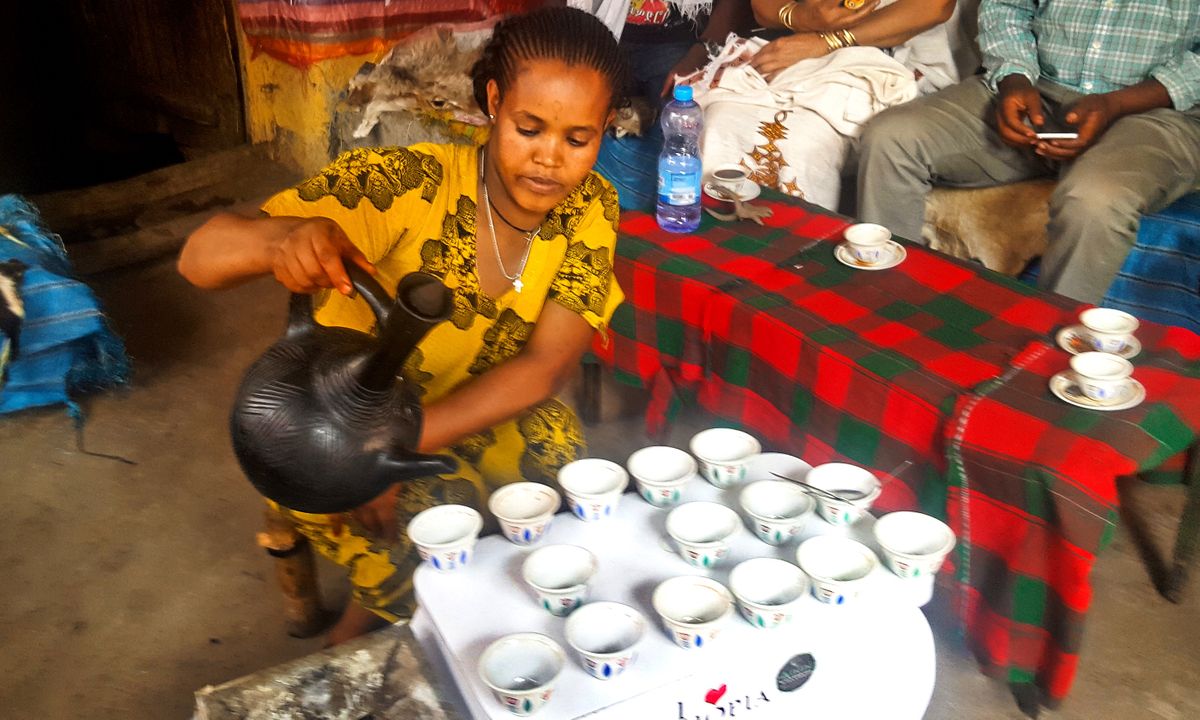
An Ethiopian coffee ceremony (Lynn Houghton)

An Ethiopian coffee ceremony (Lynn Houghton)

There are conflicting reports as to who first discovered coffee beans in Ethiopia’s highlands. Around 850 A.D., a goat herder named Kaldi noticed his animals eating the bitter red berries and noticed it altered their behaviour; this was then reported to the local Monks who took to brewing this magic potion. However, it is also recorded that the Oromo tribe would chew coffee beans as a stimulus for hunting while a Moroccan Sufi mystic was also credited with being the first to try coffee while in Ethiopia.

Whatever the origin, Ethiopian people, and the world, have been enjoying this deep dark delicious drink for hundreds of years. The Ethiopian coffee ceremony involves getting neighbours over to share conversation and a beverage, but the ritual is performed in coffee houses, too. First, popcorn is made and set aside to accompany the coffee. Then fresh beans are roasted on a tiny fire with incense burning close by. Small china cups, without handles, are carefully laid out as the beans are roasting.

Once finished, the beans are then ground, mixed with water and returned to the fire in a metal coffee pot. An incredible smell wafts through the air as the coffee percolates. It is then carefully poured out, and enjoyed by everyone taking part.  Milk is never added but sugar is usually available.

2: Injera Bread

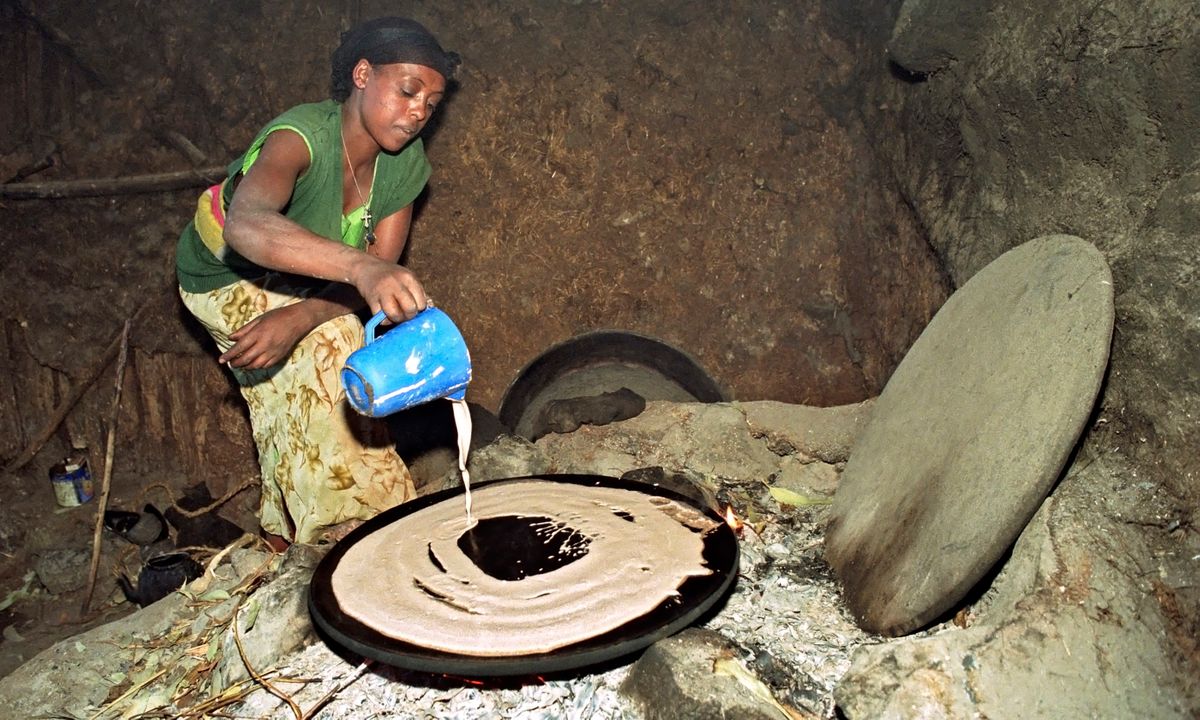
Making injera on a wood fire (Dreamstime)

Making injera on a wood fire (Dreamstime)

The Ethiopians, quite ingeniously, use injera, a type of flatbread, as an eating utensil.  With their right hand, they scoop up curries, salads, lentils and meat with a torn off bit of the bread and then pop it in their mouths. Injera is made with Teff flour, cooked and then allowed to ferment for 3 – 4 days. The result, after baking, is a sour, spongy bread that looks a bit like a soft tortilla and has quite an unusual tangy flavour.

3: The Fasting Plate

A typical fasting plate (Lynn Houghton)

A typical fasting plate (Lynn Houghton)

During a strict fast (such as Lent) Orthodox Christians may not eat meat, meat products, fish, eggs, dairy, wine, or oil; however, vegetables, fruit and lentils are all allowed.  A fasting plate, available in traditional restaurants, is a large circular platter draped with the ubiquitous injera bread. Portions of lentils, salad and curry sauces arranged in small palm sized portions on top.  A section of the injera is torn and then used like a small tortilla, to eat the curry sauce (be careful as these are often very spicy) and other food.  Ethiopians only ever use their right hand when eating as the left is, well, used for other purposes.

4: Tej – Ethiopia’s honey wine

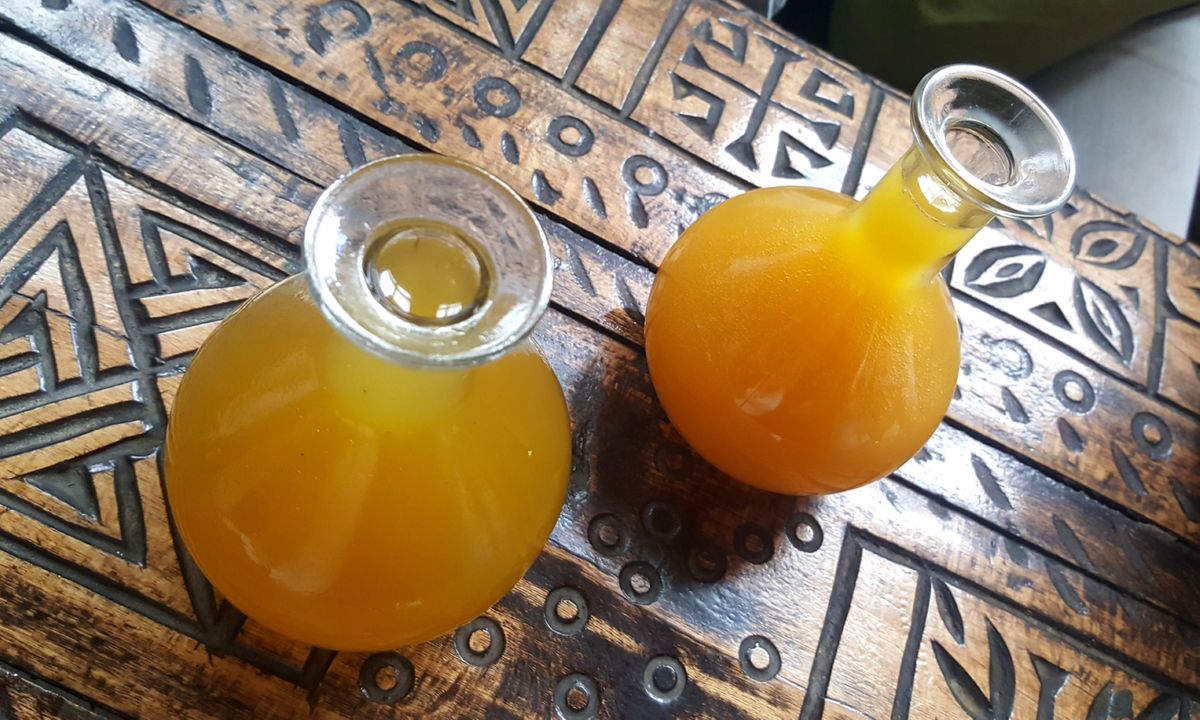
Tej (Lynn Houghton)

Tej (Lynn Houghton)

This fermented golden mead may be too sweet for some but is a solid favourite with Ethiopians and has been since time immemorial.  Also known as Tej, you can find it in Tej Houses and frequently in bars particularly in the highlands. Flavoured with gesho, the shiny leaves of the buckthorn plant, this drink can have an alcohol content of up to 40% depending on how long it has been fermented.  Served chilled in long-necked bottles known as bereles, it is the perfect foil to spicy sauces and curries.

5: Doro Wet

Doro wet (Dreamstime)

Doro wet (Dreamstime)

Popular all over the world, you will have to go to a traditional Ethiopian restaurant such as Totot Kitfo in Bole, Addis Ababa to try this dish but it is worth the effort. Doro Wet is a spicy chicken stew with ingredients that include a fiery red spice (berbere) onions and also niter kibbeh (clarified butter). Chopped collard greens and boiled egg are often added during the slow cooking process. This stew is very flavourful but extremely hot. You have been warned!

6: Timket and tibs

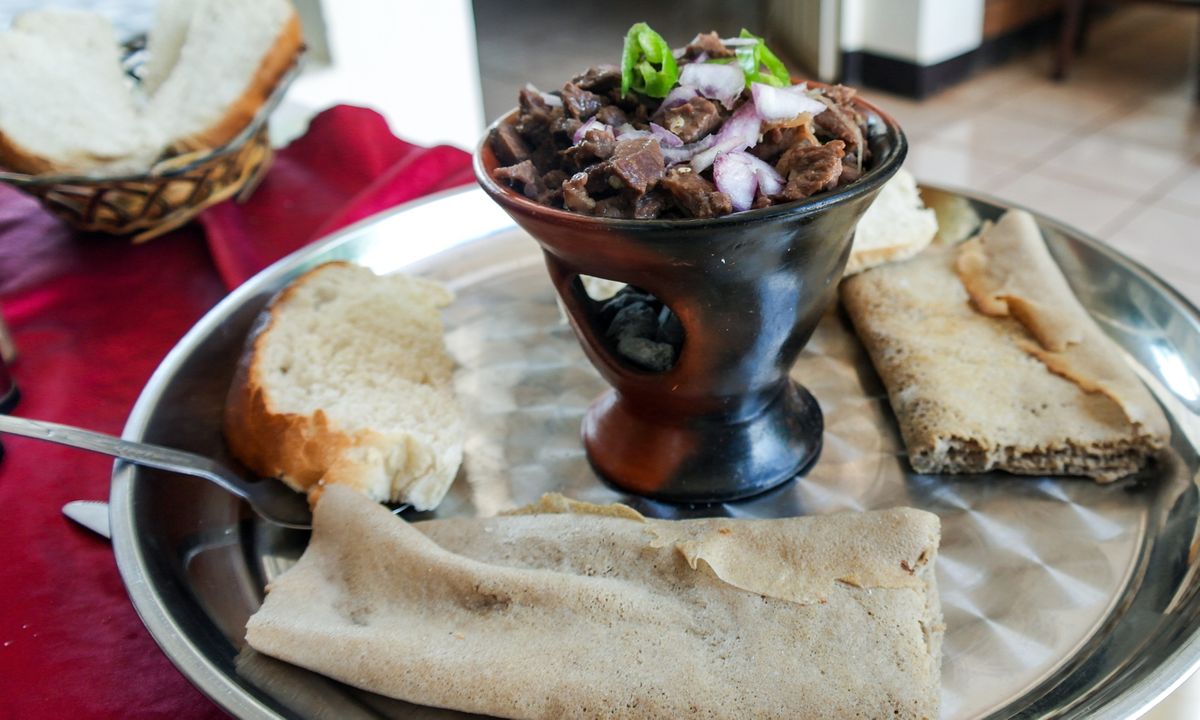
Tibs (Dreamstime)

Tibs (Dreamstime)

There are several dishes associated with Timket, the Orthodox Christian celebration of Epiphany, including Doro Wet, Kifto and Tibs. Tibs are small pieces of grilled meat such as beef or goat (often referred to as lamb in restaurants) that are frequently twinned with ayibe (a soft crumbly cheese). Kifto is minced raw beef marinated in mitmita (a chili-powder based spice) plus niter kibbeh (clarified butter). Tere Saga is another raw meat speciality that is a ceremonial dish frequently served at weddings.

Ethiopian Airlines fly daily from Heathrow and four times per week from Manchester to Addis Ababa. For more information visit ethiopianairlines.com. To find out more about Ethiopia’s intriguing history and food culture, visit farandwild.travel.

Ethiopia’s unmissable sights for travellers

Ethiopia has the ability to wow you day after day. This is truly a world apart; there are more than two millennia worth of ancient treasures scattered around Ethiopia, from the giant obelisks and hidden tombs of the legendary Queen of Sheba, to castles that would make Camelot jealous and the breathtaking rock-carved churches of Lalibela.

Not to be outdone by human craftsmen, Mother Nature really let her creative juices flow in Ethiopia. East Africa’s Rift Valley has left some of its most memorable signatures here: volcanoes bubble and boil, lakes are the colour of English tea and deep canyons and steep peaks wrinkle the land…well, just about everywhere. Starting with the best known and ending with those often unknown to even veteran Ethiopian travellers, here’s our list of the signature sights of Ethiopia.

Home to a dozen or so rock-hewn churches linked by tunnels and passageways Lalibela, or the new Jerusalem, is a site of great religious significance to Ethiopian Christians. Here a pilgrim emerges from a tunnel into the courtyard of a church. Image by Stuart Butler / Lonely Planet. A pilgrim emerges from a tunnel into the courtyard of a church in Lalibela.

Lalibela

Nearly a thousand years ago, a poisoned king was taken by angels to heaven. Here he was shown a city of rock-hewn churches. Then God himself commanded him to return to Earth and, recreating what he had seen, build a New Jerusalem. Today, that New Jerusalem is called Lalibela and to visit it is to immerse yourself in Christianity in its most raw and powerful form.

Aksum

Aksum is a riddle waiting to be solved. Did the Queen of Sheba really call the town’s dusty streets home? Does the very same Ark of the Covenant that Moses carried down from Mt Sinai reside in that small chapel? Are there actually secret hordes of treasure hidden inside undiscovered tombs? And just what exactly do those famous stelae signify? This Unesco World Heritage Site is undoubtedly one of the most important and spectacular ancient sites in sub-Saharan Africa – as well as one of the least understood.

A priest at the Abba Pentalewon monastery near Aksum. Built in the 4th Century by Abba Pentalewon, one of the Nine Saints who popularised Christianity in Ethiopia, he is said to have prayed non-stop for forty years. Image by Stuart Butler / Lonely Planet. A priest at the Abba Pentalewon monastery near Aksum.

Gonder

Gonder is often called the ‘Camelot of Africa’ on account of its magnificent collection of turreted castles painted in the pomp of royalty and bathed in the blood of treachery. The castles, churches and other royal sites of Gonder, most of which date from between the 17th and 18th centuries, are a Unesco World Heritage Site and of all Ethiopia’s historic sites they are probably second only to Lalibela in regards to immediate visual impact.

Simien Mountains National Park

The Simien Mountains, a massive table of rock up to 4500m high and riven with gullies, offers easy but immensely rewarding hiking along the edge of a plateau that falls sheer to the plains far below. These mountains are also home to huge groups gelada monkeys as well as magnificent walia ibex.

Churches of Tigray

The mountains of northern Ethiopia are home to hundreds of ancient monasteries. Some require scrambles up sheer rock faces to reach, some are invisible and guarded by sword-wielding ghosts, some contain the bones of former monks and one could only be built with the help of a giant snake.

A Surmi man on the western side of the Omo valley. Many of the numerous tribes in this region continue to live a largely traditional lifestyle. Image by Stuart Butler / Lonely Planet. A Surmi man on the western side of the Omo valley.

Lower Omo Valley

Whether it’s wandering through traditional Konso villages, watching Hamer people performing a jumping of the bulls ceremony or admiring the Mursi’s mind-blowing lip plates, a visit to the Omo Valley will stick with you for a lifetime. But come quick, because a series of mega development projects will, for better or worse (and the jury is still very much out on this count), bring huge changes to Omo and its people over the next few years.

Harar

The ancient walled city of Harar is eastern Ethiopia’s number one tourist drawcard. The old quarter, which is more reminiscent of a Middle Eastern souk than an Ethiopian town, is a maze of narrow, twisting alleys, replete with historic buildings, including 82 small mosques, numerous shrines and tombs, as well as traditional Harari houses.

The Omo valley area of southern Ethiopia is home to numerous different tribal groups many of whom continue to live a fairly traditional lifestyle. Here a young Surmi boy drinks fresh cows blood. Image by Stuart Butler / Lonely Planet. A young Surmi boy drinks fresh cows blood.

Danakil Depression

Bubbling volcanoes light up the night sky, sulphurous mounds of yellow contort into otherworldly shapes, mirages of camels cross lakes of salt and proud Afar warriors stride away into the horizons haze. Lying 100m and more below sea level, the Danakil Depression is about the hottest and most inhospitable place on earth. If you want genuine, raw adventure, then few corners of the globe can match this overwhelming wilderness. But come prepared – conditions are extreme and security issues can be a real worry.

Bale Mountains

Wrongly playing second fiddle to the better known Simien Mountains, the Bale Mountains National Park might not be as well-known as its bigger brother, but in many ways it’s the more interesting park. The wild, drizzly moorlands, alpine lakes and gushing streams are starkly beautiful, the hiking fabulous and if you want to see the world’s rarest canine, the Ethiopian Wolf, then there is simply no better place in which to meet them.

Blissful B&Bs That Are Perfect for a Relaxing Getaway

0

Sugar Hill Inn

Sugar Hill Inn

SUGAR HILL, NEW HAMPSHIRE

With stunning White Mountains scenery, a cozy indoor tavern and an on-site spa room, New Hampshire’s Sugar Hill Inn provides a relaxing escape from daily life. It’s a child-free zone, so the boutique property is a perfect setting for second honeymoons and quiet getaways. Your stay includes a full country breakfast, and guests have the option of enjoying a four-course prix fixe dinner with more than 100 international wines from which to choose. Lounge by the pool, sip a cocktail fireside or embark on a leisurely package adventure featuring experiences such as maple tapping in March and sleigh rides in winter.


pointpleasant.jpg

Point Pleasant Inn & Resort

BRISTOL, RHODE ISLAND

Looking to start your vacation with a round of tennis or maybe spend a morning socializing over a game of bocce ball? Rather de-stress in a sauna? No matter your preference, Point Pleasant Inn and Resort is your place. Set on 25 acres overlooking Bristol Harbor, this historical manor house features just seven guestrooms—allowing visitors plenty of personal space to roam. Take a dip in the outdoor pool, then head indoors for a game of billiards. And don’t miss the evening cocktail hour, complete with ample hors d’oeuvres.


Crisanver House

Crisanver House

SHREWSBURY, VERMONT

Without question, Vermont—a state known for its stunning fall foliage and idyllic landscapes—is one of the most popular destinations for B&B getaways. Elegant Crisanver House takes full advantage of its peaceful surrounds, and offers a wealth of amenities to help ease guests’ tensions. There’s a swimming pool, a shuffleboard court and a tennis court for use during warmer months; a secluded firepit to gather around on cool evenings; and a spa that can easily accommodate couples. Along with five guestrooms in the main house and three private cottages from which to choose, guests have the option of taking breakfast in a light-filled conservatory or on an outdoor deck, depending on the season. The best part? Spectacular views of Vermont’s Green Mountains abound at every turn.


steeles.jpg

Steeles Tavern Manor and Alpine Hideaway Cottages

STEELES TAVERN, VIRGINIA

Nestled on a 50-acre property in the foothills of the Blue Ridge Mountains, this refined B&B treats its occupants to some of the best Virginia has to offer. Every morning, guests at this historical 1916 manor house sit down to gourmet breakfasts prepared with locally sourced foods, such as a Southwest quiche made with herbs and vegetables grown on-site. A nightly social features Virginia wines and microbrews as well as locally farmed cheeses. Those staying at one of Steeles Tavern’s three secluded luxury cabins enjoy private kitchens in which they can prepare meals, along with cozy fireplaces and back deck hot tubs.


stanfordinn.jpg

Stanford Inn by the Sea Eco Resort

MENDICINO, CALIFORNIA

Set among lush organic gardens between forest and the Pacific Ocean, Mendicino’s Stanford Inn by the Sea is a holistic wellness center, offering everything from spa services to foraging tours. Enjoy the indoor waters of a solarium swimming pool; practice tai chi and yoga; or splurge on a multi-day package such as a vegan cooking getaway. Each of the inn’s 33 wood-paneled rooms features a private deck with ocean views and a wood-burning fireplace. There’s an award-winning vegan restaurant on-site, as well as easy access to bicycle and canoe rentals. Did we mention it’s also dog-friendly?

Inns Fit for Francophiles

L’Auberge Provencale Bed and Breakfast

L’Auberge Provencale Bed and Breakfast

White Post, VA

This inn promises that “romance is alive” in its Virginia Wine Country locale, and that promise is well kept. Innkeepers Celeste and Alain have created a romantic country inn so downright French that you’d be forgiven for believing you’ve left the States far behind. But Virginia is indeed where you’ll be, in the heart of the Shenandoah Valley. At the farm-to-table La Table Provencale, you’ll nosh on dishes sourced from local farms, dairies and the inn’s own orchards. Breakfast in the Sun Room brings that old Gallic standby, freshly baked croissants. Rooms are named after French icons, from Voltaire to Coco Chanel. But it’s not just the French-inspired touches, it’s the upscale amenities that bring back repeat guests: electric-car charging stations, aromatherapy steam showers and gourmet picnics packed for two.


La Belle Esplanade

La Belle Esplanade

New Orleans, LA

New Orleans simply must be mentioned in any list of great French-accented B&Bs, but this funky, feast-for-the-senses inn is actually located outside of the city’s famed French Quarter in a trio of brightly painted, connected houses built in 1883. This is true New Orleans neighborhood. Situated along Esplanade Avenue near Treme — local, friendly and free of partying frat boys — the street is bordered by houses painted purple and yellow and green. The splashes of color continue in La Belle Esplanade’s five apartment-like rooms, with their antique clawfoot tubs, original artwork and one-of-a-kind furnishings. (We love the peaceful Le Pelican suite, with its balcony and oleander tree.) The city’s Cajun, Creole and French roots collide beautifully at breakfast, where strong coffee is mixed with chicory in true New Orleans style and humdrum breakfast sausage is replaced by local boudin. At La Belle Esplanade, it’s not very hard to laissez les bons temps rouler.


Maison Fleurie

Maison Fleurie

Yountville, CA

The Napa Wine Country region certainly isn’t hurting for classic French-style auberges, but Maison Fleurie, a Four Sisters property in Yountville, sets its sights high. This “flowering house” is straight out of southern France, with its stone-walled guest rooms, charming floral textiles and lavish rose gardens. Take a dip in the pool and hot tub, open from April through October. Borrow the inn’s bicycles for a ride around Napa. Hop on the complimentary Yountville trolley for a trip into town. Visit the area’s renowned restaurants and world-class wineries. (The B&B staff is happy to recommend a favorite or two.) Whatever you do with your day, you’ll want to return to Maison Fleurie by dusk for a complimentary wine hour with tasty hors d’oeuvres. In the midst of all that Napa finery, Maison Fleurie is an elegant — and surprisingly affordable — stay.


Napoleon's Retreat Bed and Breakfast

Napoleon’s Retreat

St. Louis, MO

Inside the walls of this bright butter-yellow townhouse built in 1880, find Napoleon’s Retreat. This pampering B&B is located right in St. Louis’ historical Lafayette Square, near an expansive park that also bears the famous revolutionary officer’s name. The picturesque neighborhood is lined with Victorians, perfect for a leisurely walk or jog surrounded by some well-preserved period architecture. At the inn itself, enjoy a multicourse gourmet breakfast featuring twists on French classics like crepes, soufflés and quiche. Enjoy the richly decorated rooms and their unique amenities, from the Charles de Gaulle Suite’s double whirlpool tub to the Burgundy Suite’s expansive interior and deep red textiles. Set out for St. Louis’ sights, including that famous Arch, or just enjoy the company of innkeepers Brian and Stacy — and their two four-legged assistants, les chiens Indiana and Delilah, of course.


Le Chateau de Faubourg

Le Chateau de Faubourg

Quebec City, Canada

Already experienced Montreal but in need of a challenge? Why not Quebec City? It’s just a 2.5-hour drive northeast of internationally inclined Montreal, yet feels distinctly more in tune with its French colonial roots. Bed down in Le Chateau du Faubourg, a restored 19th-century home decorated in the grand style of the Second French Empire. A fairy-tale-like dining room welcomes guests at breakfast, while the formal salon’s fireplace is a wonderful accompaniment for Quebec’s cold winter months. Expect elegant draperies and fine period antiques throughout the family-owned property. No matter the season, the chateau is well within walking distance of Quebec City’s top sights, including Basse-Ville, the city’s original settlement situated on the banks of the St. Lawrence. Your French lessons may just come in handy!


Auberge de Seattle; French Country Inn

Auberge de Seattle

Seattle, WA

Auberge de Seattle may be modeled after a French country inn, but it has a Pacific Northwest vibe all its own. (Perhaps it’s the views of the surrounding evergreen forest that lend it such an easygoing air?) This B&B experience is truly hands on, with an on-site French cooking school, wine lessons and garden tours available for guests to tailor their gustatory stays. Dig into coursework like “Exploring French Classical Cuisine” and learn to DIY gourmet dishes from France’s storied culinary history. Arms exhausted from the effort of kneading bread and stirring pots? Indulge in a massage treatment after class accompanied by a soak in the heated hydro-massage bath. Take a day off and book a personalized wine tour of the Woodinville Wine Country, or embark on an educational garden tour topped off with lunch made fresh from the garden’s produce and herbs. Few B&B stays come with amenities this delicious.

Puglia, Italy: The Most Beautiful Destination You’ve Never Heard of

pasta.jpg (534975723)

Incredible Food

Simple, rustic dishes—this is the kind of food that you’ll find in Puglia. Pugliese cuisine incorporates locally grown ingredients such as vegetables, herbs and durum wheat as well as seafood sourced from its hundreds of miles of coastline. Specialties include ear-shaped orecchiette (tiny curls of handmade pasta often served with broccoli rabe or tomato sauce); cheeses such as ricotta forte, creamy pear-shaped manteca and burrata; and seafood that runs the gamut from raw sea urchins, shrimp and squid to baccalà (salted cod) and zuppa di pesce (fish soup). Then there’s the bread—hearty loaves like pane de Altamura, featuring a thick crispy crust and a soft golden interior that remains edible for weeks. Altamura bread has been a staple so long that Roman poet Horace was singing its praises as far back as 37 B.C.


Beloved Drinks

Whether it’s steaming cups of espressino (an addicting mix of espresso and milk with a dusting of Nutella) served in bustling cafes or a glass of Puglian wine such as primitivo—an intense red similar to California Zinfandel—or the darkly colored fruit-flavored negromaro al fresco at a local trattoria, quenching a particular thirst comes easy in these parts. The region is dotted with wineries, especially the endlessly sunny Salento Peninsula, which stretches diagonally across Puglia from Taranto to Ostuni, connecting the Ionian and Adriatic seas. While it’s also easy to find well-known Italian liqueurs like limoncello and Sambuca, many locals prefer Padre Peppe, a walnut-based digestive blended with herb and spices—originally invented by an early 19th-century Capuchin friar in the Puglian city of Altamura.


pugliabeach.jpg (513823385)

Miles of Beachfront

Puglia features more coastline than any other mainland region in Italy. Along Puglia’s southern Adriatic waterfront, you’ll find gems such as Polignano a Mare, a stunning resort town of towering limestone cliffs, sheltered coves and swimmable sea caves; and Monopoli, with its long sandy beaches. Puglia’s Salento Peninsula is known for seaside towns like Gallipoli—home to clear, Ionic Sea waters and restaurants that burst to life during warmer months—and Otranto, where you’ll find the Baia dei Turchi or “Bay of the Turks”—stunning white sands sheltered by a pine forest.

Olive Oil

It doesn’t take long after leaving Bari Airport to find yourself in the thick of one of Puglia’s prime agricultural treasures: endless fields of olive trees. Puglia produces 40 percent of Italy’s olive oil (more than anywhere else in the country). In small-batch, locally produced bottles—which you can often purchase directly from producers—you can taste Puglia’s varied terrain, including hints of pomegranates, green apples and grass. If you’re lucky enough to visit the region from mid-November to mid-December, you’ll even catch the annual harvest. Multigenerational family members take to the land to reap the rewards of the season, laying out heavy-duty nets beneath each tree and shaking the olives loose from their branches with handheld and pneumatic rakes. They then gather the olives in crates and transport them to the press, where the oil and the skins are separated. The sweet smell of oil permeates Puglia, already dense with an air of celebration. One word of advice: Puglians do not go easy on their olive oil; so if you want to eat like a local, get pouring!


gravina.jpg (544343310)

A Subterranean World

Puglia’s Murge plateau is a low-lying stretch of limestone tufa that occupies much of the region. It’s home to Alta Murgia National Park, known for its many ravines, caves and sinkholes. There’s the Pulo, a massive amphitheater-like hole that delves 300 feet down into the ground and is lined with caves prime for exploring. The nearby town of Gravina is the park’s central base and has an underground of its own worth visiting. The park is also home to dozens of rupestrian churches carved into the land during medieval times, with the remnants of ancient frescoes still adorning their walls. An organization called Messors offers summer art restoration workshops at which you can y help restore the timeworn frescoes, as well as culinary workshops and a chance to assist in preserving an entire ancient cave site.


Distinct Culture & History 

Romanesque cathedrals, seaside fortresses and picturesque old towns are another part of Puglia’s immense charm, as are its people. You’ll find a great combination of the two in Bari’s Orecchiette Quarter, where local women set up outdoor tables to make orecchiette, cavatelli and orecchiette pastas by hand. This ancient port city is also home to Basilica di San Nicola, where a portion of the relics of St. Nicholas (yes, that jolly ol’ St. Nicholas) remain. Each May, locals honor the 11th-century arrival of these relics with La Festa di San Nicola, a three day celebration that includes a costumed procession through Bari’s streets and culminates with a fantastic fireworks display. Although Capuchin friar Padre Pio was born in Italy’s Campania region, he spent the bulk of his life in San Giovanni Rotondo on Puglia’s Gargano Peninsula. Opened in 2004, the city’s massive Padre Pio Pilgrimage Church pays homage to this Catholic saint who passed away in 1968. The site draws millions of visitors annually—many who come to see his body in a crystal coffin.


Architectural Treasures

Puglia abounds with unique architecture, from its 16th- to 19th-century masserias (fortified farmhouses or large estates) to its trullis—dry stone structures with adorable cone-topped roofs that dot the Valle d’Itria countryside outward from Bari. Alberobello is trulli central, with its Monti district sporting more than 1,000 of these beehive huts, many which house eateries, souvenir shops and B&Bs. Lecce is also known for its architectural wonders, with more than 40 stunning Baroque-era churches in the city alone. Among its many ornate facades decorated with griffins, gargoyles and human figurines stand the remains of a 1800-year-old Roman amphitheater. Ostuni, Puglia’s “Città Bianca,” is a hilltop town of whitewashed homes, hanging archways and hidden staircases perfect for exploring, while the more subtle walled old town of Altamura is especially known for its claustros, approximately 80 courtyards that allowed individual ethnic groups to coexist in the larger city.


trullo.jpg

Where to Stay

There’s Trullo Barbagiullo, an expanded trulli home with six cozy guestrooms and an in-ground swimming pool, located in the hilltop town of Cisternino. Over in Lecce’s Corigliano d’Otranto, Agriturismo Masseria Sant’Angelo features both spacious guestrooms and stand-alone cottages tucked among a grove of olive trees on a working farm. Help milk goats, feed the donkeys, and even assist with dinner by picking fresh vegetables from the garden. Up north in Puglia’s Foggia Province, the six-guestroom Bed and Breakfast Dalla Nonna is a fully renovated seaside property that includes a daily breakfast overlooking the water. Discover even more Puglia B&Bs.

How to Plan the Perfect Montreal B&B Getaway

Montreal is named after the triple-peaked mountain that towers over the heart of the city. Long inhabited by First Nations people then settled by fur traders, it has throughout its history been a welcoming home to many: immigrants, students, the LGBT community and travelers too.

This is a city of neighborhoods. Historical Vieux-Montreal and the Old Port stretch along the water, where cobbled streets wind around old buildings and the stunning Notre Dame Basilica. To the north and east, the Plateau and its Mile End district are home to the city’s creative types and the funky shops, cafes and bars they frequent. Most every area is walkable or bikable; traversing this city on foot leads to the discovery of its many charms.

No matter the neighborhood you call home during your stay, you’ll find plenty to welcome you. Here are some of our favorite things to do, see, eat and drink—and of course some of our favorite B&Bs to book).

basilica.jpg (501860705)

Outdoors and Indoors

First, know that most parts of Montreal are best seen by foot or wheel. Rent a BIXI (the city’s bike-share program) and pedal up Parc Mont-Royal’s many moderately challenging paths. (Don’t worry—walkers are welcome, too.) In summer, kids can enjoy Mont-Royal’s rowboats as they ply the park’s Lac Aux Castors; in winter, sled or snowshoe instead. Also consider a stop at the city’s other green spaces, Parc Jean Drapeau and Parc La Fontaine.

Got a green thumb? The Botanical Garden and its flowered walkways contain some 22,000 different plant species in a vibrant array of colors. Thematic gardens, greenhouses and a pavilion are all worth exploring, and concert series, exhibitions and guided tours offer many angles on Montreal’s crown jewel.

Walk along Vieux-Port, Montreal’s photogenic waterside neighborhood. Catch a ferry or fireworks, grab a cocktail and snap photos of the St. Lawrence around this working port.

Enjoy the city’s many museums, including the Biodome, the Montreal Museum of Fine Arts and more. Arts and culture fans should consider picking up a Museums Pass that includes admission to dozens of spots plus three days of public transport and shop discounts.

If your bed and breakfast comes with a kitchenette, there’s no better place to pick up local produce, flowers, herbs, cheeses and baked goods than at Jean-Talon. It’s one of the largest public markets in North America and offers a bounty of Quebec’s freshest ingredients.

Montreal’s Plateau has a slate of top consignment shops, designer clothing boutiques and cutting-edge interior design studios. Stroll and spend along Rue St. Denis and Boulevard St. Laurent. For amazing vintage pieces, Mile End is bursting with options, from critical darling Citizen Vintage’s well curated collection to Annex, where everyone can relive the ’90s with great abandon.

Visiting in winter? Don’t skip Basilique Notre-Dame de Montreal lit up in its holiday finest. The grand Gothic Revival basilica looks magical dusted in snow and aglow with blue lights. Guests can take a brief guided tour in English or French; enjoy an hour of music led by organist Pierre Grandmaison; or snag a coveted ticket to the basilica’s moving Christmas Eve Mass.

Events and Festivals

If you’re looking for an event around which to plan your visit, you’re in luck. Montreal’s calendar is packed around the year with festivals, fetes and parties.

  • Pack your warmest mittens for outdoor music festival Igloofest (January/February)
  • Catch music, circus acts, dance, and lights during Montreal En Lumiere (February)
  • Sample from a miles-long list of beers during Le Mondiel de la Biere (June)
  • Spectate the Formula One during jetset favorite Grand Prix Montreal (June)
  • Listen to top jazz acts at the world-renowned Montreal International Jazz Festival (June)
  • Or catch some big names — like Radiohead big — at outdoor festival Osheaga (July)
  • Join the parade (and PM Justin Trudeau) at Montreal Pride (August)
  • See the city in its holiday finest during Noel dans le Parc (December)\

poutine.jpg (584783400)

Eating and Drinking

Poutine is more than just a mere bar snack or a guilty pleasure; it’s something of a cultural institution. Experts say a perfect poutine should have crisp browned frites smothered in flavorful brown gravy and studded with squeaky white cheese curds. La Banquise dishes up some of the city’s most famous renditions of the dish, from a classic poutine with no added frills to L’Obélix, a local favorite piled high with Montreal-style smoked meat. Try a fancy version at Au Pied de Cochon, Martin Picard’s temple to meat, where the poutine comes with rich lobes of foie gras. Patati Patata on Saint-Laurent is also a favorite, a tiny diner-style spot that serves a tasty classic poutine alongside burgers for unbelievably cheap prices.

Beyond the famous fry dish, Montreal has a few other dishes that can’t be missed. Start with some wood-fired bagels at St-Viateur or Fairmount Bagels, where the flat, slightly sweet, always smoky bagels are best topped with a smear of Philadelphia cream cheese and ribbons of bright smoked salmon. For even more smoky flavor, grab a smoked meat sandwich at Schwartz’s or Lester’s, both upholding the Jewish tradition of peppery brisket. Other musts are Portuguese roast chicken, any number of classic French bistro dishes, and a perfectly pulled espresso (Montreal has a serious cafe culture).

Speaking of intoxicating drinks, Montreal’s beer scene is vibrant, with world-class and wonderfully affordable breweries dotting the city. Dieu du Ciel brews right on-site in the Plateau; if you’re lucky enough to nab a seat on the terrace, you can spend all night sipping from the dozens-long beer list (including our favorite brew, the darker-than-night Péché Mortel stout). Other top spots include Vices & Versa, Brouhaha, L’Espace Public, and Le Saint Bock.

montrealinn.jpg

Bed and Breakfasts

Montreal has a lengthy list of bed and breakfasts from which to choose, but we selected a few favorites for their artsy vibe, great locations, and little extras.

In downtown Montreal, just steps from Le Centre Bell, Auberge Les Bons Matins resides in a row of Victorian townhouses. Here, interiors are bright and funky, and wood-burning fireplaces warm guests in winter months. Extra-large deluxe suites have Jacuzzi tubs and cozy private terraces. Plus a generous all-you-can-eat breakfast includes Montreal’s best wood-fired bagels and local maple syrup.

A fabulous 1927 home surrounded by hundred-year-old trees, Le Terra Nostra is also a quick walk from downtown (but its location feels downright residential). With only three rooms, the accommodations are quiet and private, and each room has a distinct, well-decorated theme—Europe, Asia or Africa. A den, garden and living room offer plenty of nooks for reading.

La Loggia Art and Breakfast’s rooms are airy and modern, filled with works by local Canadian artists. Bilingual hosts Rob and Joel (a personal trainer and sculptor by trade, respectively) have created space focused on tranquil creativity right near Vieux Montreal. Guests are even welcome to take sculpture classes at the nearby studio.

Perched on the edge of Plateau, one of the planet’s hippest neighborhoods, is Gingerbread Manor. Traditional decor, private baths, homemade breakfasts, and a garden are well worth coming for, but it’s the surroundings that make the Victorian manse a worthy stay—Square St. Louis and Rue St. Denis are just steps away.

Finally, A La Carte more than lives up to its well-earned reputation as one of the top B&Bs in Canada. In the family-friendly neighborhood of Rosemont with easy Metro access to downtown Montreal and the Plateau. Private rooms and a self-service apartment offer options if you’re coming with a large group. And the cute-as-a-button resident miniature poodle, Monsieur Petit, will be happy to show you around his digs.


National Parks: Supersized natural wonders in the US

0

Superlative natural wonders appear wherever you turn in the USA’s national parks. Whether you’re working on your bucket list – ‘Climb North America’s highest mountain!’ – or just wanting to hug the world’s largest living tree, you can explore nature’s extreme outer limits at these record-setting US national parks.

Yosemite Falls reflected perfectly in outlet of Merced River by Swinging Bridge, Yosemite National Park, California Yosemite Falls is the highest waterfall in the mainland United States

Water, water everywhere

Looking for North America’s highest waterfall? Head to California’s Yosemite National Park, where the triple-decker cascade of Yosemite Falls tumbles 2425 ft into a glacially carved valley. One of the world’s 10 highest waterfalls, Yosemite Falls swells in late spring, when melting snow from mountain peaks roars as it drops into the Yosemite Valley, which conservationist John Muir described as nature’s temple.

The Old Faithful Geyser at Yellowstone National Park erupts at sunset in Wyoming. It's one of several supersized natural wonders in the US National Parks system Old Faithful Geyser is one of the most visited sights at Yellowstone National Park

Equally impressive wonders are the spouting geysers of Yellowstone National Park, shared between the states of Wyoming, Idaho and Montana. More geysers are found here than anywhere else on the planet, with superheated water from underground volcanic rocks bubbling to the surface in hot springs, fumaroles and roiling mud pots. Old Faithful, the park’s most famous geyser, erupts more regularly than any other geyser on earth, spouting up to 8400 gallons of water over 100 feet high into the air every hour or two, day and night.

Closer to the West Coast lies the USA’s deepest lake at Oregon’s Crater Lake National Park. The astounding clarity of 1943ft-deep Crater Lake, formed by rainfall in an extinct volcanic caldera, will have you instantly reaching for your camera. Peer over the crater rim from roadside viewpoints or hike down to Cleetwood Cove, where you can catch a boat tour over to Wizard Island, the volcanic cinder cone popping up above the lake’s surface that looks like an enchanted lost world.

A grizzly bear walks down a road in the late evening when Denali (or Mount McKinley) was in full view. The Mountain is one of several supersized natural wonders in the US National Parks system. A Denali ‘traffic jam’ lines up near the tallest peak in North America

From snowy peaks to hot badlands

With global climate change accelerating, you’d better hurry if you want to see North America’s largest collection of glaciers. Of the 25 large glaciers remaining in Montana’s Glacier National Park, several are expected to melt away by 2030. You’re best off heading north to chilly Alaska, where Glacier Bay National Park and Wrangell-St Elias National Park are preserved as a UNESCO World Heritage Site. The number of glaciers there dating from the Little Ice Age – including a few record-breakers that flow for 75 miles or have grown to be 3000 feet thick – is uncountable.

Alaska also boasts the USA’s tallest peak. At 20,030 feet high, Denali (Formerly Mt McKinley)– an Athabaskan word meaning ‘The High One’ – dominates the epic landscapes of Denali National Park. If you can’t journey that far, California’s Sequoia National Park offers the chance to climb Mt Whitney (14,505ft), the highest peak in the Lower 48 states. Towering over the Sierra Nevada range, Mt Whitney’s summit – with its views of craggy granite peaks, not to mention head-spinning elevations – may take your breath away, literally. Sequoia National Park is also home the world’s largest living tree, a giant sequoia that measures over 100 ft around.

Couple walking in a giant redwood forest, Sequoia National Park, California. They're one of several supersized natural wonders in the US National Parks system The redwood trees in Sequoia National Park are the largest living things in the world

Less than 140 miles from Mt Whitney you’ll find the lowest elevation in North America: Badwater. Covering almost 200 square miles of Death Valley National Park, Badwater is one of the world’s largest salt flats. Once a prehistoric lake, this arid spot now sits at an elevation of 282 feet below sea level. Death Valley also holds the unenviable record of being the hottest place in the USA, with the temperature at Furnace Creek hitting an excruciating 134 degrees Fahrenheit on July 10, 1913.

Here’s some more hot stuff for you: Hawai’i Volcanoes National Park on the Big Island of Hawai’i protects what was the world’s longest running continuous volcanic eruption since 1983 – it flowed for over 10,000 days until May 2018. The wonders of the lava lake and glowing flows might have stopped for now, but there’s still plenty of otherworldly sights in this unique environment. You can see what the volcano is doing at the National Park Service’s web site.

Railings and lights lead the way through a dark cave passage in Kentucky. Mammoth Cave is one of several supersized natural wonders in the US National Parks system Mammoth Cave in Kentucky has more than 400 miles of passages – the longest in the world

Where more wild wonders are

Hawaii Volcanoes National Park is famous for its walk-through lava tubes, too. But diehard spelunkers should head back to the mainland instead to Kentucky’s Mammoth Cave National Park. There you can crawl inside the world’s longest known cave system, a subterranean maze of chambers that measures almost 400 miles long. Like Carlsbad Caverns National Park in New Mexico, Mammoth Cave is a valuable hot spot for biodiversity and has been declared a World Heritage Site.

If the wonders of biodiversity really have you hooked, you’ll want to fly south to Florida’s Everglades National Park, another World Heritage Site and the largest subtropical wilderness in North America. Watch pink flamingos flock to its crystal bays and sharp-toothed crocodiles and alligators swim beside rivers of grass.

A view of steep cliff, Grand Canyon and Colorado river from Toroweap overlook. The canyon is one of several supersized natural wonders in the US National Parks system The Grand Canyon is the longest in the US (though at more than a mile, still not the deepest) 

Otherwise, if going deep into the bowels of the earth is what fascinates you most, hit the road to Grand Canyon National Park. Though not North America’s deepest canyon, it’s the longest, winding for more than 275 miles along the Colorado River. Peering down into the canyon’s pastel-painted depths at sunset from more than a mile high atop the rim is a view that’s hard to beat.

7 Amazing Natural Wonders in the U.S.

Sequoia National Park

Sequoia National Park

California


500x500-lhl.jpg

To Do: Containing both the highest point in the Lower 48 (Mt. Whitney, at 14,500 towering feet tall) as well as the trees that give the park its name, Sequoia National Park is all about its famous giants. See the General Sherman tree and other wonders of the Giant Forest. Explore acres of dense, ancient forests where trees are routinely hundreds of years old. Spy the foxes, black bears and bobcats that call this national park home. Or discover the Sierra Nevada foothills town of Three Rivers, where the art galleries are abundant with nature photography and local crafts and restaurants serve up hearty, hiker-approved meals.

Must-See Wonder: General Sherman and the Giant Forest, which boasts five of the ten largest trees on Earth.

To Stay: A log house perched in the trees high above Three Rivers, the aptly named Log House Lodge is filled with rustic decor and fascinating antiques, including an old-fashioned gramophone and spinning wheel. It’s just a ten-minute walk to Sequoia National Park, meaning the cozy rooms are exceptionally close after a long day, and the cast-iron wood-burning stove warms up chilly nights.

Rates from $225 per night.

Rates from $225 per night.


Niagara Falls State Park

Niagara Falls State Park

New York


500x500-rci.jpg

To Do: Water from four of the five Great Lakes comes together in a thundering, crashing miracle that spans the United States and Canada. View the falls — actually three separate waterfalls — from the Observation Tower, where you might also see a soaring bald eagle or peregrine falcon. Or climb aboard the iconic Maid of the Mist and feel the falls’ spray firsthand, as guests have been doing since 1846. While the area is admittedly a tad touristy, the powerful lure of the falls can’t be overstated — and many locals recommend hopping over to the Canadian side for better views, if you remember to pack your passport.

Must-See Wonder: The Cave of the Winds’ wooden walkway to experience tropical-storm-like conditions of Bridal Veil Falls.

To Stay: You can’t beat this B&B’s location. The Red Coach Inn is just 500 yards from the falls, overlooking the swirling Upper Rapids. In fact, the owners swear it’s close enough to hear the waterfalls’ roar. Most guest rooms and suites also have Niagara views, plus you can make your own waterside fun in the en-suite jetted Jacuzzi tubs found in every room type. The on-site restaurant and wine bar are top-rated, with even more panoramic views of the majestic falls, just in case you can’t get enough.

Rates from $159 per night.


Mammoth Cave National Park

Mammoth Cave National Park

Kentucky


500x500-SH.jpg

To Do: In the hilly, river-threaded country of south-central Kentucky, you’ll find Mammoth Cave. At 400-some mapped miles, it’s the world’s longest cave system, a grand and sometimes eerie space of dark caverns and serpentine tunnels. The best way to explore the surreal cave is on a ranger-led tour, though advance reservations are strongly recommended, as tours fills fast. Most tours are moderately strenuous, but avid cavers can embark on a true spelunking exhibition, scrambling up rocky slopes and squeezing through tight holes if they so desire. Before or after your subterranean exploration, hike the Green River Bluffs or canoe the 25-mile river itself, bordered by sheer cliffs on either side.

Must-See Wonder: Gothic Avenue, a stretch of cave with a ceiling covered in visitors’ signatures from the 19th century.

To Stay: Just a mile from the entrance to Mammoth Cave National Park is the country-cute Serenity Hill Bed and Breakfast. Rooms are bright with crisp white bed linens and antique furnishings, including gorgeous four-poster beds. Expect freshly made cookies in your guest room each day, and enjoy the beautiful valley view from the wide front porch in this secluded, peaceful retreat.

Rates from $85 per night.


Book Now


Zion National Park

Zion National Park

Utah


500x500-IGI.jpg

To Do: One of Utah’s Mighty Five national parks, Zion is famed for its massive sandstone cliffs, striated in shades of ochre and cream and blush, that seem to brush the blue sky above. Follow the footsteps of early Native American tribes and westward-bound pioneers as you explore the supersized canyons, basin and shrub-covered desert. Challenging trails loop throughout the park, including vertigo-inducing Angels Landing and the far easier, family-friendly Narrows, during which you’ll wade and ford the Virgin River. Not into hiking? A horseback ride is a great alternative way to see the wildlife in all its natural wonder. As its name implies, there’s something heavenly about this national park.

Must-See Wonder: The “hanging gardens” of wildflowers to see bright red Indian paintbrush and sago lilies, Utah’s state flower.

To Stay: The Iron Gate Inn and Winery, located in a pretty powder-blue Victorian, is the area’s oldest B&B, surrounded by gardens and stunning views since the late 1800s. Rooms are furnished in elegantly traditional style, with bright floral duvets that bring the romantic garden feel indoors. With eco-minded practices and vegan toiletries, the Iron Gate is appropriately earth-friendly. Breakfasts are well-known for their liberal use of local produce, jams and honey. Here, you can stargaze southern Utah’s skies from the gardenside Jacuzzi and patio fire pit.

Rates from $119 per night.


1200x700-acadia.jpg (529983821)

Acadia National Park

Maine


500x500-CMI.jpg

To Do: Spotted by Champlain as he sailed down the New England coast, Acadia’s pine forests, its crowning Cadillac Mountain and its tiny coastal islands are sights to behold, stretching over tens of thousands of acres along the Atlantic. Follow the carriage trails and granite bridges laid by gentleman naturalist John D. Rockefeller. Hike to the Bass Harbor Head Lighthouse, listed on the National Register of Historic Places and prettily situated on Mt. Desert Island, once home to the Rockefellers themselves as well as a slew of Vanderbilts, Carnegies and Astors. It’s just a 4-hour drive from Boston to this outdoorsy paradise. Pro tip: While summer is high season for hikers, fall is a special time to visit Arcadia, when the mountainsides bloom in autumnal glory, blanketed in red and gold.

Must-See Wonder: Catching sunrise from Cadillac Mountain. In fall, it boasts the earliest sunrise in the United States (and the prettiest one at that).

To Stay: While many tourists flock to spendy Bar Harbor, you may more enjoy the peaceful seclusion of Acadia’s Oceanside Meadows Inn, located in a whitewashed 1860s sea captain’s home. Guests awaken to sunrise over the private sandy beach, gulls squawking in the near distance, and of course a four-course gourmet breakfast.

Rates from $149 per night.


1200x700-great-fl-reef.jpg (185251753)

Great Florida Reef

Florida


500x500-MA.jpg

To Do: If you thought snorkeling and diving were best reserved for Caribbean islands and Australian beaches, you may be missing out on amazing undersea adventures in your own backyard. Off the coasts of the Florida Keys lies the Great Florida Reef. Some 1,400 species of marine life — including fish, mammals, plants and corals — are found here, the diverse array attracting the snorkelers and swimmers who ply its waters. Especially around Key Largo, visitors find the densest, most colorful corals and swarming schools of parrot fish, turtles, eagle rays and occasionally a nurse shark or two. These reefs, lying in warm and shallow waters, are well suited for beginners learning to dive.

Must-See Wonder: The Christ of the Abyss statue may be manmade, but not so for the brain corals and famous barracuda, Smoky, who call the artwork home.

To Stay: There are B&Bs aplenty in the popular Keys, but we love The Mermaid & Alligator. Nine rooms mix island-style luxury and Victorian elegance. Think gabled roofs and spacious verandahs, spa-style bathrooms and four-poster beds. A complimentary breakfast is served beside the plunge pool and tropical gardens outside.

Rates from $178 per night.


1200x700-denali-ntl-park.jpg (56687219)

Denali National Park

Alaska


500x500-MML.jpg

To Do: Denali comprises a mind-boggling six million acres of Alaskan backcountry: alpine forest, mossy tundra and, at its highest elevations, ancient glaciers. With snowcapped Denali (formerly Mt. McKinley) at its center, this national park is a feast for the eyes — and a getaway for thrill seekers. Denali is one of the most isolated peaks in the world, and the national park surrounding it is made for pure adventure. Dog sledding, snowmobiling and cross-country skiing are all worth a try for mere mortals, while mountaineers can summit Denali itself over a two- to three-week climb. This year is the perfect time to visit — in 2017, Denali marks its 100th anniversary as a national park.

Must-See Wonder: On a bus tour, photograph (from afar) the resident wolves, grizzly bears, caribou, moose and bald eagles.

To Stay: The private log cabins in Talkeetna’s Meandering Moose Lodging make for a cozy base before and after Denali adventures. Acres of birch trees surround the homelike, handcrafted cabins, which have kitchenettes and extra-comfy beds, plus access to an outdoor campfire. Owners Mike and Kathy Stoltz are happy to assist with planning and recommendations, including the best local fishing spots.

Rates from $90 per night.

Why seeing chimpanzees in Uganda is one of the world’s greatest wildlife experiences

0

Chimpanzees may get much less hype in the travel media than endangered mountain gorillas, but tracking our closest relative through the African jungle is in fact one of the world’s most thrilling wildlife encounters (and it costs a fraction of visiting our larger cousins).

Although there are around 300,000 chimpanzees left in the equatorial forests of Africa, observing them in their natural habitat is a rare treat. One of the best places to do so is Kibale Forest National Park in Uganda as it’s home to five habituated groups that are within easy walking distance.

A mature male chimpanzee sits in dense green foliage atop a large branch with its legs tucked up and its forearms hanging over its knees - it is looking pensively up to the trees above© Bella Falk A male member of the Kanyanchu chimpanzee group in Kibale Forest National Park


Africa’s chimpanzees

Chimpanzees live in communities of up to 150 members, which are divided into smaller subgroups and led by an alpha male. They’ll typically spend much of their day high up in the treetops, grooming, sleeping, and feeding on fruit, leaves and bark. However, it’s when they descend from the canopy that you’ll have your best chance of getting close to them.

Today we know that chimpanzees are humans’ closest genetic relatives – sharing around 98% of our DNA – but it was the celebrated primatologist Dr. Jane Goodall who first observed their astonishing human-like behaviour. In the 1960s Dr. Goodall moved in with a community of chimps in Tanazania’s Gombe National Park, where she was able to prove that chimpanzees kill and eat small mammals, and can make and use tools, ideas that were completely unknown at the time.

By spending time with the chimps she eventually taught them to accept her – a process known as habituation which is not only fantastic for scientists, but also opens up the opportunity for ordinary visitors to get almost within touching distance of these incredible creatures.

A baby chimpanzee has its mouth full of fruit, with one hand on a branch and the other grasping more fruit, while an elder chimp sits down the same branch and carefully tastes a piece of fruit - bunches of fruit hang from the branch they are sitting on © Bella Falk Living the high life, two chimpanzees feed on fruit in the tree canopy of Kibale Forest National Park

The chimpanzees of Kibale Forest National Park

Kibale Forest in Uganda is home to around 1500 chimpanzees living in 13 communities. Of these, various groups have been successfully habituated; some for scientific study and others, such as the Kanyanchu group, are used for tracking.

The Kanyanchu group, made up of more than 120 individuals, is led by an alpha male named Totti (after an Italian footballer) who took the top job in 2016 after a two-year battle with the previous alpha, Magezi. Visits to the group take place in the mornings and afternoons and typically last 3-4 hours with up to one hour spent with the chimps. The cost of the tracking permit is US$150 per person, a fraction of the US$750 and US$1500 price tags for gorilla permits at Uganda’s Bwindi Impenetrable National Park and Rwanda’s Volcanoes National Park respectively.

If an hour isn’t enough for you, then the park also offers a habituation experience, where you’ll spend a full day (US$220) following one of two communities currently undergoing the two-year habituation process. You’ll need to be prepared for a fair bit of brisk walking – chimps can move fast – but it will be worth it for the rewards of a more intimate encounter.

Several tourists walk single file up a slope into the thickening undergrowth of the rainforest while tracking chimpanzees© Bella Falk Tracking chimpanzees on foot through the undergrowth

What to expect from your chimpanzee experience

Most visitors opt for the half-day, which should provide you with plenty of time to find the group and enjoy a thrilling hour in their company. The adventure starts with a briefing, during which you’ll learn a little about the animals you’re about to see, as well as being given some dos and don’ts. Top of the list: avoid getting too close. Not only for your own safety, but also for theirs as our colds, viruses and diseases can easily spread to them due to shared DNA. It’s also not wise to imitate their calls. While it might seem fun to mimic them, if you’re not careful you might accidentally end up recreating a battle cry and bring 120 angry chimpanzees down upon you. Once you’ve been briefed, you’re separated into groups of up to seven, each accompanied by a guide, who is armed in case of emergencies. And then it’s time to head into the forest.

Pushing through the tangled undergrowth, ducking under low branches and watching your step for twisted roots, you’ll hike in the direction of where the animals were last seen, all the time listening for their cries in the trees above. With a bit of luck you’ll soon hear them: that harsh, high-pitched screeching that rises to a crescendo and then fades away again as the family members call to one another. It’s an eerie, thrilling sound, and one that you know means you’re about to meet the stars of the show.

As you follow the direction of the cacophony, you should soon find one of the family’s sub-groups. They may be high up in the treetops, feasting on figs, grooming or playing. But if you’re lucky, some will have come down to the ground, and that’s when the real magic happens.

An adult chimpazee laying on its back atop a large branch, with one arm outstretch - its palm left open and skyward - above its head, the other folded gently across its chest; its head is upside down and it is gazing gently at the camera © Bella Falk Habituated chimpanzees are not tame; they are wild creatures who have simply had their fear of humans removed via the process of habituation

Face to face with chimpanzees

No matter how prepared you are, nothing beats that first, up-close, chimpanzee encounter. That intense buzz of being no more than a few feet away from these completely wild creatures. The thrill of seeing how intelligent they are, with their poses, expressions and interactions that could be almost human. The way they look right at you with their bright eyes, and even pose for your camera, you may wonder if they’re enjoying the interaction even more than you are.

The gorillas may be Uganda’s star attraction, but coming face-to-face with a wild chimpanzee is every bit as breathlessly exhilarating. In fact, this experience is arguably better, because the terrain is much easier, the forest less dense, the chimpanzees easier to find, and the price significantly cheaper. All good reasons why you might want to consider putting chimps right at the top of your must-see list.

Africano, the Ugandan park guide, stands dressed in his green uniform, with one arm resting on a tree, the other holding the shoulder strap of his rifle © Bella Falk Africano, one of the skilled guides leading chimpanzee tracking in Kibale Forest National Park

The unsung heroes of Kibale

Like any African wildlife experience, chimpanzee tracking is only as good as its guides. Fortunately, the Uganda Wildlife Authority rangers who run the show are among the best of the best. Working in wildlife tourism in Uganda is a highly-prized job, and for the lucky few it offers a chance to spend every day out in nature, helping to protect the country’s precious ecosystem and sharing their passion with other wildlife-lovers. Little wonder that there are 50 applicants for every job, and that the selection process is tough, involving a written exam, oral interview and fitness test. Rangers must be truly knowledgeable about conservation, have great people skills and speak excellent English – which makes them among the most dedicated and interesting people you will meet anywhere on your travels.

Take 34-year-old Africano, for example. He grew up in Kibale forest, the son of poor parents who scratched a living from subsistence farming. When the forest was made a national park in 1993, everyone living there was forcibly evicted. For a long time, young Africano was furious with the government and with life, until he realised that if he followed his passion, he could turn the situation to his advantage. He studied hard at school, learned about tourism and wildlife management, and got a job as a ranger in the park. Now he’s not only able to help protect the forest he loves, he’s supporting his family in the process.

Step up your Instagram game with these 10 travel photography tips

0

It’s never been easier for photography enthusiasts to take and share better pictures, with technology becoming increasingly intuitive, practical and affordable. Instagram has granted the everyday traveller an audience, allowing passionate and creative people the opportunity to express themselves while also inspiring a bit of wanderlust in their followers.

A rollerblader jumps some tape on a bridge over a river in Paris; there is an intricate lamppost behind him, and crowds milling around a bench watching; in the background are trees and a handsome building. A street performer jumps some tape in Paris


With so much to share, this expert-informed travel photography guide will help you make the most of capturing those unique moments from around the world.

An aerial view of a lone figure walking the beach in Big Sur in California, under a moody light; the sea looks powerful and there are cliffs behind the beach. A lone figure walks the beach in Big Sur in California

1. Beat the crowds

Whether it’s the famous vibrant red tori gates of Kyoto’s Fushimi Inari-Taisha or the gravity-defying spires of La Sagrada Família in Barcelona, images of iconic landmarks or eye-catching structures can look particularly compelling when they are free from the usual crowds. This means making an effort to get there early in the morning or late in the evening, with the added benefit of the soft, even light further adding to the aesthetic. Not only will you get the chance to capture a more tranquil mood, but you will be afforded more time and space to play with framing and perspectives. On the other hand, the presence of people can often add something to an image, with their expressions, poses and placements giving it a unique character, so it always pays to experiment no matter what situation you are in.

An Ethiopian girl prepares a coffee ceremony; she is wearing a yellow headscarf and sitting in front of a turquoise wall. An Ethiopian girl prepares a coffee ceremony

2. Connect

Travel photography can come in many different forms, from street, architectural and landscape to fine art and portraiture, and all of them call for additional skills in order to create something special. When it comes to portraiture, getting intimate with the subject calls for a lot of trust on all sides. It’s of the utmost importance to be mindful of the people that are offering you a glimpse into their lives and their humanity. Respect the space and the culture that you have been welcomed into, and your patience and understanding will pay off. Often the important moments are not in the action but in the calm, and a well-crafted portrait where all parties are comfortable will instantly appeal to a viewer. Take the time to connect with your subject, learn about who they are and figure out a way to best tell their story.

Symmetry looks great on Instagram; inside the colourful Nasir-ol-molk Mosque in Iran; there is an intricately patterned red carpet, and columns support a vaulted ceiling adorned with astonishingly detailed tilework. In the centre someone is praying covered in a white veil. Inside the colourful Nasir-ol-molk Mosque in Iran

3. Seek symmetry

Every destination boasts its own visual identity, whether it’s an architectural structure or a natural landscape. Creating compelling shots around this is just a matter of practice. Harness clean lines and symmetrical objects and forms to create an artistic feel. If something catches your eye, take a few steps back and look at what’s in front of it. There may be be something else to include, whether it’s the column of a gate or the trunk of a tree. If you’re seeking to place yourself in the image, study the scene and decide on the best spot before setting up your tripod and self-timer.

A woman looks to the sky against the the backdrop of a building in Berlin with a rainbow painted across it. Picking out interesting details in your surroundings can lead to eye-catching images

4. Focus

Travel photography is often about capturing the new and the unexpected, but that doesn’t mean that you should be resigned to just quickly snapping what passes in front of your lens. Taking the time to really home in on what is around you can lead to some striking images. Focusing on one object, person, or situation can make your photographs stronger and bolder. Experiment with composition and study your environment. Plan your shot and wait a few moments to see if the scene changes or if someone interesting walks into frame.

A huge wooden statue on a sunny beach of a woman's torso with hands splayed out on the sand, and face upturned to the sky; it wears a necklace of green leaves, and there are palm trees behind. Express yourself with your smartphone

5. Go mobile

Investing in a good camera can benefit your photography across the board, but it’s definitely not the only route to self-expression. Smart phone technology has advanced so rapidly that travellers now essentially hold full production suites for imagery and videos in their pockets. Learning to work around the limitations of smart phone photography can be a fun learning curve. Newer devices allow for optical zooming without losing photo quality, but users can also take the image from slighter further back and crop in on an aspect they like. Standard focal points can be hacked with the addition of clip-on fisheye and portrait lenses, while apps such as VSCO, Lightroom Mobile and Instasize can yield incredible post-production results. Keeping the lens clean is also vitally important, as smartphones can easily become dirty from constant use.

A yakitori vendor is sat in the back of his van behind his griddle while checking his phone in Okinawa, Japan; he is flanked by lanterns on each side hanging from the open hatch door. A yakitori vendor checks his phone in Okinawa, Japan

6. Seize the moment

One of the biggest joys of travel photography is not knowing what to expect, so it’s essential to be ready to capture that charismatic street vendor flipping food or that fleeting moment of sunlight behind a building as soon as you see it. If it’s safe to do so (always be aware of your surroundings when carrying equipment) have your camera at the ready, because if you have to fumble around in a bag to find it, chances are that the moment will have passed. Hand grips, neck straps, side slings and belt or bag clips are all handy options to ensure you can capture a scene at a moment’s notice. Ensure that you have spare batteries and memory cards with you, as well as some alcohol wipes and a small lens blower to keep your equipment functional.

Looking out to Neist Point Lighthouse on the Isle of Skye, Scotland in the evening; it sits at the end of a long promontory of high rocky cliffs topped by grass. Neist Point Lighthouse on the Isle of Skye, Scotland

7. Think format

Instagram is a world unto itself, and can be a helpful tool when it comes to searching for and sharing inspiring content. Many of the most successful accounts follow certain aesthetic rules, like creating vertical images at an aspect ratio of 4:5 to maximise size on the app, picking a cohesive theme, colour or editing style, and ensuring that the quality of each shot is in keeping with the rest of the feed. Take inspiration from other accounts in your niche and engage with them; ask them questions about their work and save the shots that really speak to you.

Hallstatt in Austria in winter; a picturesque town sits on the edge of a lake; there is a church with a spire and a boat sailing across the lake towards it. In the foreground is a yellow-tinged bush and in the background, dramatic snow-covered mountains. Hallstatt in Austria

8. Research

It’s great to get lost while travelling, especially when you have a camera in your hand. Over-planning can kill the joy of a trip, but at the same time, taking the time to seek out special locations for shoots can really enhance your experience. Instagram’s built-in geotags are the perfect way to search what is around you in a new country, and can even show you what kind of shots other people have taken while they are there. Using weather apps will also help you plan for the best lighting by taking into account sunrise and sunset times, while access information for harder-to-reach spots can also be found with a bit of online digging.

A boatman in Guilin, China; he sits in his long traditional boat made from tree branches at night, with a lantern illuminating him; he wears a wide-brimmed hat. There is a bird of prey sat at oneend of the vessel while in the background are a stretch of water and dramatic karst mountains. A boatman in Guilin, China

9. Use the light

As previously mentioned, the moments right after sunrise and right before sunset (known as the ‘golden hour’) are great for warm, soft and even lighting, and can be perfect for landscape and portraiture work. You may not always be in a position to hit those timing marks however, so you should be able to adapt your style according to your environment. Hard sunlight can be a nightmare to deal with, but it can also create some stunning harsh shadows, especially for the likes of black and white images featuring architectural shapes. Get to know the limitations of your camera, and see how high you can bump your ISO (the setting that brightens or darkens a photo) before the image becomes too noisy. When shooting on mobile, try to use natural light whenever possible, as the built-in flash rarely looks good. Play around with longer shutter speeds with your camera mounted on a tripod to take in more light and create ghostly, blurred figures or vast, stretching light trails from traffic.

A couple in the Palau de la Música Catalana in Barcelona, Spain; it is a richly colourful auditorium, and they gaze upwards at a ceiling of blue-and-gold stained glass and a shimmering skylight that looks like a giant, crystalline, downward-thrusting nipple. A couple gaze at the ceiling of the Palau de la Música Catalana in Barcelona, Spain

10. Change your point of view

When taking travel shots, it’s always good to challenge yourself to shift your perspective, especially if you’re photographing something that has been captured countless times by other photographers throughout the years. Getting low, including something close up in the foreground, using diagonal and leading lines, shooting through a window, archway or door and moving in very close to a subject are all ways of shifting your viewpoint for dramatic effect. Move around and try different things and challenge yourself to show a well-known place in a new and interesting way.

How to spend a perfect weekend in Miami !

0

With its close proximity to the Caribbean, Miami (distinct from nearby Miami Beach) stands at the crux of two separate worlds. The city – the sixth most densely populated in the U.S. – marries the frenetic energy of a thriving global metropolis with the languid pace of sun-soaked island life. A weekend in Miami means dipping into both worlds in a sometimes bewildering, but always irresistibly alluring way. After all, it’s called the ‘Magic City’ for a reason.

Skyline of Miami around Sunset, with neon pinks and purples reflected in the water of the bay. Weekend in Miami Miami nightlife is not for the faint of heart

Friday

Afternoon/evening

Charge through the midday slump and begin your weekend in Miami with a trip to Panther Coffee in Wynwood, the flagship location of one of the city’s first small-batch coffee roasters. Order a cup of creamy cold brew nitro white and take it to the Wynwood Walls, the epicenter of Miami’s street art scene. Afterwards, weave your way in and out of the neighboring roads, taking in the colorful murals splashed across the area’s signature warehouse walls. Souvenir seekers will also find plenty of funky, independent shops scattered along 2nd Avenue and its surrounding streets.

If you have an affinity for R2-D2 and award-winning beer, a good spot to cool your feet (and palate) is the Star Wars-themed J. Wakefield, Wynwood’s only independently-owned craft brewery and taproom. But don’t get carried away with the samplers — dinner awaits at Alter, where James Beard Award finalist Brad Kilgore reigns with playful takes on global dishes. Reservations are a must, so make sure you call a few weeks ahead. Another option is 1-800-Lucky, an Asian food hall with vendors hawking freshly-rolled sushi, dumplings and IG-worthy matcha ice cream in fish cones.

Fact: Miami nightlife is a competitive sport. If you want a taste of the fist-pumping shenanigans the city has built its reputation on, take it to E11even ­– a multi-story club open 24 hours a day where only the most seasoned club-goers survive. A quieter version of the city’s bar scene can be found across the street at The Corner, a locals haunt for inventive cocktail combos, live jazz and intimate conversation that lasts well into the morning.

People walk in front of a stark white multi-story art-deco building with a white pergola and glass entrance. Weekend in Miami The highlight of the Frost Museum of Science might be its planetarium screen

Saturday

Morning

Life is all about balance, right? So after a night of Dionysian debauchery, center your chi with a free yoga class on the bay at Bayfront Park. After you’ve sweated out Friday night with a few tree poses, nourish your soul with the cultural riches at neighboring Museum Park, where the Philip and Patricia Frost Museum of Science’s spectacular planetarium hurtles visitors through space and along the ocean floor via a 16-million-color 8K projection screen.

Afternoon

Directly across from Frost Science sits Perez Art Museum Miami, with some of the finest contemporary art exhibitions in the city. Don’t miss the hanging gardens and stunning water views on the patio of the museum — in fact, having lunch at the museum’s resident restaurant Verde is one of the best ways to do just that.

Evening

Make a date with the brilliant Miami sunset and a few alfresco martinis at Sugar, a verdant polynesian cocktail bar on the 40th floor of the EAST Miami hotel in Brickell. When the sun’s wrapped up its watercolor swan song, follow up the experience with a dinner party the nearby El Tucan, where an exotic jungle atmosphere accompanies plates of thinly sliced sushi, live singing, sparklers and patrons letting loose on tabletops to a DJ-spun soundtrack.

A very large pool runs right up to the edge of a cream colored building with a tall tower, as statues stand along the pool's edge. Weekend in Miami The opulant Biltmore Hotel is a Miami landmark

Sunday

Morning

Start the last day of your weekend in Miami with a shot of Cuban coffee from the ventanita (a little window that offers Latin food to-go) at Versailles, a Miami institution for Cuban food and US politicians looking to woo the locals. The highly addictive sugar-and-caffeine combo known as ‘cafecito’ is a favorite local remedy for sluggish mornings and early afternoons. Give the concoction a few minutes to work its magic and take a 2.5-mile ride to the historic Venetian Pool in neighboring Coral Gables for a refreshing dip. The pool, one of the few listed in the National Register of Historic Places, is fed with water from an underground aquifer and lives up to its namesake with ornate mosaic tiles, waterfalls and a Venetian-style bridge that leads to a small, palm-lined island.

Afternoon

Spend the rest of your weekend in Miami eating like royalty at the Biltmore Hotel’s legendary Sunday brunch. Throw on a chic cover up (or use one of the Biltmore’s restrooms for a quick change) and prepare for hours of leisurely feasting accompanied by unlimited pours of sparkling wine, mimosas and bellinis. The lavish three-hour extravaganza takes place on a tropical terrace featuring gurgling fountains and artfully arranged stations of caviar, shellfish, carved meats, omelets and a pastel-colored dreamscape of exquisitely prepared pastries. Odds of missing your flight home: downright solid.

Looking up from street level, skyscrapers and palm trees reach for a brilliant blue sky. Weekend in Miami Bustling city and languid palm trees – that’s Miami in a nutshell

Where to stay

Downtown: For swanky sky-high digs, the Kimpton Epic Hotel sits on the precipice of Downtown Miami and Brickell with glittering views of the bay, modern lines and the well-appointed Exhale spa and gym facilities. Part private residential condominium, part trendsetting hotel, The Guild puts you in the center of all the Downtown action with a larger-than-life rooftop pool deck, a hip neighborhood hang in the form of Jaguar Sun and direct access to the free Metromover. Either are good home bases for your weekend in Miami.

Brickell: The city’s financial district plays a strong hand when it comes to its hotel game. The Four Seasons, SLS and Mandarin Oriental all have a location amongst the neighborhood’s high-rises, but more budget-friendly accommodations can be found at Aloft Miami – Brickell.

How to get there

Miami International Airport has direct domestic flights from most major US cities year-round. International flights are also available from London, Paris and Istanbul. Another alternative is the Fort Lauderdale-Hollywood International Airport (a 35-minute drive to Downtown Miami), offering non-stop direct domestic and international flights throughout the year.


Where Do The Richest Americans Live?

0

Sizing up the homes of Bill Gates and other top members of the new Forbes 400 list

Suspicious Buys: Miami & New York are home to the highest volume of shady luxury real estate deals in the U.S.

View image on TwitterFacebook CEO Mark Zuckerberg jumped into fourth place, his highest rank ever, with a net worth of $55.5 billion. However, Oracle founder Larry Ellison landed at No. 5 for the first time since 2007. His net worth is $49.3 billion.

Standing on the No. 6 spot is former New York City Mayor Michael Bloomberg, CEO of the eponymous firm Bloomberg L.P., who has a net worth of $45 billion.

These six richest multi-billionaires have a combined $363.3 billion at their withdrawal, most of which is still held as stakes in the companies they founded. However, part of their fortune is vested in real estate. Mr. Gates, for one, owns a Washington mansion worth about $170 million, several horse ranches across the U.S. and shares in some luxury hotel chains through his private investment firm, Cascade.

Here, take a look at the residences the six richest moguls call home:

1. Bill Gates Worth: $81 billion Home: Medina, Washington

Mr. Gates, 60, spends most of his time at his 66,000-square-foot Medina, Washington, mansion, nicknamed Xanadu 2.0 after the title character’s estate in Citizen Kane. The mansion overlooks Lake Washington. It took Mr. Gates seven years and $63.2 million to build this house, which is filled with lots of high-tech features. He purchased the lot for $2 million in 1988, but it’s now worth an estimated $170 million, according to public records.

2. Jeff Bezos Worth: $67 billion Home: Medina, Washington

Mr. Bezos, 52, in the process of building his e-commerce empire, scooped up a vast amount of real properties over the years, earning him the No. 26 spot on The Land Report’s list of America’s largest landowners last year. In terms of residences, he has a 165,000-acre ranch in West Texas, a waterfront house in Washington state, three linked apartments in Manhattan’s Century Tower, and a 12,000-square-foot Beverly Hills estate that boasts Tom Cruise as a neighbor, according to Forbes.

His home at Medina, Washington, close to Amazon’s headquarters, boasts 5.35 acres and about 29,000 square-foot of living space. Aside from the main home, there’s also a caretaker’s cottage and a 4,500-square-foot boathouse on Lake Washington.

3. Warren Buffett Worth: $65.5 billion Home: Omaha, Nebraska

Although the shrewdest investor on earth holds multiple real estate investments, Mr. Buffett, 86, is known for living humbly.

His home sits on a corner in Omaha, Nebraska, which he bought in 1958 for $31,500. Mr. Buffett has lived there ever since. The house, originally built in 1921, underwent several expansions to make it a cozy and comfortable 6,500-square-foot home for the man who has a net worth of over $65.5 billion.

4. Mark Zuckerberg Worth: $55.5 billion Home: Palo Alto, California

The youngest richest entrepreneur docks most of his wealth in schools, health and other philanthropies. His real estate portfolio include his home in Palo Alto and a 9.9-million pied-a-terre near Dolores Park in San Francisco.

Mr. Zuckerberg, 32, purchased his first Craftsman-style 5,000-square-foot home in Palo Alto in 2011 for $7 million. He snapped up four of the houses surrounding his home in the following years for about $43.8 million to better keep his privacy. But his plan to tear down and rebuild those four homes has been stalled.

5. Larry Ellison Worth: $49.3 billion Home: Woodside, California

Oracle executive chairman Larry Ellison, 72, has an extensive real estate portfolio. He has bought up large parts of whole neighborhoods in Malibu and around Lake Tahoe. He owns a $70-million Beechwood Mansion in Newport, Rhode Island; a garden villa in Kyoto, Japan; and 98% of the land of Lanai, Hawaii’s sixth-largest island, which he purchased in 2012 for $500 million, according to published reports.

His estate in Woodside, California, with an estimated value of $110 million, is modeled after 16th-century Japanese architecture, complete with a man-made 2.3-acre lake.

6. Michael Bloomberg Worth: $45 billion Home: Manhattan, New York

Former New York City Mayor Michael Bloomberg, 74, has more than a dozen of properties worldwide. He spends most of his time at his Upper Estate Side townhouse, but he also owns estates in the Hamptons in New York, as well as in London, Bermuda, Colorado and Florida.

Mr. Bloomberg’s townhouse, located at 17 East 79th St., spans five stories with a limestone exterior. During his three terms as mayor, Mr. Bloomberg lived in the townhouse instead of Gracie Mansion. However, he apparently has a plan to turn it into a mega-mansion. Since 1989, he has been gradually buying up units at 19 East 79th St., the townhouse co-op that’s right next door to his current residence. Out of the six units in the white 1880 Greek-revival-style building, Bloomberg now owns five of them, according to The New York Observer.