Rugged stone churches and dazzling monasteries dot a pristine landscape of rocky mountains and rolling hills. Transylvanian towns have stepped out of time, while vibrant Bucharest is all energy.
Nature & Wildlife
The Carpathian Mountains draw a wide arc through the centre of the country, leaving a swath of exposed rocky peaks surrounded by groves of pine and deciduous trees, and stretches of bright green meadow below. The harsh geography has limited human habitation, and the woods are filled with deer, elk and bear. Europe’s second-longest river, the Danube, marks Romania’s southern border with Bulgaria before turning suddenly northward and emptying into the Black Sea. The delta provides sanctuary for 300 species of bird and 160 species of fish. The sprawling marshes account for the largest expanse of reed beds in the world.
Castles & Medieval Towns
Transylvania, the land that gave us Dracula, has no shortage of jaw-dropping castles pitched precariously on rocky hilltops. There’s spooky Bran Castle, of course, with its spurious connection to Bram Stoker’s fictional count, but don’t overlook beauties such as Hunedoara’s 14th-century Corvin Castle or King Carol I’s sumptuous 19th-century pile, Peleş Castle. In medieval towns like Braşov, Sighişoara and Sibiu, cobbled walkways support chic streetside cafes, while a cacophony of sounds emanating from student bars and clubs echo off the Gothic and baroque facades in lively Cluj-Napoca. Transylvania’s Saxon villages boast fortified churches that date back half a millennium.
Folk Culture
For centuries, a highly productive peasant culture thrived in much of Romania. The hilly geography and lack of passable roads necessitated the emergence of hundreds of self-sufficient villages, where old-school crafts such as bread-making, pottery, tanning and weaving were honed to an art. Folk museums, particularly the open-air skansens and village museums, are a must. Many isolated hamlets, where the old folkways are still practised, are museums in themselves. This is most evident in Maramureş, where oversized hay racks, horse carts and stately wooden churches dominate, and towns and villages have seemingly stepped out of the Middle Ages.
Outdoor Activities
The rocky peaks of Transylvania and Moldavia, snow-capped from mid-October in some years, call out for conquering, and well-marked trails lead to summits from all directions. There are less adventurous but no less rewarding walks through woods, meadows and villages in other parts of the country. The Danube Delta is a vast and unique protected wetland and makes a perfect backdrop for fishing, boating and, especially, birdwatching in spring. In summer, from mid-June to early September, the action moves to the Black Sea coast. Beach resorts fill up with swimmers, divers, sunbathers and partiers, who come for the all-night, open-air clubbing marathons.
Palace of Parliament
Top choice historic building in Bucharest
Image by Monica Suma Lonely Planet
The Palace of Parliament is the world’s second-largest administrative building (after the Pentagon) and former dictator Nicolae Ceauşescu’s most infamous creation. Started in 1984 (and still unfinished), the 330,000-sq-metre building has more than 3000 rooms. Entry is by guided tour only (book ahead). Entry to the palace is from B-dul Naţiunile Unite on the building’s northern side (to find it, face the front of the palace from B-dul Unirii and walk around the building to the right). Bring your passport.
Bran Castle
Castle in Bran
Rising above the town on a rocky promontory, Bran Castle holds visitors in thrall. An entire industry has sprouted around describing it as ‘Dracula’s Castle’, though connections to either the historical Vlad Ţepeş or Bram Stoker’s fictional vampire are thin. The liberties taken with Bran’s reputation are quickly forgotten on a visit: you’ll climb up its conical towers, admiring views over thick forest, and stroll through creaky-floored rooms furnished with bearskin rugs and 19th-century antiques.
Noting Bran Pass’ strategic location, Teutonic knights built a citadel here in the 13th century. The structure was destroyed in battle, but fears of Turkish invasion led to a new citadel being built in the same place in 1382, as part of a 14th-century boom in castle-building. Bran Castle languished as an administrative building during the 18th century. The town of Bran was offered to Queen Maria of Romania in 1920, as a thank you for her efforts in uniting the country.
Indeed, you’ll learn rather more about Queen Maria than Dracula. One room exhibits a half-hearted account of Romanian vampire lore, and rather infuriatingly shoehorns together some displays on Vlad Ţepeş – popularly, ‘the Impaler’ – and author Bram Stoker.
Several displays are devoted to Maria, the castle’s former royal resident, and her belongings are lovingly displayed alongside video footage. One of the finest rooms is her husband King Ferdinand’s former bedroom, with decorated furniture and ceramic fireplaces.
Bran Castle hosts atmospheric events around Halloween; check the castle’s website for details.
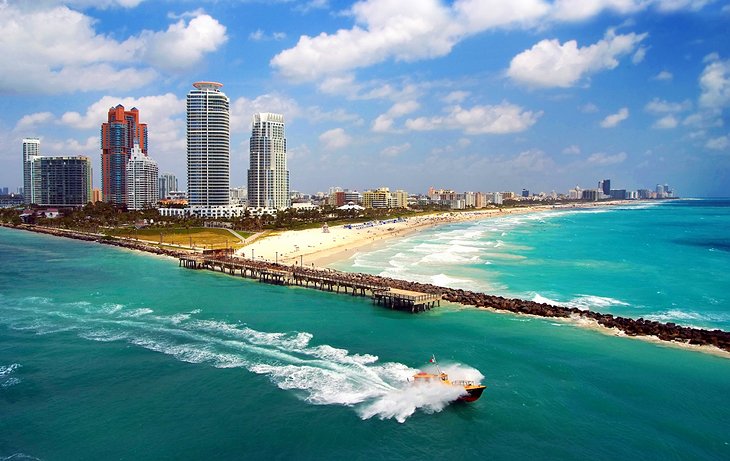
Allison Island is an exclusive island in Miami Beach offering beautiful luxury homes with stunning water views.
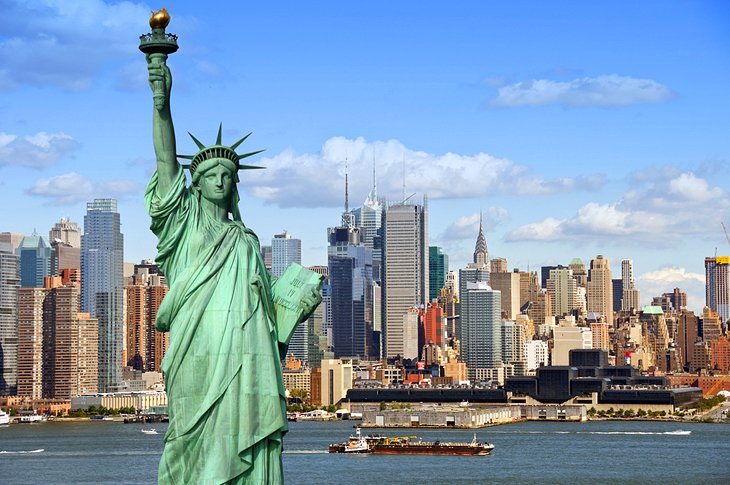
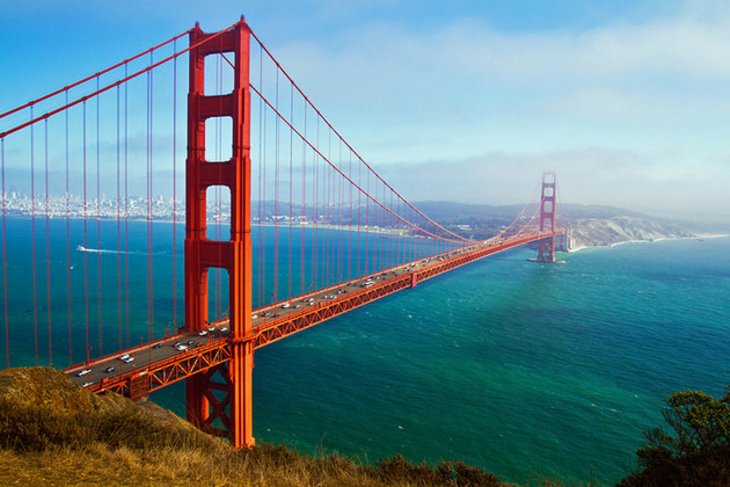
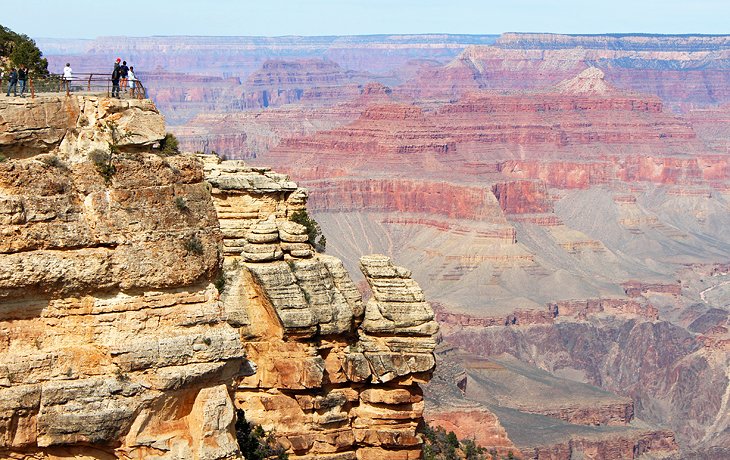
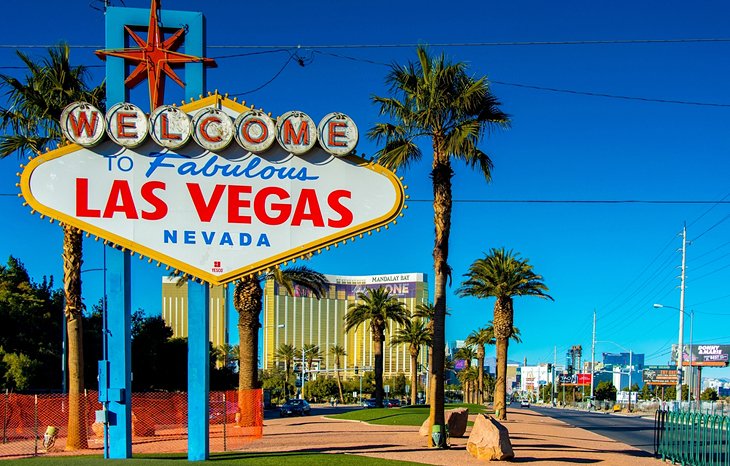
With so much to see in this vast country, it may be difficult to know where to start when it comes to planning a trip in the United States. World-class cities, some known for history and others known for fun or glamour, give visitors a broad spectrum of places to choose from. Along the Eastern Seaboard, New York and Washington, D.C. offer two uniquely different city experiences. Along the West Coast, San Francisco and Los Angeles are both hot spots for tourists. In the Southwest, Las Vegas brings the desert to life, and the Grand Canyon shows off one of nature’s greatest creations. Beyond the mainland are the beaches of Waikiki and the tropical Hawaiian Islands. These are just a few key locations, but wonderful destinations for any type of traveler can be found all over the country.
1 New York
New York
New York City is like no other city in the world, and one that must be experienced to be fully appreciated. For first-time visitors, walking the streets can be like walking through a movie set, with famous sites at every turn, from the Empire State Building, to Rockefeller Plaza, the Chrysler Building, Central Park, Times Square, 5th Avenue, Broadway, and of course, the Statue of Liberty. Sightsee by day, take in a Broadway show in the evening, work in time for shopping, and relax and reminisce over a fantastic meal. This is New York. With too much to see and do in a day or a weekend, this is a city worth visiting time and time again.
2 San Francisco
San Francisco
This charming and picturesque West Coast city is the perfect getaway destination for couples, singles, or families. Famous sites, charming streets, beautiful views, and outdoor dining are all part of what makes San Francisco such a great place to visit. Take a cruise on San Francisco Bay, tour Alcatraz, drive over the Golden Gate Bridge, wander around Fisherman’s Wharf, or hop on a street car to explore the city sites. Summer or fall is a wonderful time to visit, but the climate here is mild and any time of year is pleasant.
3 The Grand Canyon
The Grand Canyon
The Grand Canyon is one of those must-see, bucket-list destinations that have been attracting visitors for generations. Gazing out over the cliff walls to an endless horizon and an unfathomable depth below is one of the highlights of any trip in the United States. Visiting the Grand Canyon, in the American Southwest, can easily be done on a day trip from Las Vegas, Phoenix, and some smaller cities in the vicinity, or incorporated into a larger driving trip through Arizona and surrounding states. A train trip from Williams, AZ is another delightful way to experience the canyon. You can visit the south rim of the Grand Canyon, which is the most popular and most visited section, at any time of year. The road to the north rim is closed in winter due to snow.
4 Las Vegas
Las Vegas
This glittering city of lights in the desert holds a unique appeal, and one that has been attracting visitors for decades. Huge resort complexes, with all kinds of things to see and do at any time of year, have made this a destination that draws everyone, from want-to-be newlyweds who come here to say their vows, to families who just want to hang out around a pool. Entertainment options are endless, with some of the music industry’s top stars calling Las Vegas home and playing to packed audiences every night. When you’ve had your fill of the city, there is plenty to explore in the surrounding area, with the Grand Canyon, Death Valley National Park, and Hoover Dam all within easy day-tripping distance.
5 Waikiki
Waikiki
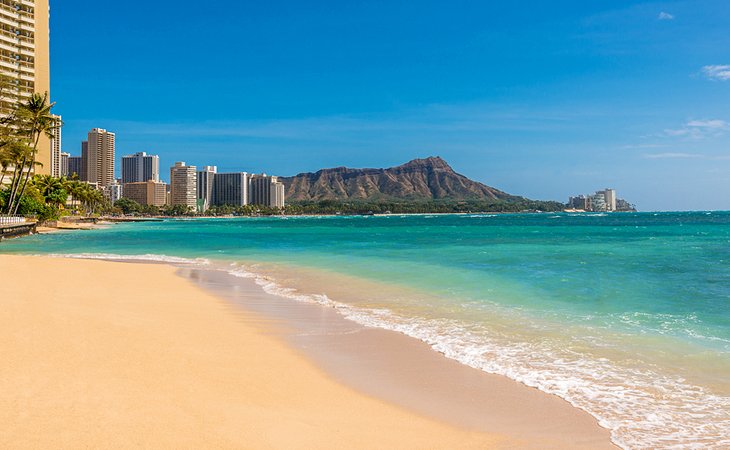
Waikiki is one of America’s top beaching destinations, with all the comforts of North America on a beautiful tropical island in the Pacific Ocean. Located on the Hawaiian island of Oahu, Waikiki is a suburb of Honolulu known for the beautiful golden sand beach that stretches along the oceanfront, backed by hotels and retail establishments. Rent a surfboard and test your skills in the waves, hit the shops when you’re done with the beach, and enjoy all kinds of dining options in the evening. This is the perfect destination for everyone, from families to couples or singles.
6 Washington, D.C.
Washington, D.C.
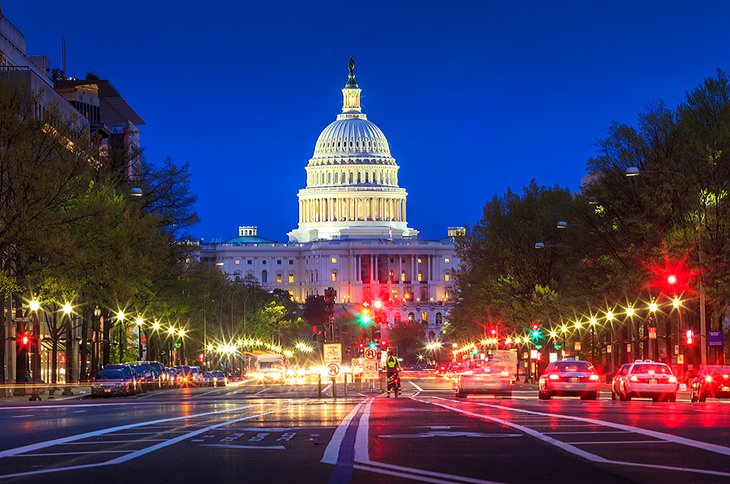
Washington, D.C. is the US capitol and home to some of the most famous sites and national treasures in America, from the White House and the Capitol Building to the Smithsonian museums. This city should be on everyone’s itinerary of the East Coast. In the spring, the Cherry Blossom Festival is a beautiful time to visit, when the trees are in full bloom. Fall is also a good time, when the hot summer temperatures have cooled off enough to make walking around outside very comfortable and the rush of the busy summer season has passed. In winter, the crowds are definitely smaller, and the city is stunning after a fresh snowfall.
7 Miami
Miami
The hot spot of southern Florida, Miami is more than just a great beaching destination. Wonderful beaches can be found all over Florida, but Miami offers an atmosphere like no other city in the state. The Cuban vibe along Calle Ocho in Little Havana, the Art Deco District in Miami Beach that calls to mind the 1930s era, the endless parade of sports cars cruising along Ocean Drive in the evenings, and the summertime beach scene of South Beach are just some of the unique aspects that make Miami one of the best cities in the US. For a unique experience take a day trip from Miami to Everglades National Park to see alligators, turtles, and an array of birds in this one-of-a-kind wetlands area.
8 Los Angeles
Los Angeles
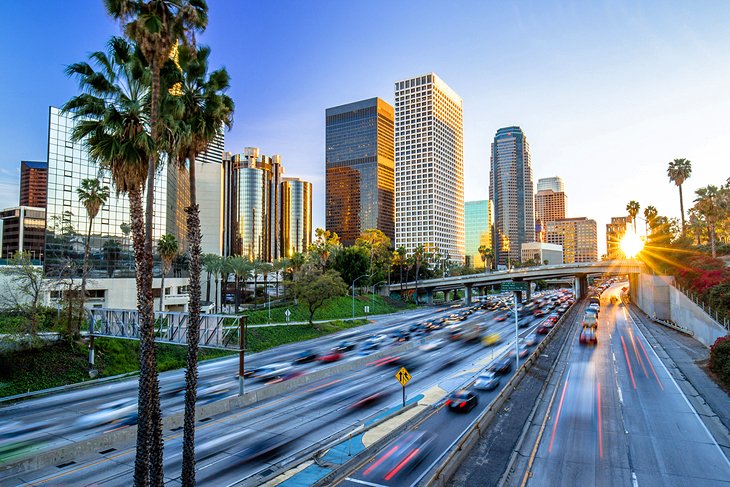
Southern California has a culture all of its own, and Los Angeles is the epicenter of this unique area. The city has always been associated with glamour, with the suburbs of Hollywood, Beverly Hills, and Bel Air dominating pop culture. There are all kinds of vacation possibilities in the Los Angeles area. Hollywood is a must for movie lovers, families come to experience nearby Disneyland, and shoppers will find plenty of possibilities. If you are looking for a laid-back beach scene, head to Venice Beach. For an interesting natural history experience be sure to visit the Page Museum and La Brea Tar Pits to see fossil remains of prehistoric animals that roamed this area 40,000 years ago.
9 Orlando/Kissimmee
Orlando/Kissimmee
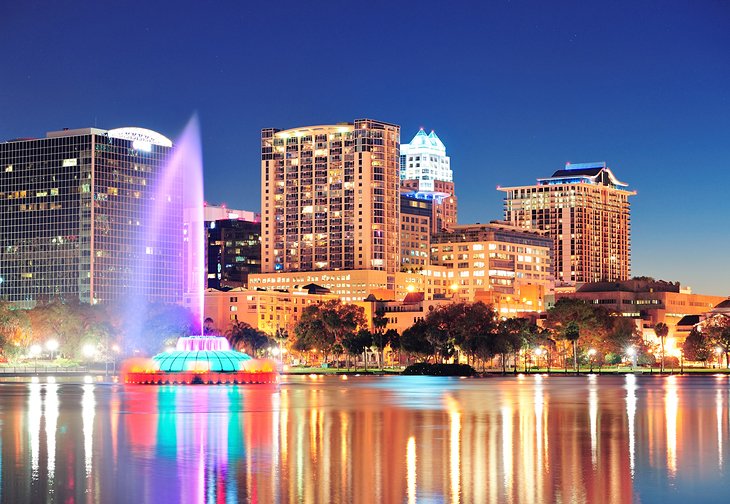
Orlando, which for most tourists is synonymous with Kissimmee, is all about the theme parks; Walt Disney World Resort, Universal Studios, and SeaWorld. Families flock here to these huge attractions, and kids love it, making school holidays the busiest time to visit. Christmas and summer holidays are particularly hectic. But adults will also enjoy the parks, as well as the shopping, dining, golfing, and sunshine. Orlando is primed for tourists, with all kinds of hotels and home rentals available in the area. The city is located inland but within easy day-tripping distance of both coasts and the popular Kennedy Space Center at Cape Canaveral on the Atlantic Coast.
10 New Orleans
New Orleans
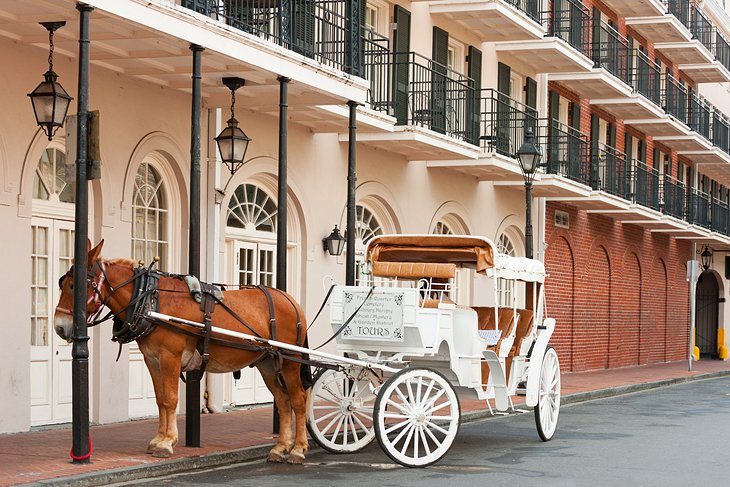
New Orleans is like no other southern city. The mix of cultures, with strong French and Spanish influences, is more reminiscent of the Caribbean than the United States. Cajun and Creole cuisine, jazz music, and the architecture of the French Quarter set this city apart and make it a perfect destination for a long weekend getaway. The highlight of New Orleans’ calendar year is Mardi Gras, when elaborate costumes and outrageous floats light up the streets, music can be heard everywhere, and the celebrations seem never-ending. However, if crowds are not your thing, you may want to avoid this time of year. The best time to visit is from December to May. June to November is hotter and prone to storms and hurricanes.
11 Chicago
Chicago
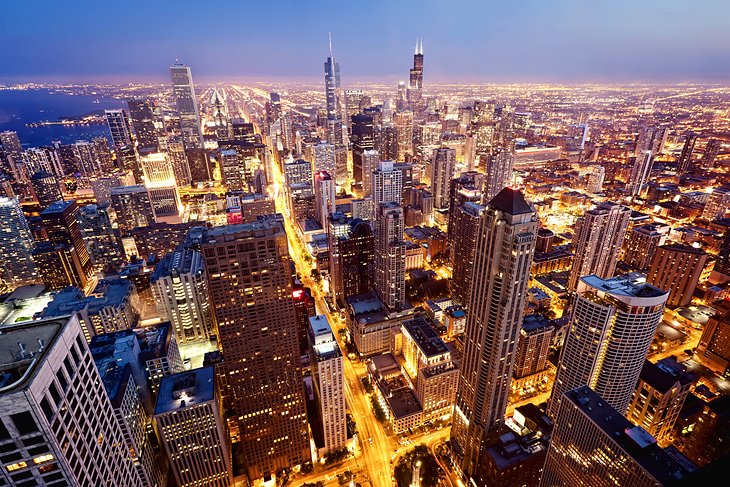
Set on the shores of Lake Michigan, Chicago is a great summer destination, with parks and a beautiful waterfront. But its arts and cultural attractions, as well as fantastic shopping, make it a popular year-round destination. The Magnificent Mile, along Michigan Avenue, is the city’s most famous area, with high-end luxury stores and galleries, along with famous buildings and outstanding architecture. Some of the tourist highlights include Millennium Park, the Art Institute of Chicago, Navy Pier, and the views from the Willis Tower SkyDeck.
12 Phoenix
Phoenix
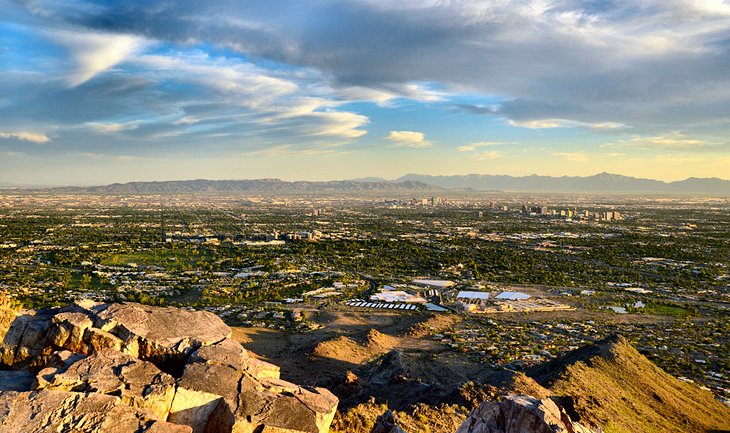
In the heart of the Southwestern US, Phoenix is a huge, sprawling city that attracts large numbers of northerners during the winter months, who come here to escape the cold weather. The city and surroundings, which include Scottsdale, Mesa, and several other townships, are known in particular for their golf resorts and spa retreats. Phoenix is a great destination for golfing, shopping, relaxing, and hanging out by a pool. Natural areas that showcase the desert landscape can be found within the city and nearby, providing easy access for light hiking or mountain biking. Summer temperatures can be extremely high, but October to April is very pleasant, especially if you want to spend time outdoors.
13Editor’s Pick Savannah
Savannah
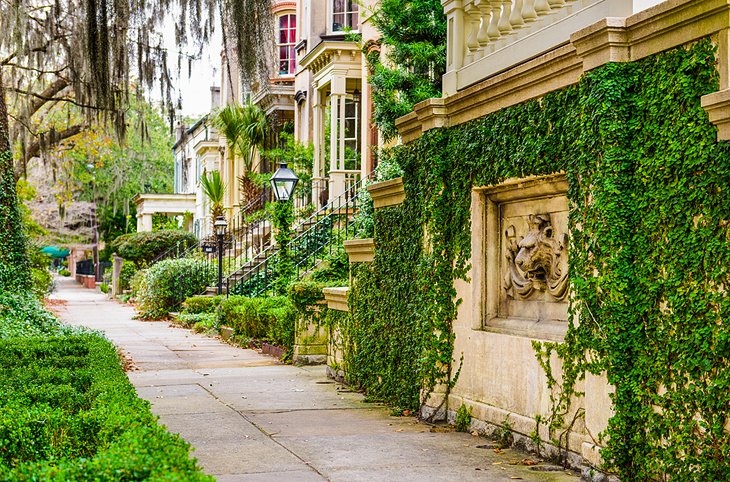
Savannah is the quintessential small southern city, with huge moss-covered trees in the beautiful parks, old southern mansions, and a lovely waterfront area with candy stores and other unique shops in historic buildings. The pace is slow, and the people are friendly. It’s easy to tell that Savannah is a city where people live and enjoy life, rather than an area simply developed for tourism. The city center is small enough that you can walk everywhere. This is a city you can see in a day, but the kind of place where you will want to linger. Nearby are some beautiful beaches at Tybee Island and Hilton Head Island, both of which can be reached by car in well under an hour.
14 Boston
Boston
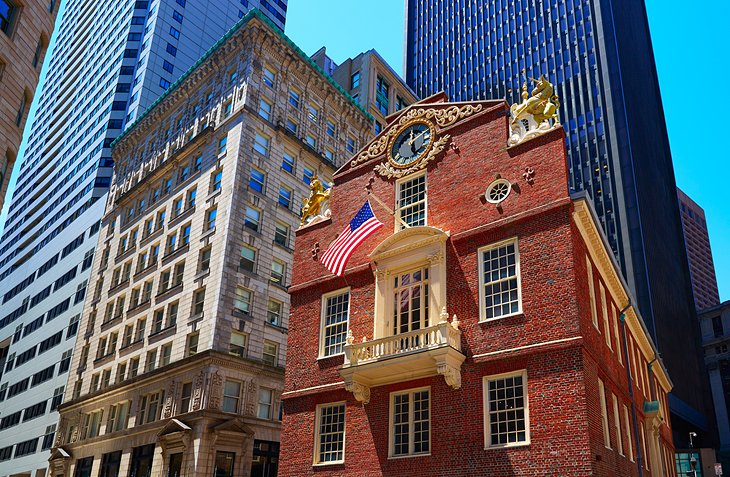
Located along the Eastern Seaboard, Boston is a city of history. The famous Freedom Trail leads past some of the city’s most famous and historic sites, making sightseeing and navigating through the city extremely easy. Picturesquely situated along the oceanfront, with ferries connecting the outer suburbs, Boston has a unique charm. Modern skyscrapers stand next to centuries-old buildings, and open public spaces, like Boston Common, give the city a quaint, small-town feel. The city also has a strong arts and cultural scene, and is home to the famous Boston Pops Orchestra.
15 Seattle
Seattle
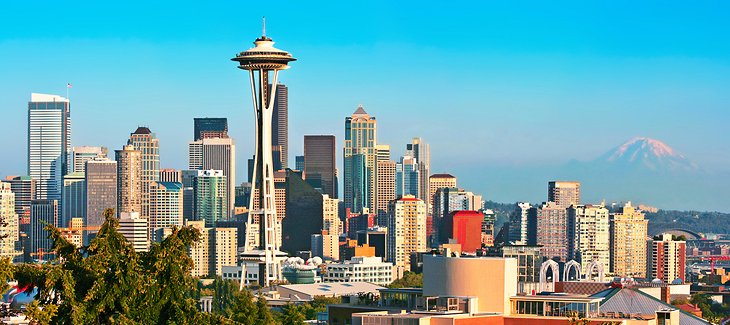
In the northwest corner of the US is the lovely coastal city of Seattle. Surrounded by water and snow-capped mountains, the city is reminiscent of Vancouver, Canada, with an active, outdoor oriented population and countless things to see and do. Key sights in the city include the impossible-to-miss Space Needle, the lively Pike Place Market, and the waterfront. Within easy day-tripping distance of the city are beautiful beaches, the Hoh Rain Forest, and mountain landscapes, all waiting to be explored. Although the winter months see more rain than summer, the city has a mild climate and is a nice place to visit at any time of year.
The Amazon Rainforest crosses nine nations and covers around 40% of the South American continent.
Given its vast size, choosing the best country to visit the Amazon Rainforest can be an important decision for your experience.
The majority of this impressive forest is found within Brazil and Peru, but significant amounts are also found in Ecuador, Colombia and Bolivia.
When planning your Amazon Rainforest experience, the most important consideration is your choice of lodge, cruise and guides. It’s the level of service, comfort and your guide’s knowledge and skill that will create the best experience.
With this in mind, there are some very good lodges and cruises that employ the region’s best guides in Ecuador, Peru and Brazil. Although any of these areas offers a fantastic experience, there are some differences between regions.
Let’s have a look at the main countries to visit the Amazon Rainforest.
The Amazon Rainforest of Peru
Peru offers the most claylicks of anywhere in South America. These are areas where different birds and mammals visit to obtain different salts and medicines, which offer almost guaranteed spectacles of iconic Amazon Rainforest wildlife.
The animals that often visit the claylicks are large colorful macaws, tapir, different monkeys, different parrots, capybara, and even large cats that wait for prey.
The best area to see hundreds colorful macaws and other wildlife at the claylicks is the area of Amazon Rainforest from Puerto Maldonado. You can read more about this incredible area in our Puerto Maldonado travel guide.
From Puerto Maldonado, a fantastic protected area to visit is called the Tambopata National Reserve.
The reserve is home to an incredible level of animals and plants. As an excellent example of the wildlife, visitors to the Tambopata Research Center enjoy a 20% chance of seeing wild jaguar. You will also have a higher than usual chance of spotting harpy eagles at the Refugio Amazonas Lodge and a high chance of seeing giant river otters at the community-owned Posada Amazonas Lodge.
The Tambopata Research Center
The Tambopata Research Center is one of the deepest tourist lodges in the Amazon Rainforest.
Nestled near the middle of the incredible Tambopata National Reserve, the wildlife around the lodge is at carrying capacity for the environment, which means you will have incredible wildlife experiences.
See several different monkeys, including the larger species of howler monkeys (often seen relaxing near the lodge) and spider monkeys. The presence of spider monkeys is one of the tell tale signs of a healthy forest. Not only this, but visitors to the lodge have a 20% chance of spotting wild jaguar near the river.
The lodge started simply as a research center but expanded to provide a way for tourists to enjoy this incredible region. The lodge was positioned near one of the largest macaw claylicks in Amazonia. As a main attraction, you can visit the claylicks to see hundreds of colorful macaws with their smaller parrot cousins visiting the clay.
You will also enjoy guided trail walks to find monkeys, peccary, tall emergent trees, different reptiles, amphibians and many other plants and animals.
The lodge offers a choice of suite options providing ensuite bathrooms, comfortable beds and a connection to the rainforest. Enjoy delicious meals in the dining room and relax in your suite or common areas when not exploring Amazonia.
Puerto Maldonado, Amazon Rainforest, Peru, South America
Price per person from $981
The Tambopata Research Center is a deep Amazon lodge located near one of the largest known clay lick More info
The Refugio Amazonas Lodge
The Refugio Amazonas Lodge is located in the buffer zone of the Tambopata National Reserve.
The Refugio Amazonas Lodge is a better choice if you only have 3-days available to explore Amazonia than the Tambopata Research Center above.
This is because the Refugio Amazonas is located a little closer to the base town of Puerto Maldonado. In fact, enroute to the Tambopata Research Center mentioned above you would spend one night at the Refugio Amazonas.
Enjoy a choice of suite options depending on comfort level. Each suite offers a connection to the rainforest and ensuite bathroom.
From the lodge, you will head out to explore the Tambopata Amazon on guided trail walks. You will also explore a large Amazon Rainforest lake to find a range of lake-living animals and plants. On the forest trails, your guide will help you spot different monkeys, interesting birds, tall emergent trees and various plants and flowers.
Some favorite activities at Refugio Amazonas include climbing the canopy tower for some fantastic rainforest views and visiting the large macaw claylick.
You will then return to the lodge to enjoy delicious meals and the comfortable relaxation areas before your next excursion.
Puerto Maldonado, Amazon Rainforest, Peru, South America
Price per person from $602
The Refugio Amazonas Lodge & Spa is an Amazon Rainforest lodge located in the buffer zone of Ta
Iquitos
The other main gateway to Peru’s Amazon is the northern Amazon Rainforest city of Iquitos. This is a fantastic place for an Amazon cruise. Iquitos offers more choices of cruises with luxury cruises, such as the Delfin II and Aria Amazon.
From Iquitos, you can voyage to the incredible protected area of the Pacaya Samiria National Reserve. The reserve is home to fantastic wildlife, including several different monkeys, colorful parrots and toucans, two different types of sloth, giant rainforest trees and attractive flowers.
The scenery of the Pacaya Samiria National Reserve is spectacular. Known as the Forest of Mirrors, the sky and trees are perfectly reflected in the still nutrient-rich waters. This offers some fantastic photography opportunities complemented by bright blue sky.
The Tamshiyacu Tahuayo Reserve
Iquitos is also a fantastic place for a deep rainforest tour. Located in connected rainforest near the Pacaya Samiria National Reserve, you can find the smaller Tamshiyacu Tahuayo Reserve.
Containing a larger amount of accessible higher ground forest, you can enjoy more hikes and walks in the Tamshiyacu Tahuayo region.
The reserve contains a high diversity of different monkeys, including capuchins, pygmy marmosets, howlery monkeys, squirrel monkeys, titi monkeys and sakis. Within the reserve, birders and researchers have also found over 600 different birds, including cotingas, tanagers, macaw parrots, hoatzins and many more.
The Tahuayo Lodge
From the Tahuayo Lodge, explore the Tamshiyacu Tahuayo Reserve for fantastic wildlife watching opportunities. You will be assigned a private guide and have a custom itinerary to focus on your interests.
On tours of 6-days or more, you will also visit the Tahuayo River Amazon Research Center. Known as the ARC, the lodge offers a comfortable stay and allows an even deeper experience of the Amazon Rainforest.
Enjoy the 1,000 acre primate research grid to see several different monkeys and other animals and plants. As the grid is frequently used by researchers and tourists alike, you are more likely to observe animals displaying normal behaviors as animals are now familiar with visitors.
You can explore the reserve in variety of ways, such as traditional canoeing, walks, deeper forest hikes, and on motorised boats.
There are many different things to do at the Tahuayo Lodge. A favorite area is a visit to Frog Valley where conservationists have set up artificial homes for poison dart frogs. This has attracted a few varieties of these colorful frogs, which you are sure to see on your adventure.
You are assigned a private guide and custom itinerary as standard to explore the wildlife filled Tahuayo Reserve. More info
The Amazon Rainforest of Ecuador
Ecuador’s Amazon also offers some fantastic experiences of the rainforest. The gateway to the Ecuadorian Amazon is called El Coca. From here, you enjoy enjoy Amazon River cruises and different rainforest lodges.
The main protected area in Ecuador’s Amazon Rainforest is the Yasuni National Park. Offering an incredible experience of the Amazon Rainforest, the Yasuni rainforest includes a fantastic assemblage of iconic animals and plants.
If you’re interested in a cruise, there are two different options to consider for Ecuador’s Amazon Rainforest. Taking you from El Coca deep into Yasuni National Park for guided expeditions, you have a choice of the luxury class Anakonda Cruise or its sister vessel the very comfortable Manatee Amazon Cruise.
There are some fantastic rainforest lodges located inside and on the edge of Yasuni. These include the Sacha Lodge, Napo Wildlife Center and La Selva Lodge. All of these provide a fantastic experience, but there are some differences we will mention below.
The Sacha Lodge
The Sacha Lodge offers a fantastic experience of Ecuador’s Amazon Rainforest. Nestled within a private rainforest reserve right at the edge of the incredible Yasuni National Park, the lodge offers comfortable accommodation and guided rainforest tours.
One of the most popular features of the Sacha Lodge is the canopy walkway that stretches an impressive 940 feet (275 meters) through the rainforest and stands 94 feet (30 meters) above the forest floor.
Not only providing an excellent view to observe the rainforest canopy, the walkway is a great place for birdwatching. So far, 587 different birds have been spotted around the Sacha Lodge. This is about 37% of Ecuador’s entire avifauna.
The Sacha Lodge itself is nestled on the beautiful Pilchicocha Lake. Enjoy guided expeditions on the lake itself to find lake-living animals. You can also spot different monkeys that visit the lake edges. You will also enjoy guided walks along the many trails to find fascinating animals and plants, including monkeys, colorful birds, reptiles, emergent trees, orchids and more.
The Sacha Lodge itself offers 26 rooms in total, which include single, double and triple accommodation (upon request). Each accommodation option includes a private bathroom.
Located in a 5000 acre private ecological reserve, Sacha Lodge provides a safe and comfortable base More info
The Napo Wildlife Center
The community-owned Napo Wildlife Center is positioned inside the incredible Yasuni National Park for some incredible wildlife experiences.
Providing a luxury stay in the rainforest, the Napo Wildlife Center is owned and managed by the Kichwa Añangu community. You will also be guided by community members, which is a fantastic way to learn about Amazonia from those who know it best.
The lodge offers a main hall with observation tower for viewing the fantastic rainforest canopy, a small library, fully stocked bar, and a restaurant where you will enjoy your meals. The restaurant provides some incredible views of the lake and rainforest. Guests can even spot colorful birds and other animals from the lodge itself.
Your very comfortable accommodation then features ceiling fans, private bathrooms with hot water, a private balcony and 24/7 electricity provided by solar panels.
Another favorite attraction on Napo Wildlife Center tours is a visit to the Yasuni clay lick where you can often see hungreds of colorful parakeets gathered at the clay. The birds visit claylicks in this way to obtain salts and medicines that help detoxify foods in their diet.
Napo Wildlife Center is nestled in the rainforest at the heart of the world famous Yasuni National P
La Selva Lodge
One of the most luxurious rainforest lodges in Ecuador, from La Selva Lodge & Spa enjoy expertly guided tours into surrounding rainforest. Your guide will be helping you find the many different colorful birds, monkeys, reptiles and interesting plants that inhabit the area.
The lodge offers different ways to explore the Amazon Rainforest. A main attraction is climbing the tall canopy tower for rainforest views and watching birds flying over the trees. You can then explore Amazonia on guided forest walks and canoeing. You will also visit the Yasuni claylick to see the colorful parakeets gathered at the clay.
The trails have been carefully planned to show off the best bits of Amazonia. Enjoy walking past giant rainforest trees, such as kapoks and strangler figs. There are also trails for fantastic lake views.
Your accommodation then features luxury linen, king beds, private bathrooms, private balconies, and rainforest showers. Between excursions, you will enjoy delicious meals, relax in your suite or enjoy the spa. Choose from a range of massages and relaxation treatments to fully enjoy this incredible environment. The lodge is dedicated to responsible tourism and is Rainforest Alliance verified.
La Selva Lodge is an award winning Amazon Rainforest lodge in the Ecuadorian Jungle and is regarded More info
Book now
The Amazon Rainforest of Brazil
Brazil contains the largest section of Amazon Rainforest and offers some fantastic Amazon experiences.
Given its vast size, there are a few different areas to enter the rainforest. Our recommendations are Manaus, Tefe and Alta Floresta. There are some fantastic tours from each of these areas.
For an Amazon River cruise, our recommendation is to visit Manaus. Manaus is the largest city in the Amazon Rainforest and a main gateway for the Brazilian Amazon. This is also a major port of the Amazon River.
The city of Manaus is positioned right at the meeting point of the Rio Negro and Amazon River. The Rio Negro is the largest tributary of the Amazon River and one of the world’s largest rivers in its own right.
The Meeting of the Water is also a main attraction for a short trip from the city. This is where the dark waters of the Rio Negro meet the lighter water of the Amazon. Due to differences in speed and density, the rivers flow next to each for many miles without mixing and the dramatic difference in color creates a visual spectacle.
Although there are other attractions of Manaus, such as the incredible Amazon Theatre and botanic gardens, the best thing to do from Manaus is to enjoy a tour of the Amazon Rainforest.
Because Manaus is a large city, to access the most untouched forest we recommend an Amazon River cruise to take you deeper into Amazonia. Expedition cruises don’t simply confine you to a vessel, but offer guided exploration aboard motorized skiffs and forest walks.
One of the favorites is the Tucano Expedition Cruise.
The Tucano Expedition Cruise
Styled as a 19th Century steamship, the Tucano Amazon Cruise begins from Manaus in northern Brazil. From here, we will explore the rainforest of the Rio Negro to find fascinating animals and plants.
Because of the Tucano’s design, we can explore areas out of reach for other cruises to get deeper into Amazonia.
The Tucano Cruise offers a choice of either 7-day or 5-day expeditions where we will visit different areas of rainforest.
Enjoy guided expeditions on forest walks and aboard motorized skiffs to find some fantastic forest wildlife. See different monkeys, rainforest birds, tall emergent trees and Amazonian flowers.
When not on rainforest expeditions, enjoy fresh meals aboard the cruise and relax on the observation deck. Of a night, this is a great place to observe the Milky Way in stunning detail.
We will explore some of the most untouched areas of this vast forest as we travel down the Rio Negro.
Alta Floresta
Alta Floresta sits in Brazil’s southern Amazon and offers a fantastic experience of the Rainforest. This is because the region sits at the meeting of Amazonia and the Pantanal, which is another of South America’s wildlife-rich ecosystems. Because of this unique position, you can see animals and plants found nowhere else on Earth.
This is also the most well studied area of southern Brazilian rainforest. You can find an impressive diversity of different birds, including Amazon icons, as well as many different monkeys, fascinating reptiles, delicate amphibians, tall rainforest trees and attractive flowers.
The recommended rainforest lodge and tour from Alta Floresta is called the Cristalino Lodge.
The Cristalino Lodge
Offering a very comfortable experience of the Amazon Rainforest, the Cristalino Lodge is nestled in the rainforest of the Cristalino Reserve. The reserve backs onto a giant protected area mosaic. The wildlife is free to cross between different areas, which means a high chance of incredible wildlife experiences.
In addition to the comfortable accommodation of the Cristalino Lodge, you will enjoy expertly guided tours of the rainforest. Spot many different monkeys, toucans, parrots and interesting plants with the help of your naturalist guide.
There are many different trails around the lodge, which have been carefully placed to show off the best bits of the rainforest. Walk past tall emergent trees and visit the best areas for wildlife viewing.
In addition to walking the trails, this is also a great place for guiding canoe exploration to find animals and plants of the different waterways.
One of the favorite features of the Cristalino Lodge is the canopy tower. There are two giant canopy towers you can visit, which rank as some of the tallest towers in the Amazon to provide incredible views over the rainforest canopy. This is also a favorite place to spot the many different birds.
At the lodge itself, you can rest in your choice of suite or, when not on expeditions, spend time in the different relaxation areas. The lodge offers a floating deck with rocking chairs, low tables, loungers, hammocks and parasols. This is a great place to enjoy a drink while absorbing the sights and sounds of Amazonia.
Renowned as the historic and cultural jewel of Japan, the enchanting city of Kyoto captivates visitors with its shrine-dotted streets and temple-laden paths. But should you have a thirst for a change of scenery, there are plenty of options. Japan’s ancient capital city sits in the heart of the Kansai region, home to some of the nation’s top destinations boasting magnificent castles, quaint shopping streets, lush hiking trails, and charming hot spring towns.
The following day trips from Kyoto can be reached within an hour or two by train. If you make several day trips by train within a five-day period, you may be able to save some cash by using the Kansai Wide Area Pass.
Secret Marvels: Nara Park, Japan
Peaceful parks and gardens in Nara
Famed for its inquisitive deer that roam the sprawling grounds of Nara Park (and have even been designated as a national treasure), the tranquil Nara City is home to some of Japan’s most historical sites, such as the massive Todaiji temple and the lantern-lined Kasuga Shrine. While making your way to leafy Nara Park, stroll through exquisite Japanese gardens at Yoshiki-en. At nearby Isui-en, see a prime example of shakkei – the Japanese concept of borrowed scenery – with Mt. Wakakusa rising up in the distance as the garden’s backdrop.
Getting there: From Kyoto Station, take a 55-minute rapid train on the JR Nara line to Nara Station.
Eat and shop till you drop in Osaka
Known in Japan as ‘the nation’s kitchen’, Osaka’s motto ‘kuidaore’ literally means ‘to eat oneself bankrupt’. Chow down on okonomiyaki (savoury pancakes) and takoyaki (fried octopus balls) along the Dotombori River. Try kushikatsu (fried meat and vegetable morsels on sticks) near the Tsutenkaku Tower in the kitschy, neon-lit neighbourhood of Shinsekai. Wind through the alleys of Ura-Namba to Torame Yokacho (Tiger Alley) where you can try myriad favourite dishes under one roof. After wandering the expansive grounds of the iconic Osaka Castle, browse boutique and vintage clothing shops in the hip hoods of Amerika-Mura, Horie, and Nakazakicho. If you want more bang for your buck, head to the Rinku Town outlets by the airport to grab a bargain.
Getting there: From Kyoto Station, take a 30-minute JR special rapid train bound for Himeji to Osaka Station. Bullet trains also run between Kyoto and Osaka.
Consider extending your day trip for a visit to Himeji Castle
Harbourside and mountaintop excursions in Kobe
Kobe has long been a cosmopolitan hotspot with an infusion of international influences. At the heart of Kobe lie the popular retail districts of Motomachi and Sannomiya. Wander uphill from Sannomiya Station to an area of tree-lined streets with a collection of old-style merchant houses, quaint cafes, and one-of-a-kind shops. The city boasts a well-established Chinatown, Nankinmachi, and nature is close by with Mt. Rokko – a popular hiking spot (featuring a cable car for those less inclined to hike) – towering over the narrow streets. If you happen to have extra time on your hands, consider a trip to the city of Himeji to visit the magnificent World Heritage Site of Himeji Castle.
Getting there: From Kyoto Station, take a JR Limited Express Super Hakuto train for 50 minutes to Sannomiya Station. This service only runs a few times a day, so check the Hyperdia train website in advance. To get to the Kobe Port area, take a short ride on the JR Kobe line to Kobe Station.
The Japanese floating shrine of Itsukushima
Get a history lesson in Hiroshima
The Kyoto to Hiroshima leg is a well-trodden path for visitors who want to see the Peace Memorial Park and museum dedicated to the history of the Hiroshima and Nagasaki bombings. A good pick-me-up after a tour through the museum is a trip over to the gorgeous little island of Miyajima, which is home to Itsukushima – a bright orange shrine rising out of the ocean. This is a celebrated scenic spot, considered one of the ‘three great views of Japan’. There, you can wander through streets lined with machiya (old wooden townhouses), do plenty of souvenir shopping, eat grilled Hiroshima oysters on the street, and take a cable car up to the top of Mt. Misen for breathtaking views of the Seto Inland Sea.
Getting there: From Kyoto Station, take the 100-minute Shinkansen Nozomi bullet train to Hiroshima. To reach the ferry port from Hiroshima Station, take the JR Sanyo Line for 25 minutes to Miyajimaguchi Station.
Kayak or bike around Japan’s largest freshwater lake
Lake Biwa in neighbouring Shiga Prefecture is the perfect spot for a nature break with kayaking, stand-up paddle boarding, cycling, and lake cruises. The Biwaichi bike trails and road networks that circle Biwako make cycling an easy choice, and rental shops at Maibara Station are a convenient place to pick up a set of wheels. Ride south from Maibara to the charming little town of Hikone where you can climb up to Hikone Castle for spectacular views out over Lake Biwa. Or ride north to Nagahama, a town perched on the northeast coast of the lake with highlights including the reconstructed Nagahama Castle on the waterfront, the brewery Nagahama Roman Beer serving craft brews and omi-gyu beef sushi from the Lake Biwa region, and the impeccably manicured garden of Keiunkan.
Getting there: From Kyoto Station, take a one-hour rapid train or 19-minute bullet train on the JR line to Maibara Station.
Sample the onsen in picturesque Kinosaki
Soak in Kinosaki’s abundant hot springs
An atmospheric hot-spring town with seven public bathhouses and a whole host of private ones, Kinosaki is the ultimate relaxation getaway. The public baths are esteemed for their remedial properties and promises of good fortune. If you arrive in the picturesque canal town in the winter, enjoy a feast of snow crab freshly caught from the Sea of Japan. Many of the ryokans (traditional Japanese inns) serve delectable kaiseki (Japanese haute cuisine) multi-course crab meals, which are tasty works of art.
Getting there: From Kyoto Station, take the Limited Express Kinosaki train to Kinosaki Onsen Station. It takes around 2.5 hours. This train only runs a few times a day, so be sure to check the Hyperdia train website before travel.
A boat on the Kurashiki River
Wander Kurashiki’s revered historic canal district
Situated roughly 230km from Kyoto in Okayama Prefecture lies the historic canal town of Kurashiki, known for the white and grey walls of its residences and the willow trees dotted along the banks of the Kurashiki River. During the Edo period, this river formed key trade routes for Japanese merchants. In the 1600s the town’s light-coloured buildings were rice stores and granaries that have now been restored as cafes, galleries, craft and pottery workshops, denim boutiques, and accommodation. Admire the historically preserved town centre of Bikan on a traditional boat tour of Kurashiki Canal, and then tuck into a plate of barazushi, a regional speciality of sticky rice topped with over a dozen ingredients, such as seafood from the Seto Inland Sea or vegetables like snow peas, carrots, and lotus root.
With heat records breaking worldwide in the midst of the climate crisis, it’s harder than ever to stay cool on the road, especially in places where air conditioning is sparse and buildings aren’t designed for frequent and prolonged hot weather. But beyond loose clothing in natural fibres and drinking a lot, how else can you keep cool while still enjoying your trip?
Ice cream also helps
Travel early in the day, and siesta, siesta, siesta
No matter if you’re flying, taking the train, hopping on a bus, or on a road trip: travel early. It’s a bit tricky if you’re jetlagged and already needing to reset your body clock, especially if you’ve headed east, but the mornings are the coolest times to travel, and any disruption from the hot weather will be minimised.
You’ll also have more space in the schedule to catch up with any delays, rather than getting stuck somewhere you don’t want to be. (If that happens, though, try to make the most of it and explore wherever you end up.) And think about breaking the day in two with a proper siesta, where you head back to your (hopefully nice and cool) hotel room, have a snooze, a shower, and then make the most of the rest of your day. It’s important that your body can cool off for at least a couple of hours a day.
A nap can’t hurt either
Bring a fan, a battery pack… and a mini spritz bottle
My number one tip for anyone, especially on planes these days, is to buy a USB fan that plugs into your external battery pack. My favourite is the Arctic Breeze Mobile — it’s got a bendy neck and the blades are rigid for a decent balance of noise and air movement. It’s also a lifesaver in stuffy hotel rooms.
In summertime I also bring a mini-spritz bottle to fill with water. It’s much more economical and environmental than those spray cans of Evian water. Spray your face and let the fan dry it to really cool off.
And if you’re taking a road trip? Have a serious think about whether you can pack a small desk fan from home, or even invest in one if you happen to be on the ground overseas for a while. Hotels usually won’t have enough to go round, and if you can just pop it in the back of the car as you motor from place to place it’s a godsend at night.
Accessories can make the world of difference
Pick a plane with air vents
Look, I started the #WeWantAirVents movement on Twitter, and I know how hard it is to find them. As a rule, the older and smaller a plane is, the more likely it is to still have one of those overhead nozzles that will blow cool air onto your head.
So, if you have a choice in the summer, pick a smaller plane like an Airbus A220 or A320, or a Boeing 737, or a comfortable regional jet like an Embraer E170, E175, E190 or E195. Planes aren’t guaranteed, and there will doubtless be exceptions, but I certainly like to be able to have cool air blowing on me when it’s hot.
Pack a handkerchief… and a shirt
One of the things I love most about Japan is that everyone carries their own handkerchief. This is great for mopping your brow rather than bothering with tissues that will get stuck to your forehead and disintegrate. It can be used to dry your hands in a public loo as well, and is also handy if it gets really hot. Either just wet it and drape it over your head and neck, or even wet it and pop it into the freezer to really get nice and cool.
An extra shirt will always come in handy Neil Setchfield
If you can, stick a spare shirt into your bag for the day. There’s nothing quite so pleasant when you’re feeling sticky and gross as being able to swap out the shirt you’re wearing closest to your skin for a dry one.
Always bring a bottle… of water
We all know that drinking alcohol in a heatwave is a bad idea and drinking water is a good idea. But, especially when going through security, you can’t bring a big filled bottle with you, and it’s crazy expensive on the plane. If I know it’s going to be hot, I’ll bring a big empty bottle in my carry on and then fill it post-security.
Don’t expect free water, or for bottles to be widely available
I always find it weird in Germany that water is sometimes not served free with meals or drinks. I recall a very hot summer’s day in Hamburg when visiting a beer bar with some friends, and I absolutely needed a large glass of water. Nope, it was buy the five euro half-litre bottle or nothing.
You may need to plan ahead to keep your water levels up
And even living in France it’s always weird to me how few shops here have a fridge with bottles of water compared with other countries. So, be prepared: fill your bottle when you leave in the morning and whenever you can.
Pick a hotel with AC, but try and ensure it has an actual unit
Ah, the joys of trying to figure out whether a European hotel is lying when it says it has air conditioning. Those useless tiny vents in the wall that blow stuffy air out? Not air conditioning, although they’re legally allowed to be called that. And there’s usually no useful way to open a window enough to help either.
The trick: check out room pictures and online reviews to see if there’s an actual unit visible. You’ll need to make sure you’re looking at the right room category, but there’s a point at which you’ll probably be happy to be able to just wallow in cool air for a bit.
Bonus tip: choose a low floor room on the north or east side of the hotel (in the northern hemisphere; south or east in the southern) so that you get morning sun or none at all. And draw those blackout blinds before you leave for the day!
Showers are a great way to cool down in the heat
Shower multiple times a day, including at the airport
You know that feeling when you shower in lukewarm or cool water, and you feel the water warming up as it sluices down your body? That’s a really good way to cool off.
An increasing number of airports now have showers even without getting into a lounge, but honestly, in summer time having the chance to knock back a couple of litres of water and sit down in a nice cool spot can be worth the lounge entry price. Don’t feel the need to dry your hair completely, either: it’s a good way to wick heat away from the body, so consider wetting it during the day as well to deal with the heat.
Good luck — and stay cool!
America’s coolest motels
Liza Weisstuch
Lonely Planet Writer
share
Over the past few years, there’s been a bit of a motel renaissance. Creative hoteliers are taking rundown vintage motor lodges and sprucing them up with modern amenities without sacrificing any of the nostalgic charm. Here are a few of America’s coolest motels where you can rest your head, retro-style.
The courtyard bar at Austin Motel
Austin Motel: Austin, Texas
Joanne’s Fine Foods, a classic 1950s-style diner, is the Austin Motel’s restaurant, and its throwback vibe captures the overall vibe of the super-hip property. Both fit perfectly into their setting, Austin’s super-hip South Congress neighborhood.
Opened in 1938, the motel underwent a makeover in 2017 and now stands as a tribute to mid-century modern design and style. Each room features retro-esque radios and lamps, plus orange and yellow vinyl accents that complement the ultra-colorful, vibrant wallpaper. But the biggest draw is the kidney-shaped pool, a gathering spot for locals in the warm weather.
Beck’s is located in one of San Francisco’s most vibrant neighborhoods of Beck’s
Beck’s Motor Lodge: San Francisco, California
Rooms at this Castro district motel are no longer $5 per night, the rate charged when it opened in 1958, but parking is free, which is hard to come by in San Francisco and a big boon for road-trippers passing through. Beck’s Motor Lodge is perhaps the most historic on our list, what with its role in the gay rights scene in the 1960s.
A 2017 makeover added sunburst décor, analog clocks, simple throwback furniture, and other details that enhance mid-century modern vibe. Contemporary amenities like flat-screen televisions were added, too. A few of the 58 rooms have access to the rooftop sundeck, a perfect perch for a timeless San Francisco activity: watching the fog roll by.
Vagabond’s retro-chic design gives off an Atomic Era feel
Vagabond Hotel: Miami, Florida
Once you know that Sammy Davis Jr and Frank Sinatra hung out here back in the day, you’ll understand how important it was that this Miami haunt’s snazzy 1950s-era vibe was preserved during a 2014 refurbishment. The works brought the hotel back from the brink of disrepair.
The Vagabond Hotel’s revival is in sync with the design-centric MiMo Historic District in which it’s located. The sleek rooms feature Atomic Era-style geometric stenciling on the walls, groovy vintage lighting fixtures and custom-made furniture with pops of Miami-appropriate pink, turquoise, and muted yellow hues.
A revamped Travelodge, Modern Hotel and Bar provides updated design and comfort with a retro vibe
Modern Hotel & Bar: Boise, Idaho
Because of the growing number of hipster business that have sprung up over the past few years – breweries, farm-to-table restaurants, artist galleries – Boise has developed a reputation as ‘Little Portland.’ As such, the Modern Hotel & Bar, an expansive low-rise building located about a ten-minute walk from the vibrant downtown, fits right in.
It opened in 2007 in an overhauled Travelodge, an early lackluster motel franchise with all the hallmarks of a classic roadside accommodation, such as rooms that open onto an outdoor corridor. The rooms are decorated with mid-century modern furniture and retro-chic lighting. The stylish, laid-back restaurant/bar features creative dishes and classic cocktails. The most buzzed-about thing, however, is the turntable and collection of ’45s in the lobby bathroom. When the hotel opened, locals lined up to play DJ.
The Big Texan is the right side of kitschy while maintaining a classic Route 66 vibe
Big Texan: Amarillo, Texas
The towering cowboy figure flanking the roadside sign for the Big Texan Steak Ranch in Amarillo is a dead giveaway of the adjacent Big Texas Motel’s kitschy throwback vibe. Not convinced? Just take a look at the motel’s façade, which looks like the set of a Western movie, and the Texas-shaped pool.
Opened in 1960 and located on Route 66, just a few minutes from Rick Husband International Airport, the property’s rooms feature campy touches such as swinging saloon doors, old-timey wooden furniture and animal pelts, all of which add up to a theatrical Old West atmosphere.
LoBu’s Jupiter Hotel fuses the log-cabin style of the Pacific Northwest with a cool, modern sensibility
Jupiter Hotel: Portland, Oregon
Located in Portland’s fast-evolving Central Eastside neighborhood (known locally as Lower Burnside, or LoBu), Jupiter Hotel takes the log cabin design that’s inextricably linked to the Pacific Northwest’s woodsy landscape and gives it a jolt of cool, modern energy. Set in a low-slung 1964 motor lodge, which stretches out across several zig-zagging buildings, rooms open to an outdoor corridor.
But the old-school look of the exterior belies the sleek rooms, which balance subdued minimalism with pop art vibrancy. The creative vibe that’s so characteristic of Portland extends beyond the rooms. The lobby doubles as a gallery for local artists, and the Doug Fir Lounge – a log-cabin-themed restaurant/bar and club next to the motel – features local beer, nightly concerts and a lively patio. If the creativity moves you, doodle your masterpiece on your room’s giant chalkboard before snapping it and tagging it #jupiterhotel.
The retro neon sign for the Thunderbird Inn
Thunderbird Inn: Savannah, Georgia
With its neon sign, blocks of color marking the exterior, and MoonPies and cans of RC Cola on the nightstand, the T-Bird Inn looks like something out of a Doris Day movie. When this downtown Savannah motel, which sits on the National Register of Historic Places, was built in 1964, it lured travelers – including the Jackson 5 – with its ‘refrigerated’ rooms.
Now, after a 2018 overhaul, it charms with warm popcorn on arrival, retro-chic rooms, full-on green initiatives, and complimentary Krispy Kreme donuts. Also, puppy parents will be happy to know that the hotel features an enclosed dog run and offers doggie bedding and treats.
Unscripted Durham’s pool area is the perfect place to rest up after a long road trip
Unscripted Durham: Durham, North Carolina
Retrofitted into a 1960s motor lodge, the Unscripted Durham boasts a giddy mod sensibility with a vintage-style poolside lounge, mid-century modern furniture in the lobby and guestrooms, and wallpaper with colorful geometric patterns throughout.
She’s known for brightly-colored, otherworldly pieces like giant pumpkin sculptures and Lite-Brite-on-steroids-style infinity rooms, and come spring, she’ll be operating on an even grander scale.
Yayoi Kusama is bringing her distinctive style to the New York Botanical Garden next spring.
From 2 May through 1 November, the highly-acclaimed—and heavily-Instagrammed—artist Yayoi Kusama will take over the New York Botanical Garden for an exhibition examining her lifelong fascination with nature. Her signature paintings, mirrored spaces, and huge organic sculptures will cover the garden’s 250-acre grounds inside and out, along with a study of her early work (think: botanical sketches, biomorphic collages, and soft sculpture), a horticultural showcase based on one of her paintings, and perhaps best of all, a participatory greenhouse that will grow and change throughout the six-month exhibition.
Kusama has drawn inspiration from nature her whole life (see: this giant pumpkin sculpture on Japan’s Naoshima Art island), and the NYBG exhibit will be the first large-scale exploration of that connection.
“In a lifetime of finding inspiration in nature and pushing against boundaries and biases, [Kusama] developed a unique lexicon for artistic expression,” said Carrie Rebora Barratt, Ph.D., CEO and the William C. Steere Sr. president of the New York Botanical Garden, in the news release announcing the event. “While these works appear as mostly abstract forms to viewers, they are manifestations of how she sees the universe, specifically the natural world.”
Kusama’s body of work includes experiential exhibit rooms like this one, titled ‘The Spirits of Pumpkins Descended into the Heavens.’
Can’t wait until next year to catch a glimpse of the artist’s work? Good news: this November, ahead of the botanic-garden show, Kusama will return to New York for another stint with David Zwirner. She last partnered with the venerable Chelsea gallery in 2017, when, as Artnet reported, some 75,000 people turned out over the course of the dual-location, 45-day show, often waiting up to six hours to get inside. This time around, Kusama will be displaying paintings, sculptures, and an immersive installation at the 20th Street gallery, as well as debuting a new mirrored infinity room—and the crowds are sure to follow.
But if jostling with the masses doesn’t sound appealing, there’s always Boston. In January, the Institute of Contemporary Art announced the acquisition of “Love Is Calling,” an immersive experience in a mirrored room rife with polka-dotted, oversized tentacles. It opens to the public this fall—just in time to make a Northeast adventure out of it.
How to find great running routes everywhere you travel
Getting out running when you first arrive in a new area can be a quick and enjoyable way to find your bearings. As well as avoiding all the queues for buses and train tickets, you may stumble upon hidden gems off the main thoroughfares and tourist trails. If you’re jet lagged and get out early enough, you get the added joy of having the city almost to yourself.
Of course, the big fear is that you will get lost, or accidentally find yourself in the ‘wrong’ neighbourhood, but with a little planning and a mobile phone you can find great running routes everywhere you travel.
Get ahead of jet lag with an early morning run
Use technology
A phone can be a runner’s key to the city. Apps such as MapMyRun allow you to search for recommended routes all over the world. These runs, however, are uploaded by individuals, who may not mind running down the main roads, so you may prefer a more curated service such as the website greatruns.com, which provides detailed descriptions of running routes in over 400 cities, or the RunGo app, which includes many runs that start from hotels. The latter also speaks the directions as you run, reducing the need to keep stopping to look at your phone.
A popular option is to use the heatmap on the Strava app, which highlights the most popular routes used by thousands of regular runners in an area. If a route looks tempting on the map, but nobody on Strava runs there, it’s probably best to avoid it. The Suunto app has a similar heatmap option, while the mapping tool within the Garmin Connect app also picks out the routes most used by local runners.
If you do use your phone to navigate in a new area, make sure you stop when you need to check the way, as running while looking at your phone is a recipe for an accident. A phone hand holder is not a bad idea, so you can glance at it quickly without the risk of dropping it. And if it’s raining, you should put your phone in a case, a small freezer bag or a clear airport security bag to protect it.
Whether in Berlin or elsewhere, you can find running partners by reaching out to local running communities
Reach out to the local running community
Most towns and cities around the world will have a running community or two willing to take newcomers and tourists under their wing. Most running clubs and groups have web pages or Facebook pages, so if you’re feeling sociable, reach out and see when they’re running. Being locals, they’ll know the best routes, and most groups will have different paced runs to suit most people. Another great option for a Saturday morning session is to find a local parkrun.
Again, technology can be your key to the world’s running communities, from meetup.com – a website connecting likeminded people of all kinds, not just runners – to the MyCrew app, which connects people to local running and fitness groups.
If you can’t find a group to run with, you could try emailing the local independent running store. These tend to be staffed by keen runners who will love helping you out with routes and may even hold their own group runs. There’s also a Nike+ Run Club or Adidas Runners group you can run with in many major cities.
If you enjoy a drink or two after your run, the Hash House Harriers are a running group with a strong commitment to the post-run social, and have branches all over the world, from Khartoum to Canberra. Rather than simply run, they follow secret trails that can take you to some of the most unexplored parts of a city. To find your nearest group look on gthhh.com.
Following a watercourse, such as Paris’ Canal de l’Ourcq, is a great way to avoid getting lost
Go it alone
Of course going off alone gives you the freedom to run when you want and at your own pace. It’s worth asking your hotel or AirBnB host for any areas to avoid. One trick is to look for the nearest water – a river, canal or seafront – and run along it one way and back again. As well as often being pleasant places to run – though not always – this has the added bonus of making it hard to get lost. Less adventurous, but always a good traffic-free option, is to run laps around the nearest park
If you’re planning a more ambitious route, checking it out on Google Streetview before you leave is a good idea, especially to get a sense of what the key landmarks along the way look like so that you don’t miss them.
If you’re worried about safety, heading out early – say at 6am – is a good option. If you decide to run at night, wear reflective clothing and bring a head torch, especially if you’re outside the main urban areas. Always bring some cash and a credit card so you can get a taxi or public transport back to the start if you do get lost. Another option is to use the ‘return to home’ feature many GPS watches have, setting it before you start so that it will take you back to your lodgings.
But don’t worry too much, as getting lost – as long as it is a safe place – can be half the fun, and can lead you to discover all sorts of unexpected places you would never have seen otherwise.
Taking a tour where you are paired up with a local runner is a great way to get to know a new city, such as NYC
As you can probably tell by now, I’m pretty smitten with Niagara-on-the-Lake, I loved visiting so much. It’s one of those charming little towns you can visit again and again and still just wanna see more. I really think it’s a contender for one of the prettiest Canadian towns, for sure! Oh, and best of all, there’s a pretty decent selection of the best restaurants in Niagara-on-the-Lake that’ll leave you totally stuffed.
I’m serious, Make sure you prepare some elasticated pants and bibs, you’re going to gorge! 🍜
Anway, after our visit I wanted to share some of the very best restaurants in Niagara-on-the-Lake that I think you’ll love. Each has their own speciality and tasty dishes that you have to try, too.
Take a look below at the best restaurants in Niagara-on-the-Lake. 🇨🇦
1.) Masaki Sushi
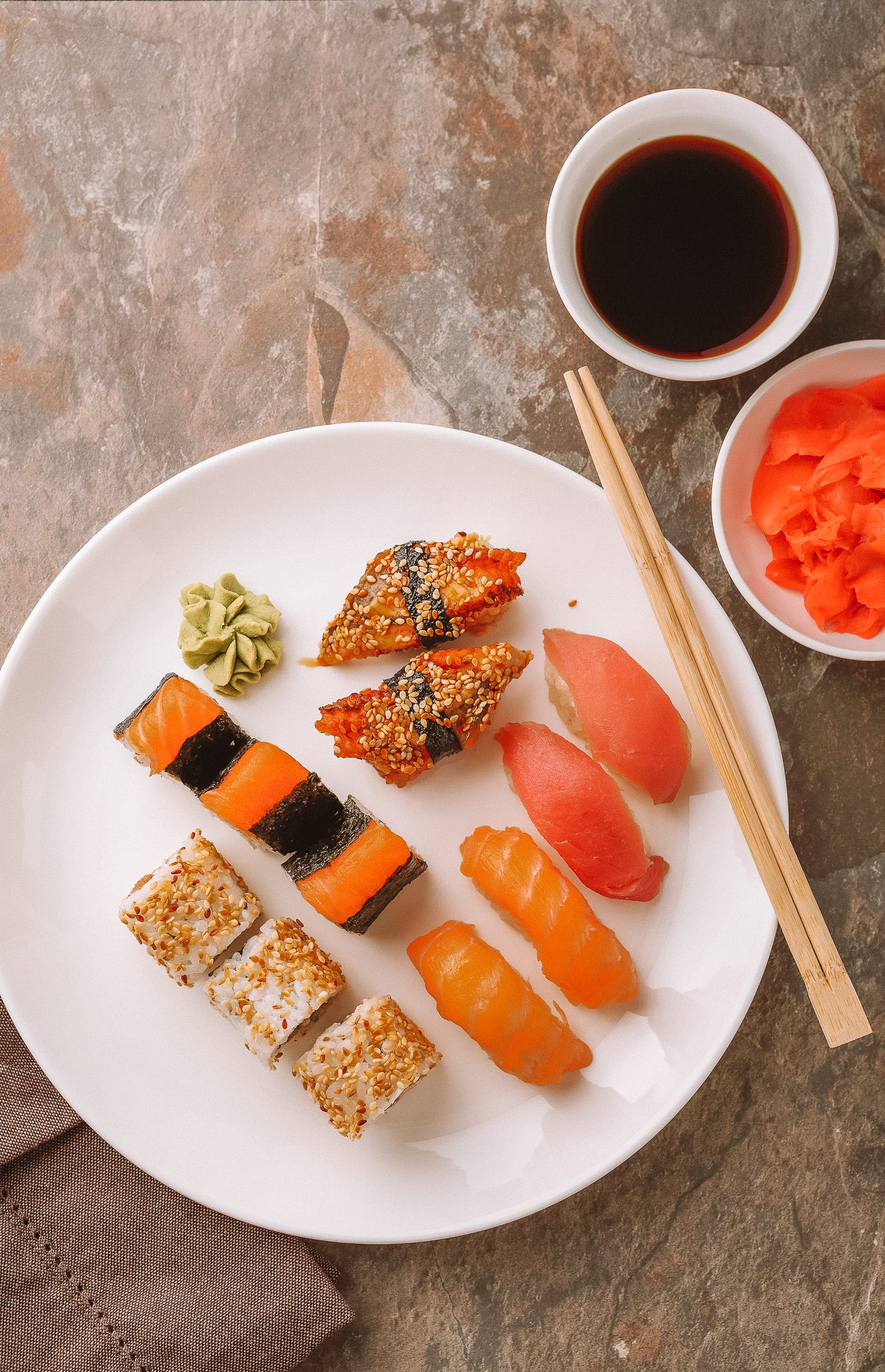
Honestly, I think Niagara-on-the-Lake is a pretty lucky town to have the owners of Masaki Sushi that make some of the tastiest sushi this side of Ontario! It’s easily one of the very best restaurants in Niagara-on-the-Lake, that’s for sure.
Make sure to try their Aburi Sushi that’s made from Seared Nigiri, their spicy salmon rolls all washed down with enough sake to get you pickled! Their Mio Sparkling Sake is so nice. 🍣
2.) Treadwell
Based on Queen Street, right in the heart of Niagara-on-the-Lake is Treadwell, one of my favourite restaurants in the town. It’s a proper farm-to-table style establishment and they pride themselves on having the best seasonal, freshest and local foods (and wines) for us all to enjoy.
Make sure to try their seared scallops and capers for starters, I could have eaten this over and over again!
3.) The Winery Restaurant at Peller Estates
So, the Winery Restaurant is easily a contender to be one of the best restaurants in Niagara-on-the-Lake. Perched just out of the town itself, on the Peller Estate, they have the most amazing menu of things like; pistachio crusted goats cheese and Rainbow trout (which you’ll find a lot of around this region).
When you’re here, make sure you try some of the wines from the estate, too. They’re delicious.
4.) Gelato di Carlotta
If you’ve got a craving for something sweet, Gelato di Carlotta is the place to go. Honestly, it’s a contender for one of the best ice creams I’ve had outside of Italy! This is a family-run joint and you can tell they really care for the gelato they serve.
Their chocolate orange, peanut and even pumpkin ice creams. They’re delicious 🍦
5.) Backhouse
Backhouse is a really cool (and totally tasty) restaurant that’s actually quite unassuming from the outside but their food is amazing. Although prices are a little higher than your run-of-the-mill joint, it’s well worth it for the care and attention they put into their meals.
They’re considered a renaissance restaurant that sources as much as they can from their very own gardens each and every day, whilst other items are sourced as locally as possible.
Make sure to try their ack of spring lamb (with plenty of artichokes) and their Icewine float.
6.) The Olde Angel Inn
This is almost home-away-from-home for us Brits! The Olde Angel Inn actually feels like a British Pub once you step inside! It’s a proper, informal and pretty busy joint where you can rock up, grab a pint and have some bangers and mash with lashings of onion gravy.
It’s the perfect local pub for your trip to Niagara-on-the-Lake.
7.) Prince of Wales, Drawing Room
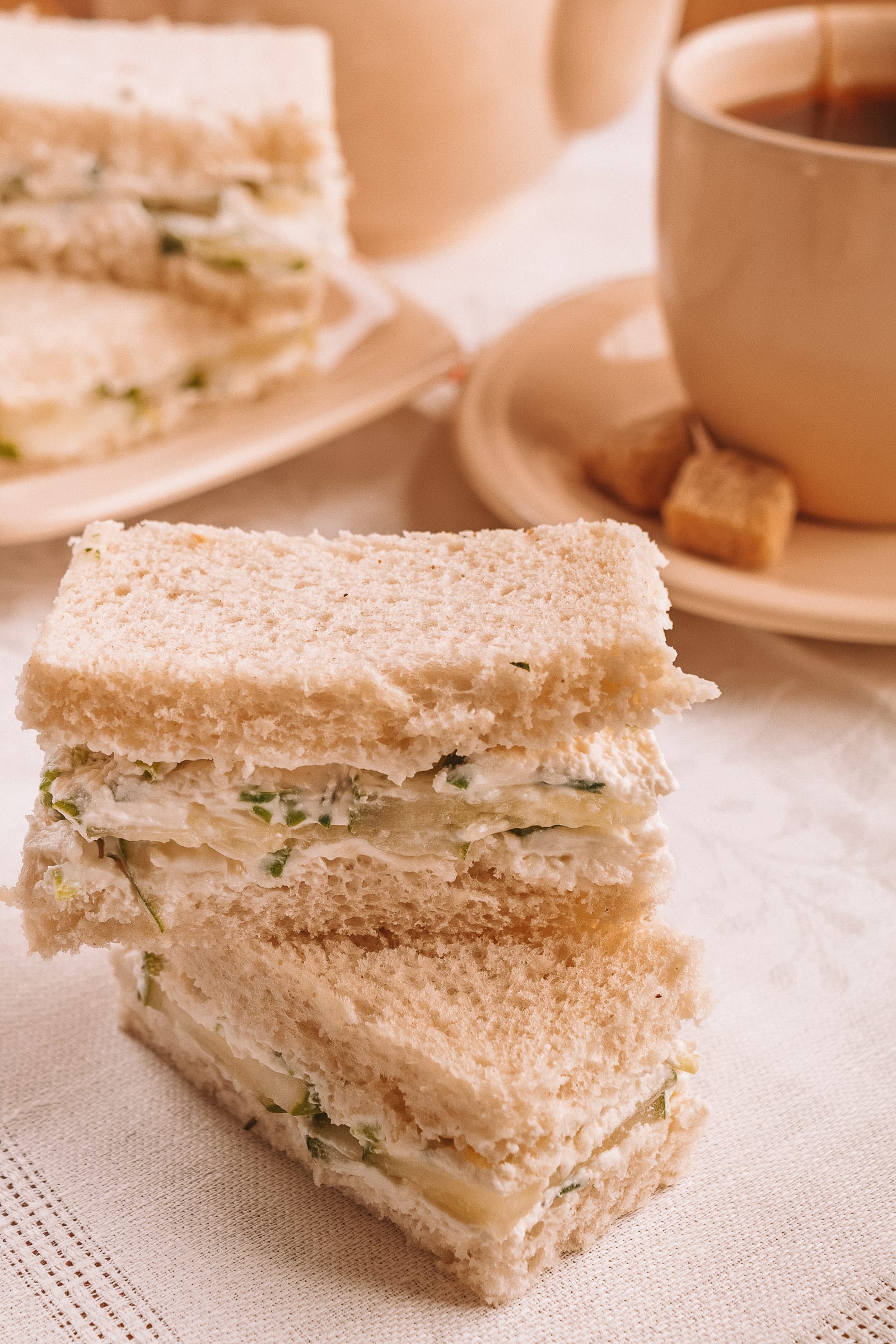
So, if you really wanna lean into the British heritage of Niagara-on-the-Lake, stop off at the Prince of Wales Drawing Room for a spot of afternoon tea. For those unfamiliar, this usually consists of lashings of tea (about 20 varieties), spongey cakes, scones and some good old cucumber sandwiches.
Prices can be a little higher than the average for a lunch but it’s perfect for a treat.
8.) Bistro Six-One
Bistro Six-One is one of those informal spots you go to for their wood-fired pizzas. It’s one of the town’s more relaxed restaurants which is actually quite nice when you’re justing wanting to chill with some comfort food.
Fill up on carbs, grab one of their freshly baked pizzas (with extra cheese) and call it a night. 🍕
Oh yeah, and that’s me trying to hide my plate of fries that I ordered WITH a pizza. Yup, I’m THAT (greedy) guy! 🤣
Cuba is one of those incredible countries that mixes a strong and vibrant culture, gorgeous cities and irresistible beaches. It’s the perfect place for a holiday, especially considering all the best things to do in Havana itself.
Whether you’re a beach lover, a foodie or a culture fiend, there’s a whole heap of amazing places dotted all across the island. That being said, Havana is really special. 🇨🇺
If it’s your first, second or umpteenth time to Havana, you’re bound to find something new and exciting upon your arrival in Cuba. After all, the city is a totally vibrant place with new and old places opening their doors every week.
This is exactly why I wanted to share some of the very best things to do in Havana on your next trip.
Take a look, below, at the best things to do in Havana.
10 Best Things To Do In Havana
1.) Enjoy the sea view from the Malecon
The Malecon is Havana’s impressive 8km-long city wall and esplanade that It runs the full length of the city. This, alone, makes it the perfect viewing platform not only for the great sea view but a lot of the city sites, too.
Plus, it took over 50 years to build, so strolling the length of the Malecon is like taking a walk through time. Also, there’s a shed load of incredible architecture you’ll see along the way.
It really is one of the very best things to do in Havana, especially at sunset.
2.) Discover Havana Cathedral
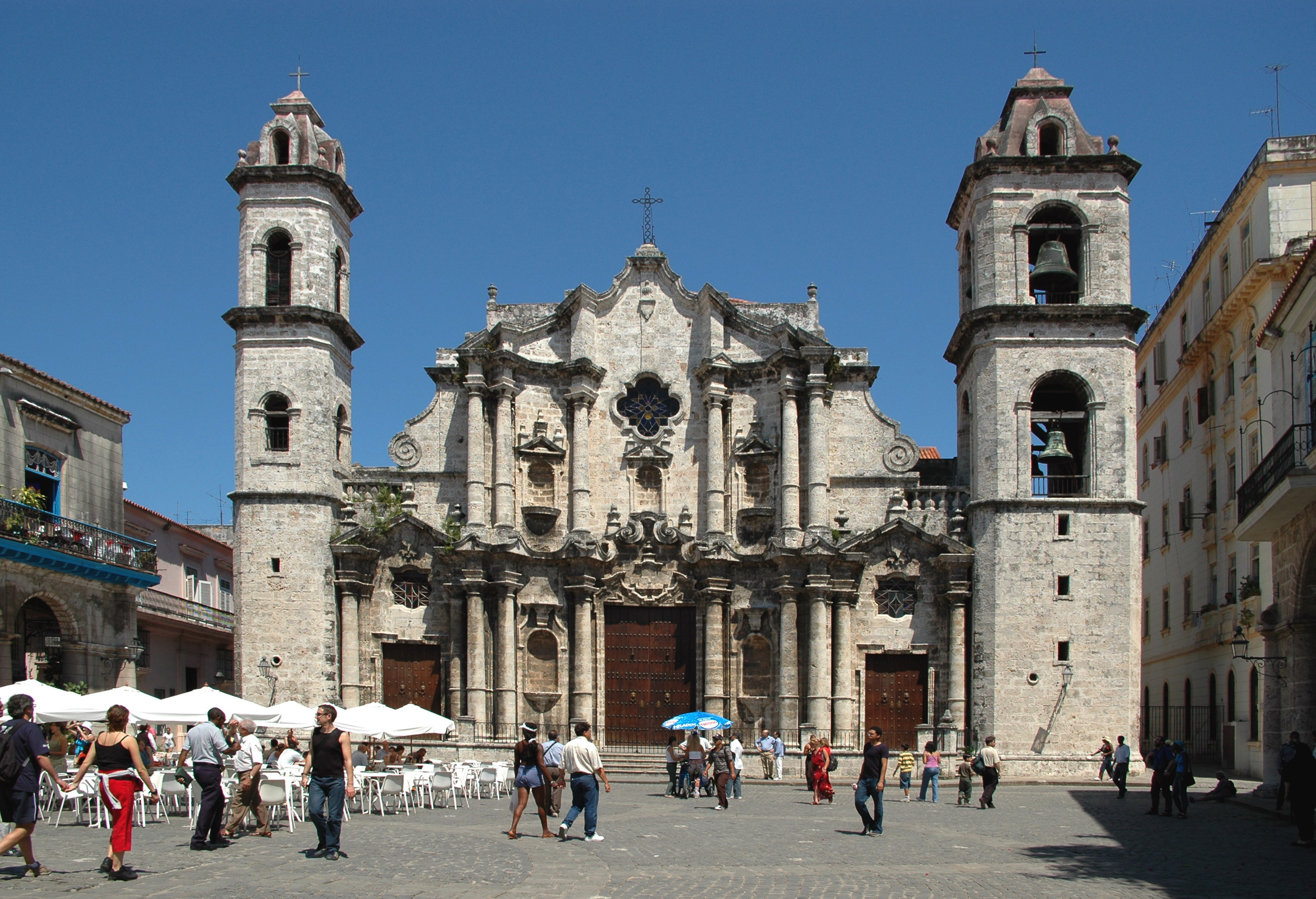
Most city ‘must see’ lists include a cathedral and Havana is no exception. The architecture of Havana Cathedral is absolutely stunning, and if you’re up for climbing the tower, the views you’ll see from the top are well worth the effort.
Perched smack-bang in the centre of Havana, it’s a must-see spot if you’re wanting to visit one of the cities 11 Roman Catholic Churches.
3.) Find Colon Cemetery
A cemetery might not sound like the most exciting of attractions and may even seem a little morose but bear with me here.
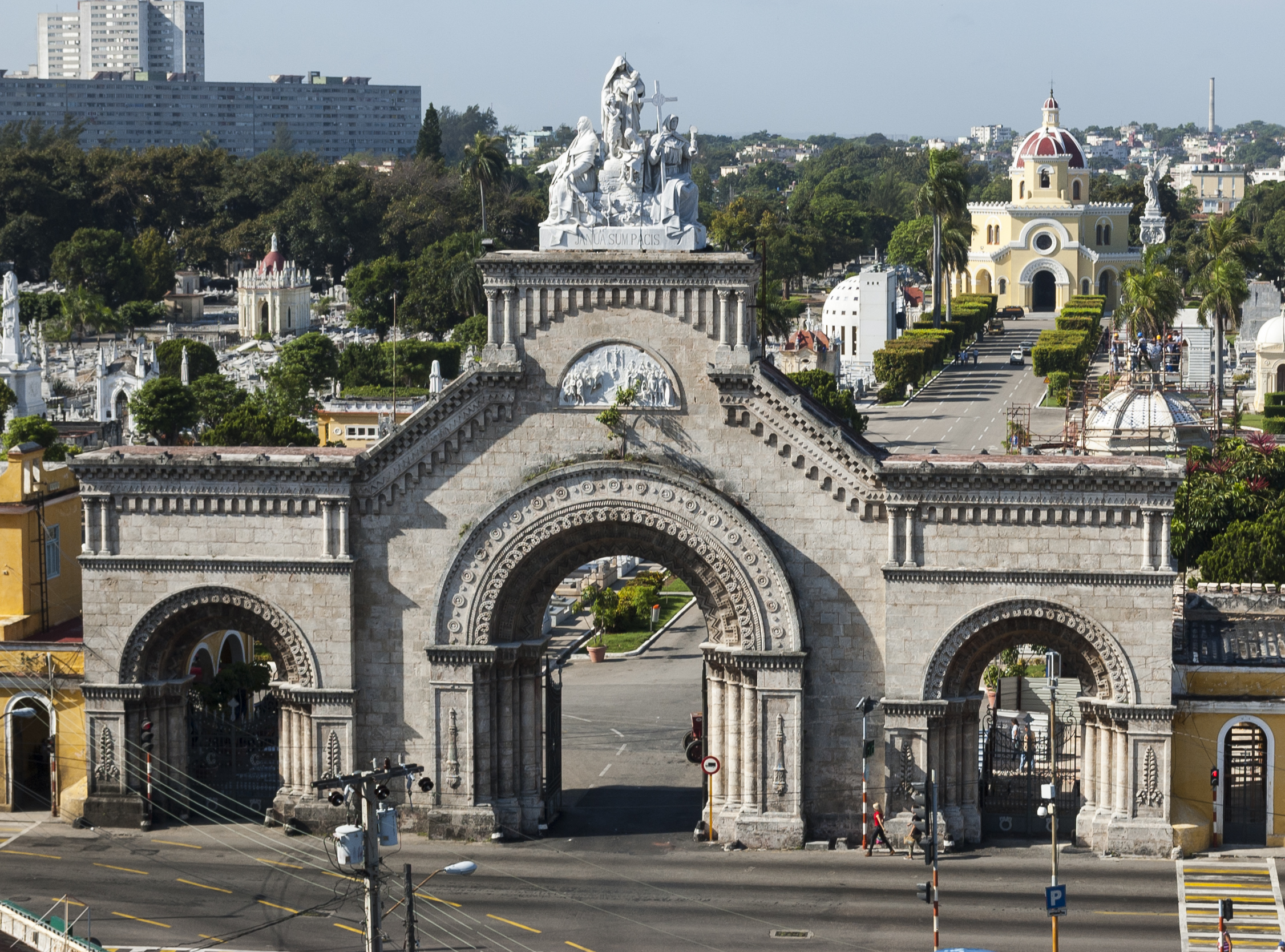
El Cementario de Cristobal (named after Christopher Columbus) is definitely worth scouting out and for some, is one of the best things to do in Havana. Many of the 800,000 graves belong to particularly affluent Cubans, so the headstones are works of art.
Interestingly, they’re also sorted into categories, from bishops to baseball players, making it one of the most organised graveyards in the world. That being said, if you’re not really into the more macabre sites of the city, you might wanna give this one a miss.
4.) Embrace your salsa dancing rhythm
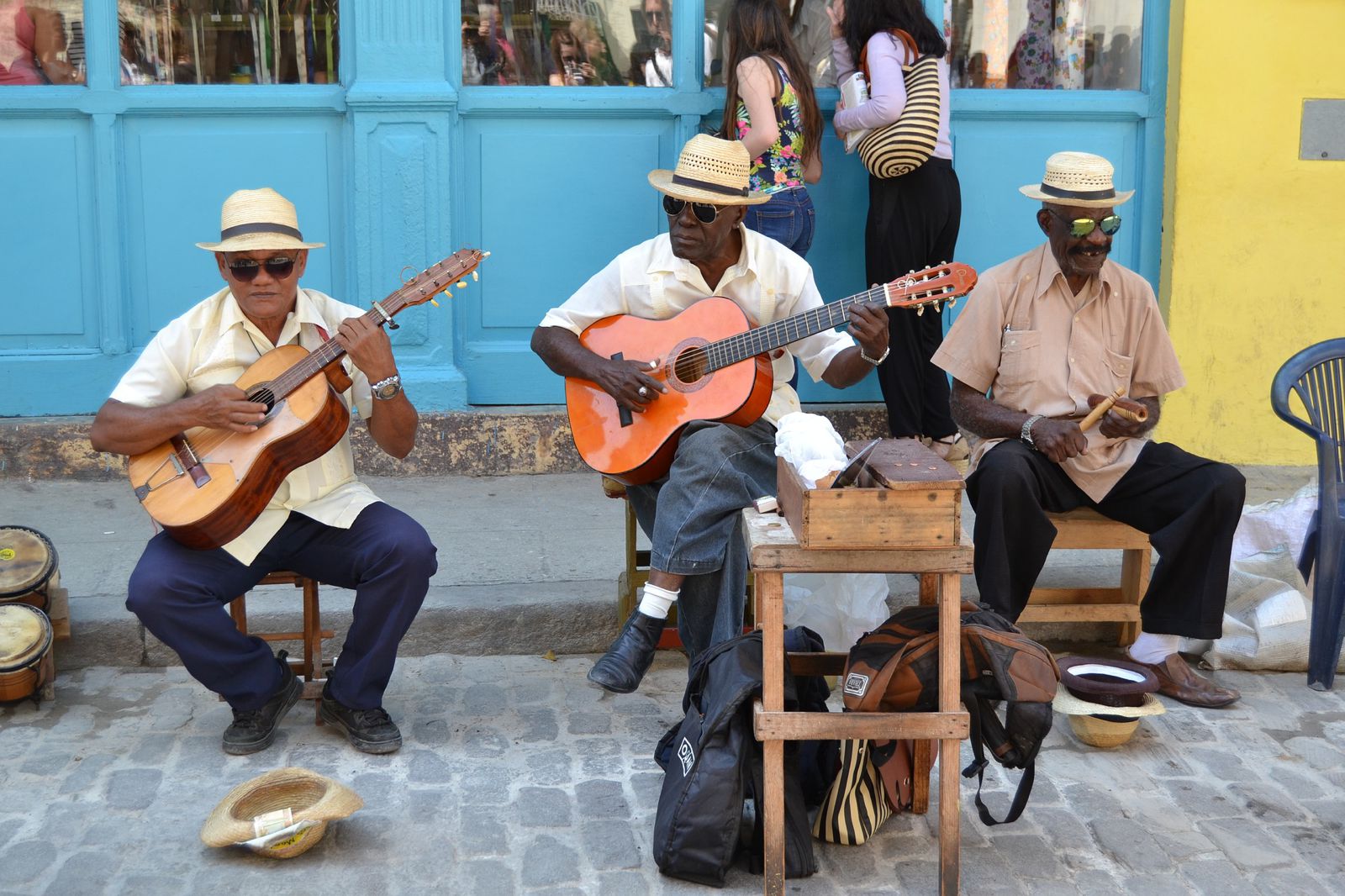
Havana is a city alive with music, and its heritage is definitely tangible in the city’s pumping music scene.
Make sure you catch a glimpse of the sensual and world-famous salsa dance, a thrilling part of Havana culture (ideally with a rum-based cocktail in hand) 🍹
Head over to the buzzing spots of; Diablo Tun Tun or La Cecilia which is one of the cities largest outdoor music spots. Honestly, it’s easily up there as one of the best things to do in Havana.
5.) Visit Plaza de la Revolución
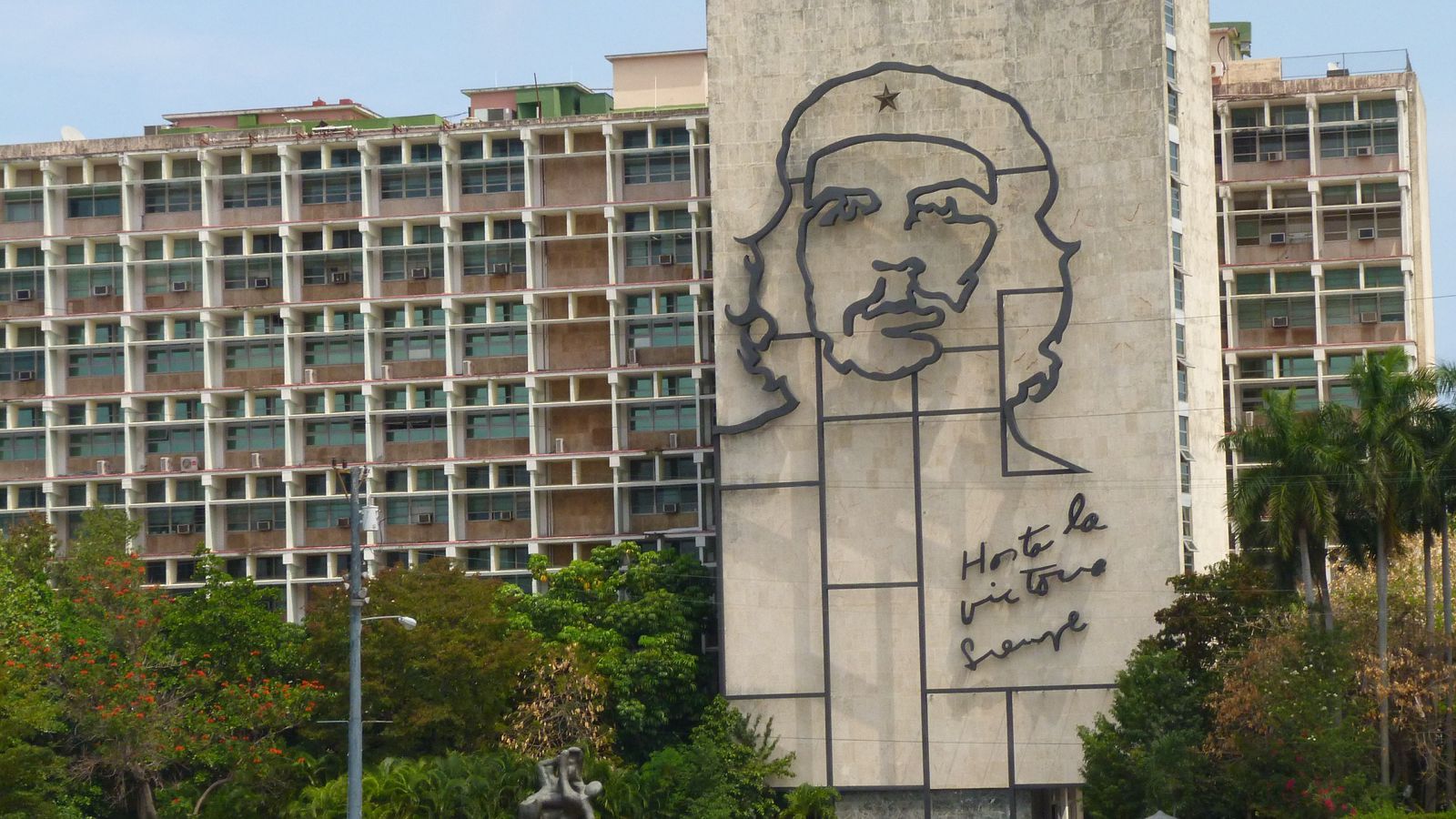
Whether you know a lot about Cuban history or nothing at all, you’re bound to have seen the face of Che Guevara splashed across T-shirts and posters all across the world. The effect is slightly different when you’re looking up at a giant mural of those well-known features on the side of Havana’s Ministerio del Interior.
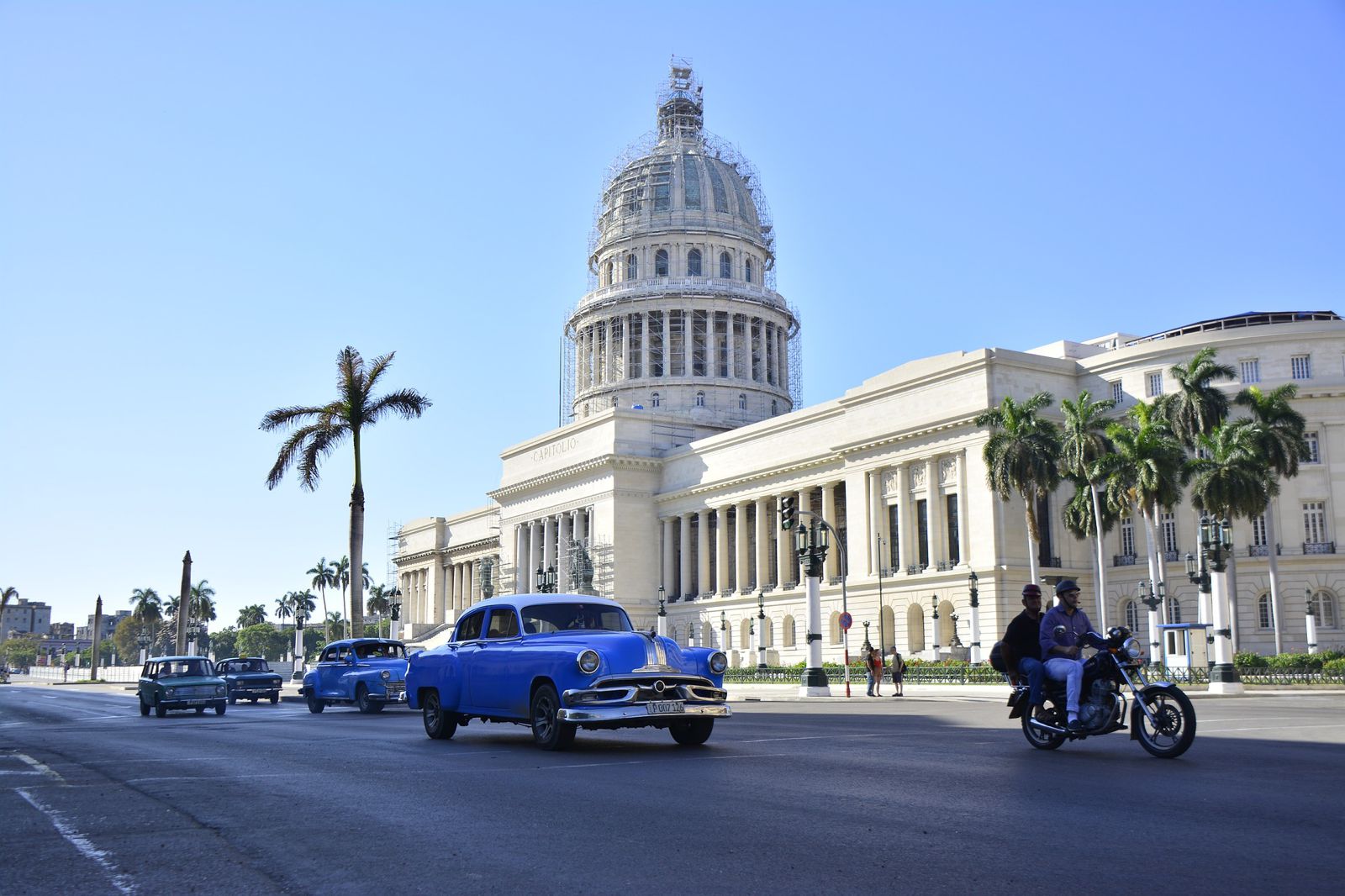
The plaza is home to a number of recognised landmarks including the Capital Building and the José Martí Memorial.
6.) Explore Old Havana
I’m a sucker for a good old UNESCO World Heritage Site! As they go, Old Havana is something particularly special. Pick your way through the cobbled streets and quaint little squares, taking in stunning old buildings like the Cathedral de San Cristobal.
Don’t miss the impressive Military fortress known as the Castillo de la Real Fuerza along the way.
For a delicious bite to eat, head over to La Bodeguita del Medio which is a must-visit restaurant that serves yummy seafood alongside traditional Cuban tunes. 🎶
7.) Watch the sunrise at Morro Castle
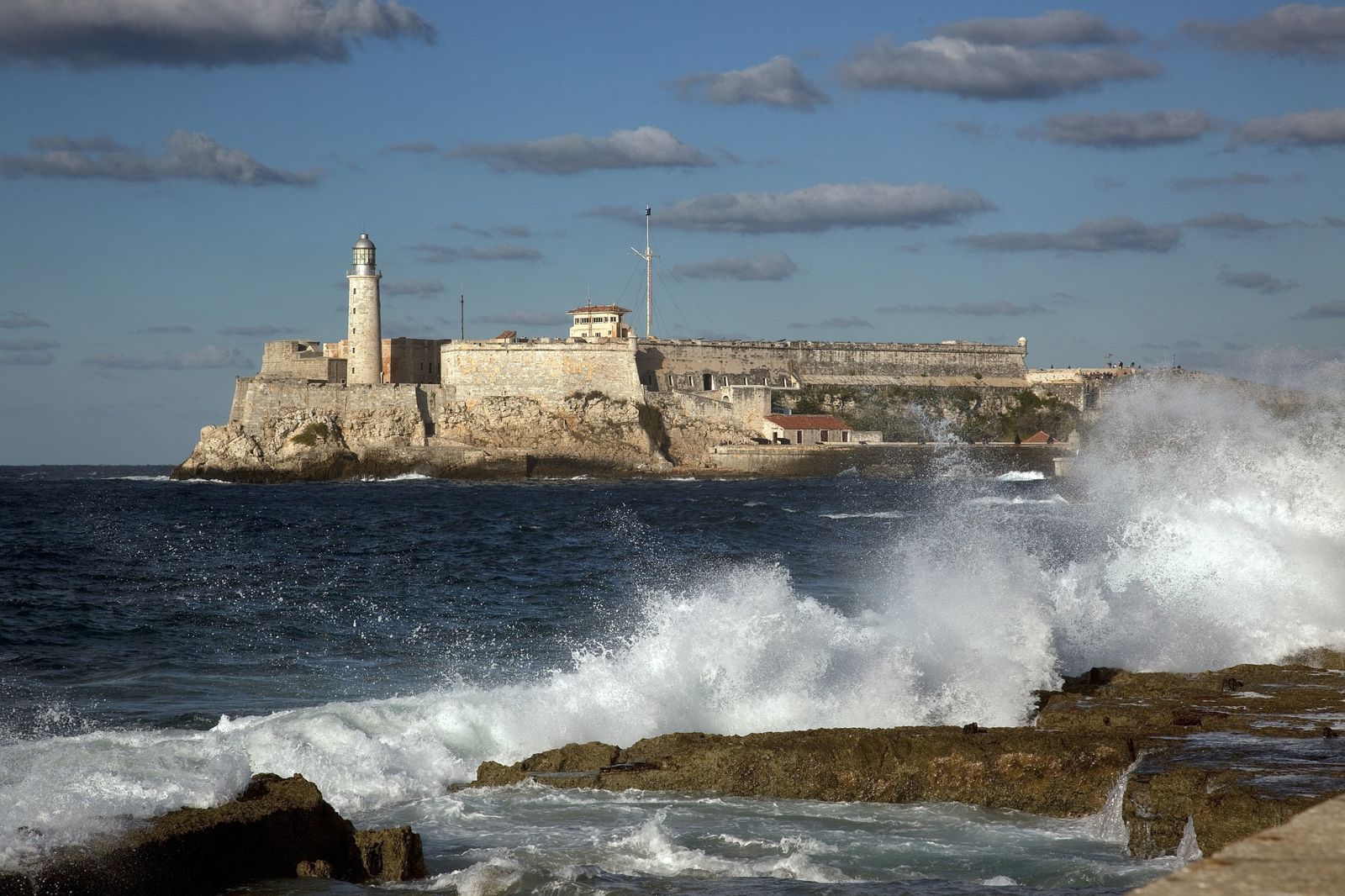
Okay, we’ve all seen a fort or two in our time. But the striking white facade of Morro castle with the blue ocean as its backdrop is a particularly impressive sight. The castle has some fascinating history behind it and offers great views both out to sea and back towards the city.
Grab yourself a tostada, a cafe con leche and enjoy the sunrise over this magnificent place.
8.) See the beauty of Paseo del Prado
Bordering on Old Havana, Paseo del Prado is arguably the most beautiful street in Havana (shhh, don’t tell the other streets). It was originally inhabited by some of Havana’s most affluent, and their wealth is reflected in the grandeur of the design.
From the grand iron lampposts and marble benches to the bronze lion sculptures, Paseo del Prado is a beauty and one of the best things to do in Havana for sure.
After all that exploring, head over to La Terraza where they’ll serve you up a hearty portion of freshly fried plantains and BBQ grilled chicken. 😋
9.) Explore Gran Teatro de La Habana
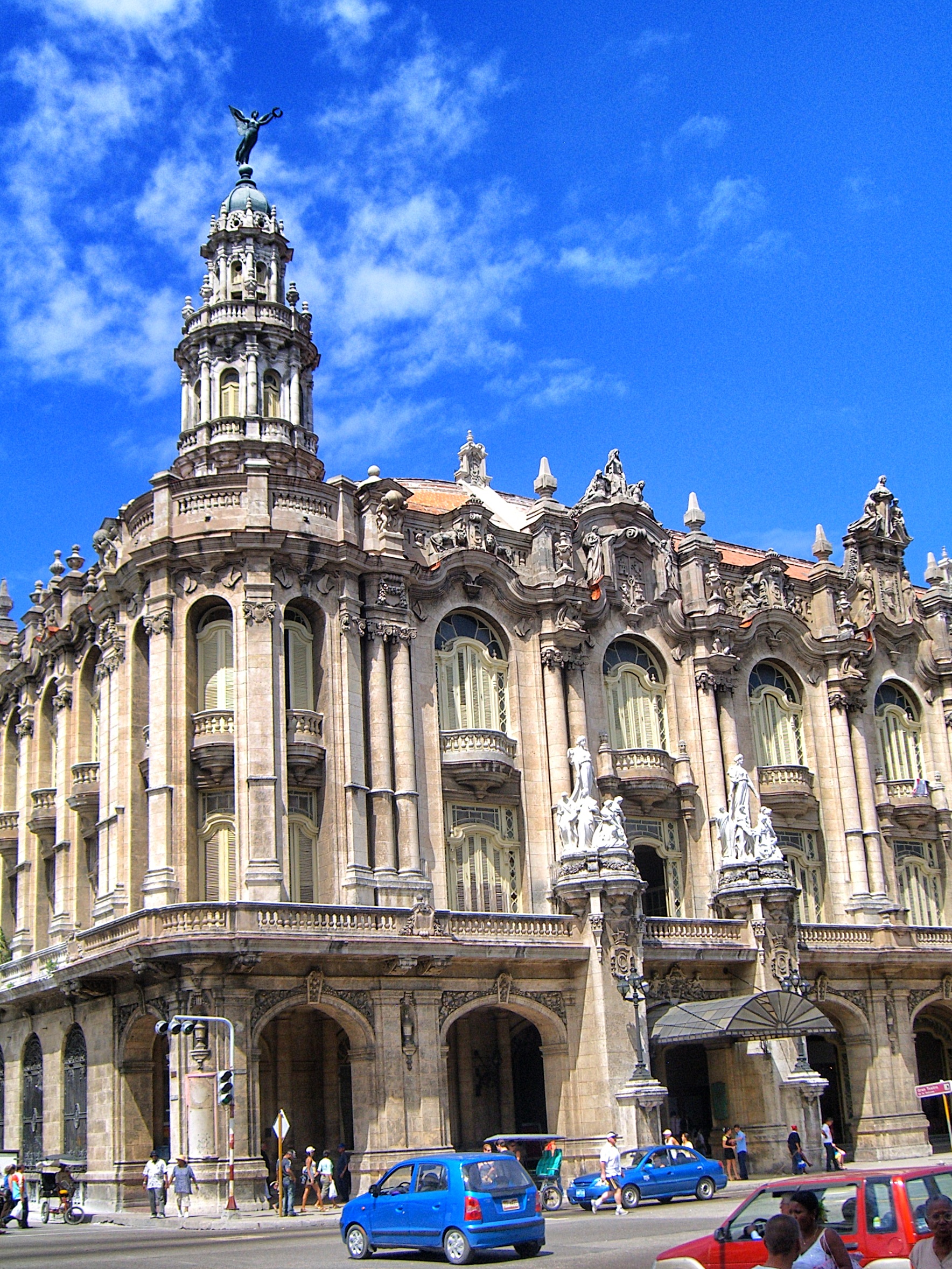
Havana is brimming with a rich cultural heritage which will blow any traveller to the city away. Built in 1915, the Gran Teatro de La Habana’s baroque style and the fascinating sculptures which adorn it should not be missed.
If you can, make sure to grab yourself some tickets to see the world-renowned Cuban National Ballet Company in all their glory (who call the García Lorca Auditorium home). It’s breathtaking and easily up there as one of the best things to do in Havana.
10.) See the gorgeous Fusterlandia
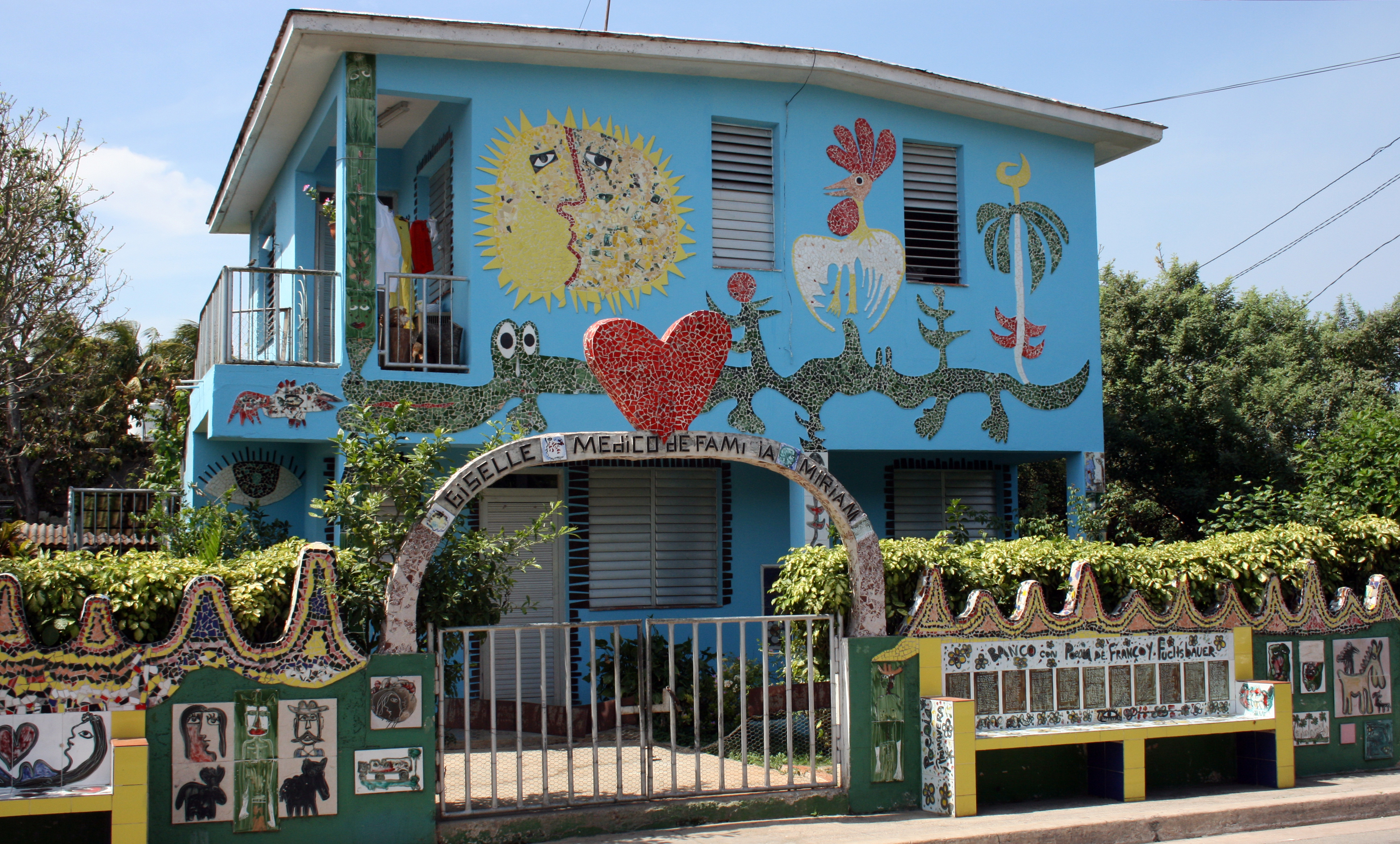
Decorating an entire neighbourhood with representations of your own life and artistic work might seem like an egotistical thing to do but that didn’t stop José Fuster, and us visitors are very grateful for it.
Fusterlandia, a small village on the outskirts of the city, is pumped full of colourful mosaics, paintings and sculptures by the man known as the Picasso of the Caribbean. It’s a beautiful and unique thing that every traveller should see. 🎨
For a local bite to eat, head over to Starbien for some of the best food in the city… don’t forget to try their flan for dessert! It sounds run-of-the-mill but I assure you, it won’t be a disappointment.
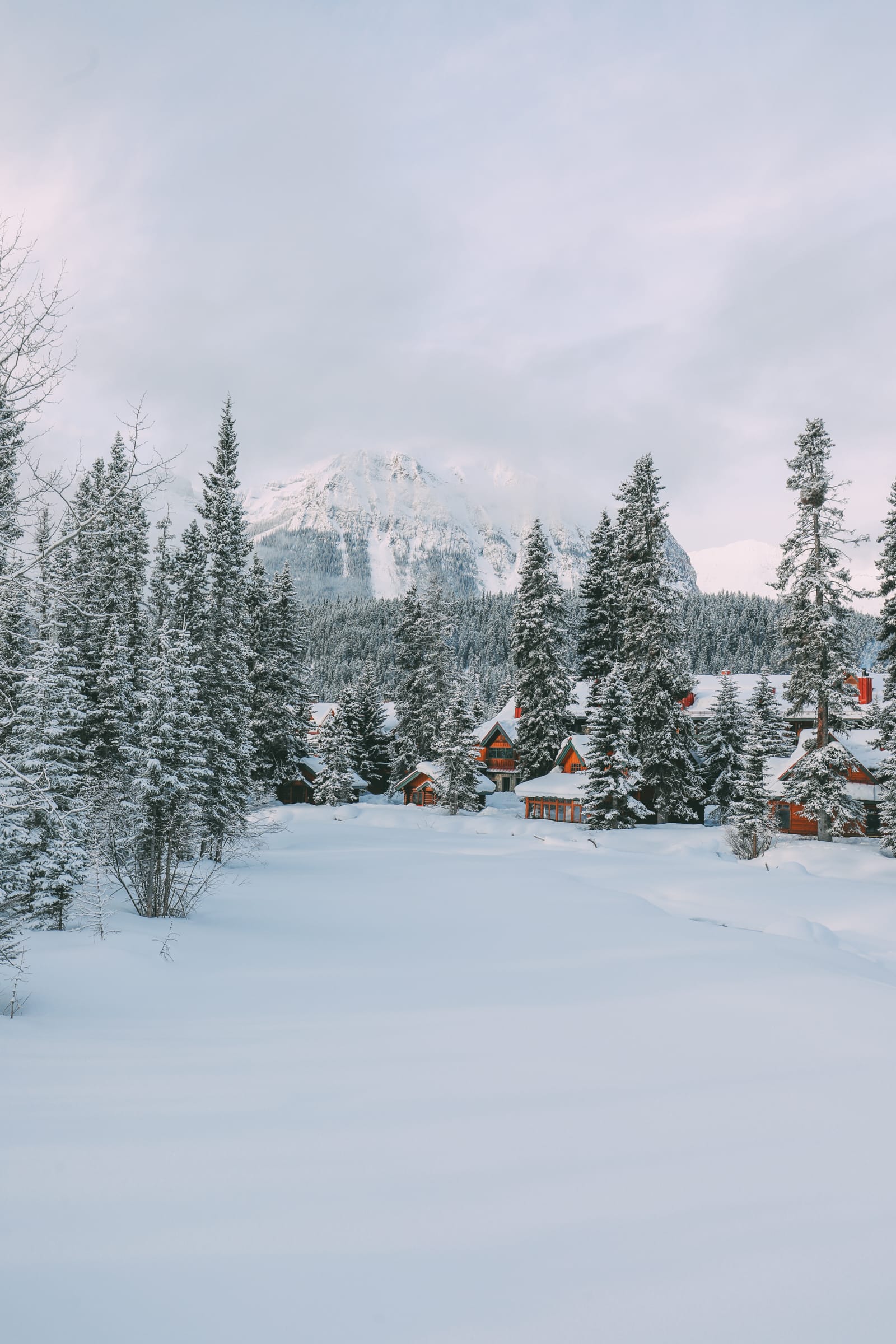
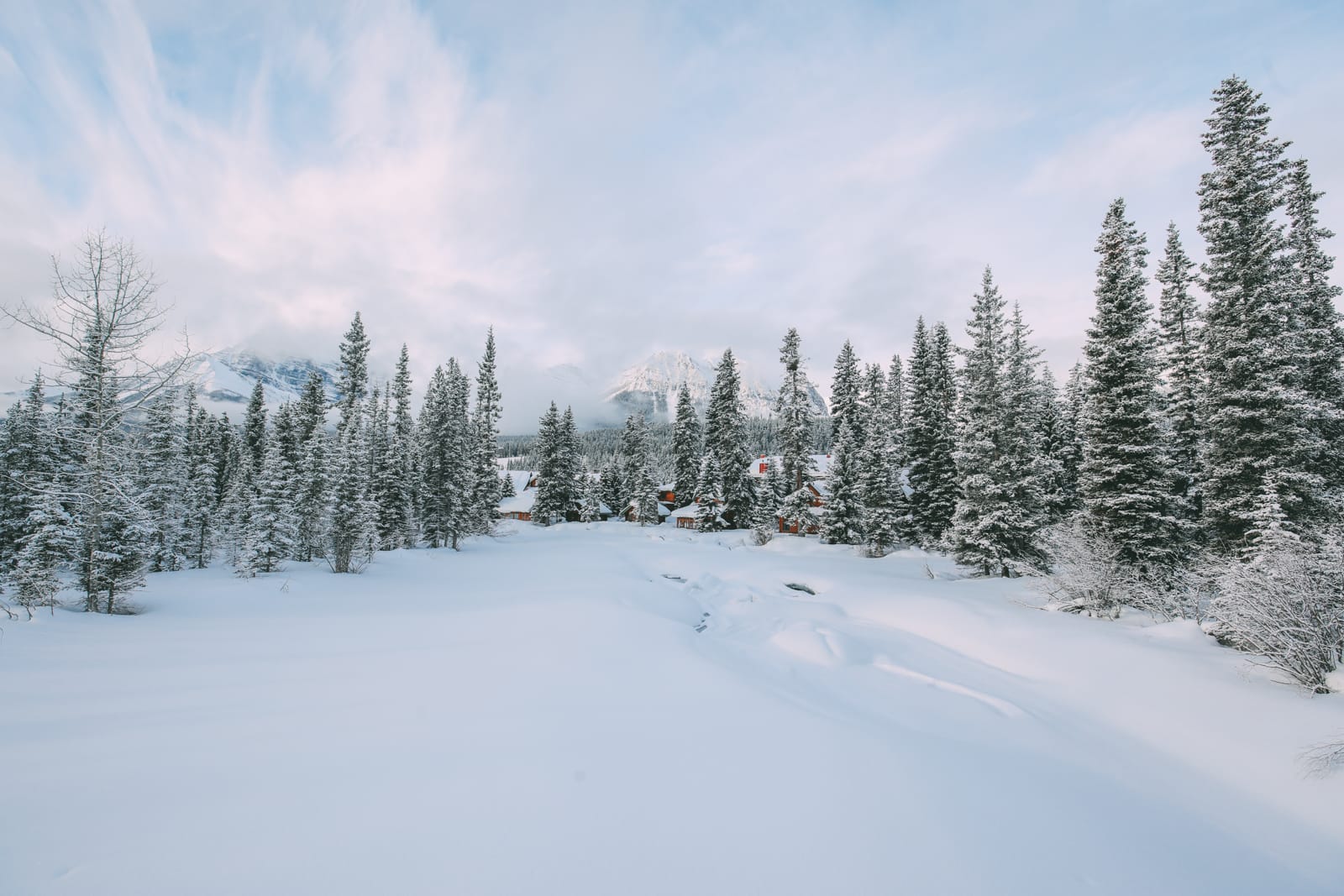
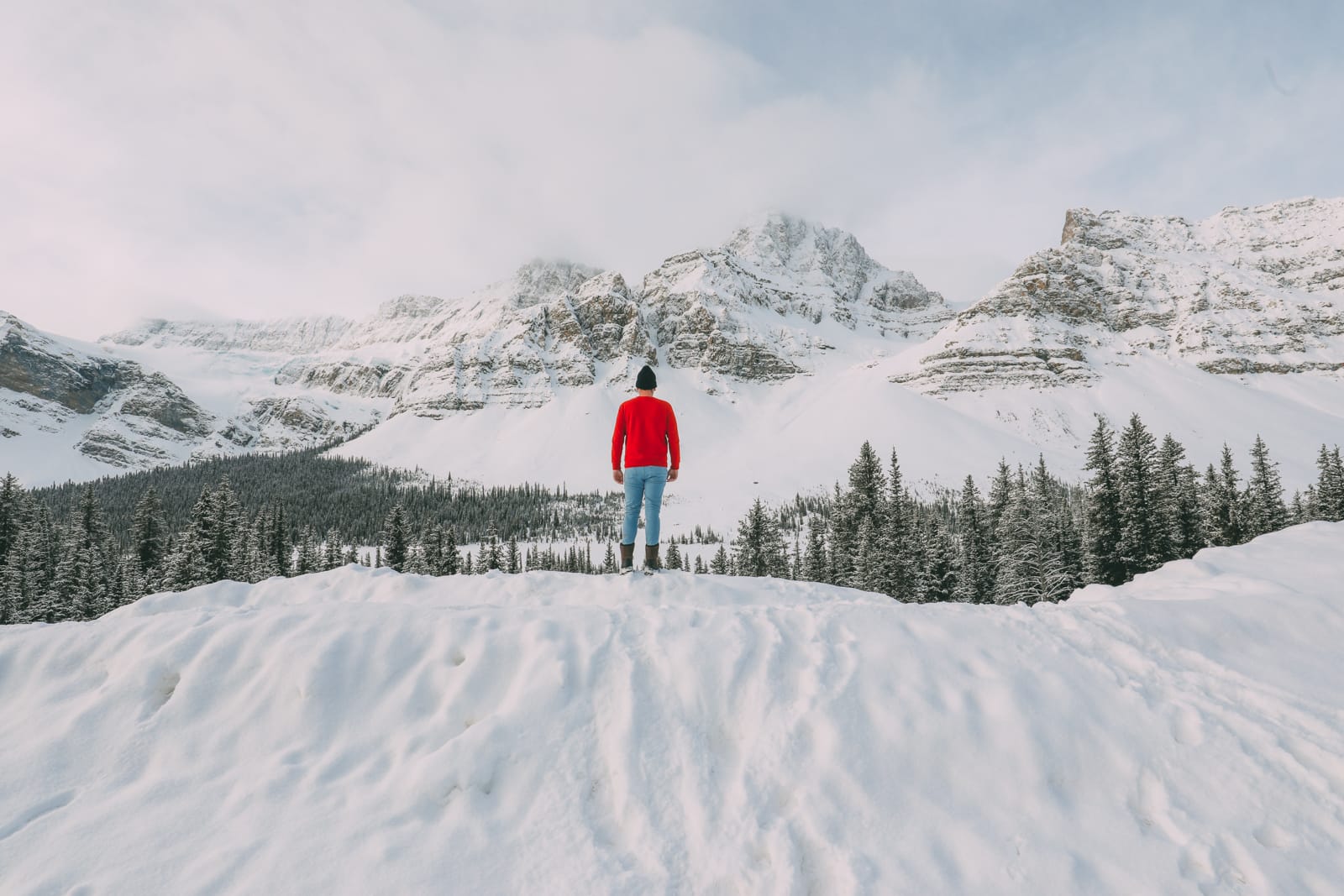
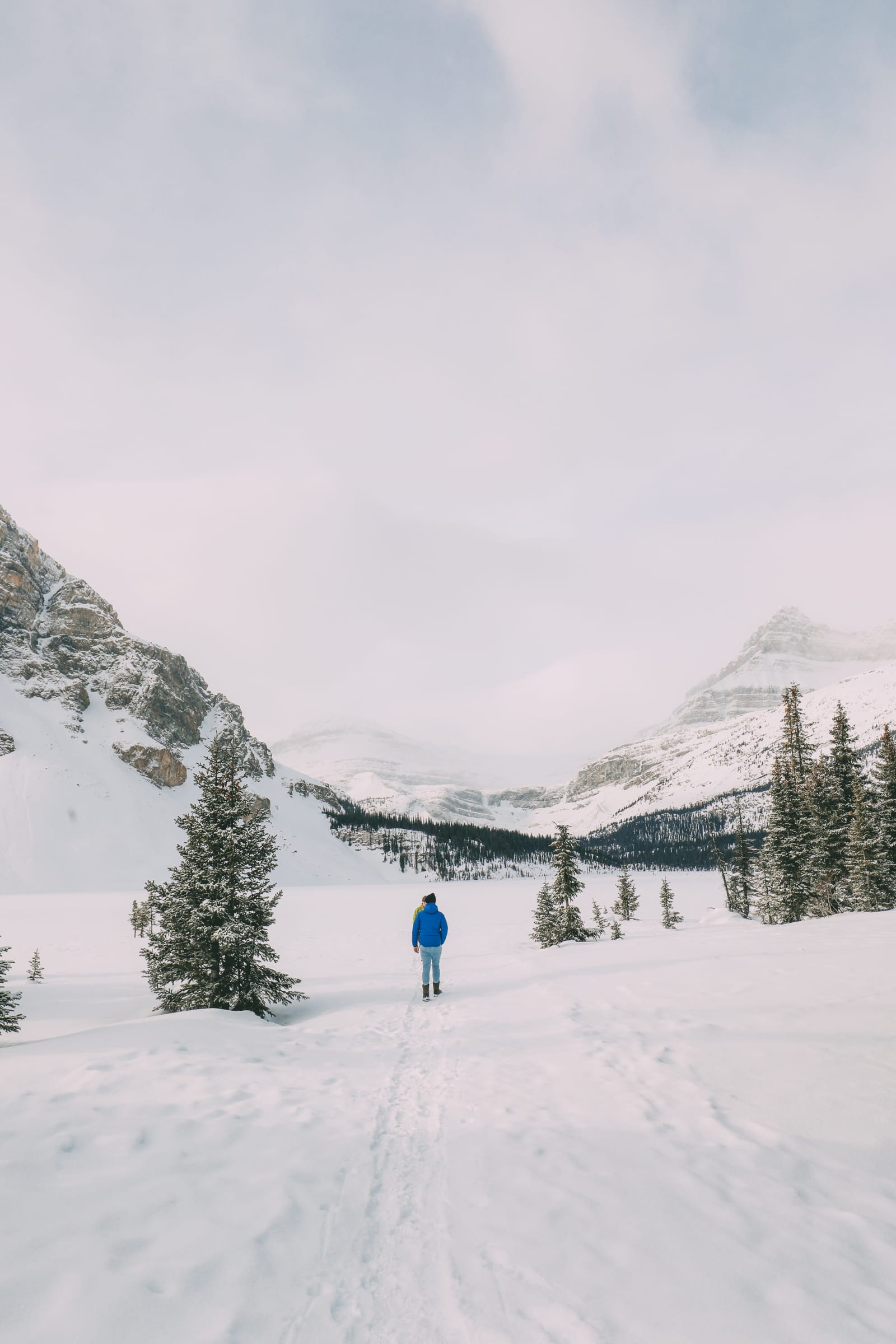
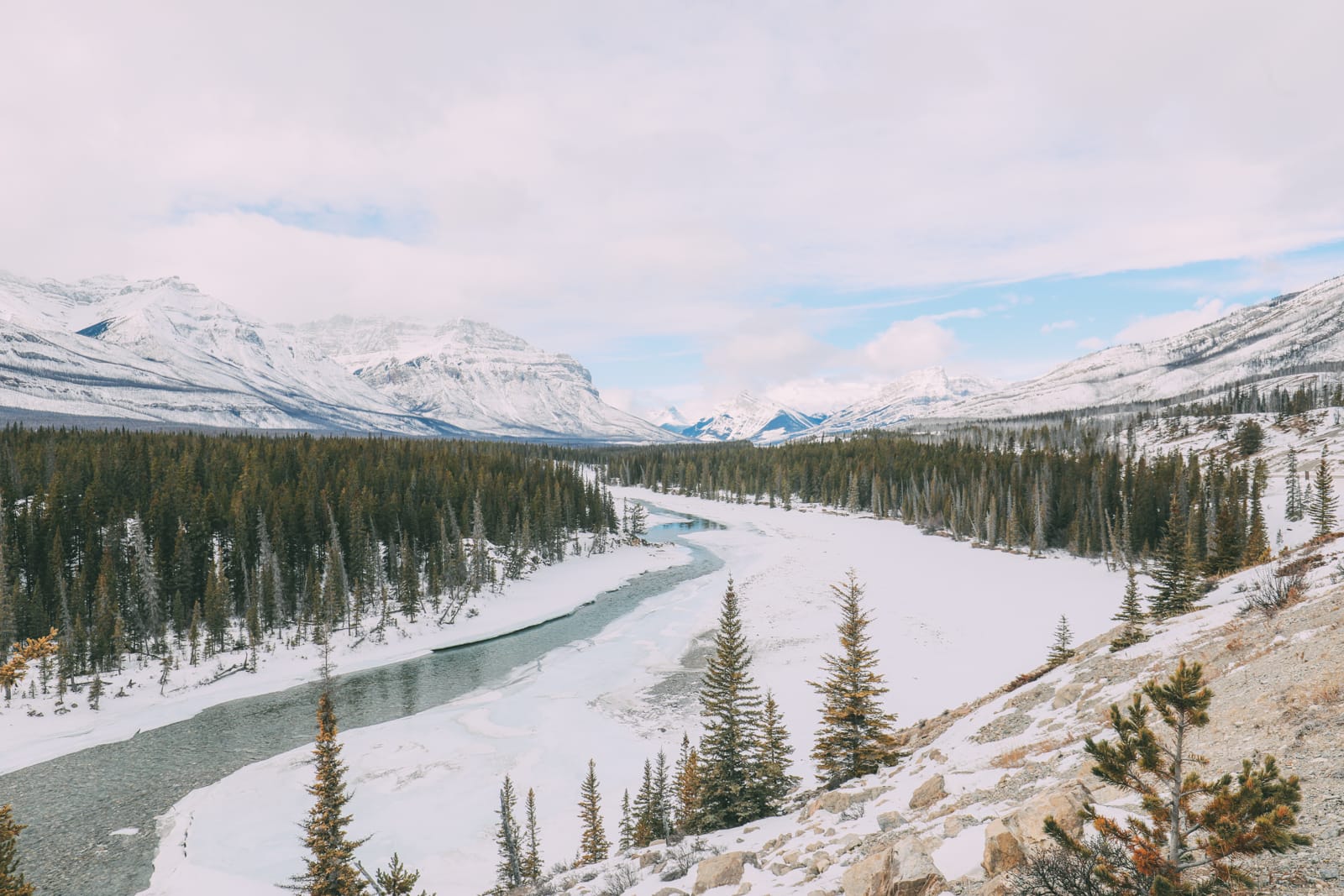
I feel like this post is gonna be more of a photo diary than anything else because of how utterly beautiful this part of Canada is.
Like I could try describing it to you but it’s just one of those places/experiences that’s better shown than described really. (There are, after all, only so many ways one can describe snow-capped mountains).
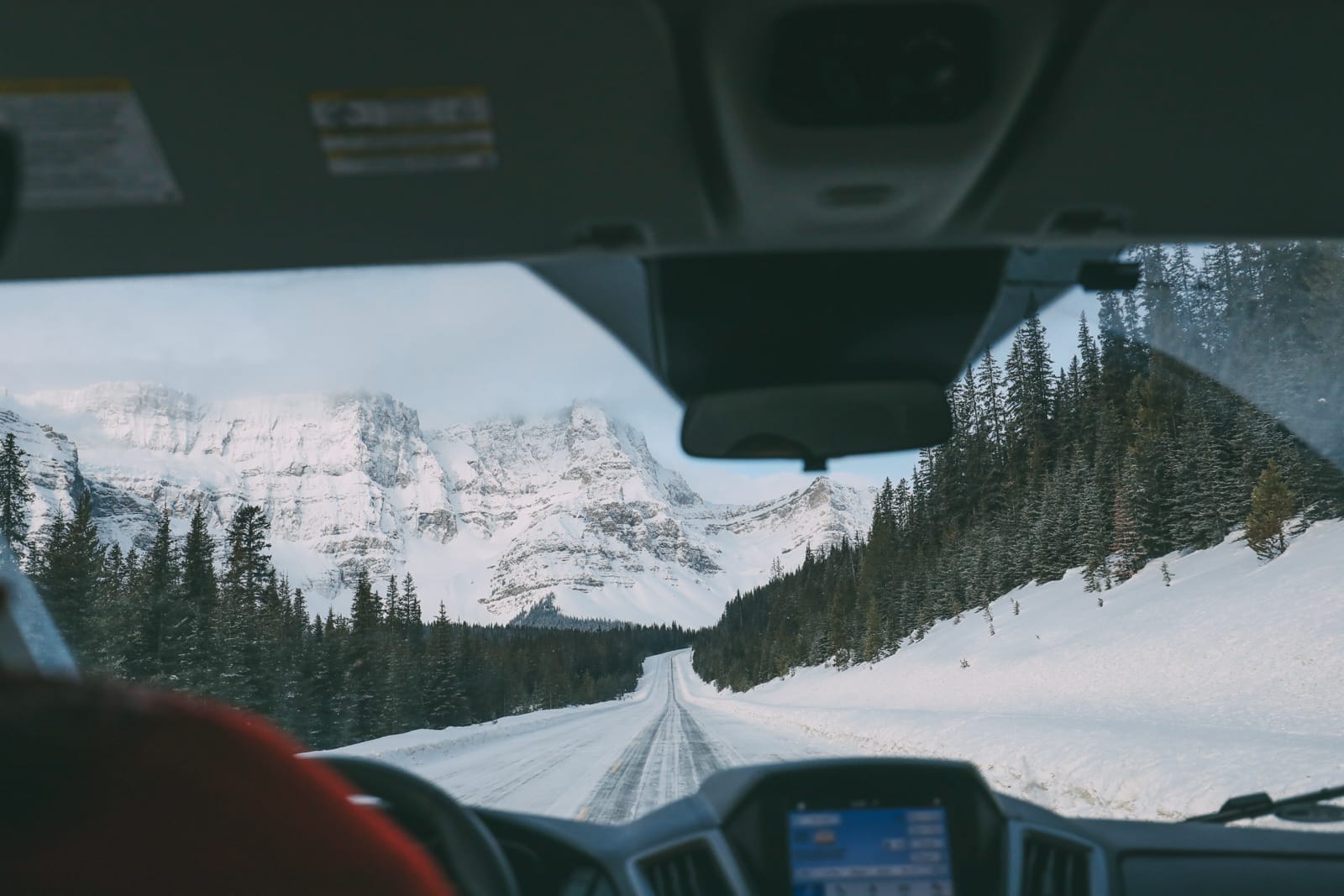
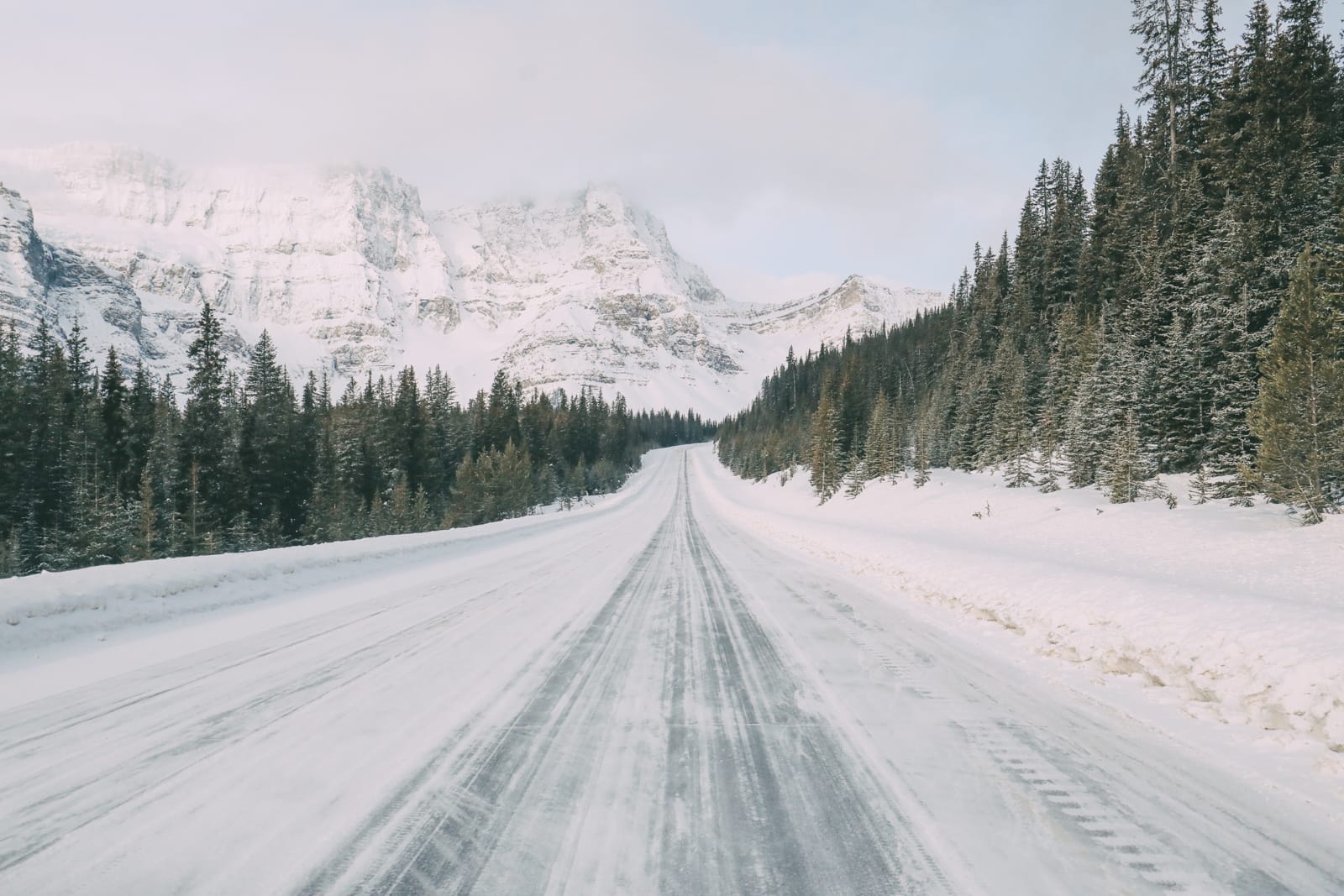
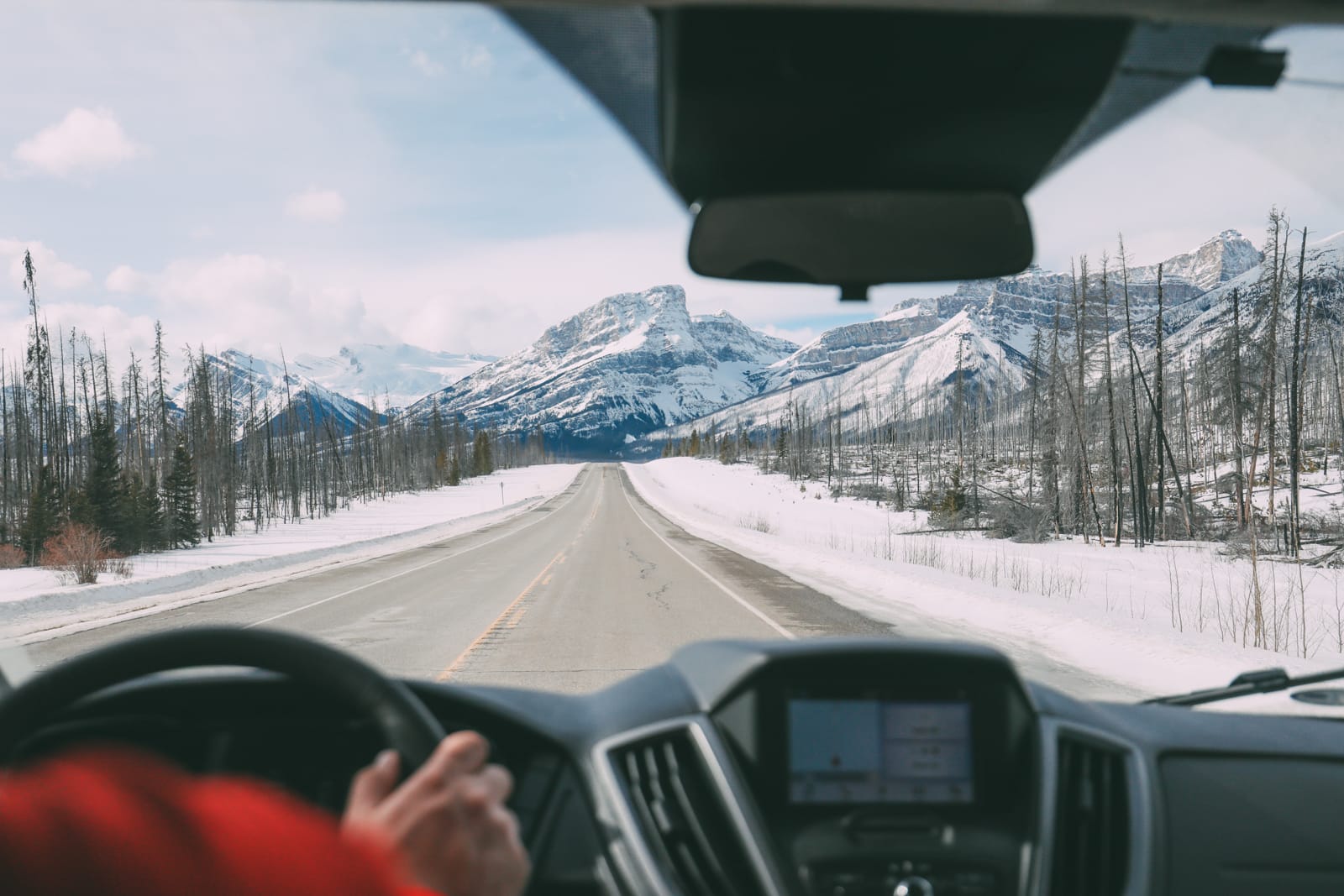
Anyway, after our day skiing in Banff, we woke up to clear skies (it had actually snowed overnight) which meant that finally, we could drive the Icefields Parkway.
The first time we tried doing this, there was an avalanche which meant this utterly beautiful road from Jasper National Park to Banff National Park was closed.
It was fine for us as we weren’t going to Banff on that trip but it would have been nice to see. Those that were, however, found an extra 4 hours added to their journey.
The second time, we were actually due to make that drive from Jasper to Banff and there was another planned avalanche (they set off the avalanches with dynamite to clear the mountains and prevent a real one from happening) so we found ourselves with that extra 4 hours drive on our way over to Rockies Heli for our helicopter ride over the Rockies (which made for a super early start).
This time, however, no avalanches and so off we went to Lake Louise to meet with JP, our guide for the day who runs Pursuit Adventures Guide with his wife Danielle.
The new dusting of snow actually ended up adding even more to the beauty of this already gorgeous drive through Alberta and I kid you not, the next few hours were pretty much spent mouthing “WOW!” as we made our way from one glacier-capped mountain to the other.
We started off at the magnificent Crowfoot Glacier…
…before making our way over to the now-frozen Bow Lake; where Lloyd proceeded to (unintentionally) fill his boots up with snow.
We then essentially just carried on driving and stopping whenever we felt as we made our way slowly over towards Abraham Lake.
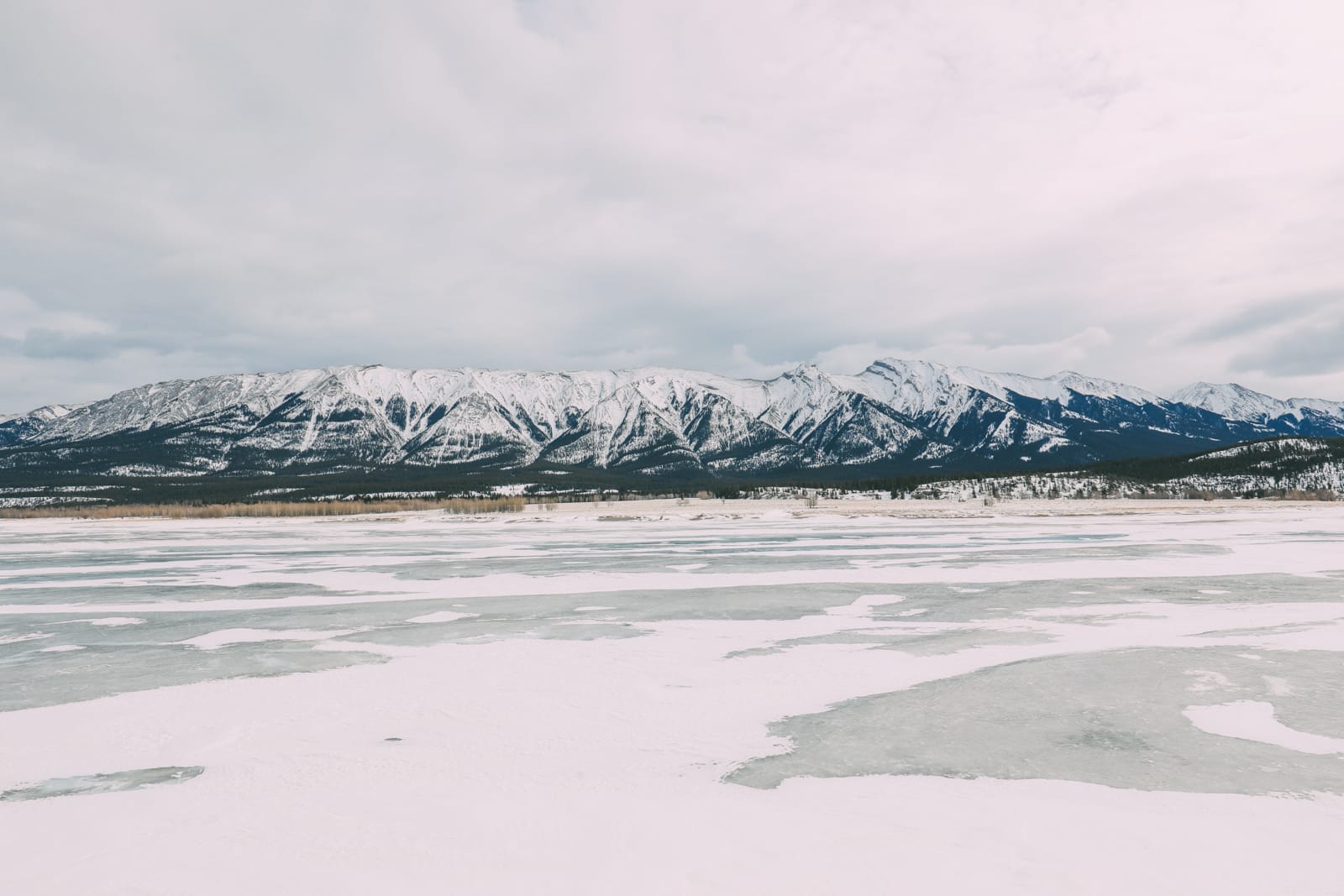
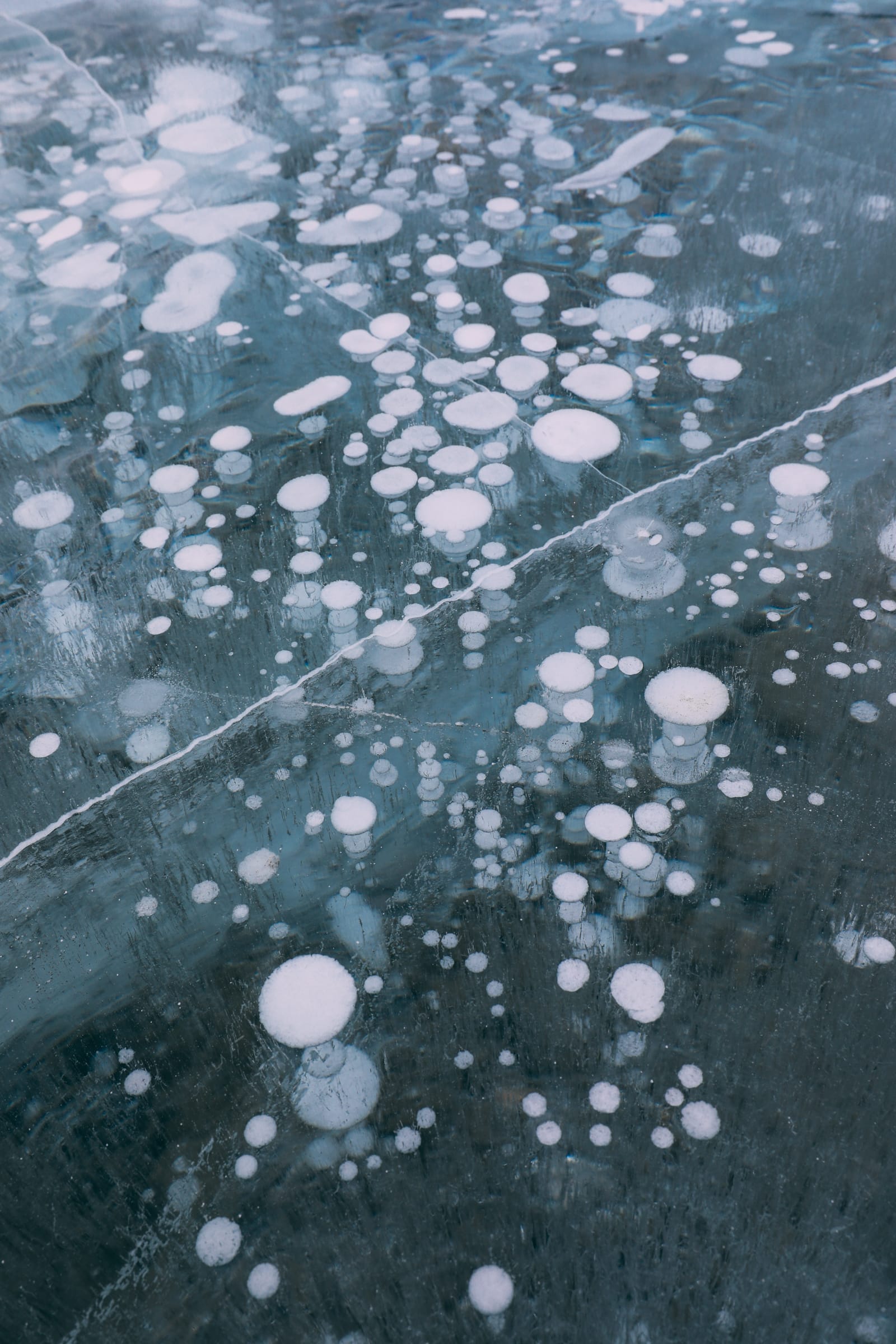
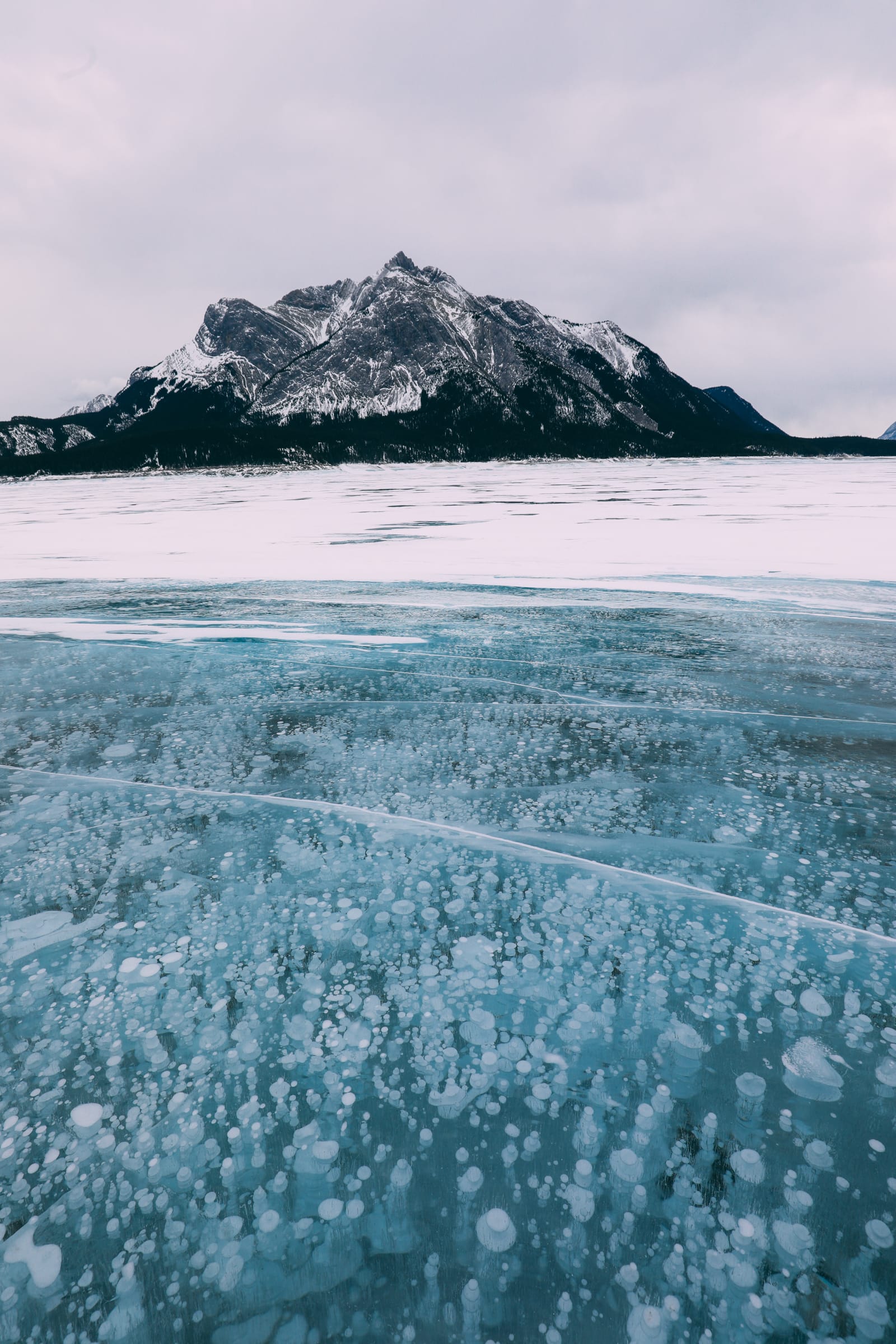
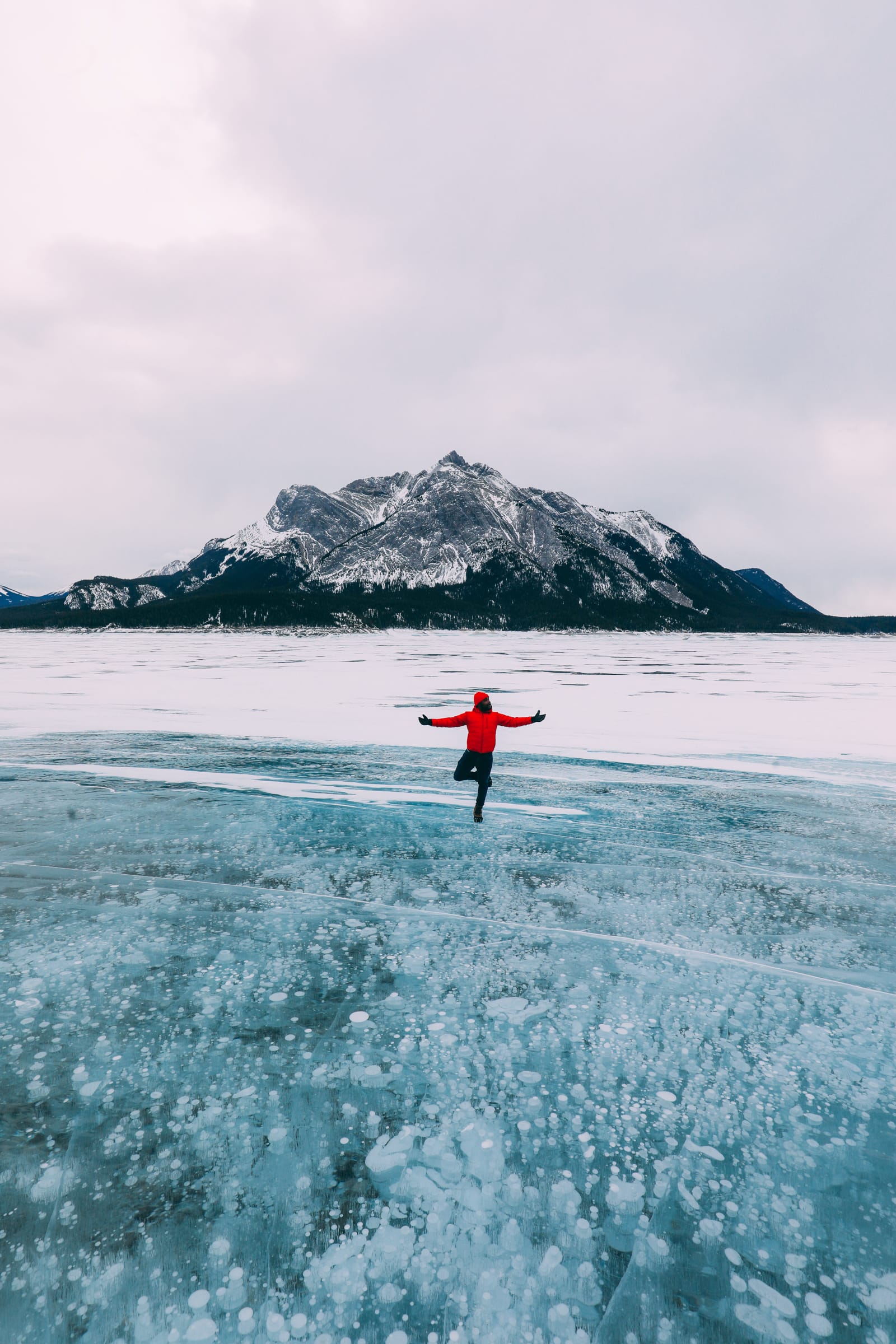
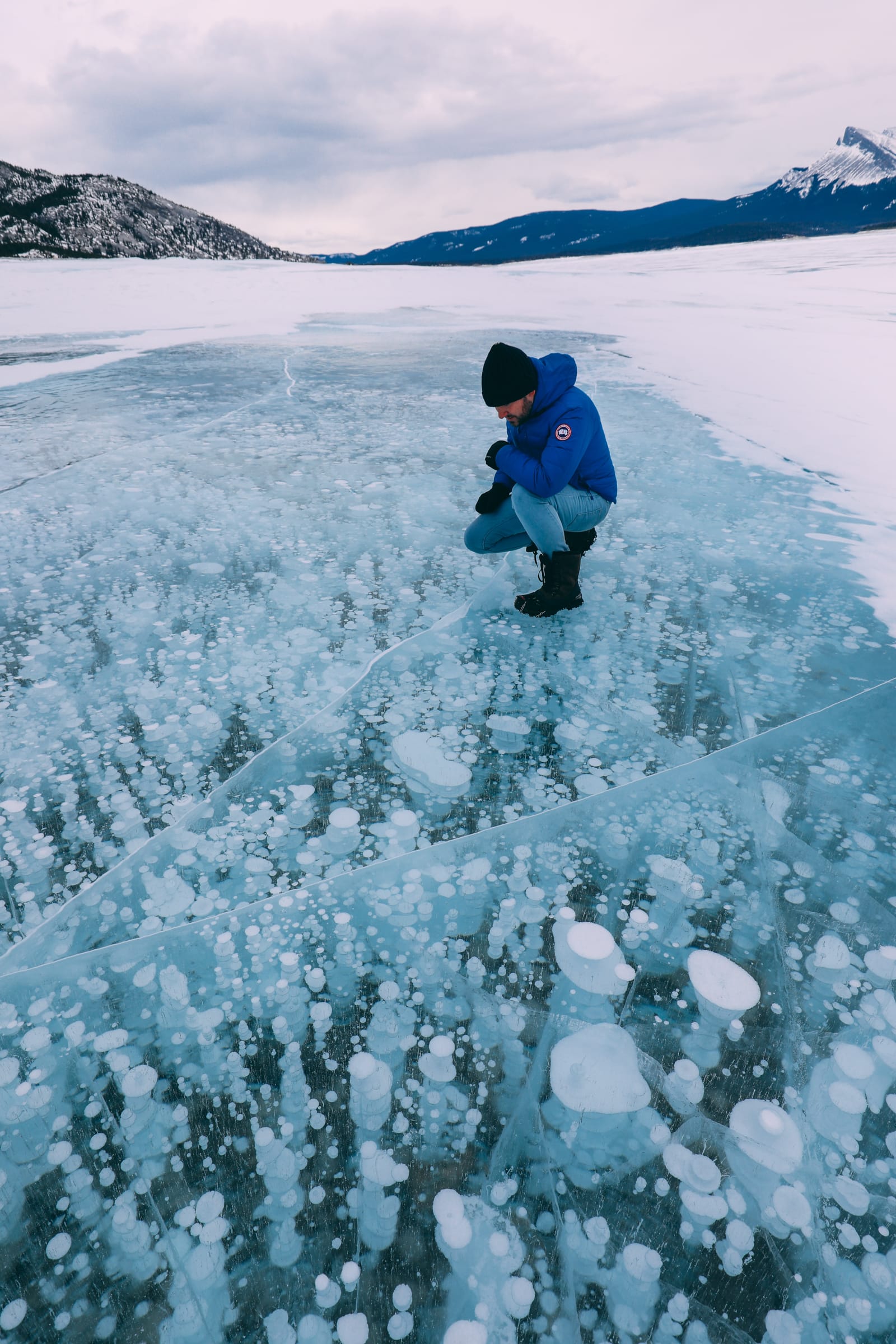
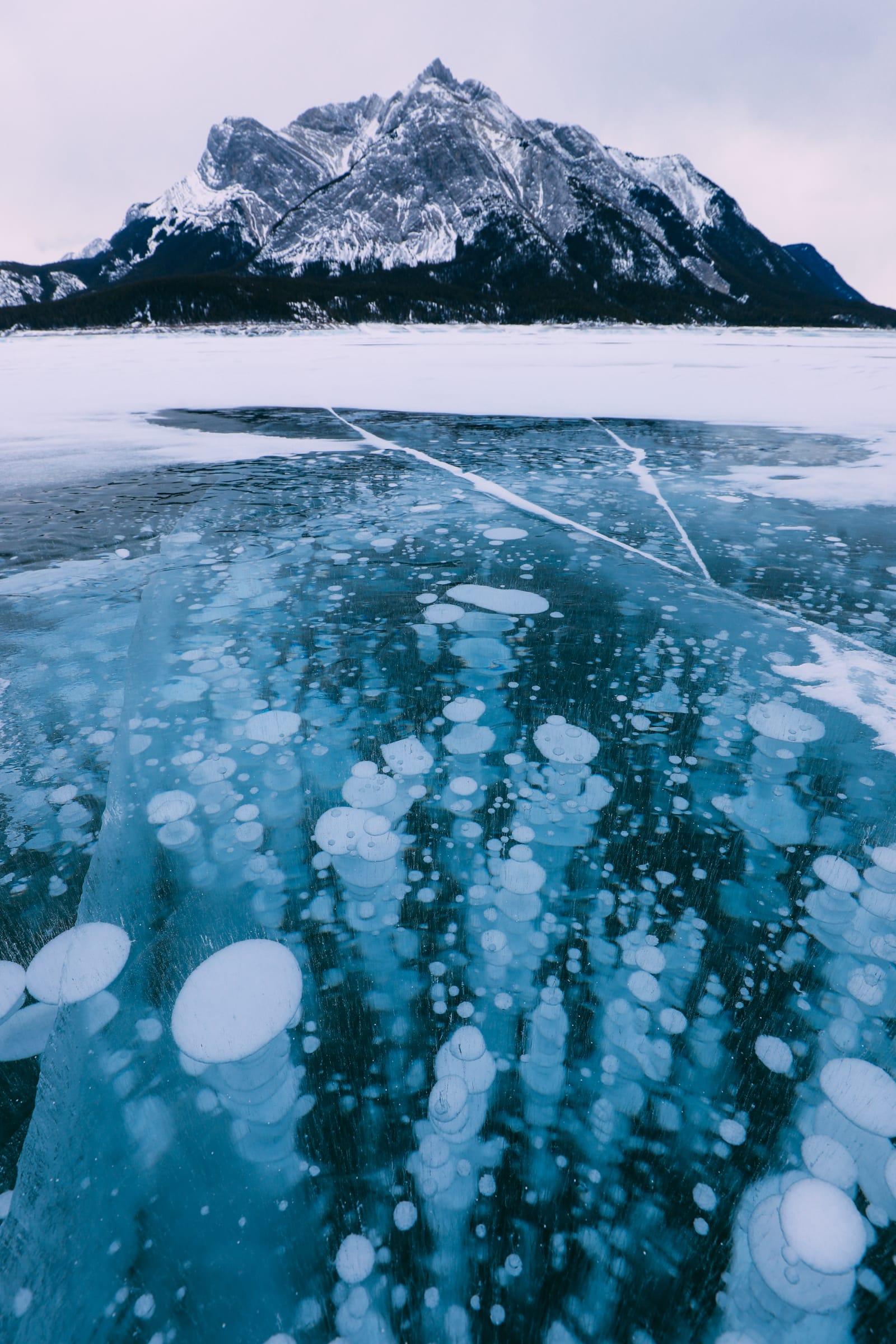
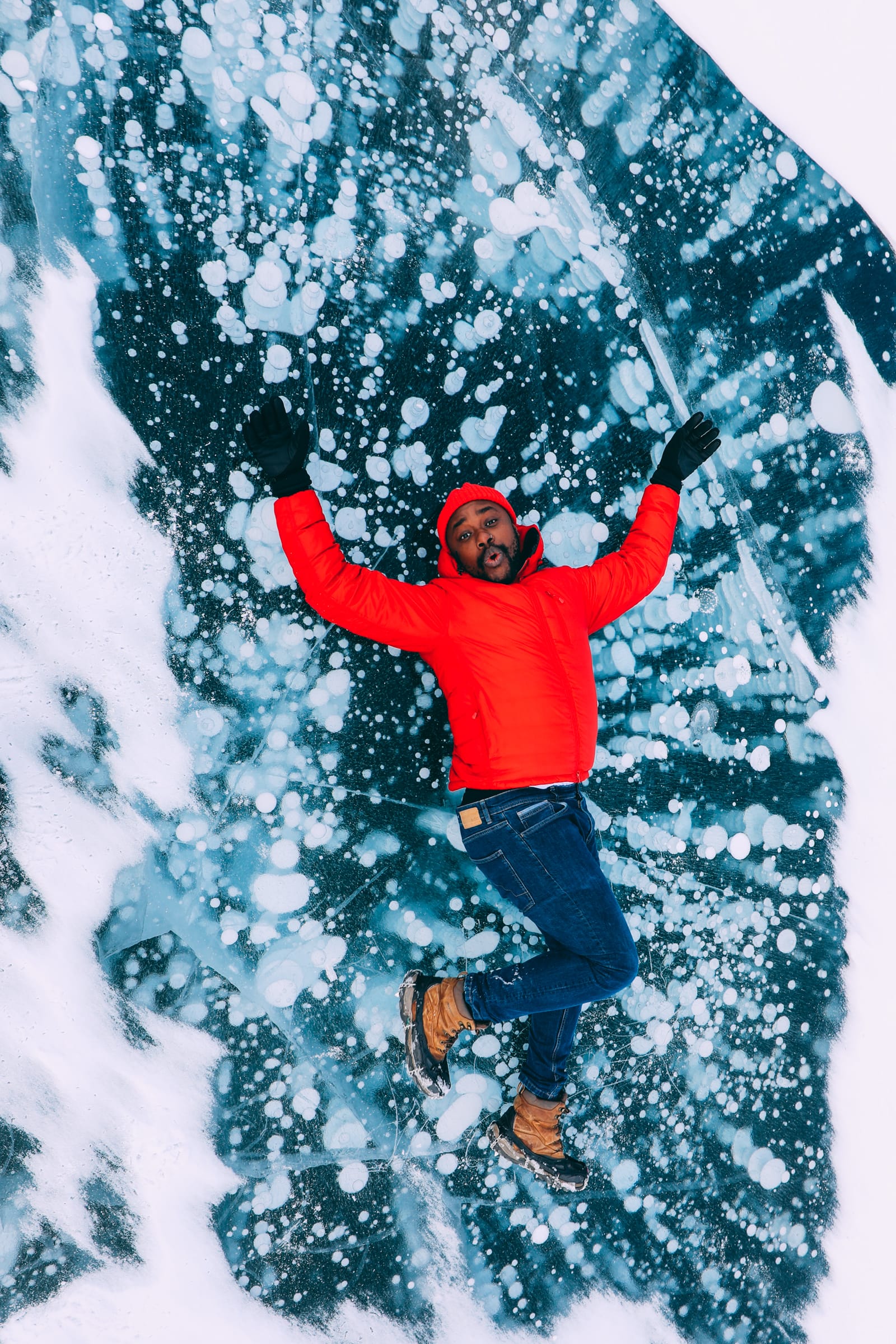
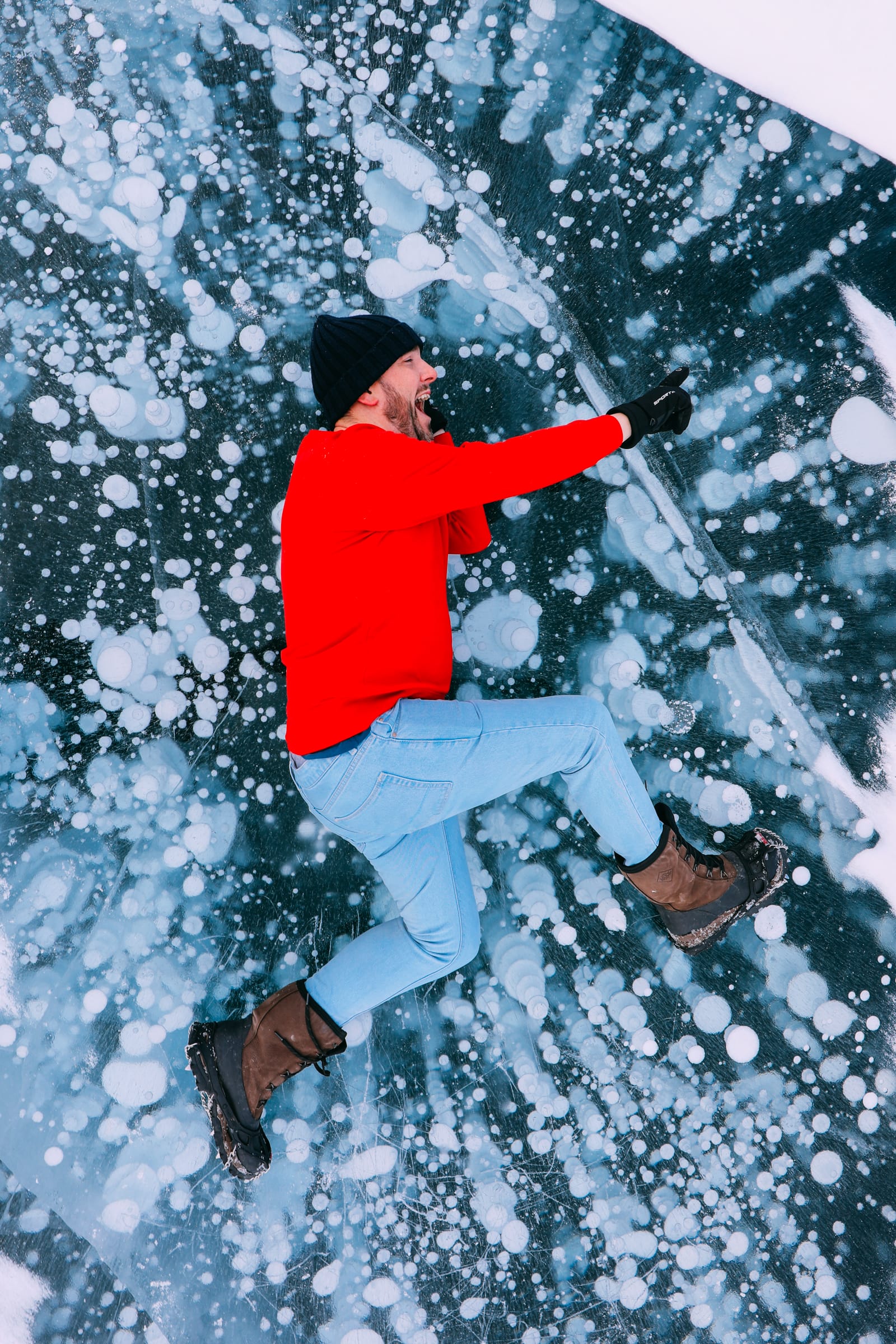
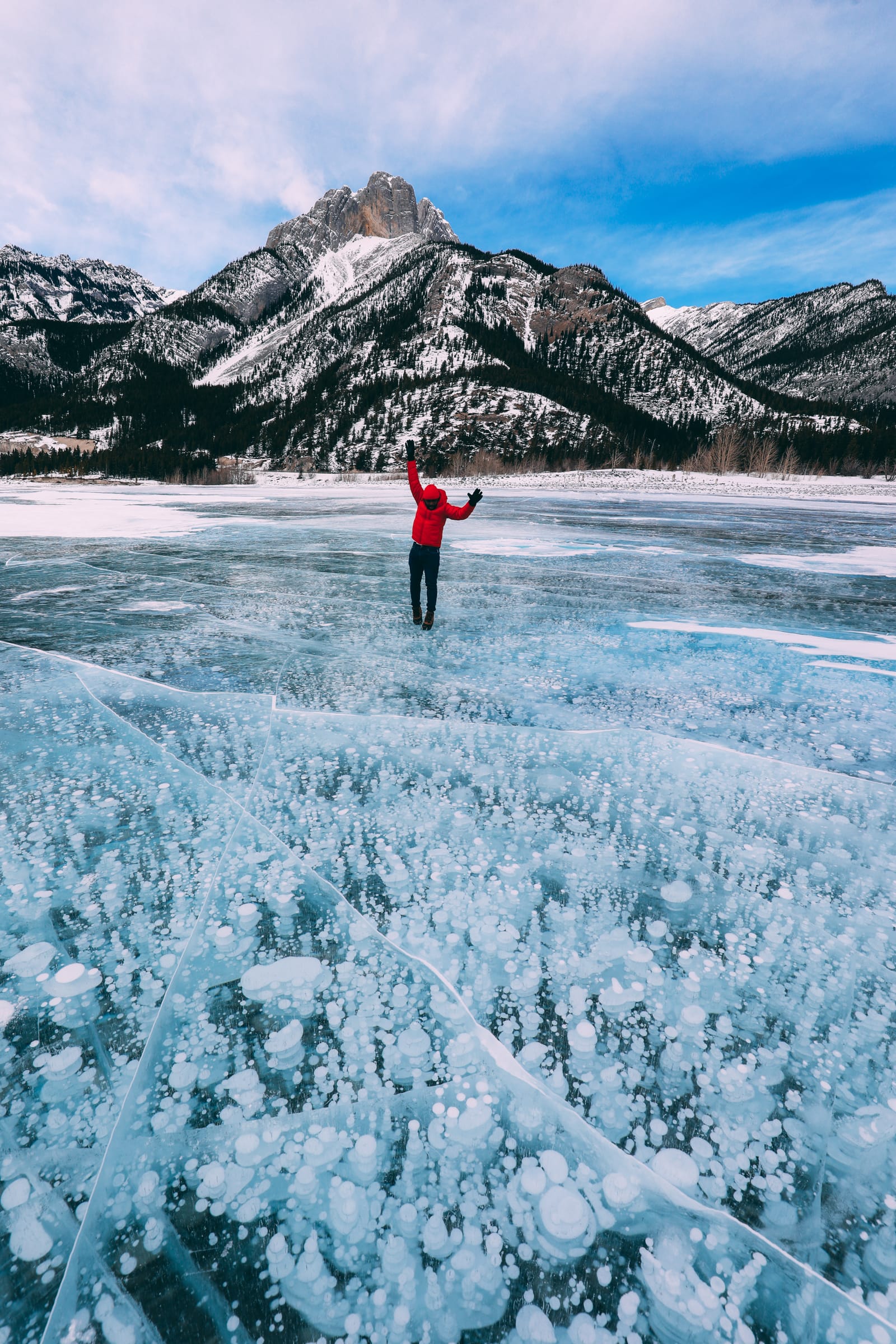
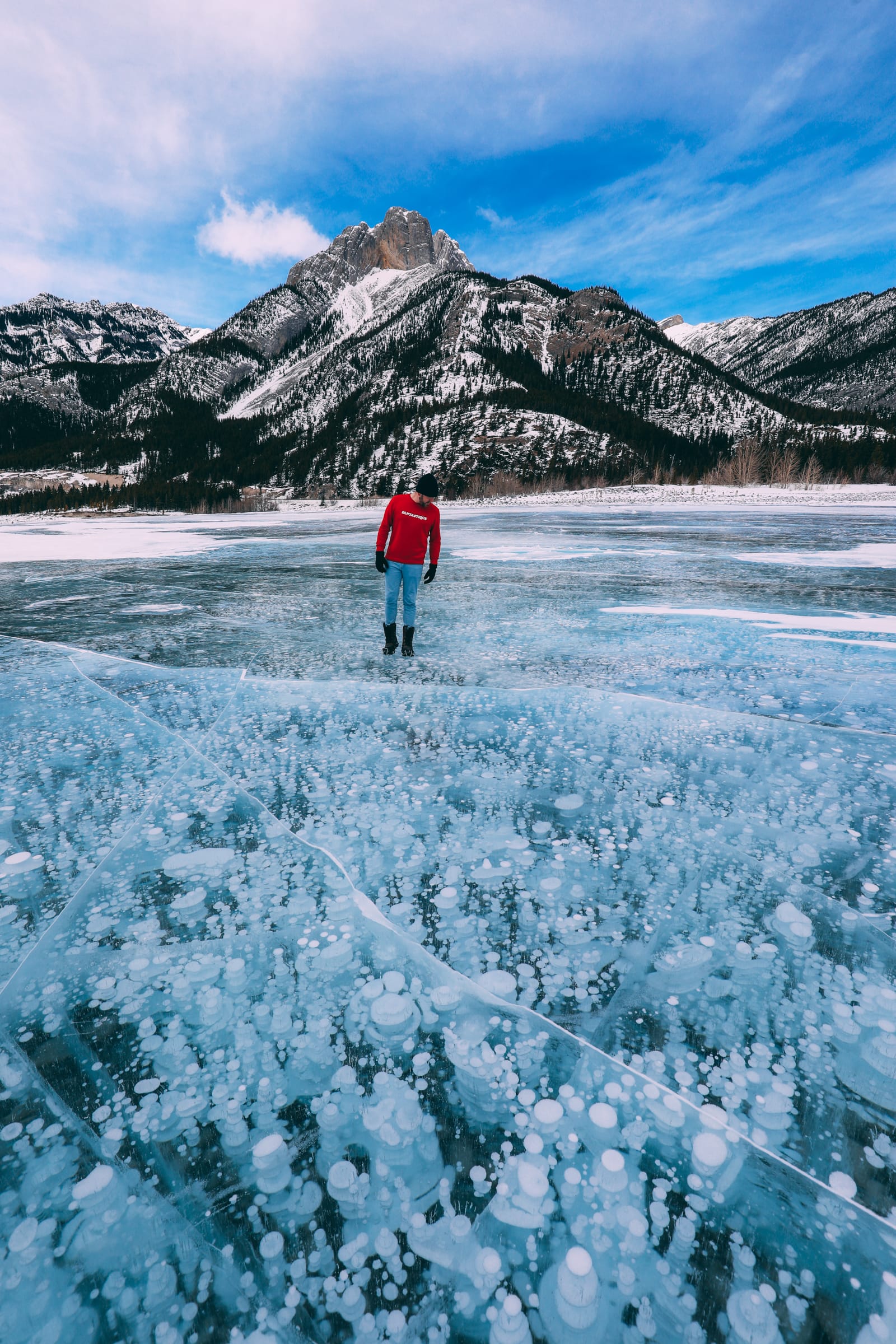
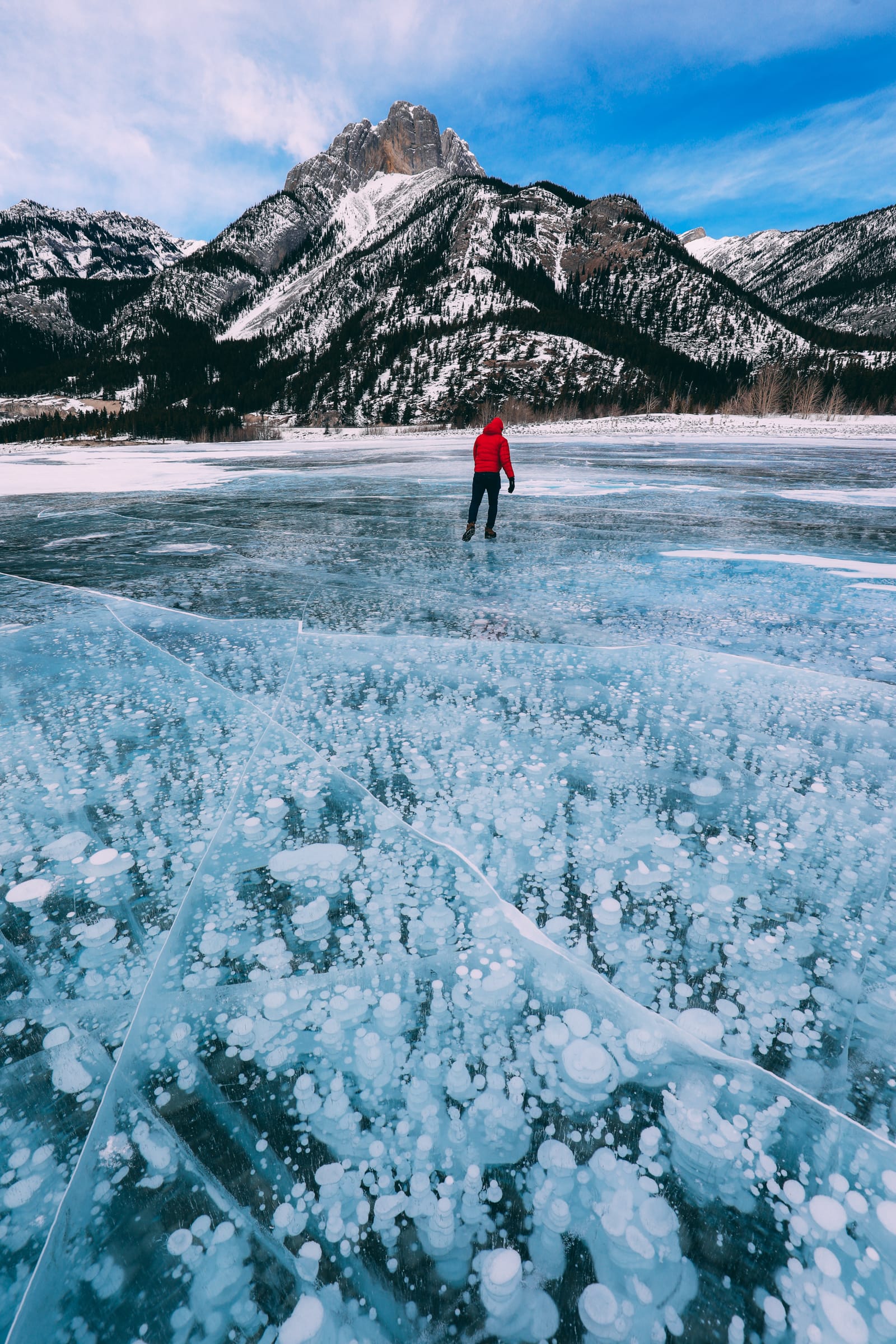
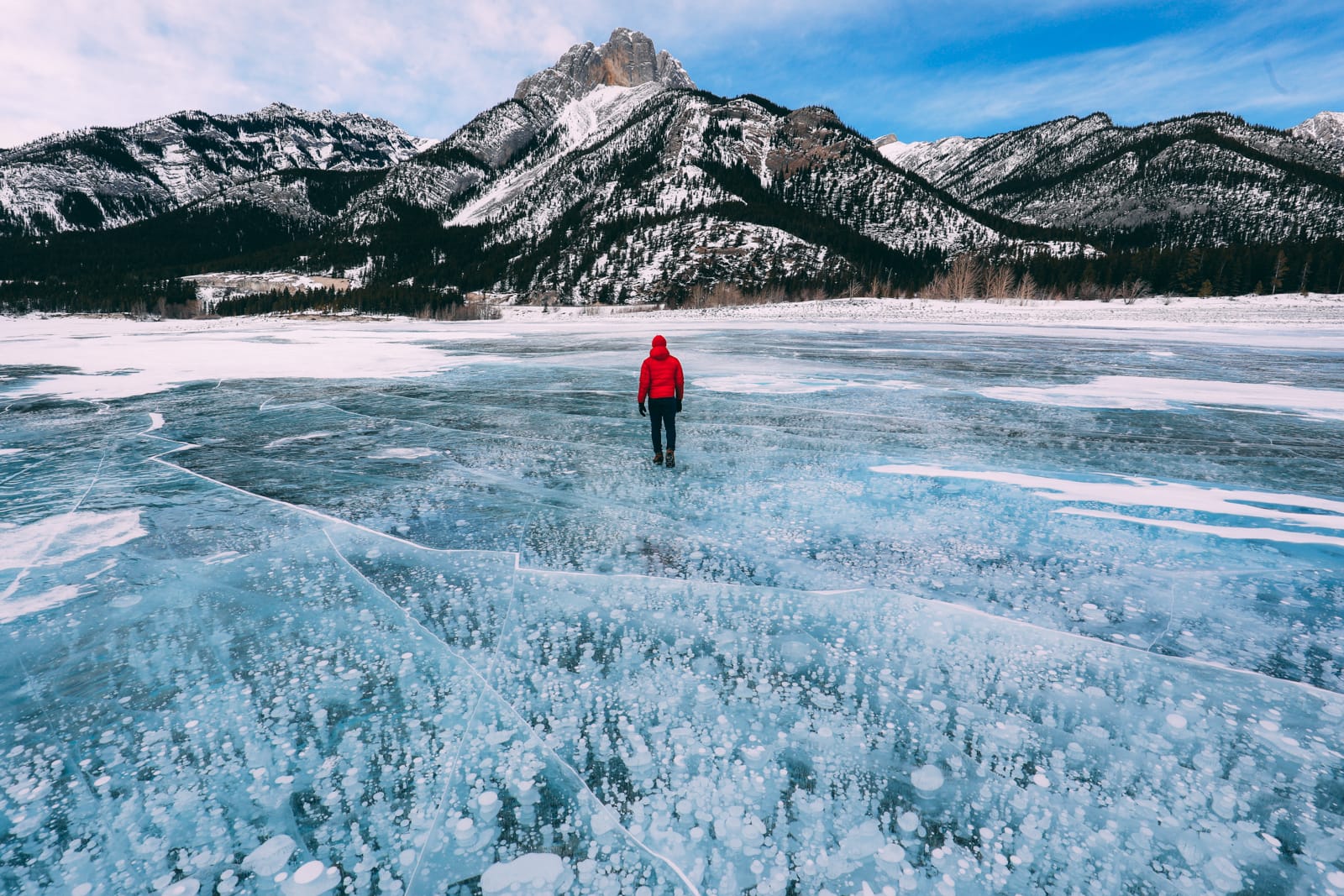
Now, Abraham Lake is one place in Canada where you’ve probably seen, even if you didn’t know what it was called. It’s essentially the lake with those frozen bubbles.
We stopped off for lunch (brought with us by JP) as we soaked up that gorgeous view of the lake.
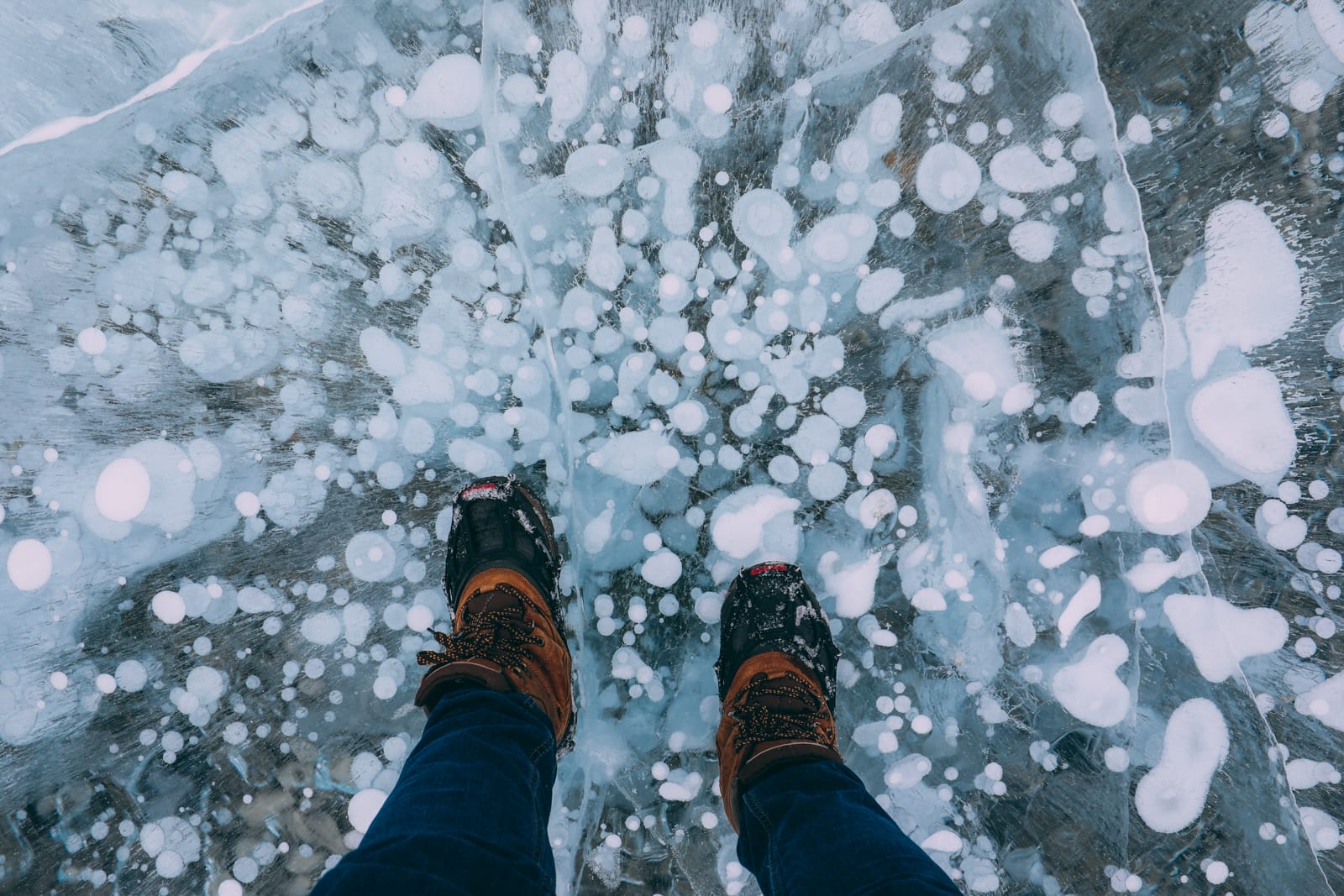
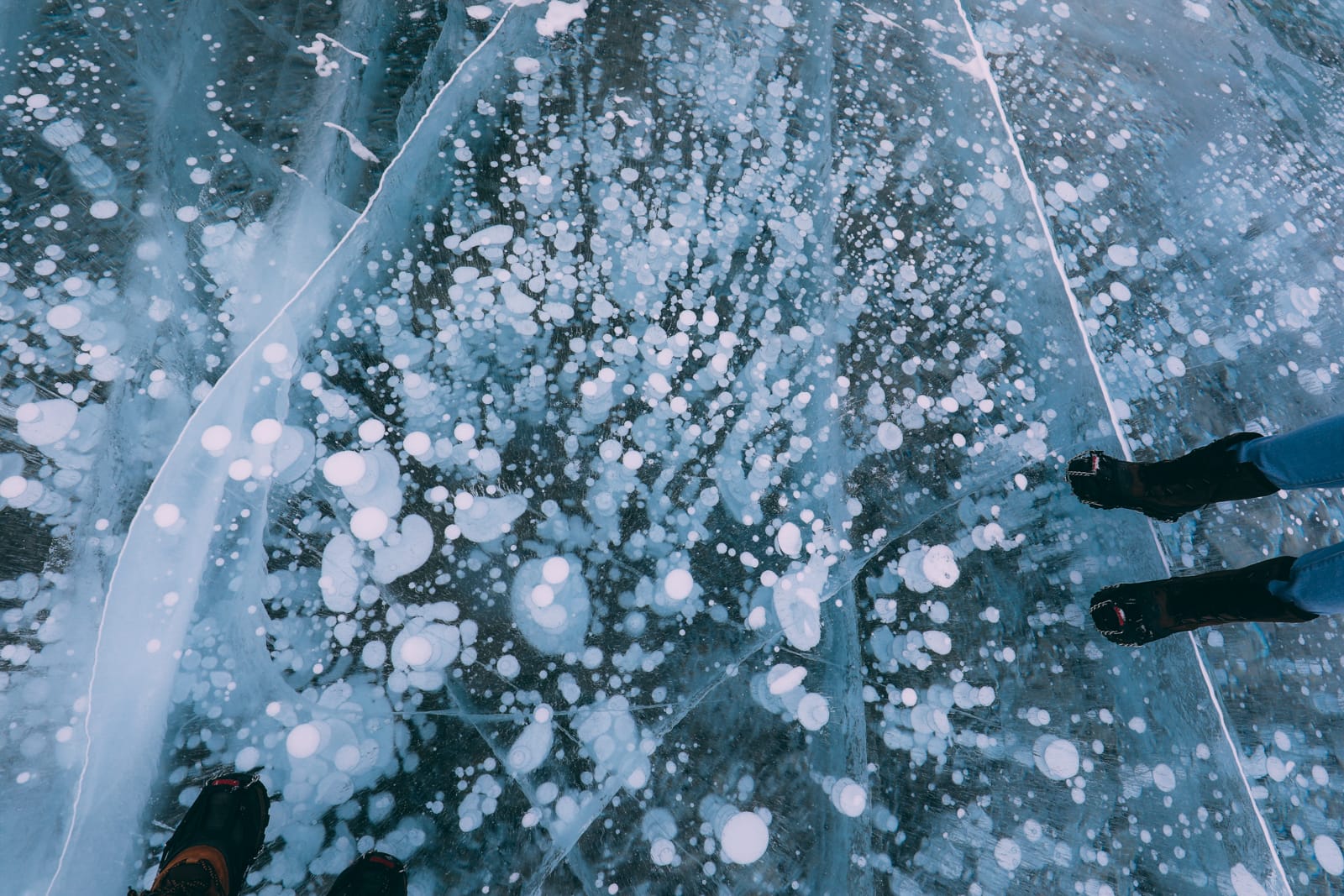
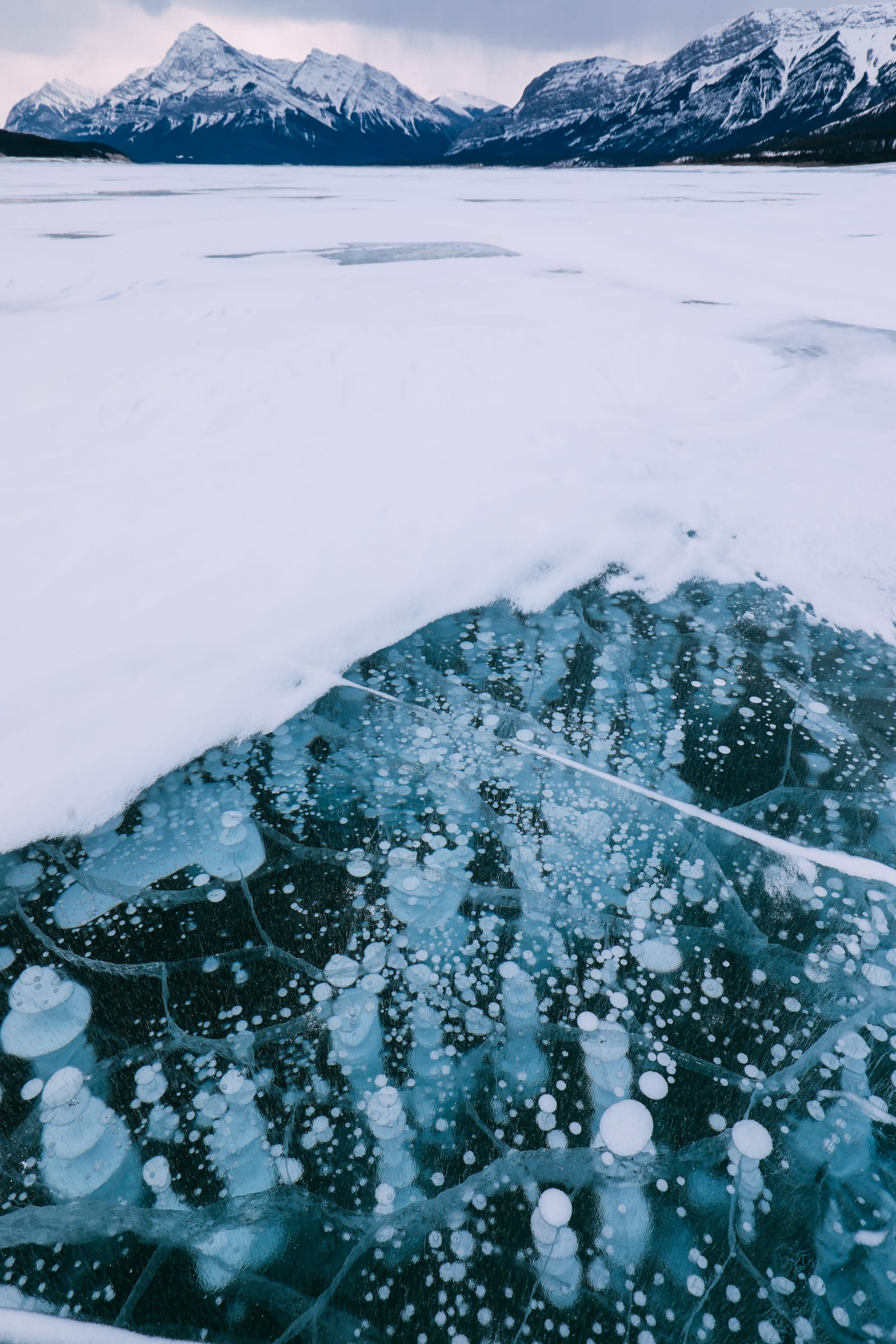
The frozen bubbles in Abraham Lake are caused by methane freezing up as organic matter under the lake decompose and release methane which slowly freezes as it rises up in winter.
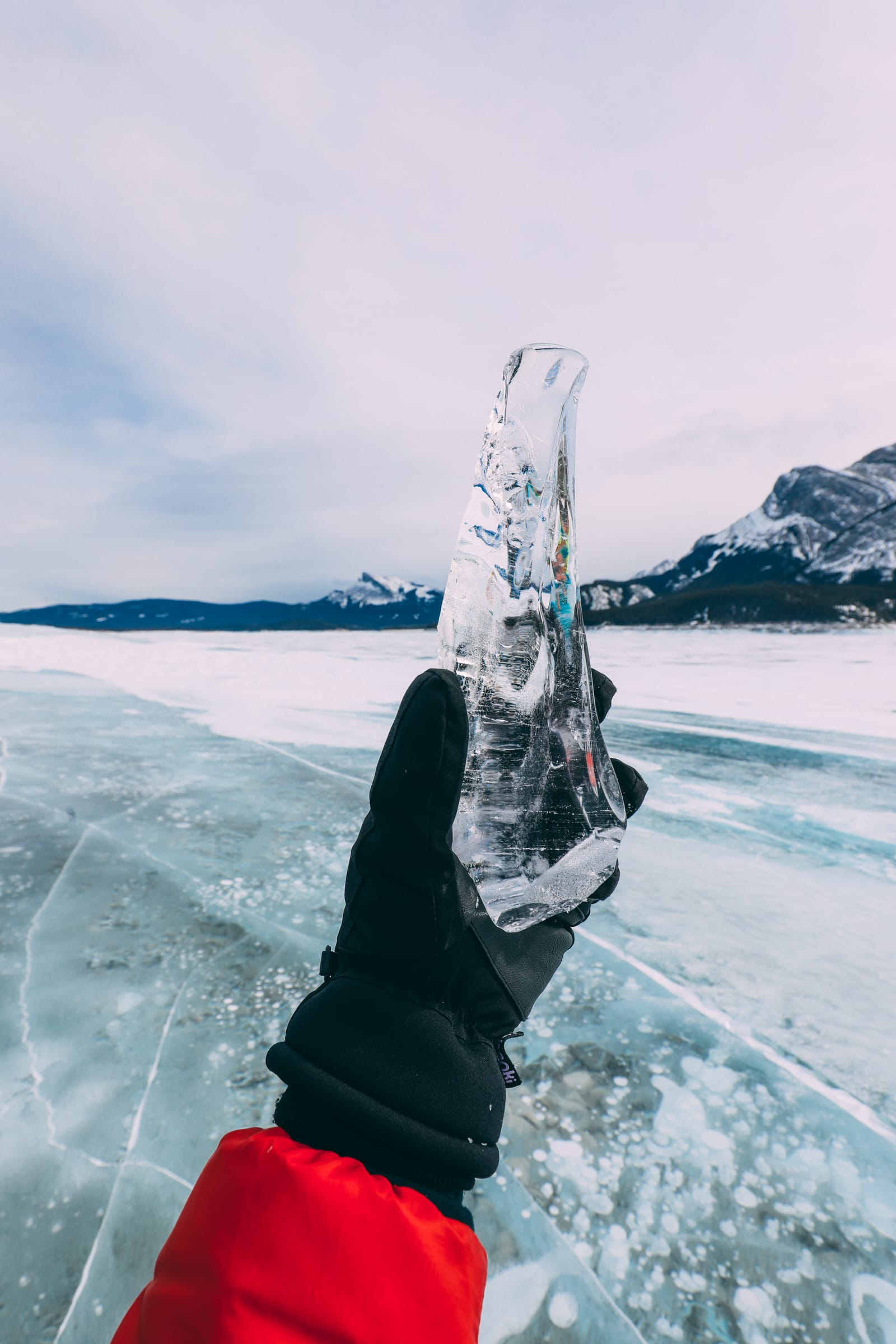
The way the ice freezes makes the ice super clear (instead of being cloudy, like ice you might find in your fridge). The fact that it’s fairly windy here also means the dusting of snow on the lake always clears up so you end up being able to spot the bubbles as you walk over the lake.
It is absolutely beautiful and so worth the trip.
There are a few things worth knowing though. There’s definitely a better time to visit – essentially the middle of winter is brilliant for seeing the bubbles at their finest – arrive too early (late autumn) or too late (early spring) and you won’t actually be able to even walk on the lake.
Walking on the lake requires crampons. Don’t even try without – you won’t get very far and will probably hurt yourself from constantly falling over.
Having a guide certainly helps. There are clear hotspots here that are best for seeing the bubbles and having a guide local to the area is one of the best ways to do so. Plus they know the bits of the lake not to head out on.
It makes a huge difference; having a guide like JP as this was actually not our first experience of being in Abraham Lake.
The first time around, we saw the bubble but it was somewhat underwhelming as it was covered in snow (which meant we tried clearing it our ourselves and was just tedious, to be honest) and that first time, the bubble looked nowhere as clear and beautiful as this time with JP as our guide.
The stark contrast between that experience and this amazing experience we had with JP just made it all that bit clearly why having an expert like him is so worth your while.
(*I know I keep going on about this but trust me, it makes a huge difference to your experience here!)
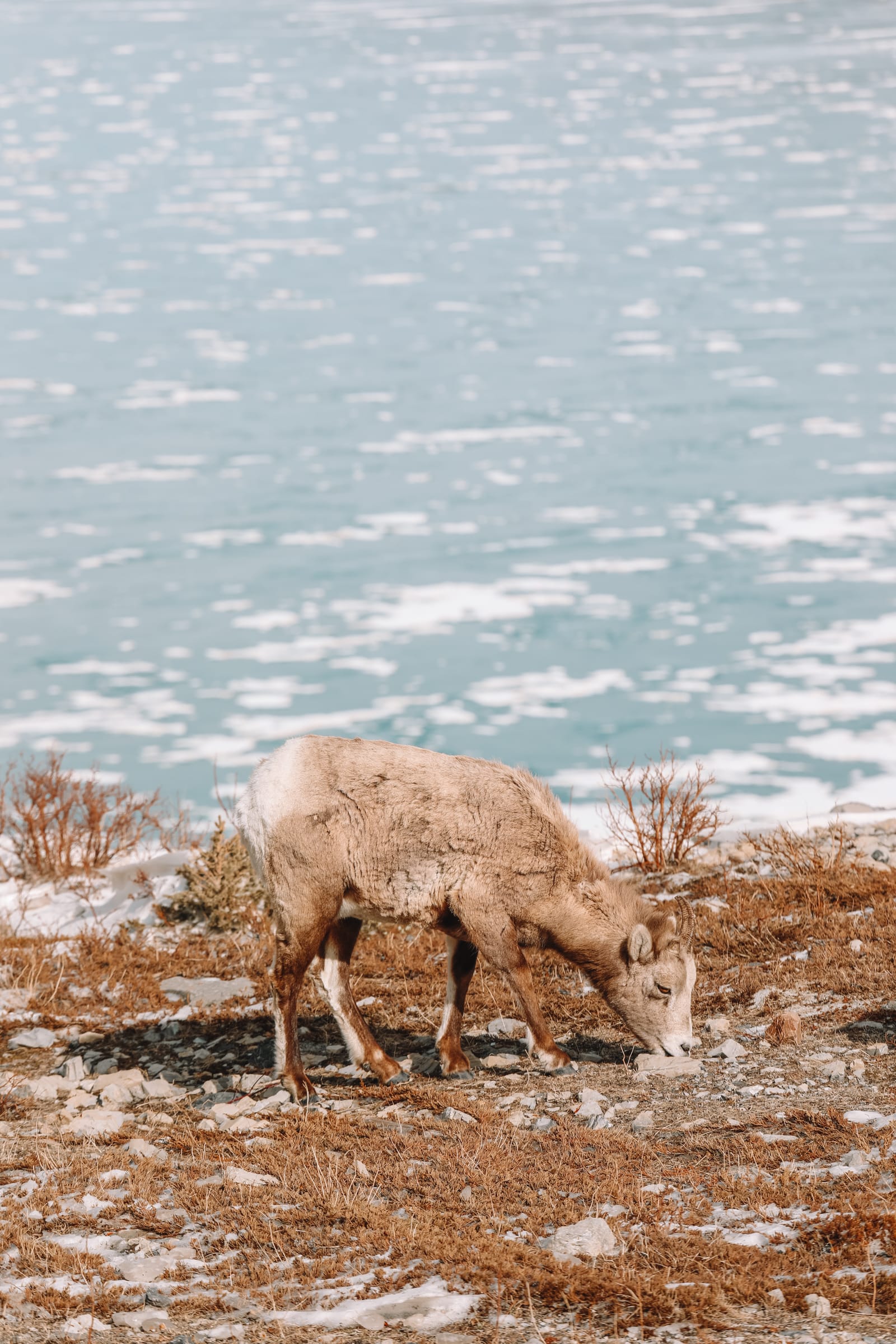
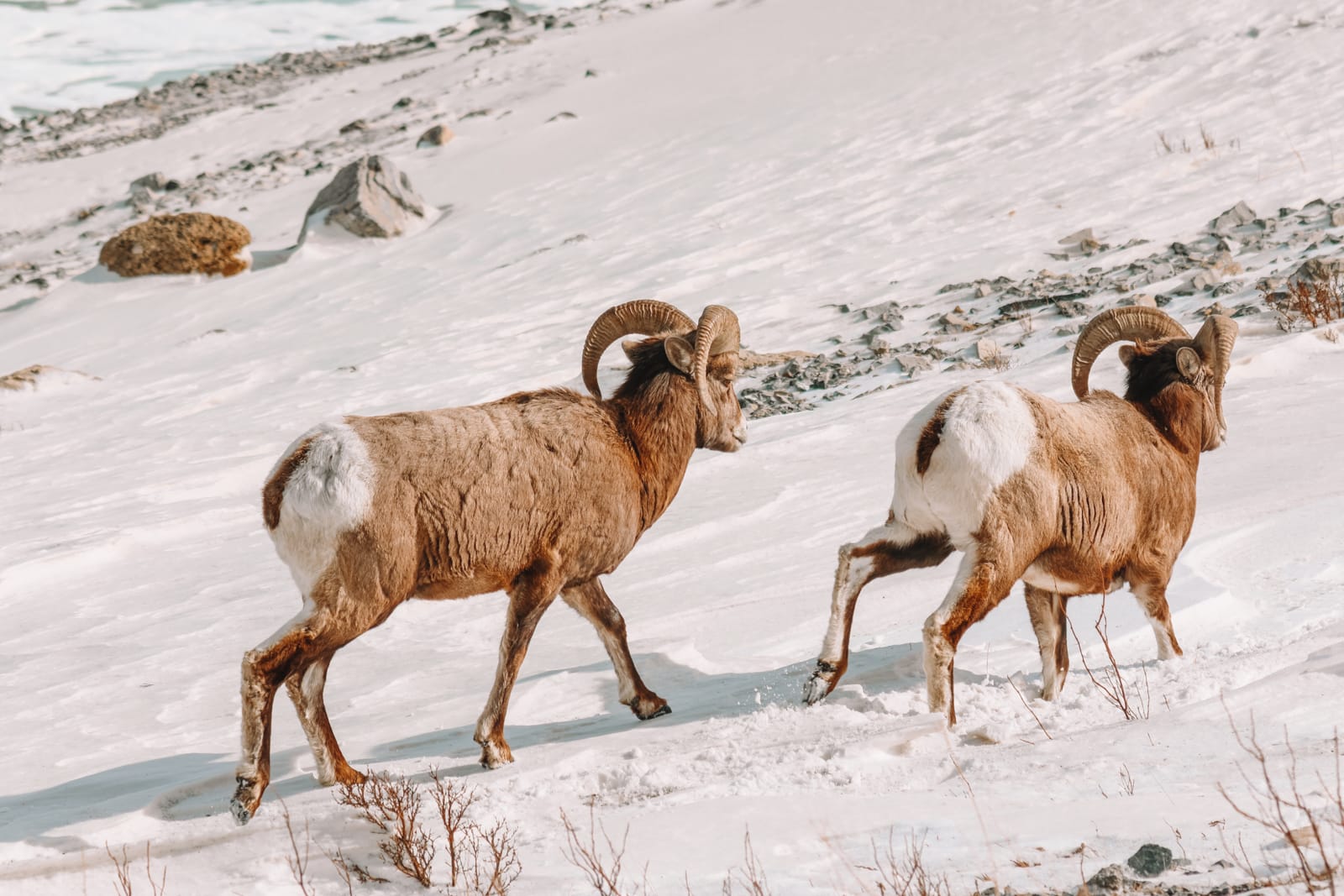
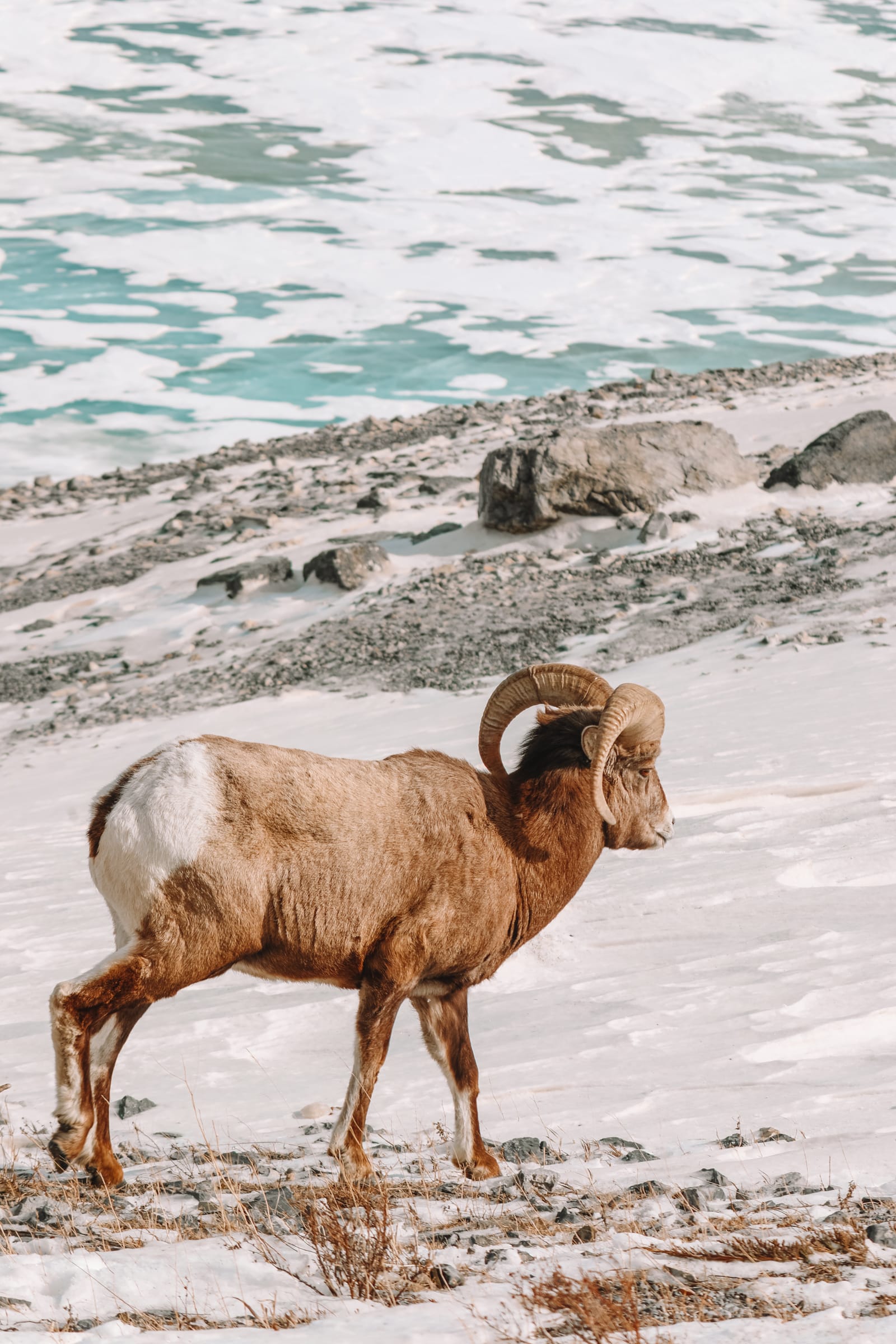
Eventually, we left Abraham Lake, stopping to check out the wild Bighorn sheep that roam the area.
By the way, if you see these when you’re here, do not approach them – unless of course you fancy getting head-butted by wild rams. 😄
With that, we decided to call it a day and head back to Banff…
…where we would be staying somewhere pretty special for our final evening of this trip through Alberta! 😀
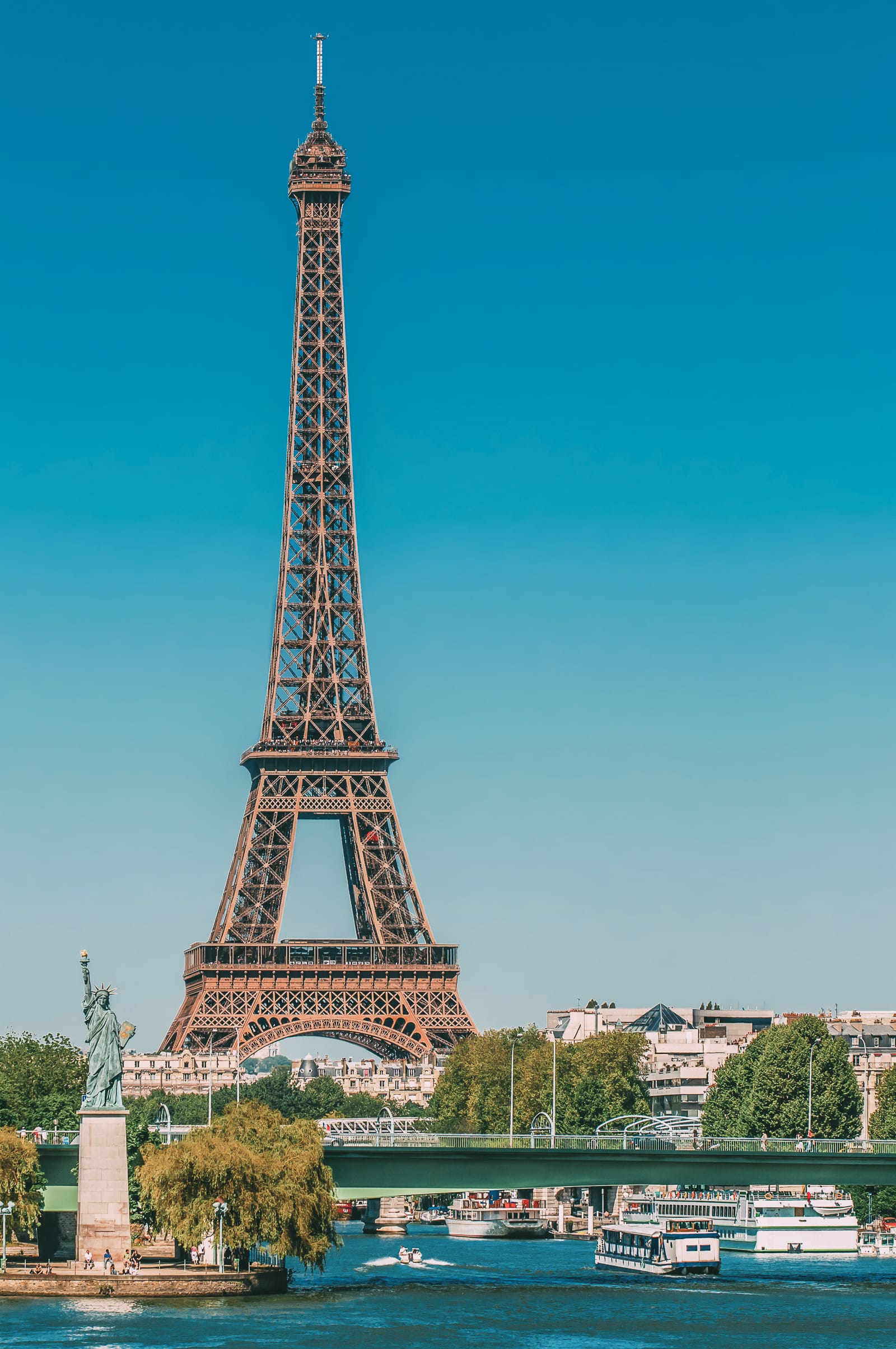
Paris is possibly one of the most sought-after cities to visit. With things like the top places to see like the Eiffel Tower, embracing its romantic image and finding a good restaurant with a view. These all make it a focal point when thinking of visiting France, but there really is so much more to the city than these fabulous spots. Now, if you’re anything like me, you’ll love seeing all the popular sites but you’ll also be hankering to find some of the more unique things to do in Paris.
As you’ve probably guessed, your time in France doesn’t have to be filled with macaroons, pretty desserts or the Mona Lisa, not that there’s anything wrong with them, but there’s soooooo much more. So, after heading up the Eiffel Tower, make sure to see some of these more unique spots you’ll love.
Take a look at some of the unique things to do in Paris, below. 🇫🇷
1.) Wander through the Catacombs
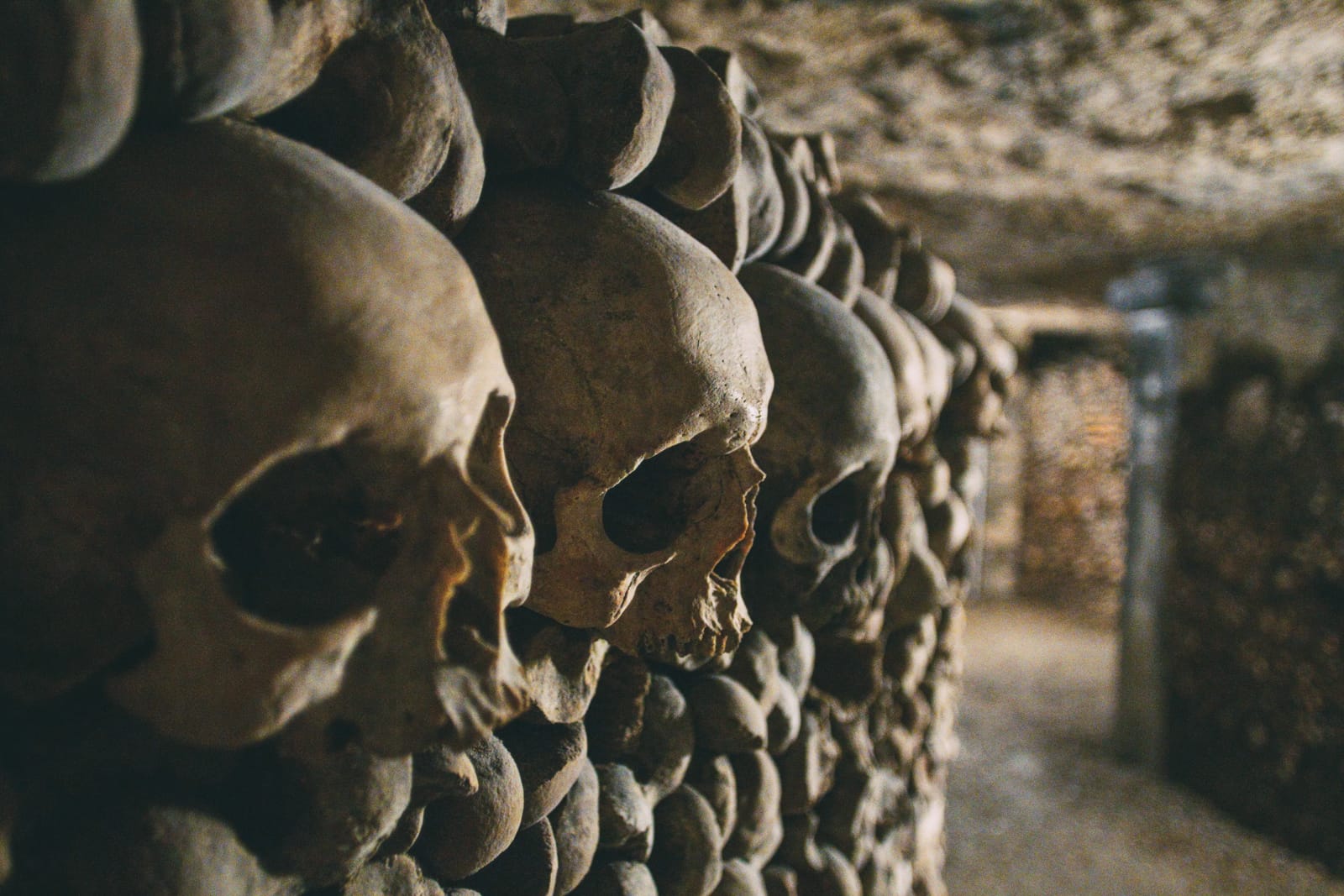
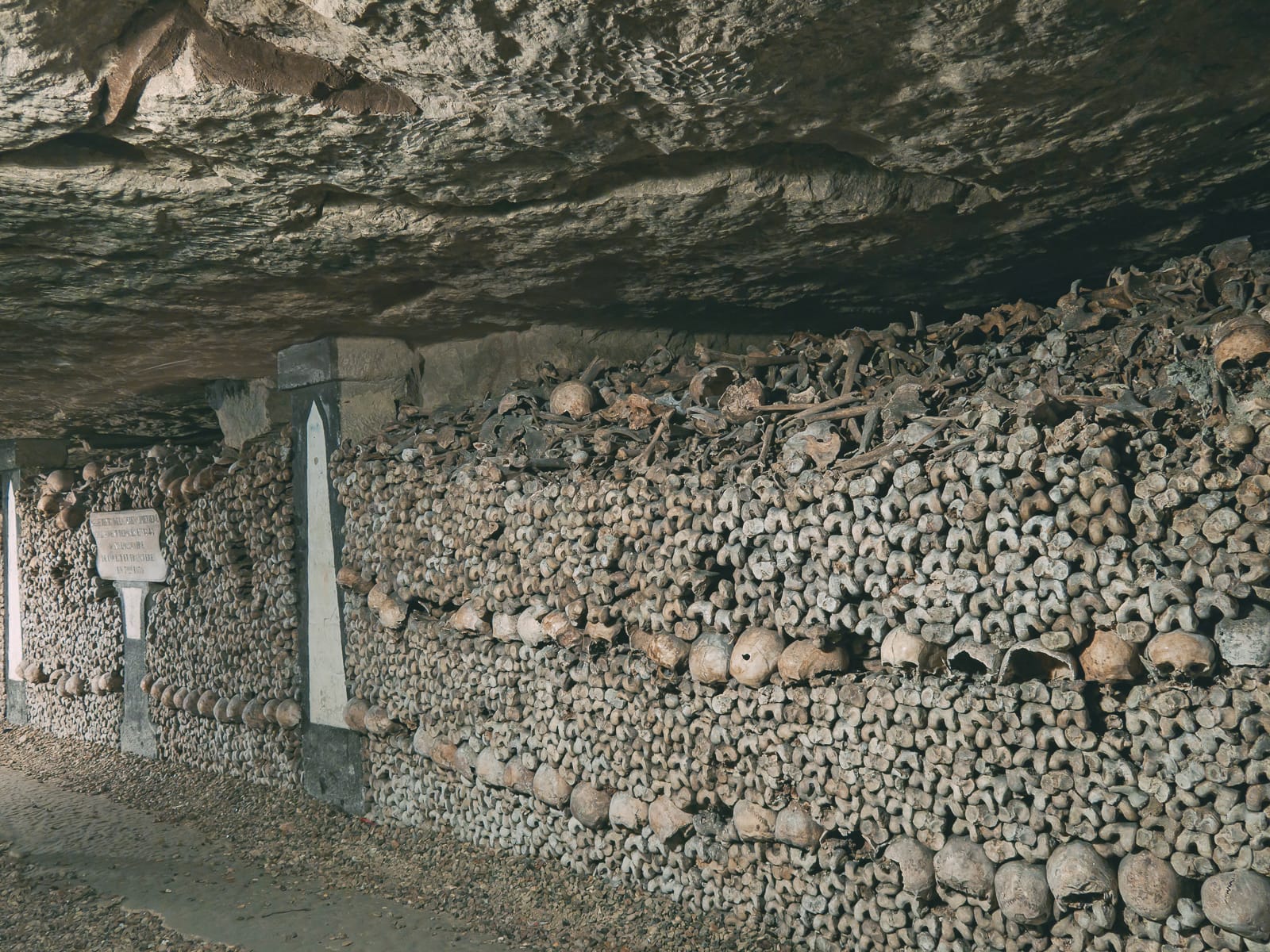
Holding the skeletons of over 6,000,000 people, the Catacombs in Paris are one of the most unique (but pretty macabre) spots you should think of visiting. Let’s be honest, it’s completely different to places like the Eiffel Tower, but not less relevant to the history of the city.
You will usually find a queue to enter the catacombs, so make sure to plan your visit just as it opens or just before it closes. If you can avoid weekend, please do so. After all, no one likes waiting in a queue.
2.) Watch the sunrise over Sacré-Cœur
Sacré-Cœur is pretty well-known but it’s definitely one of the unique spots you’ve got to see. Completed in the earlier part of the 20th Century, Sacré-Cœur might not be too old but it’s still a beautiful spot to visit.
If you want to avoid the crowds, make sure to visit early in the morning. Sacré-Cœur opens every day around 6 am making which is great if you want to see the sunrise over the city.
3.) Wander around Chateau de Chantilly
Nestled within the Chantilly Forest, just north of Paris itself is the Chateau de Chantilly. A gorgeous place to escape the hustle and bustle of Paris for the relaxed and grand charm of the commune itself.
It won’t take you long at all to visit, especially from Paris. It takes less than 25 minutes on the train from Gard Du Nord Station but feels like a world away from the city. Wander around the gorgeous buildings, stop off for some pastries and coffee or even head out on a horse ride.
You’ll love this place.
4.) Grab Cheeses from Marché Bastille
One of the biggest Markets in the city is Marché Bastille and a spot you definitely shouldn’t miss if you’re looking for some of the more unique things to do in Paris.
The Market itself is open on Thursday from 7 am-2.30 pm; and Sunday, 7 am-3 pm. Personally, I find this market best to grab some local cheeses and a few bottle of wine for the time in the city.
There’s nothing better than having a cheeky glass of vino and a tummy full of cheese.
5.) See a concert at Philharmonie
If you love your music, you’ll love the Philharmonie. Perched in the north-east of the city, within Parc de Villette, it’s truly a unique venue to experience some of the best symphonic performances from across the world.
It’s a total one-of-a-kind venue and a place that’s
6.) See the Statue of Liberty
Yep, you read that right. You can actually visit the Statue of Liberty in Paris… though, it’s a little smaller than its big sister across the pond. Head over to Pont de Grenelle and see the gift that the USA gave to France in celebration of their friendship.
Oh yeah, I nearly forgot, you can also see the Liberty Flame, which is identical to the new flame that Lady Liberty holds in New York City. It’s right next to Pont de l’Alma bridge. You can’t miss it.
7.)Go inside the Museum of History and Medicine
Well over, 100 years old, is The Museum of the History of Medicine -which is pretty different from the likes of the Louvre. Pop inside.
The museum is housed in a beautiful hall and situated within the previous Universite de Paris-Descartes’ Faculty of Medicine. It really is one of the more unique things to do in Paris. Especially when it comes to museums.
8.) See the, I love you wall
Right by the metro stop, Abbesses and not too far from the Moulin Rouge is the ‘I Love You’ wall. It’s not the biggest wall or biggest piece of art, but it’s a great spot to see and take someone special. Especially when you’re leaning into that romantic vibe of the city. 💛
You probably won’t spend longer than 10-minutes here, so it’s a great pitstop to see when you’re in the area.
9.) View Paris Through A Clockface
Within the popular Musée d’Orsay is the stunning view through the clock (which was once a train station). Head to the clock face itself, take a peek through the face and see a view that’s one of the unique things to do in Paris… well, for views anyway.
You’ll even spot some of the major landmarks and even the silhouette of Sacré Coeur.
10.) Find proof that the earth spins
Yup, Paris is home to one of the first Pendulum’s that proved the earth spins around. Pop into the Panthéon to see a full-scale copy of the original (now at Musée des Arts et Métiers) and learn more about this experiment.
If physics isn’t your thing, make sure to wander around the Panthéon itself. The building is stunning.
11.) Walk over an old prison
Crossing the River Seine, Pont Concord Bridge is an unassuming 18th Century bridge that’s got a shed load of history within it. Literally. The structure itself was made (rather eerily) from the remnants of the infamous Bastille Prison. Meaning that you can actually walk over the remnants of a historic prison.
After crossing the bridge, make a pitstop at the Palais Bourbon with its classic design. On certain days, you might even be lucky enough to join a tour.