Starting from 1 October, most visitors to New Zealand will need to request an NZeTA (New Zealand Electronic Travel Authority) to enter the country. The authority will enable travellers from 60 visa-waiver countries to stay in NZ for up to three months.
British citizens will be allowed to stay for six months, but the NZeTA will not be required for Australian passport holders and permanent residents of some Pacific Island nations. Cruise ship passengers from all countries will need to apply for an NZeTA.
See here for a list of the 60 visa-waiver countries, including the United States, Canada and all member nations of the European Union. Like an ESTA for the United States, an NZeTA will be valid for multiple visits across a maximum period of two years.
Applying for an NZeTA for travel can be done online at www.immigration.govt.nz/nzeta or via the Immigration New Zealand mobile app. Online the cost will be NZ$12 per person, reducing to NZ$9 when using the app. An additional fee of NZ$35 per person will be charged at the same time, and it is estimated this International Visitor Conservation and Tourism Levy (IVL) will raise up to NZ$450 million across the first five years to be used to expand NZ’s tourism infrastructure and also help to protect the country’s natural environment. Projected benefits of the NZeTA scheme are improved border security and reduced processing time for travellers entering the country.
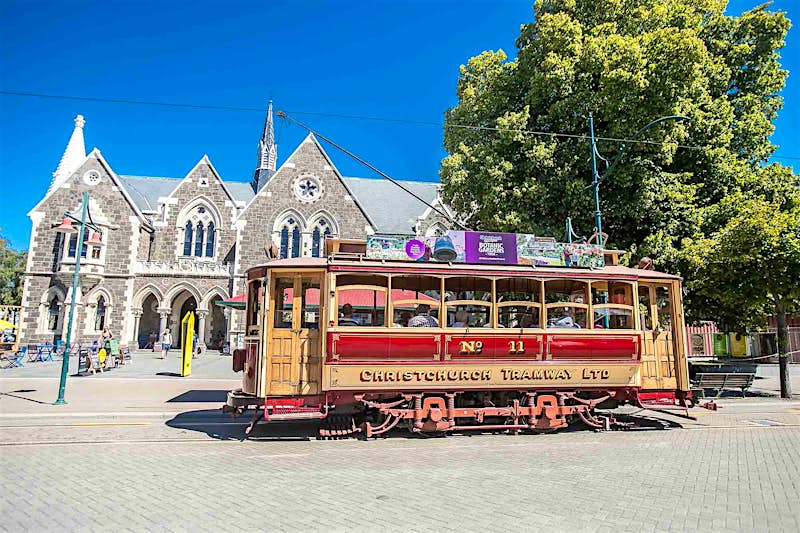
Christchurch’s city centre.
While authorities say it could take as little as 10 minutes to issue the visa, all applicants should make their request at least 72 hours before they travel. They will also be required for travellers transiting through NZ airports even if NZ is not their final destination.
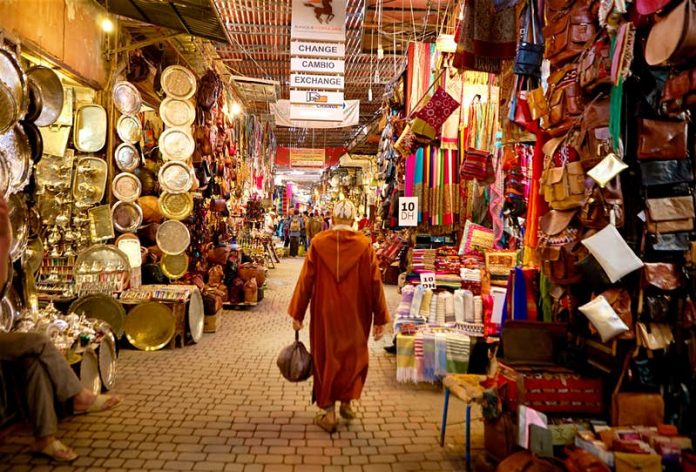
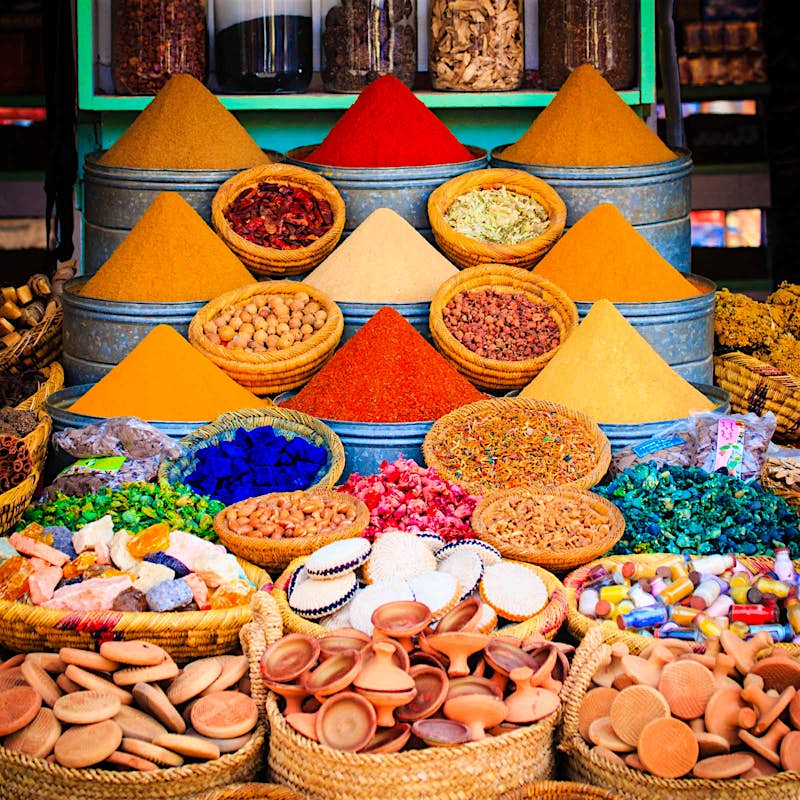
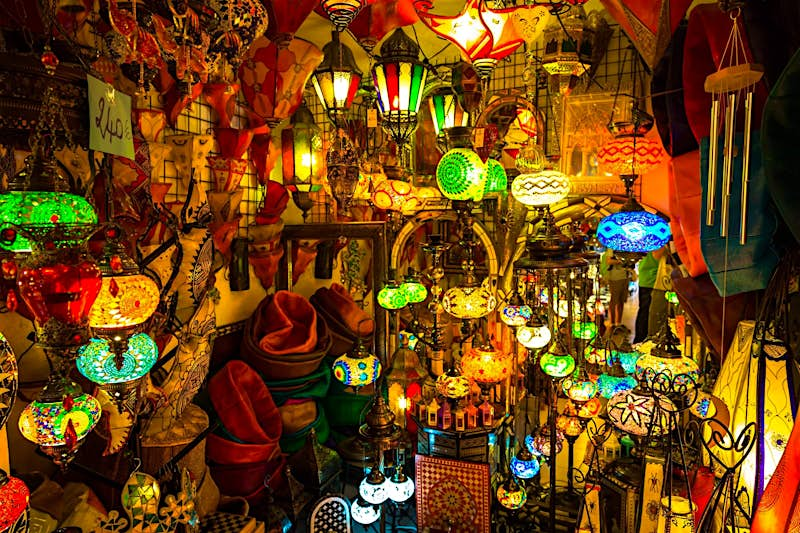
The dazzling souks of Marrakesh are teeming with beautiful objects to be taken home; colourful spices, walls of brightly lit lanterns, and radiantly patterned ceramics, to name a few. They could cost you a small fortune elsewhere but these simple haggling tips will get you a fair price and some unique purchases. Just remember to leave space in your suitcase.
What to know before you start shopping
Marrakesh is the beating heart of Morocco; traders come from all over the country, many of them with workshops in their hometowns. Different souks will specialize in different products; for example, in the Souq Haddadine, you’ll be able to see blacksmiths at work and buy directly from them. Marrakesh specifically is known for spices; they are locally produced and sold by the bag. There’s also quite a bit of Berber influence in the markets. A nomadic people living primarily in places like the Sahara and Atlas Mountains, their rich culture of craftsmanship and design is seen all over the souks in things like colourful bread baskets, hand-woven rugs, and silver jewelry, with many coming directly from the Berber tribes.
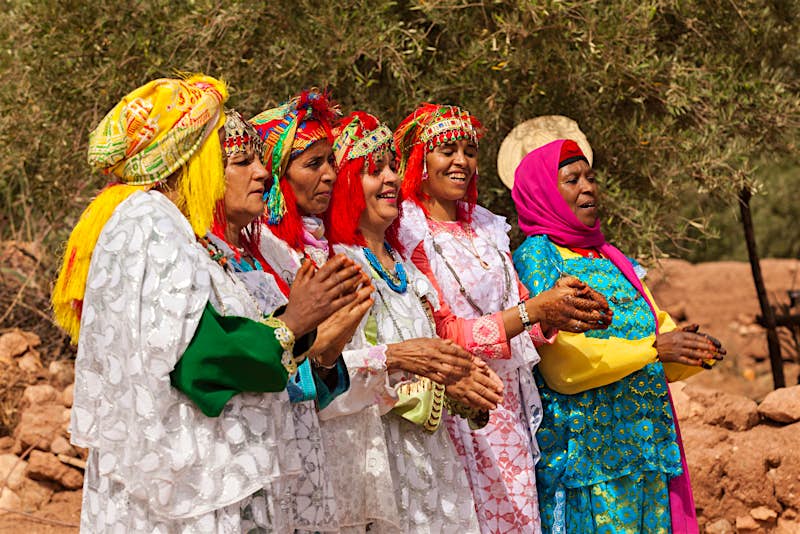
The Berbers bring plenty of their crafts to the Marrakesh souks
A word of warning about the main tourist souks outside the Djemaa El Fna. It can feel very overwhelming and claustrophobic, and though the stalls are “outside,” the pathways between them are covered. GPS doesn’t work particularly well, so when guides say “get lost in the souks,” it’s a very literal suggestion. Expect intense smells, vivid colours, winding narrow lanes and, perhaps most overwhelmingly, the holler of every shopkeeper that catches sight of you, waving you down into their shops.
While it can get frustrating constantly being badgered by all the peddlers, but remaining civil is very important. Competition is intense, and you must remember this is their livelihood. Instead of ignoring the shopkeepers or saying something rude, you can say:
“I’ll let you know when I find something”
“I need a minute to look around”
“Do you mind giving me a few minutes to see the stuff?”
Marrakesh is famous for its local spices
If you don’t intend to stop, just keep walking and give them a polite smile and a shake of the head, you’ll be surprised at how often you’ll receive a laughing wave back!
How to haggle
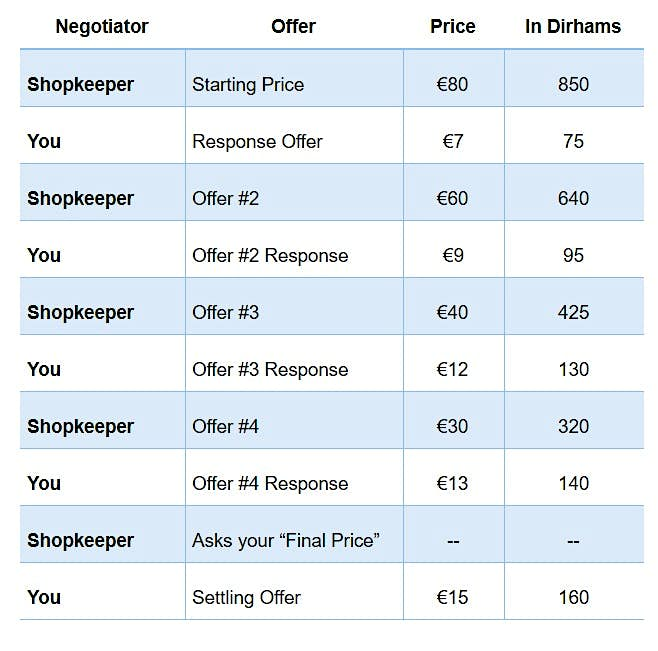
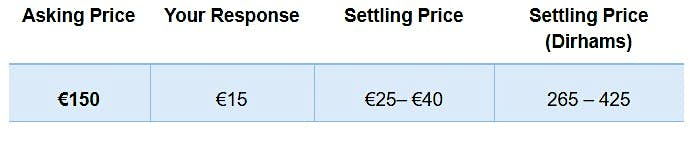
Until you become a seasoned expert, it’s easier to let the shopkeeper begin the numbers game so you have a foundation to work with. After picking out something you like, they will likely start off with an absurdly high number, probably in euros. It’s a number they don’t expect to receive, just as you’ll respond with a number so low it’ll make you uncomfortable.
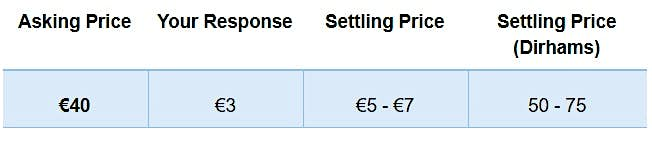
However you’ll be going up by increments of €1-2 and they’ll be cutting down their asking price by 5s and 10s. The goal, eventually, is to meet somewhere around the middle mark after their second response offer. For example, you’ll see a scarf that you want to purchase, and they’ll say it’s €40. You can say you’ll only purchase it for €3. The actual price for a scarf could be between €5-10.
An example negotiation could go like this:
It is easier to negotiate if you are buying more than one item. For example, to buy one scarf you can get the price to maybe €7-8, but if you are buying four, it’s much easier to get them down to €5 each.
It’s important not to be aggressive. If your seller isn’t giving you the price you want, walk away. Likely that will be the trigger for them to give you a better settling price, and if not, there are plenty of other shops to try. It is also poor etiquette to agree on a price, but then change your mind and refuse to purchase.
Understanding quality is important; if one shopkeeper said he will sell you lanterns for €2 each, but another shopkeeper refuses to sell his lanterns below €15, get a feel for the quality; the €15 lantern is likely made brass instead of tin. Shopkeepers will not compromise as much on their quality products, and it is an insult to the craft to keep on insisting on a lower price.
Introducing Morocco
Start exploring Morocco with Lonely Planet’s video guide to getting around, when to go and the top things to do while you’re there.
Don’t worry if you feel uncomfortable, especially starting off. Haggling is the culture of Morocco, it’s an expectation, and an experience in and of itself. If you happen to wander through less touristy areas, you’ll likely see locals haggling in French or Arabic as well, carrying baskets around to gather their groceries. The biggest difference you’ll see are the goods; kettles, electric fans, and piles of t-shirts and jeans.
What to buy in Marrakesh
Lanterns
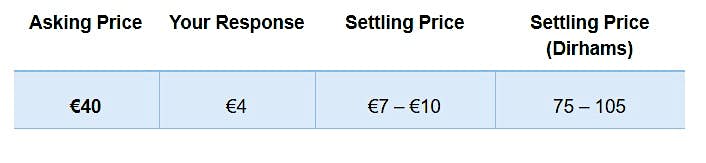
This can be tricky, so it’s good to feel around before making a choice. Aluminum lanterns are the cheapest but they’re breakable and poor quality. Many are painted to look like brass or copper, but if you look closely, you’ll be able to see the paint chipping off on a tin base. Actual brass lanterns will not be painted, they’ll be heavier, and the lever will open much smoother.
The range of lanterns available is spectacular, so the below is for a small lantern:
Likely the best approach is to negotiate the price of the most expensive ceramic (salad bowl or dinner plate) and once settling on a price for that, negotiate an entire set. The better-quality ceramics come from Safi and Fez, and are much thicker and often ridged compared to the poorer quality ceramics which are thin and tend to shatter.
For a single large Safi plate:
For a 6 piece set (price will vary based on quality):
Tagine
You cannot leave Marrakesh without trying tagine, whether at a restaurant or in your riad. You can take home decorative tagines for as little as a €1, to €20 for an authentic clay one to cook with.
Cooking tagine for two:
Scarves
The scarves in Marrakech tend to be made in India; the sellers might say it is an authentic Berber scarf, or that they are made of ‘cactus silk,’ but those claims are false; Berber scarves tend to be indigo-dyed cotton, simple and without patterns, and fairly inexpensive. The colourful patterned scarves in the marketplace are imported and mass-produced from India.
However if you do have it in your heart to purchase one, use this guide:
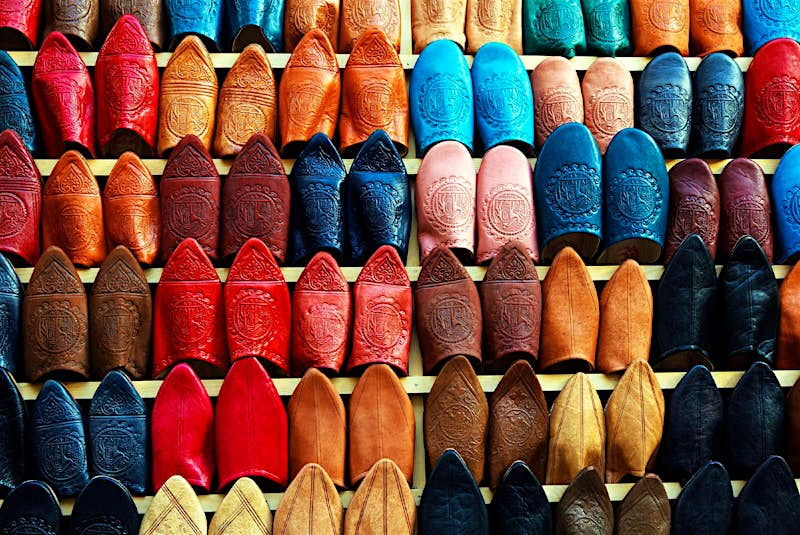
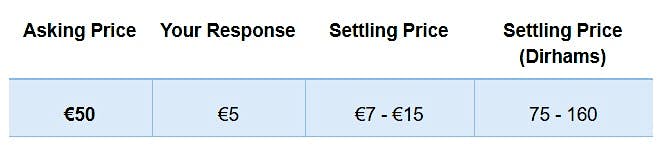
These are very popular leather slippers sold in Marrakesh, though you have to be careful to purchase authentic leather and not fabric babouches.
Leather babouches:
Thuya wood items
Carved from trees in the Southern region, you can purchase plenty of beautiful thuya wood items, like hand carved chess-boards with swinging compartments to hold the pieces. Wooden chess boards like this would cost a small fortune anywhere else, but in Marrakesh you can get them for a fraction of the cost, and even see them make it.
Wooden chess board:
There are plenty of items you can purchase that are not on this list; baskets, silver jewelry, mirrors, and so on. A good rule of thumb is to offer them 10% of their original offer, and settle somewhere between that and their second counter-offer. Eventually you’ll build up knowledge about prices and quality, and you’ll be haggling like a Moroccan in no time.
Beneath the busy, bustling, metropolis of London lies a forgotten world; a labyrinth of twisting tunnels, cavernous caves and secret passageways hidden behind locked doors.
Sound intriguing? As well as scooping up a brand new publication on the history of the city’s underground, visitors to London can now take a tour to see it for themselves.
Called Hidden London: Discovering the Forgotten Underground, the book was created by David Bownes, Chris Nix, Siddy Holloway and Sam Mullins of the London Transport Museum, with photography by Toby Madden and Andy Davis. Published by Yale University Press, it’s described as “an exploration of the abandoned tributaries of London’s vast and vital transportation network through breath-taking images and unexpected stories.”
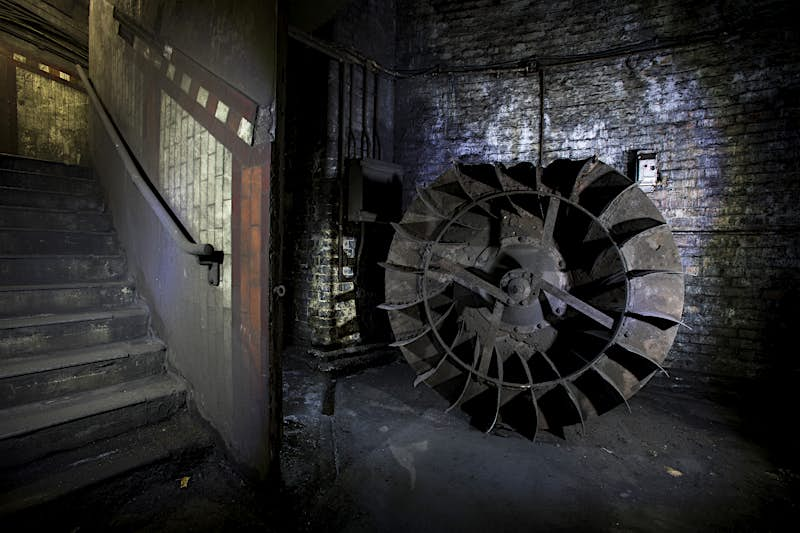
A redundant fan impeller in a dark corner of disused York Road station
The book is the first of its kind to focus on the mostly hidden side of London’s history, including abandoned stations, redundant passageways, empty elevator shafts, and cavernous ventilation ducts. With detailed imagery, it includes information about the deep-level shelter at Clapham South, the closed Aldwych station and the lost tunnels of Euston, and was written with access to previously unseen archives, architectural drawings, and images.
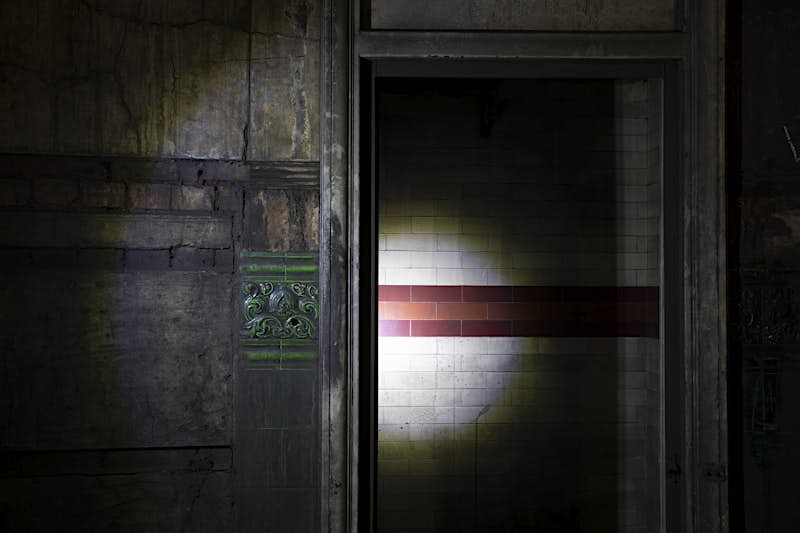
At York Road station, the Edwardian ticket hall tiling design – with a border of green, glazed relief tiling – can still be seen against the red, cream and pink passageway
Those wishing to explore the underground themselves can also now do so through the London Transport Museum’s Hidden London tour. The events see experienced guides taking visitors to disused stations and secret sites in different places across the city.
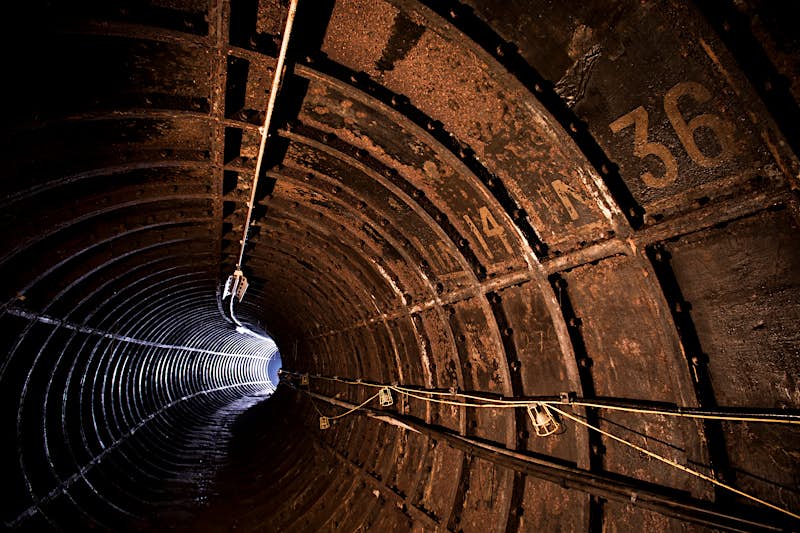
One of the tunnels under the Thames. The original gradient markers on the tunnel wall record just how steep the approach to the station was at this point
Tours are available at locations such as Piccadilly Circus, Aldwych, Clapham South, 55 Broadway, Euston and Down Street, and packages can include cocktails, film clip screenings and special station architecture tours. At the Piccadilly Circus tour, visitors go behind secret doors to passageways and lift shafts closed to the public since 1929 and discover the original Edwardian design features, the stories of wartime sheltering and top-secret storage of priceless artefacts.
Any time spent in Antarctica, one of the planet’s most extreme and inhospitable places, inevitably involves an adventure.
Antarctic travel has epitomised adventure for more than a century. For most of this time, the only way to experience it was to go with a government scientific programme or a hugely expensive private expedition. Fifty thousand tourists a year now visit, mostly sightseeing and wildlife watching, but it’s still the one continent where you can’t just take a cheap flight, turn up and do your own thing. Unless you skipper your own yacht to the ice, everyone has to rely on a commercial operator to provide the logistics – either just the basics for hardcore exploration, or fully pampered glamping on ice. In between those extremes are two traditional means of polar travel – skiing and kayaking.
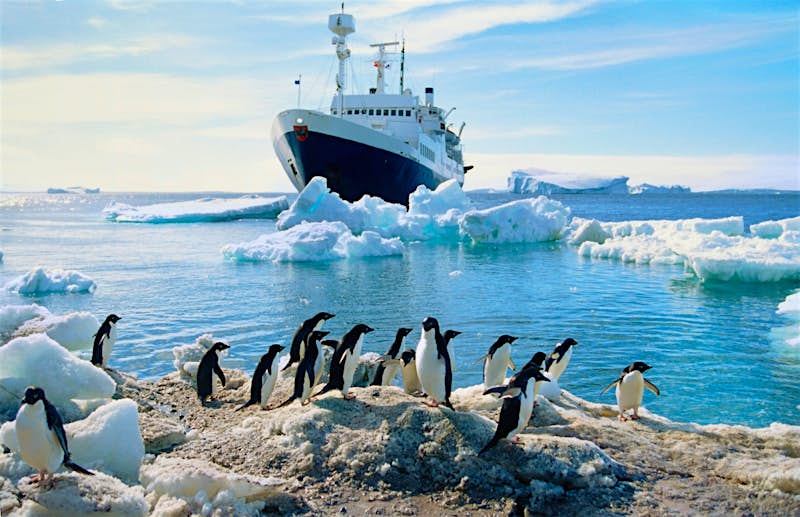
Arriving in the wilds of Antarctica typically involves an expedition ship
Far from the flat, monochrome void of the deep interior, the Antarctic Peninsula is beautiful and richly diverse. A melding of sea, snow and rock, enriched with wildlife and stories of human endeavour, it’s no wonder most visitors consider it the trip of a lifetime. Weather governs everything here, but even with inevitable delays, most trips get plenty of time for active adventure. Ships and yachts visit constantly from November through late-March, but sea-ice conditions vary greatly year to year, and this affects access to some locations. Skiing and climbing are best done in November and December, while January to February is better for kayaking and whale sightings.
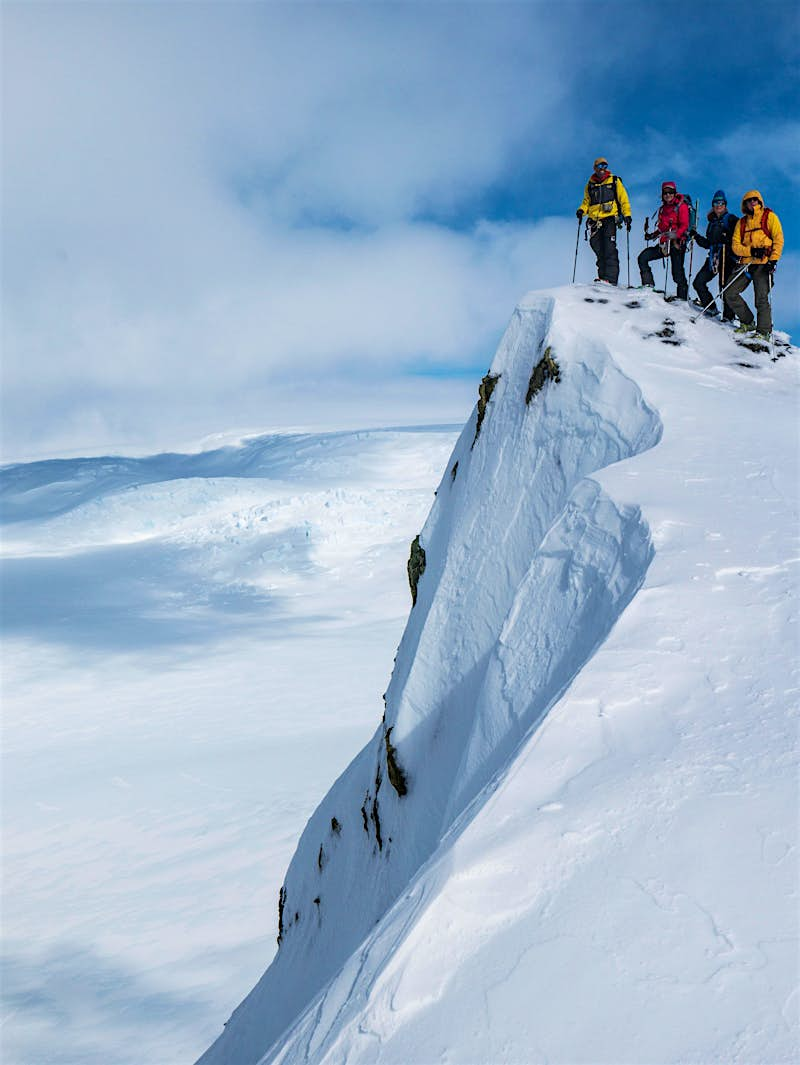
Ski mountaineers use synthetic skins on their skis to summit one of Antarctica’s many summits
Skiing & climbing
The Antarctic Peninsula is basically one long mountain range dropping straight into the sea, flanked by equally steep islands poking out of the stormy straits and bays. Some of the larger islands have giant peaks – such as Mt Français (2822m) on Anvers Island and Mt Parry (2520m) on Brabant Island, which are both popular climbing and skiing areas – while dozens of lower islands and promontories provide easier days out.
Though barely any snow falls in the icy Antarctic interior, the maritime environment of the peninsula coast means softer, skiable snow on the mountain slopes. The skiing here is backcountry style. There are crevasses and the possibility of avalanches, but all outings are with well-qualified guides and even skiers without huge experience can end up carving turns with an iceberg-strewn ocean as a backdrop.
Several established companies offer cruises with ski and mountaineering opportunities but the only ship-based option fully dedicated to ski adventures is Californian outfit IceAxe Expeditions, which runs regular trips at the start of every season. On most trips you can ski everyday, even in less-than-perfect weather, and you will encounter wildlife along the way, as the Zodiac navigates past seals and puts you ashore among penguins. Nights are spent safely aboard ship in well-catered comfort. A longer, tougher and more expensive option is aboard a yacht such as Icebird, the base for Ski-Antarctica, a company that has made numerous first ascents, descents and ski journeys on the coastal peaks and hinterland.
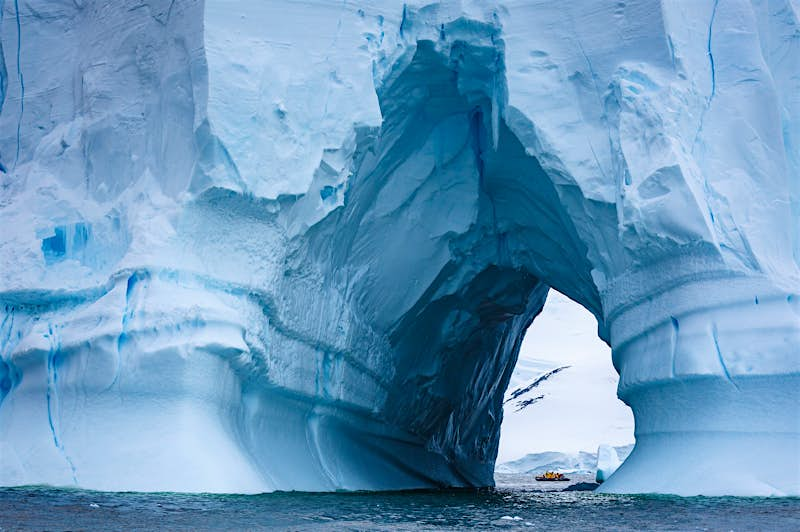
Accessing adventures on shore can involve rather adventurous trips in zodiacs through the mesmerising icebergs
For those seeking to explore deeper into the big white void, Antarctic Logistics & Expeditions, incorporating the inland-Antarctic pioneers Adventure Network International (ANI), offers two-week Ski Antarctica or Climb Antarctica programmes. These are separate to its long-standing operation on Mt Vinson (4892m), the continent’s highest peak, and magnet for Seven Summiteers. Starting out of ALE’s impressive Union Glacier camp, these trips offer the opportunity to make first ascents of lower peaks or take long, exploratory ski tours through the Heritage Range, a network of elegant low mountains with sweeping spurs and craggy ridges. Here, the weather is usually better but colder than on the Peninsula. After a four-hour flight from Punta Arenas, Chile, visitors spend some time at Union Glacier acclimatising and preparing for their adventure, before heading out with experienced guides on multiday adventures. For the climbing programmes, basic alpine experience at least is needed to make the most of the trip.
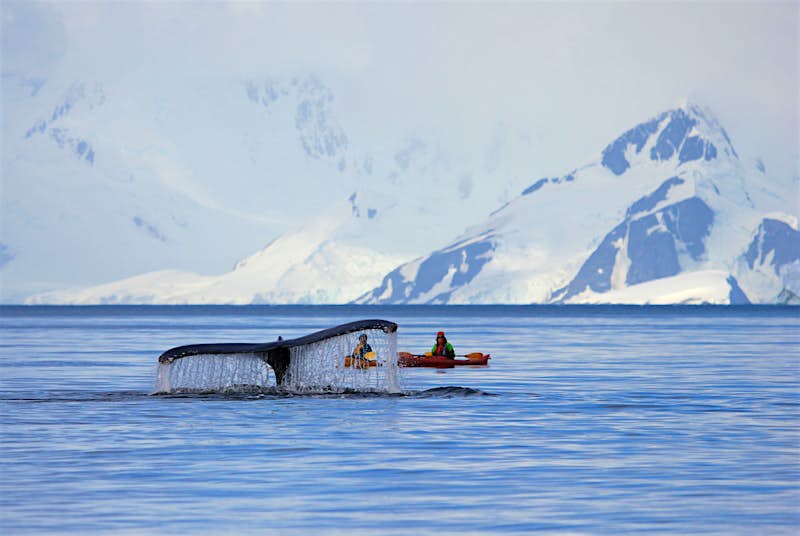
With whales and icebergs as companions, it’s understandable that kayaking is the most popular adventure activity in Antarctica
Sea Kayaking
Now the most popular adventure activity conducted by operators on the peninsula, kayaking offers visitors a way to fully immerse themselves in the landscape. Unlike planes and ships, a kayak brings you back to the pace of the place, in tune with the waves and the wind, powered only by yourself as you glide past icebergs to explore popular sites such as Neko Harbour, Cuverville Island and Cierva Cove, as well as hidden gems inaccessible to larger vessels. There’s something intimate about moving around this blue world, plugged into to the fluid polar environment around you, spotting whales while penguins zoom underneath your paddle. Sea-kayaking options are available on several cruises as optional additions for an extra cost, but some operators, such as Southern Sea Ventures, run dedicated trips that will aim to paddle every day.
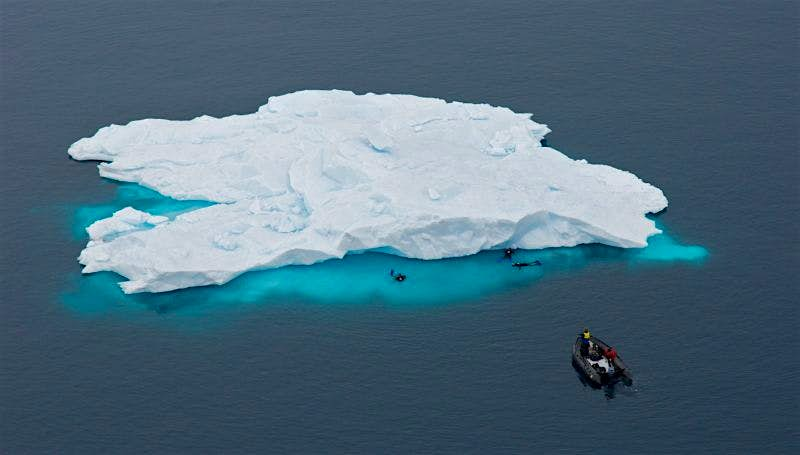
With a drysuit, it’s possible to explore beneath the surface of Antarctica’s waters
Diving
To enable even more immersion in Antarctica, some operators offer scuba options to certified divers with open-water and drysuit experience. A whole new underworld opens up: ice walls and caverns, historic wrecks, wildlife unseen from above and the truly unique chance to touch the ice from the inside – just watch out for the leopard seals as at least one diver has been drowned by an aggressive seal.
Winter comes in many guises in Europe – in the polar north there’s serious snow and sunless weeks, while you’ll find lingering sunshine in the mild Mediterranean, and cosy cafe culture and Christmas spirit in the centre.
It’s an inspiring time to visit grand cities and charming villages: with fewer queues you can fit more into your itinerary, and off-season accommodation prices make European travel wallet-friendly in November, December, January and February. Via Europe’s train network you can explore countries at your leisure, meeting locals going about their daily business away from the often-frenetic summer tourist season.
1. Rovaniemi, Finland
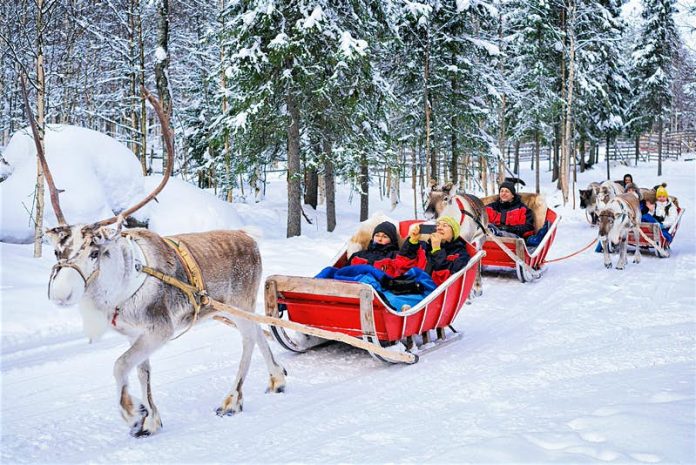
Fistfuls of Christmas clichés characterise Rovaniemi, the ‘official’ terrestrial residence of Santa Claus. Everyone’s favourite bearded man hangs out in an atmospheric Arctic Circle grotto, and it’s free to visit him (but photos are another story). Snow and reindeer add festive spirit, while the Arktikum museum gives insights into life at these latitudes.
Tip: Finnish thermometers have more numbers below 0°C than above, so pack serious winter clothing.
Trip the white fantastic in Lapland: Saariselkä’s best winter activities
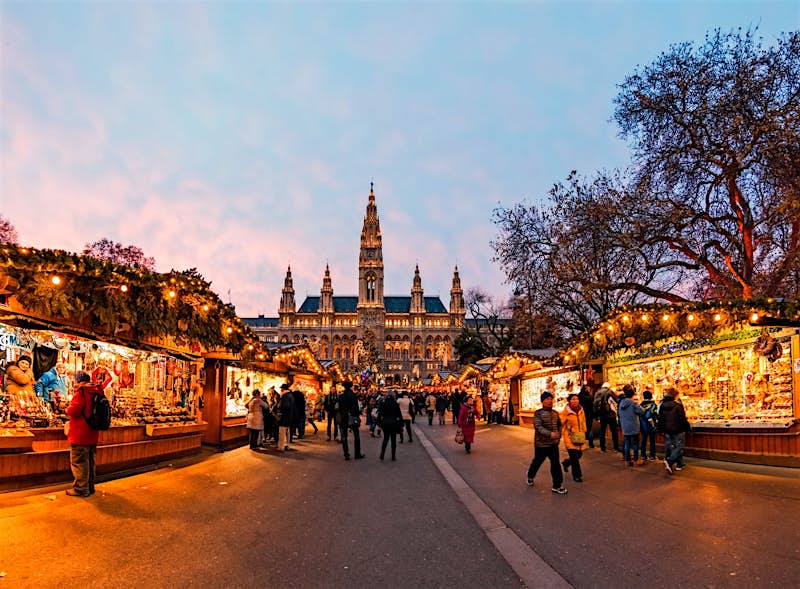
Vienna is famous for its spectacular Christmas markets
2. Christmas markets in Germany & Austria
December sees these romantic historic markets pop up all over Germany, Austria and other Central European nations. Expect cute stalls selling everything from gingerbread to sleigh bells and plenty of good cheer, toasted with a glass of warming glühwein.
Tip: Famous markets in Cologne, Vienna and Munich draw the tourist crowds, but seeking out ones in smaller towns is rewarding.
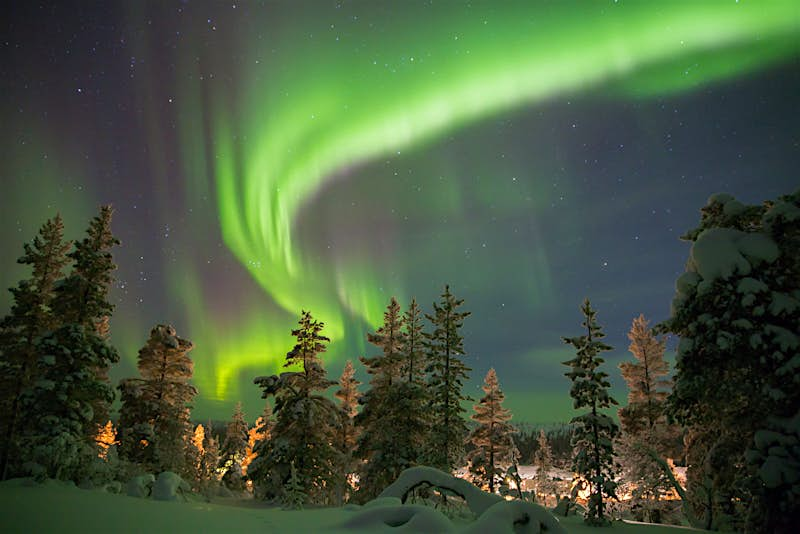
You’re never guaranteed a sighting of the Northern Lights, but a visit to Abisko, Sweden, puts you in with a decent chance
3. Abisko, Sweden
Almost as far north as you can get in Europe on a train, Abisko in Lapland is for lovers of serious winter. The sun doesn’t rise for several weeks in December and January but that darkness makes it one of the world’s best places to view the majestic aurora borealis. Other attractions include cross-country skiing along national park trails and husky mushing.
Tip: Stop off at nearby Kiruna to see the famous Icehotel.
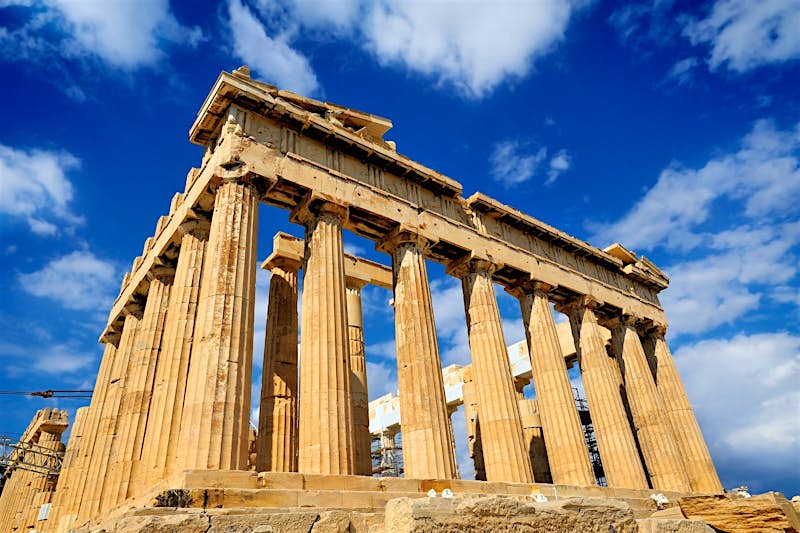
Have the Parthenon and other marvels of Ancient Greece all to yourself on a winter visit to Athens
4. Athens, Greece
It’s a real downer trying to Photoshop 500 people out of your would-be-prizewinning Parthenon photo, but in winter in Athens it’s not an issue. All summer stresses – crowding, tourist pricing, intense heat, queues, air pollution – more or less disappear. It’s the best time to explore the country’s ancient heritage and get to experience local culture.
Tip: By all means do some island-hopping, but most accommodations close in winter.
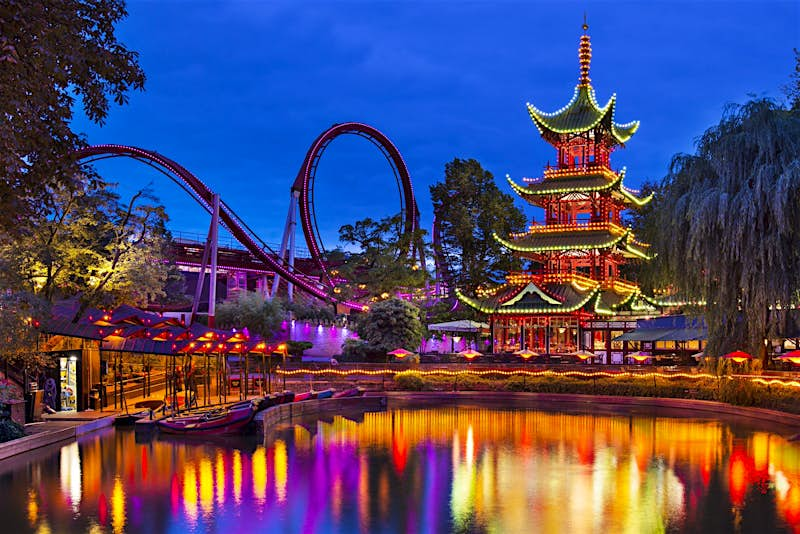
Enjoy thrills and spectacle this Christmas with a visit to Copenhagen’s Tivoli Gardens
5. Copenhagen, Denmark
For fairytale European winter, it’s hard to beat the home of Hans Christian Andersen. Forget the over-hyped Little Mermaid and head to the city’s cosy bars and cafes to watch snow flurrying outside. In the heart of town, the 19th-century Tivoli amusement park is a romantic, kitsch delight around Christmastime, with heartwarming illuminations and body-warming mugs of glögg.
Tip: Splash out on a meal at noma, considered by many to be the world’s best restaurant (reservations can fill quickly, so try to book several months in advance).
The best of Budapest’s thermal baths
Budapest is the spa capital of Europe, but which thermal bath is the best?
6. Budapest, Hungary
Couples skating hand-in-hand, breath cloudy in the frosty air – there’s nowhere better for it than the Hungarian capital’s picturesque central park Városligeti Műjégpálya, with its enormous outdoor rink. Feeling chilly afterwards? Budapest is famous for its ornate thermal baths.
Tip: At night seek out a ‘ruin pub’ – an atmospheric drinking venue artfully created in a once-abandoned building.
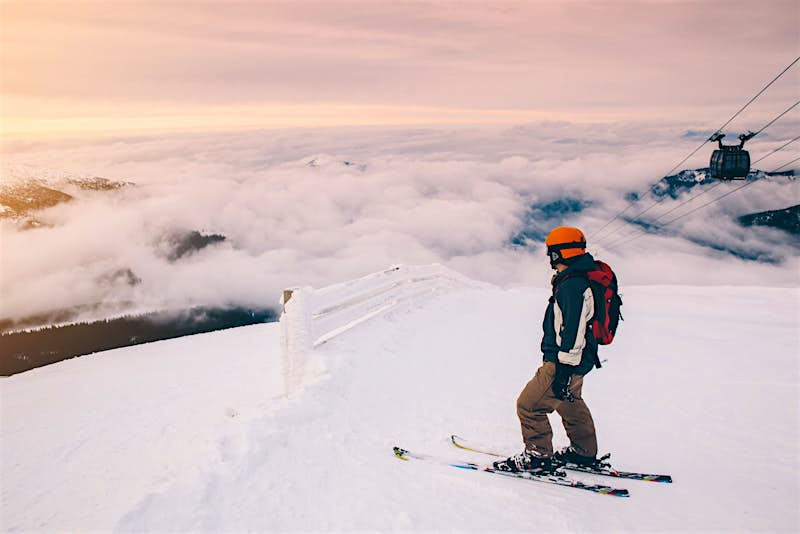
Slovakia is the place to go this winter if you’re a skier on a tight budget
7. Jasná, Slovakia
Slovakia offers high-quality skiing at affordable prices. Accommodation and food are reasonable too, and there’s a friendliness that’s missing from some of the snootier Alpine slopes. Jasná is the best Slovakian resort, with long descents flanked by snow-laden spruce trees, set in the ruggedly lovely Tatras Mountains.
Tip: Flights direct to Slovakia can be pricey, so don’t make this your entry point to Europe.
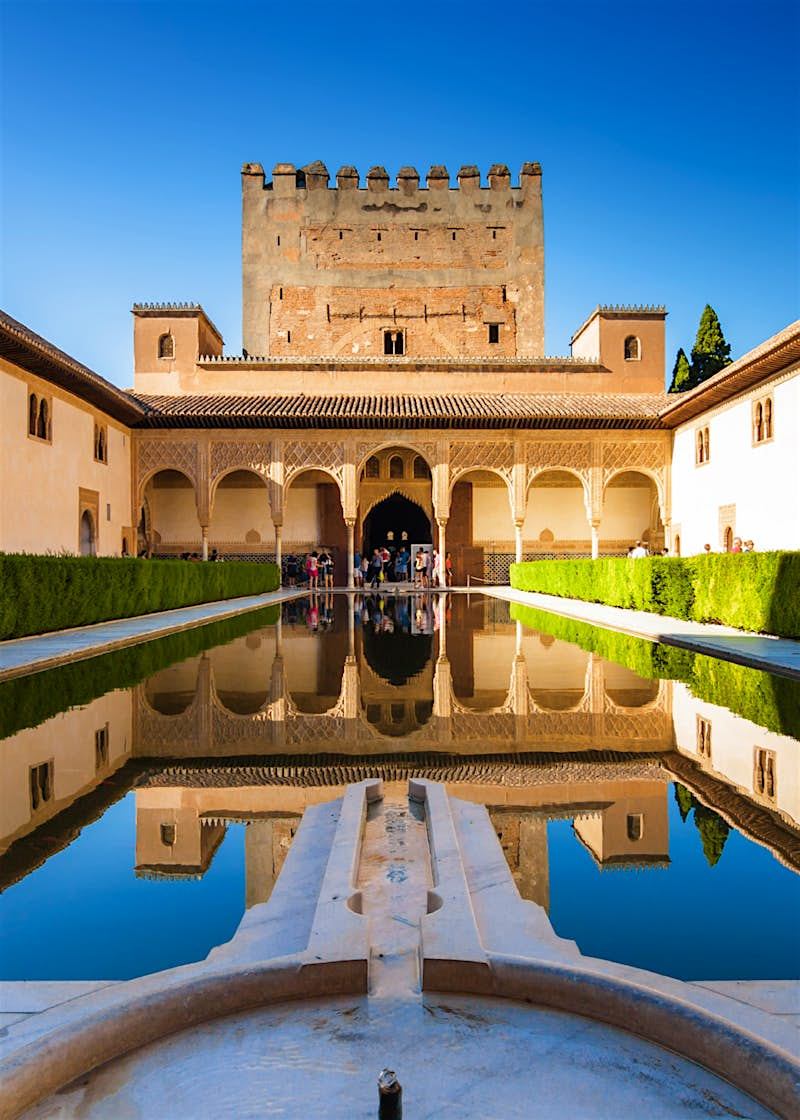
The Generalife Gardens are just one of the wonders of Granada, one of Andalucía’s – and indeed Spain’s – most fascinating cities
8. Andalucía, Spain
Parts of Andalucía are further south than the African coast so expect mild temperatures in winter. Accommodation is cheap, and crowds are smaller at standout attractions like Granada’s Alhambra or Seville’s cathedral. Plus, tapas and nightlife in the cities are as enticing as ever.
Tip: Head to the Sierra Nevada near Granada if you want snowsport action.
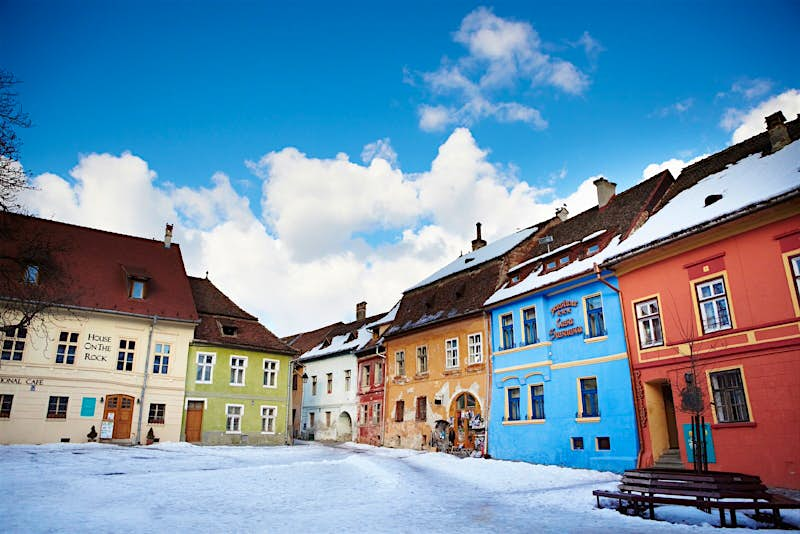
Follow in the footsteps of Vlad Ţepeş, the historical Dracula, on a visit to Sighişoara, Transylvania
9. Transylvania, Romania
You can’t visit Dracula’s lair on a sunny day with lambs bleating in the fields, right? Try steel-grey skies, bare trees and a smattering of snow. Braşov and Sighişoara, two hours apart by rail, are gorgeous medieval towns with various connections to Vlad Ţepeş, the historical Dracula, though it’s doubtful that he ever set foot in his so-called castle.
Tip: Bram Stoker never visited Romania, so don’t expect many parallels with the book or films.
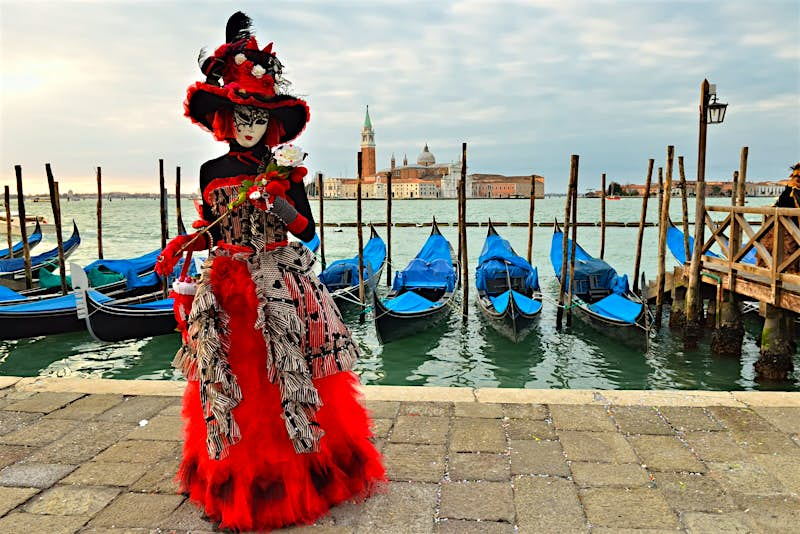
Venice’s Carnevale is a highlight of any European winter, but be prepared to book ahead
10. Venice, Italy
Hauntingly beautiful and rather weird, Venice’s Carnevale in February is a European highlight. Elaborate costumes and spooky masks bring the canal city’s colourful history to life. Costumed dances are pricey affairs, but you can have a ball enjoying the free events with a mask bought on the street, but be prepared for epic crowding.
A beautiful natural landscape from mountains to dramatic coast, a traditional craft-making culture, and regional food specialities that include a noodle challenge are just a few reasons to detour north and explore Iwate Prefecture as part of a Japan itinerary.
What’s more, travellers who do make the effort to visit this little-known swathe of Tōhoku will find it refreshingly light on tourist crowds.
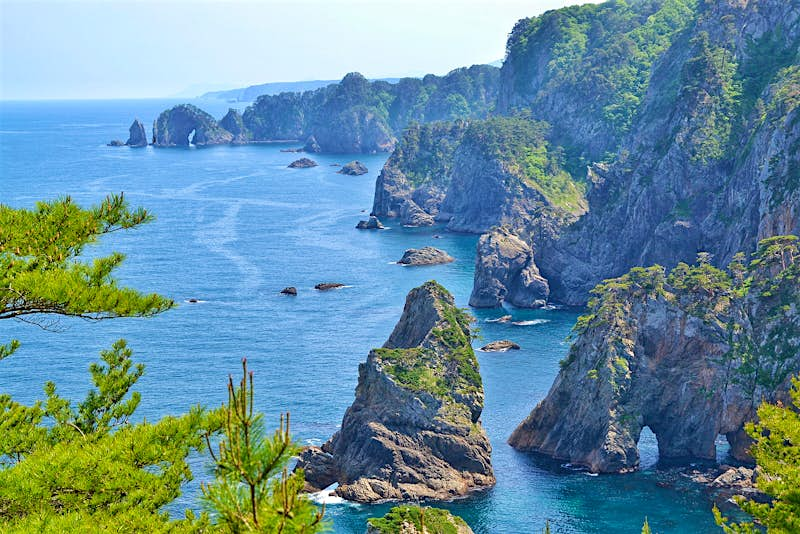
The Kitayamazaki Cliffs are just one scenic highlight on the Sanriku Kaigan
The great outdoors
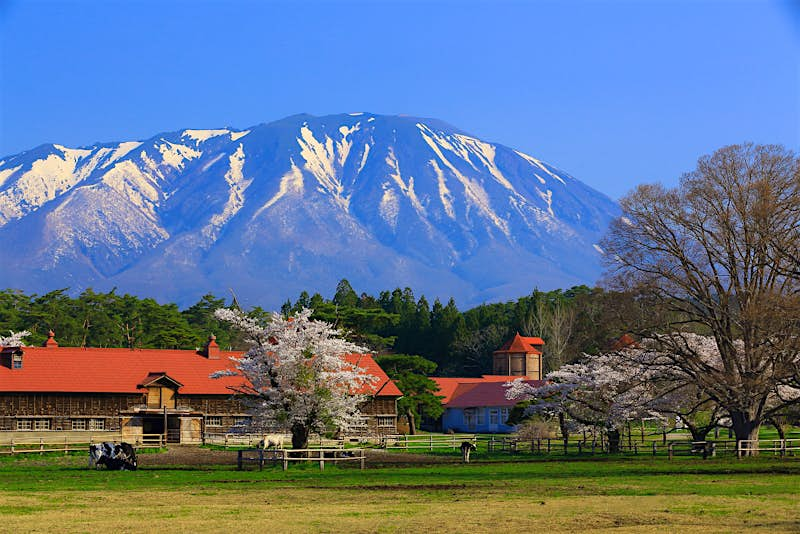
With one of the lowest population densities of any prefecture in Japan, Iwate is defined by its natural features. Mountain ranges, deep gorges, beech forests, volcanic peaks and caldera lakes make it a prime hiking, onsen-soaking and getting-away-from-it-all destination. Come winter, the landscape transforms into an impossibly pretty snow country, with low-key ski resorts (such as Hachimantai, at the base of mountain Iwate-san) seeing relatively few international visitors.
To the east is the stunning and varied Sanriku Kaigan (Sanriku Coast), stretching about 220km and passing through three prefectures. Here sheer cliffs and jagged ria formations meet the broad Pacific Ocean, with the Kitayamazaki Cliffs in Iwate’s north just one windswept highlight. The Sanriku Kaigan region is great for a road trip, but for deeper exploration consider walking part of the Michinoku Coastal Trail. Traversing the length of the coast, this series of trails leads through scenery ranging from sandy coves and woodlands to steep bluffs and rural hills, stopping at small towns along the way.
Oodles of noodles
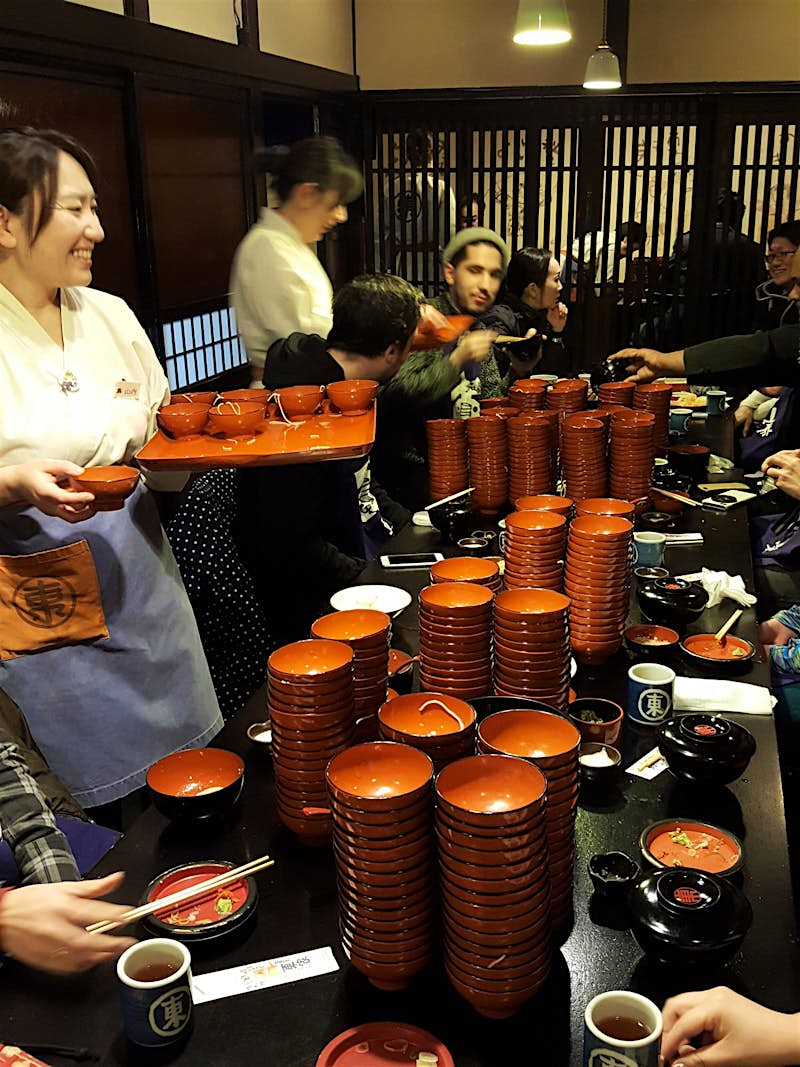
Iwate is the place to take the wanko-soba challenge: discover how many mini servings of noodles you can quickly slurp down, one after another, in one sitting. Not a bizarre game-show task, this is said to be a 300-year-old tradition, and one place to try it is atmospheric restaurant Azumaya in Morioka. Here servers stand by with trays of noodles to refill each bowl the moment you empty it. Diners who can manage 100 bowlfuls (surprisingly not uncommon!) receive a commemorative plaque.
Keeping count of the bowls eating wanko-soba at Azumaya, Morioka
For noodles with less pressure, tasty Morioka reimen is an interesting local speciality worth seeking out. Firm, chewy noodles are served in a chilled broth, usually topped with a boiled egg, vegetables, and kimchi – a spicy giveaway to the Korean origins of the dish.
But it’s not all noodles. A long coastline means excellent fresh seafood, and fertile farmlands raise beef and produce some of Japan’s best known dairy products (in particular, look out for Koiwai farm cookies and cakes). There are also surprising finds, such as L’auréole, a restaurant perched on a remote clifftop in the north of the prefecture, where chef Ito Katsuyasu prepares French-inspired dishes using local ingredients.
Dining with a Sanriku Coast view at L’auréole
Traditional crafts
The northern region of Japan is home to many traditional crafts, with artisans practising techniques honed through the centuries. Iwate’s most well-known contribution to this legacy is Nambu Tekki (Nambu Ironware), with a history thought to span at least 400 years. At Iwachu ironworks close to Morioka, visitors can observe craftspeople at work casting and detailing the iron; then browse a tempting smorgasbord of beautifully made ironware items in the attached shop – from the traditional and contemporary tea kettles, to wind chimes and candle holders. (Just don’t forget to have your passport on you to receive a tax refund if spending more than ¥5000.) Nambu Tekki can also be perused and bought at Morioka Handiworks Square, a collection of several workshops demonstrating various crafts from around the region, with opportunities to try your hand at making your own.
Contemporary cast-iron tea kettle designs at Iwachu
Heritage and history
If it’s the Japan of quiet temples and contemplative gardens you seek, Iwate has those too. Hiraizumi, a former feudal town, is home to the wooded temple complex Chūson-ji, a World Heritage Site. The star here is 12th-century Konjiki-dō, a fully gilded and elaborately decorated pavilion (kept behind glass for preservation), beneath which are the remains of three generations of the Ōshu Fujiwara clan, once rulers of the region. Nearby is the garden of Mōtsū-ji, centred on a large pond. Also dating from the 12th century, this is one of very few remaining examples of a Pure Land Buddhist garden in Japan – these types of gardens were designed to resemble the Buddhist paradise that devotees hoped to eventually enter.
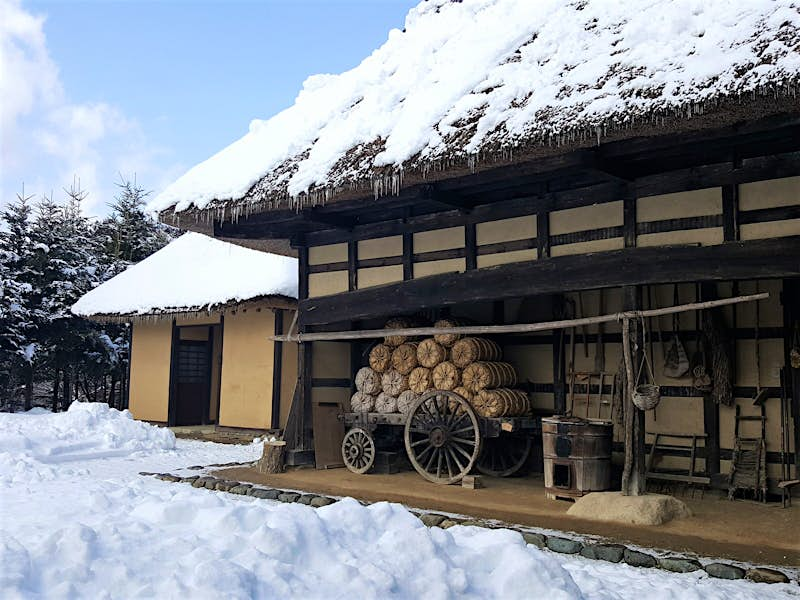
A winter scene at Tono Furusato Village
About 80km northeast and a few hundred years younger than the sites of Hiraizumi, the carefully maintained farmhouses of Tono Furusato Village give an insight into rural life in Edo times (1603–1868). This open-air museum features several thatched-roof, broad-beam houses, relocated from around the region and arranged on leafy grounds surrounded by hills. You can also explore inside the houses, where household items and tools from the era are on display and the open hearth may be crackling.
Crowd-free, feel-good travel
Iwate may not have the cache and big-name sights of Tokyo and Kyoto, but it also doesn’t have the overcrowding, and the lack of polish in some areas is a big part of its charm. It’s also a region home to many inspiring and welcoming communities, continuing to rebuild and revitalise since the devastating earthquake and tsunami of 2011. Iwate is a place to come for unhurried travel: a road trip through the mountains, a stay in an onsen hotel, a ride on the slow train along the coast. And while it’s off the beaten path, this is still Japan – you can of course get here by bullet train.
Immovable mountains tower over the flat farmlands in Iwate
Make it happen
When to go Every season has its appeal. Autumn colours are stunning, and spring popular for cherry-blossom viewing. While snow can disrupt travel in winter, it is exceedingly scenic. Rugby fans should head to coastal city Kamaishi during the Rugby World Cup 2019 – two matches will be held here (25 September and 13 October) at the newly built Kamaishi Recovery Memorial Stadium.
Getting there It’s about 2½ hours by shinkansen (bullet train) from Tokyo to Morioka, capital of Iwate Prefecture.
Getting around Hire car is the most convenient way to get around, but there are local trains – most notably the scenic Riasu line, which hugs the Sanriku coast, creating a 160km train journey along the Pacifc Ocean.
Visiting London in winter is an unforgettable experience. Dark evenings are illuminated by cosy pub fires, twinkling Christmas stalls in outdoor markets and brilliant firework displays at the turn of the year. On top of that, many attractions, crowded in warmer months, can be enjoyed in comparative tranquillity. And while locals love to grumble about the weather, it’s actually fairly mild, with average temperatures between 4 and 9°C, and roughly 20 dry days per month.
Ice skating, Christmas lights, markets and fireworks
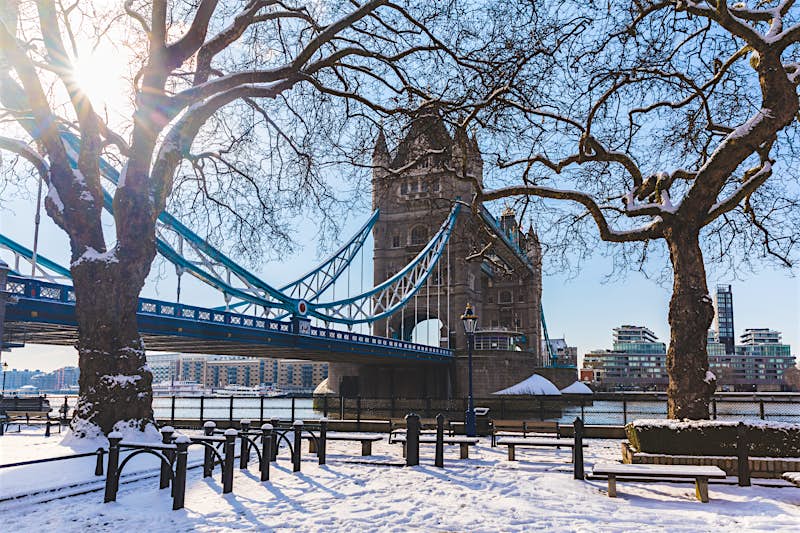
Christmas in London is a big deal, with events across town from November to January. Open-air ice rinks pop up at famous landmarks like the Tower of London, Somerset House, Hampton Court Palace and the Natural History Museum, and 2019 sees the return of London’s first-ever (and Europe’s only) rooftop ice rink at Skylight in Tobacco Dock.
Traditional Christmas music can be heard at Trafalgar Square, which resonates with carols through much of December, sung alongside its giant tree, an annual gift from Norway dating back to 1947 to thank the UK for help during the war. Hyde Park’s family-favourite Winter Wonderland features rides, a circus, ice sculptures, a market and the big man himself, Santa Claus. On New Year’s Eve, the riverbank by the London Eye erupts in a soul-stirring fireworks display. Buy a ticket if you want a spot with a good view.
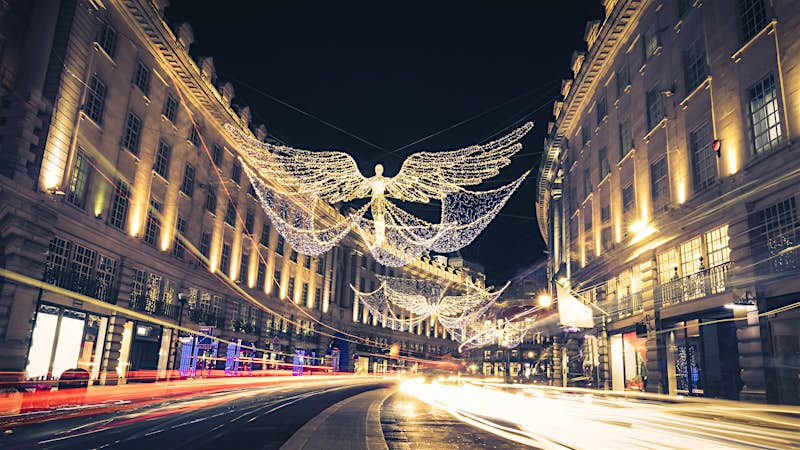
Craft fairs and Christmas markets appear on the South Bank and at Greenwich, among other places, while festive lights spectacularly illuminate the central shopping zone around Oxford and Regent streets. The lights are truly lovely but that sentiment is shared by many, so expect crowds. Further east, Westfield Stratford City shopping centre by the Olympic Park throws a big party for the turning-on of its lights. Head south and book tickets in advance for the spectacular Christmas at Kew immersive Christmas lights experience.
A guide to London’s food halls and markets
Hunt for bargains while admiring Regent Street’s famous Christmas lights
Christmas shopping bargains
London is famous globally as a shopping paradise and the best prices are found during the annual sales. From backstreet boutiques to Harrods, stock clears at big discounts, and while things traditionally get going in early January, stores are increasingly starting their sales before Christmas. Winter is also a great time to explore historic covered shopping arcades, such as Leadenhall Market or Burlington Arcade, which offer retail respite from the chilly weather and a glimpse back to the London of old.
The 10 best afternoon teas in London
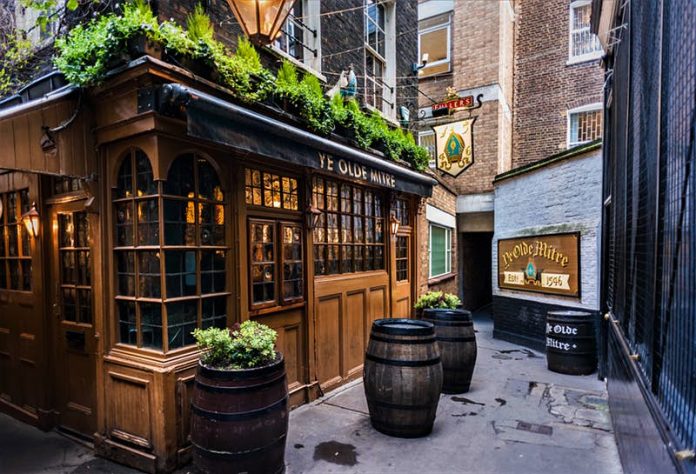
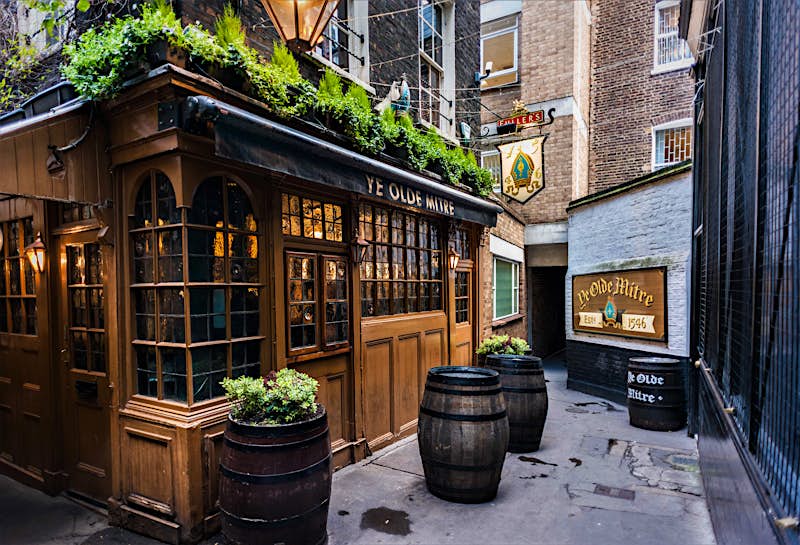
Tricky to find, but worth the search, Ye Olde Mitre is one of London’s most atmospheric pubs
Down the local: where to go for a winter tipple
The cosiness of a typical London pub is a blessing in winter. Top spots to raise a glass include Ye Olde Cheshire Cheese (once frequented by Charles Dickens), Gordon’s Wine Bar (arrive early for any chance of a seat) and Ye Old Mitre (you might need to hold your breath to squeeze down the tiny alleyway that leads to it).
Away from the city centre there are some equally excellent options with each neighbourhood inviting exploration, with its own character, characters and lovely local boozers. It’s the best way to meet Londoners and get a feel for what their city is about. Try the Jerusalem Tavern in Clerkenwell, the Holly Bush in Hampstead or the Carpenter’s Arms in Shoreditch.
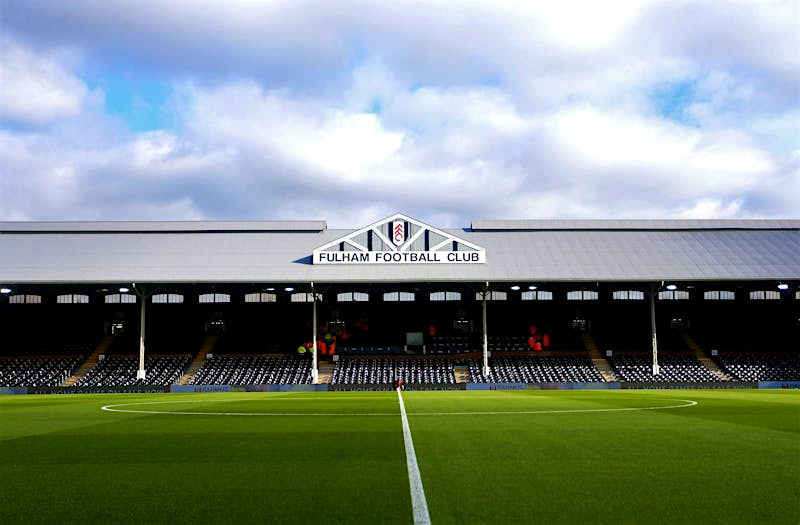
Watched by hundreds of millions around the world, British football is iconic. Chelsea, Arsenal and Tottenham are globally renowned, but smaller clubs like Fulham – whose Craven Cottage home ground is the city’s most beautiful – Brentford or QPR offer a more authentic atmosphere, plus tickets are cheaper and easier to come by. Drop a couple of divisions and match days at Leyton Orient or AFC Wimbledon are great grassroots experiences. If the oval ball is more your thing, rugby matches are always great fun, with local teams including the Harlequins and Saracens, and big games taking place at impressive Twickenham Stadium.
From cutting-edge drama to a Christmas pantomime’s nostalgic camp, London’s winter entertainment caters to every taste. The West End always has an incredible variety of musicals and plays showing, but some gems are out in the suburbs too, particularly in the north, around Camden, Highgate and Kilburn. Always check local listings for what’s currently showing, but at time of writing some of the most anticipated Christmas performances for December 2019 include Goldilocks and the Three Bears at the London Palladium, English National Ballet’s The Nutcracker at the London Coliseum and The Lion, The Witch and the Wardrobe at Bridge Theatre.
How to spend a perfect weekend in London
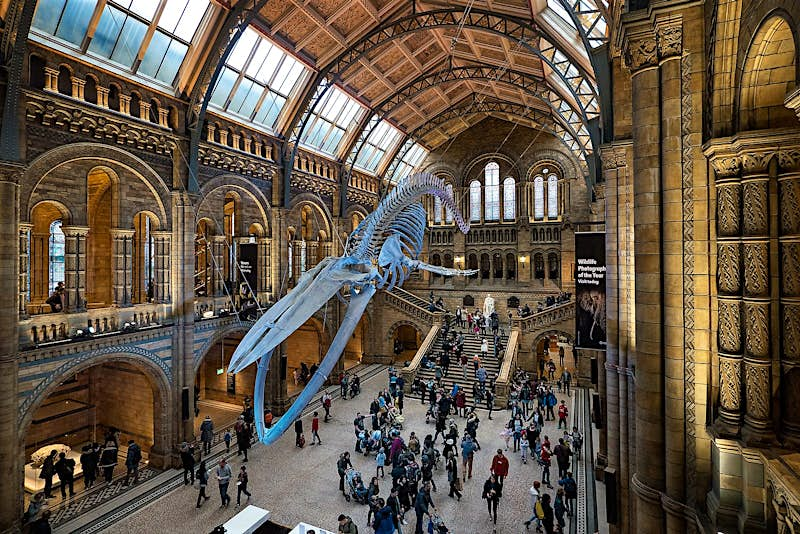
Similarly, London’s plump pick of galleries and museums is fattened further by temporary exhibitions in winter. The annual Wildlife Photographer of the Year display at the Natural History Museum is now in its 55th year, and as breathtaking as ever. Over at the National Portrait Gallery, the Everyday Icons: Collecting Popular Portraits exhibition will be drawing the crowds all the way into March. And at the Science Museum an exhibition on innovation, ‘from enlightenment to dark matter’, will run until the end of January 2020.
The Underground and buses are handy, but in winter they can get crowded as commuters seek to escape the cooler temperatures. For a fresher perspective, get a map and take to the streets: you’ll see so much more of the city. Distances around the centre are rarely as far as they look; Buckingham Palace and the Tower of London are just an hour’s stroll from each other, with many of the city’s most famous landmarks in between.
Or if temperatures drop and those wintery white flakes start falling, do like the locals and head to the hills (or at least one of the parks) for some sledging and snowman building – Hampstead Heath, Primrose Hill and Greenwich Park are firm favourites.
When it comes to the best resorts in Hyderabad, the extravaganza of luxury is quite unique in every sense. This luxury and comfort cannot be experienced anywhere else in the country. If you believe in the fact that a comfortable and wonderful stay is very much essential for a great trip, then there are lots of options for the best resorts in Hyderabad. Hyderabad has a number of resorts that you might get confused as to which are the best resorts in Hyderabad and which one would treat you the best. What is significant amongst these resorts is that most of them are characterized by luxury and by an ambience that depicts the culture and heritage of the place.
The best resorts in Hyderabad offer amenities and services that have the ability to leave no stone unturned to flatter all of your senses. Cosy beds, clean and large rooms, beautiful ambience, mesmerizing views and above all delicious Mughlai and Hyderabadi food are some attributes of the best resorts in Hyderabad that will make you Hyderabad visit worth remembering. There are resorts that serve as a perfect getaway in order to rejuvenate your mind and soul from the monotonous everyday life prevailing in the city. So before you get confused and mess up your trip to Hyderabad here is a list of some of the best resorts in Hyderabad that can be considered for a luxurious and comfortable stay.
The Best Resorts In Hyderabad
Leonia Holistic Resort
Leonia Holistic Resort certainly makes it to the list of the best resorts in Hyderabad on the basis of its standard of service and ambience. The resort also serves as a holistic centre and a revitalization destination. The resort offers an array of services and located amidst sprawling greenery. With well-maintained suites and villas the resort invites visitors from around the world.
Golconda Resort & Spa
If you are someone who is looking for a vacation in a place nestled away from the hustle bustle of the city amidst nature, then the Golconda Resort and Spa is the perfect destination for you. The resort aims to provide world class facilities. This leisure resort cum spa destination is best suited for people looking out to have a relaxing weekend. Known to be one of the best resorts in Hyderabad the resort has a harmonious combination of luxury and nature. The resort houses 40 villas and 4 suites.
Button Eyes Resort
The verdant greenery and scenic beauty that the Button Eyes Resort offers is simply mesmerizing. This resort is a perfect getaway to take a break from your busy schedule and enjoy a family vacation. The subtle design and architecture of the resort helps it stand apart from the others and this is what makes it one of the best resorts in Hyderabad.
Vivanta By Taj Begumpet
Vivanta By Taj Begumpet
The Taj Group of Hotels are renowned for their hospitality and quality of service. Each of its hotels and resorts makes sure to live up to the expectation and follow the ideology of the group. Vivanta Taj stands to be one of the best resorts in Hyderabad and follows a very strict international standards and amenities. The interiors of the resort will simply leave you in awe. The resort houses a mini bar, swimming pool, fitness centre, lounge and much more.
Songs of Earth Resort
Songs of Earth Resort
Song of Earth Resort clearly depicts that the resort is located amidst natural beauty and scenic landscapes, which provide a comfortable and eco-friendly stay to the visitors. Known to be one of the best resorts in Hyderabad, because of its natural ambience and range of services, the resort also promotes adventure sports. The resort is mostly visited by families or corporates. The resort offers multiple types of stays and also has adventure tents.
Lahari Resort
Lahri Resort is amongst the best resorts in Hyderabad. Spread in 35 acres the resort is situated amidst the nature and features beautiful fountains, water bodies, flower beds and much more. The resort has been able to create a brand of its own. The resort serves the purpose if both; it is a great family vacation spot as well as is a great spot for corporate meeting and tours too. The resort resembles a small village with all the ultra-modern facilities. From a huge cricket stadium to indoor and outdoor swimming pool and from restaurants to conference hall you name it and Lahari Resort has it all.
Celebrity Holiday Retreat
Celebrity Holiday Retreat
The Celebrity Holiday retreat as the name suggest is listed amongst some of the best resorts in Hyderabad that welcomes the elite gentry of guests, who come to visit Hyderabad and spend some quality time here. The resort is located quite close to the Secundrabad railway station in a very calm location. The ambience at the resort resembles buildings of the Victorian age.
Pragati Resort
Pragati Resort
One of the most popular and reasonable resorts in Hyderabad Pragati Resort serves to be one of the best resorts in Hyderabad too. Designed in 85 acres of land the resort houses lush green lawns, villas and suites along with swimming pool. The resort has an aromatic garden with over 24 lakh plants and herbs. What make this resort special is the Pushpa Ayurveda therapeutic massages, which helps in rejuvenation of mind and releases toxins from the body.
Drafting a list of things to do when in Chennai? Well, Chennai is more than what people see in movies where people eat idli and fight with villains (well people fight anyway). One of the most culturally strong cities with equal amount of urbanization the city is still rooted in its traditions and rituals.People gear up for all things you can do when you’re in Chennai.
Things To Do In Chennai
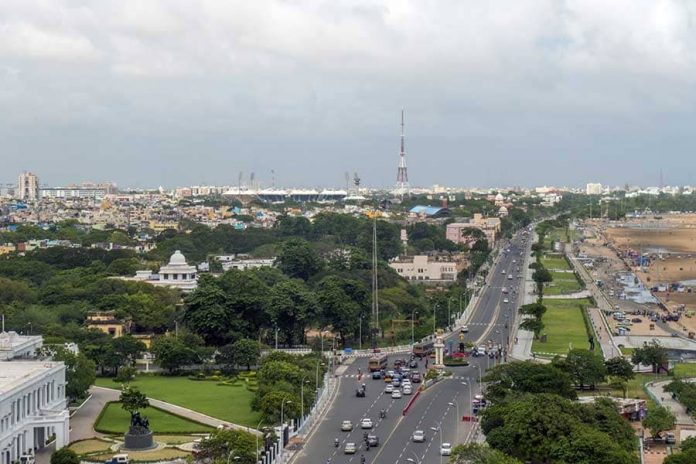
Marina Beach
One of the most loved beaches for Tamilians which is like a festive itself is the Marina Beach. You can find people of different stratas enjoying here their early morning walks and jogs.
It has been acclaimed as the second longest beach in the world
MGR Film City
Film studio complex situated in Taramani is a famous tourist spot and has been sets for various films. The film studio has depictions of churches,temples and not only Indian architecture but Italian , Japanese and Mughal too. One of the most famous attractions in the city to visit
Kolli Hills
Typically called the ‘Mountain of Death’ located in the Namakkal District of Tamil Nadu.It is a picturesque destination for your Instagram. Preferably not to visit it in January since the temperature drops down.
Valluvar Kottam
This temple chariot like historical monument dedicated to a well known intellectual poet. There is carving of the famous poet Thiruvalluvar inside the chariot. A very famous feature of the Valluvar Kottam is that it stands baseless. It has no pillars which makes it unique.
Dakshin Chitra Museum
It is a cross cultural living museum for lifestyle, architecture, arts and performing arts in the Tamil Nadu culture. It has authentic exhibitions in each of the houses. It is a unique concept where the different cultures of South India have been brought under one roof. A MUST VISIT FOR CHILDREN AND ADULTS OF ANY AGE. The concept will definitely be enjoyed by everyone.
Royapuram Fishing Harbour
One of the most popular fishing grounds in Chennai, since it is located in a place famous for seafood and famous for boating, It is one of the busiest fishing grounds of Tamil Nadu.
Best Places To Eat In Chennai
To all the foodies out there who want to explore Chennai as their food pilgrimage, here are a few suggestions for the best places to eat when you are in Chennai-
Murugan idli shop
If you ever want to know what mouth watering Idli tastes like this is must haves in your Chennai food menu visiting places. You have to taste the sambar, the podis and the finest chutneys in town. The traditional taste will remind you of the authentic taste of Tamil Nadu. With a rating of 4.2 on Zomato.
Rayars Mess
The idly, pongal, vada, and getti chutney and sambar from this place has excellent taste also famous for filter kaapi and rava dosa do visit this old restaurant for a pocket friendly and stomach friendly environment. Next to Kapeeleshwar temple it is a must visit in early morning. With a rating of 4.4 on Zomato.
Best Chettinad Restaurants In Chennai
New Pattukotai Kamatchi mess
For all the Non Veg lovers it is a paradise, they serve food in Banana Leaves and the you can have it under the sun. The meen fry is really good. They serve goli soda and buttermilk along with the meals to help you wash down those extreme spice levels. A must visit for their famous Nattu Kozhi gravy, the Kaadai gravy and the Mutton gravy. With a rating of 4.3 on Zomato.
Courtallam Border Rahmath Kadai
If you think you can have Parotta at any given point of the day then this is your heaven. The famous dishes are Kalalki, Bun Parotta, Gun chicken and mutton briyani, Nattukozhi Potichathu 65 or Chicken 65, Mutton Pepper Fry,Chicken Biryani,Coin Parotta,Wheat Parotta. Excellent for its service, taste and pocket friendly menu. A must visit if you’re a south Indian Parotta lover. With a rating of 4.1 on Zomato.
Shiva. The supreme giver of joy, The one who wields the triden. The God of all the Gods. A Jyotirlinga is a shrine where Lord Shiva is worshipped in the form of Jyotirlingam. India today has 12 Jyotirlingas situated in all directions of the country. It’s a place of worship for people with no barriers to caste or race. The temples provide shrine to a lot of people. There are various belief and theories relating to the Jyotirlingas in the books. There are 64 Jyotirlingas in original but only 12 were considered highly auspicious. The temple is considered holy for Hindus and a pilgrimage for many. People travel all the way to reach the temples. Here are all the Jyotirlingas that you need to visit.
The temple is situated in Western coast of Gujarat. One of the most beautiful temples in India with a beautiful architecture. The temple was reconstructed several times after repeatedly getting destructed by Several Muslim invaders. The present temple was completed in 1951 and under the orders and guidance of Shri. Vallabhbhai Patel. The temple has a sea shore attached to its end which makes it a beautiful spot for all the pilgrims.
2. Mallikarjuna Jyotirlinga -Andhra Pradesh
Shri Bhramaramba Mallikarjuna Temple is situated at Srisailam in Andhra Pradesh. The temple constitutes both Shivam and Shakti, as is regarded as one of the 18 Shakti Peethas of Goddess Parvathi. Shiva is worshipped as Mallikarjuna and Parvathi is depicted as Brahmaramba. It is famous for being the only temple with a Shaktipeeth and a Jyotirlinga.
3. Mahakaleshwar Jyotirlinga -Madhya Pradesh
Located in the ancient city of Ujjain in the state of Madhya Pradesh. It is situated on the side of Rudra Sagar lake. Lord Shiva is believed to be Swayambhu. The idol is known to be Dakshinmurti(facing the South). It is believed that the Prasad offered here can be reoffered unlike other shrines. Must visit for the sky high temple and the majestic structure.
4. Omkareshwar Jyotirlinga -Madhya Pradesh
Located in the Malwa region of Western Madhya Pradesh. The unique thing about the temple is that Narmada River creates the shape of Om to the Mandhata Island. There are three hills that enclose the temple within themselves are Brahmapuri,Vishupuri and Rudrapuri, the three Gods themselves. The temple resides between dense forests and marine life which is great for all the Nature Loving travellers.
5. Kedarnath Jyotirlinga -Uttarakhand
Located in the Himalayas,Kedarnath is different amongst all. It is believed that Devi is supposed to be at a height and Shiva is supposed to stay in the ground at a lower level. Here,in Kedarnath it is situated at a height of 3,584 meters. The greatness of the temple is seen in the devotion of the pilgrims carrying themselves uphill. Due to extreme weather conditions it becomes difficult for some devotees. The temple is a shrine to all the people situated in the lap of Himalaya.
6. Bhimashankar Jyotirlinga -Maharashtra
Located near Pune in the Sahyadri hills. The temple is the source of river Bhima. Covered with trees in a forest region the temple is home to animals,birds and plants as well. The architecture is an amalgamation of old and new. This is a must visit because it is one of the most graceful temples of Lord Shiva. Bhimashankar was a wildlife sanctuary.There a bell at the temple which attracts many tourists and pilgrims because of the Roman Style structure. The bell also has an idol of Mother Mary with Jesus.
7. Kashi Vishwanath Jyotirlinga -Uttar Pradesh
The temple is located in Varanasi in Uttar Pradesh. Standing on the western bank of the holy river Ganga. The temple has a lot of devotees visiting the temple daily. It is one of the holiest temples of Shiva. Varanasi has a lot of temples in the city which makes it important to visit the city in the month of October-November.
8. Trimbakeshwar Jyotirlinga – Nasik
Located in the town of Trimbak in Nashik District of Maharashtra. The temple is the origin of the Godavari river. There exists a Kasuvarta which is the source of Godavari River. The temple was built by Peshwa Balaji Baji Rao. The temple is enclosed with between three hills Bramagiri,Nilagiri and Kalagiri and three rivers Bilvatheertha, Viswananthirtha and Mukundathirtha. The temple has several other monasteries and samadhis of saints from a very long period. The town is beautiful and the architecture of the temple is beautiful and sacred. Located within a huge market the temple is a home to a lot of people.
9. Vaidyanath Jyotirlinga – Jharkhand
Located in Deoghar in the star of Jharkhand it consists of twenty one small temples and one main temple. It is believed that Ravana worshipped Shiva at this very temple. It has a very calm environment with helpful Pandits. It is One of the best temples in India to attain peace and positivity.
10. Nageshwar Jyotirlinga- Gujarat
Located in the Hingoli district of Maharashtra. The structure of the temple is incredible. The history attached is well known. If you love architecture then this temple is a must visit because of its serene environment outside. Preferable time to visit is early in the morning. The environment near the Shivalinga is pure and peaceful. The temple has a positive energy in the air.
11. Rameshwar Jyotirlinga -Tamil Nadu
Located on the Rameshwaram island in the state of Tamil Nadu. The temple was expanded by the Pandya dynasty. It is a holy pilgrimage for Shaivites, Vaishnavites and Smarthas. The temple has two lingams, one built by Sita out of sand and the other brought by Hanuman. It is an ancient temple in South India. It is built in the south Indian format with high compound wall on all sides. With beautiful long corridors in the interior the temple is majestic in its beauty.
12. Ghrishneshwar Jyotirlinga – Aurangabad
Located near the Ellora Caves the temple is near the city of Aurangabad. The temple has sculpted walls inside and out. The scenes and paintings in the temple are graceful as ever. A must visit because Ajanta caves and Ellora caves surround the area with the temple.
These famous Shiva temples in India have been there since ages, making people believe in the power of God. People come together as devotees. These are the twelve beautiful Jyotirlingas in India. Visit them before mamkind takes over the architecture.