Home Blog Page 97

The best rooftop bars in London

0

At first glance, London might not seem like the best city for drinking alfresco. The streets are brimming with top bars and cosy pubs, but where do you go for a pint when the sun is shining? The rooftops, of course.

Indeed, some of London’s best bars are found perched on the top of buildings, but their lofty locations mean you won’t just stumble upon these gems. Hidden amid the capital’s dramatic skyline is a world of pretty terraces, preened English gardens and hipster hangouts which aren’t visible from street level. Take a look over our list of the best rooftop bars in London – just keep your fingers crossed for sunshine.

Drinkers converge at sunset on the Skylight rooftop; some are standing, while others sit on seats repurposed from wooden pallets, covered in grey cushions; the City of London and residential tower blocks are visible beyond. Skylight is a lively place for a sunset drink in Wapping

Skylight

If the sweeping vistas of London aren’t enough, there are oodles of lawn games – like croquet and pétanque – to while away summer evenings at Skylight on the roof of Tobacco Dock in Wapping. If you’re feeling organised, comfy day beds are available to pre-book, but walk-ins are welcomed too.

An aerial view over Netil360, on the roof of a four-storey modern building; the trees of a park are visible beyond with the city skyline further still. Looking down over London Fields and a busy evening at Netil360

Netil360

Based above Netil House in London Fields, Netil360 is a laid back and roomy rooftop with panoramic views across the city. On the bar you’ll find locally brewed beer and wines from around the world, and on the decking you might be lucky enough to meet Tres, the friendly resident rooftop pooch.

Drinking at wooden benches in the sun on Roof East, under rainbow-coloured bunting; the bar is housed in a bright turquoise structure, with a red-brick office building visible beyond. Roof East makes the most of a prime spot on top of a Stratford Shopping Centre

Roof East

Roof East is less a rooftop bar, more a rooftop adventure playground, complete with batting cages, crazy golf, bowling and heaps more. Based on top of Stratford Shopping Centre, it’s a fun and casual affair, carefully curated with recycled pallets, scaffold, and retro deckchairs. Antics are fuelled by a changing roster of street food stalls and no less than three bars.

Why Londoners love gin

Frank’s Cafe

Set on the rooftop of a car park in Peckham, Frank’s Cafe is just one part of the not-for-profit project by Bold Tendencies. Frank’s Cafe has established itseslf as an institution since it opened in 2009, not least for its ambitious programme of art, music, literature and theatre events. Be sure to visit their on-site exhibitions while sipping on a negroni from the bar.

People sit at white chairs on the Boundary rooftop on a sunny day, surrounded by plants; a blurred city skyline is visible beyond. The Boundary in Shoreditch is a relaxing place to kick back outdoors

The Boundary Rooftop Bar & Grill

With comfy wicker seating, leafy plants and a cosy open fireplace, it’s no wonder tables fill up quickly at Shoreditch’s Boundary Rooftop. Pitch up early to bag a sofa in the sun, and order a selection of Mediterranean-inspired sharing dishes to nibble on.

Queen of Hoxton

A lively rooftop and good vibes are the main draws at this multi-level bar and club. Daytime drinks easily turn into all-night partying at the Queen, thanks to events like ’90s-themed silent discos and summer BBQs. This summer they’ve gone big on the Mexican theme with pops of colour, giant frozen margaritas, and plenty of tequila.

People drinking on the verdant rooftop of the Culpepr on a sunny day; there is view of the futuristic City of London skyline beyond, including the Gherkin building. Drinks with a view over the City skyline at the Culpeper

The Culpeper

There’s a stripped-back elegance to this old corner building in Whitechapel, which boasts a handsome pub on the ground floor, an acclaimed restaurant on the second, and a pretty roof terrace where the kitchen grow herbs, fruit and vegetables. It fills up quickly, but it’s not too painful to pop your name on the waiting list and prop up the bar while you wait.

Aviary

Slick and polished, Aviary fills up quickly with a swanky city crowd. The drinks are expensive but delicious, the seating plush and preened. If you’re out to impress, head up to the 10th floor to sip a cocktail and drink in the views. Just be sure to arrive early to secure your spot in the sun.

An empty Dalston Roof Park; a green floor is flanked by potted plants, while overhead is a glass roof studded with triangular orange and yellow mosaics; a white-tiled bar is in the corner. Dalston Roof Park before the drinkers arrive

Dalston Roof Park

This once forgotten roof has been transformed by the Bootstrap Charity into a lush little oasis with flower beds, trees… and some astroturf. By night, the bohemian hangout comes to life as DJs play alfresco to an uber-cool crowd. Unless you’re a member, be prepared to pay a small entry fee (around £3) or buy a ticket in advance for one of their events.

Bussey Rooftop Bar

Peckham’s Bussey Building is hugely popular live music venue, globally respected arts hub, and warehouse-style club. The cherry on top? A hidden retreat of festoon lighting, plants, and un-fussy drinks. Watch the sunset with a pick from the decent cocktail menu, or book tickets for a flick at their rooftop cinema.

An empty Market Hall Victoria, one of the best rooftop bars in London; in the foreground is a hedge emblazoned with the bar's logo in white, while beyond are white tables and metal stalls; a red-brick building is beyond. Market Hall Victoria is a great shout if you’re after central London rooftop space 

Market Hall Victoria

Not only is Market Hall Victoria home to a selection of the most exciting food traders in the city, it’s crowned with a stunning rooftop bar that has a tempting menu of craft beers and summer spritz cocktails. Grab roti from Gopal’s Corner or an ice cream from Soft Serve Society, then head up top for some sunny terrace action.

Flight Club, Victoria

When it comes to whimsical rooftops in London, Flight Club Victoria hits the bullseye. The darts club has venues across the capital, but its Victoria branch scores top points, with decor ranging from eclectic to downright loopy. Some areas can be booked in advance (from around £100 minimum spend on food and drinks per 90 minute booking), but the rest of the seating in this free-to-enter bar is first come, first served.

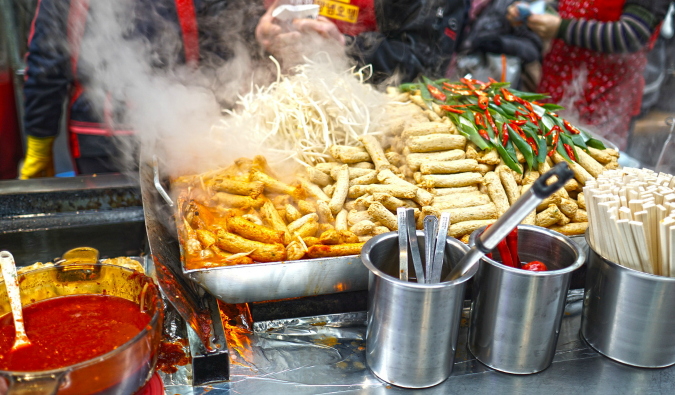
 

How to Travel And Eat Your Way Around the World

0

jodi ettenberg the legal nomadThis is a guest post by Jodi Ettenberg, foodie extraordinaire and writer of The Food Traveler’s Handbook. She is one of my favorite travel bloggers, and it’s a honor to have her guest post here while I am in Africa!

The beauty of traveling the world is that you can home in on the things you are most curious about or the themes that bring you joy. For many people, this means adventure or volunteering or climbing as many mountains as possible. For me, it means eating my way around the world and learning about food.

I never started out this way. I planned my travels to last one year, expecting to return to my lawyering job in New York in 2009. After saving up as much as I could, I started a site, Legal Nomads, to document whatever adventures came my way. I never thought that I would be still writing years later, and certainly did not expect to have written a book about food.

Somewhere between Mongolia and China, I figured out that what I ate would become more of a focus for my travels. Growing up, food was never a big part of my life, but as time went on and I began to travel, it was obvious that my destination choices and daily schedules were planned around my taste buds. Moreover, I wanted to travel so that I could learn about what people ate and why. It wasn’t just about the enjoyment of a meal or two but went much deeper. How was it that these tastes and traditions that fascinated me came together to form the historical backdrop for countries I was only beginning to explore? Food was a never-ending source of wonder (and delicious meals).

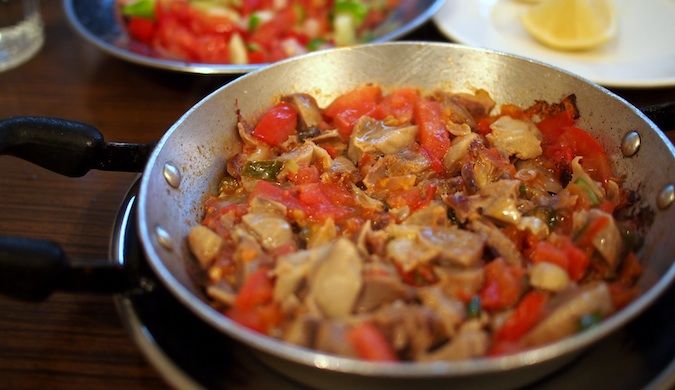
travel food: Chicken gizzards in Istanbul, Turkey
Chicken gizzards in Istanbul, Turkey

But for those who want to do what I do, there are some valid concerns. How do you eat safely, without getting sick? What do you need to pack before you go that helps you on your tasty travels? And what do you need to know to build out an itinerary based around food?

I just wrote a book, The Food Traveler’s Handbook, answering these questions and more, and Matt asked me to post my thoughts here about how I eat the world.

Here are my five tried-and-true tips and tricks for discovering the hidden secrets of food:

Start with the basics: the dishes themselves. One of my favorite places to start is Wikipedia, specifically its page on national dishes. Jumping from that landing page through to the ingredients named in it, or a historical footnote that fascinates you, means that you can take a journey though the anthropology of a country’s food before you even set off. For example, many travelers do not realize that ketchup’s origins lie thousands of miles away from America, in Fujian, China. By learning about that history before you set off to a trip to China, you are afforded a whole other lens through which you can view your adventures. A delicious lens at that!

eating good food while traveling, Pork floss corn muffins in Chiang Mai, Thailand
Pork floss corn muffins in Chiang Mai, Thailand

You’ll appreciate food more if you also learn about the etiquette and social mores that accompany it. Part of the fun in learning about food is also trying to understand and/or mimic the cultural and food habits of the countries you visit. I’ve found asking locals about their traditions or their table habits is an excellent conversation starter. For example, in much of Asia, staking your chopsticks vertically in rice is frowned upon, because it is a Buddhist rite for the dead to burn incense in a bowl of rice at the altar. And asking about this topic at a dinner in Bangkok turned into a long discussion about the many other food quirks in our respective countries. Pre-trip, a good starting point for learning is Etiquette Scholar’s international dining etiquette section, divided into regions.

Two brief packing tips. Whether you travel with or without food, a good first aid and medical kit is important, as are my recommended packing essentials like a headlamp, doorstop, and safety whistle. For my first aid kit’s full contents, see my resources page. But what about packing for the food traveler? Specifics include the following:

  • I never leave home without portable chopsticks, great where food is fresh but the street stall’s dishes may not be as clean as you’d like. An alternative is bringing baby wipes or Wet-Wipes with you to wipe down the utensils. That’s not to say I wander around disinfecting all of the cutlery, either! But for those street stalls with a fast turnover but less exciting washing methods, it’s always good to take that extra step.
  • I also carry a Point-It Dictionary, easy to use when the language barrier gets in the way. You can point at the animal, condiment, or other item in the book and be guaranteed a minimum of communication. For those with iPhones, an alternative is ICOON, a picture dictionary.
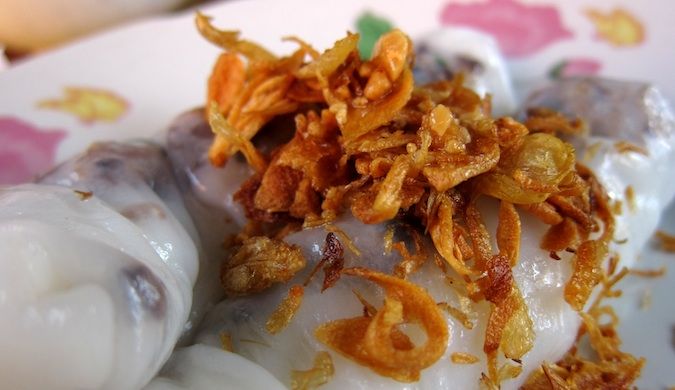
traveling and eating steamed pork and mushroom spring rolls topped with fried garlic in Muang Ngoi, Laos
Steamed pork and mushroom spring rolls topped with fried garlic in Muang Ngoi, Laos

Don’t ignore breakfast options. Be it nasi lemak in Indonesia or mohinga soups in Myanmar, breakfast is often an ideal time for you to explore your destination’s culinary offerings. Another option, particularly in Southeast Asia and South America, is to find the fresh food markets at dawn — they will almost always have food stalls attached, where shoppers stocking up on ingredients stop for a meal. Turnover is fast, the food is fresh, and it is almost always cheap.

What about food safety? Street stalls and markets are the best way to try food and not break the bank, but their safety is a concern for a lot of people. To be honest, I’ve been sicker from restaurants more often than from street stalls on my travels. The beauty of frequenting streetside restaurants is that they are open and accessible; you can see how the food is treated and cooked, and how clean the stall is — or isn’t.

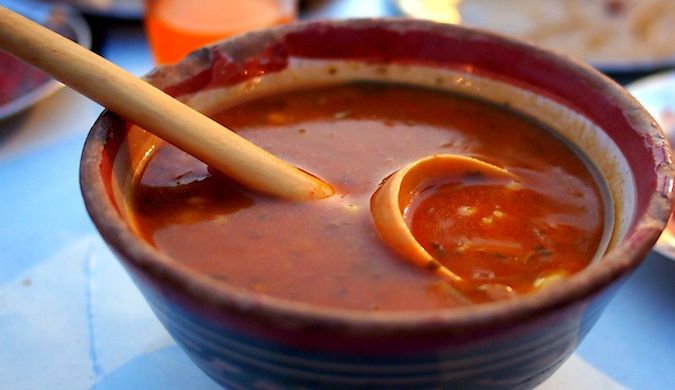
Harira soup in Marrakesh, Morocco while traveling
Harira soup in Marrakesh, Morocco

Other tips:

  • I aim for stalls where the person cooking is not also handling the money, and if they are, then they are handling that money with gloves on, taking them off to cook the food.
  • I also take a close look at how the town or country eats; if a big meal for locals is at lunchtime, that would be my choice for experimenting with new meats or exciting dishes, when the food is freshest.
  • For those with food allergies or restrictions such as avoiding meat or dairy, Select Wisely has allergy and/or food cards that you can print out and take with you in the local language. Very helpful for a celiac like me who has to avoid gluten, wheat, barley, and rye!

These are but a few tips that can help guide you toward safe, delicious, and inexpensive eats on your travels. While food wasn’t a priority when I started traveling, I’ve found it an excellent addition to what was already a fulfilling experience. By focusing on food, I’ve added some fascinating stories, found great new friendships, and — of course — eaten some delicious meals. If you have any food questions, I’d be happy to answer them at or in the comments.

Bon appétit!

Jodi Ettenberg has been eating her way around the world since April 2008. She is the author of the recently published Food Traveler’s Handbook. She is also the founder of Legal Nomads, which chronicles worldwide travel and food adventures, and she is a contributing editor for Longreads. She gets the shakes when she goes too long without eating sticky rice.

              How to Travel as a Vegetarian

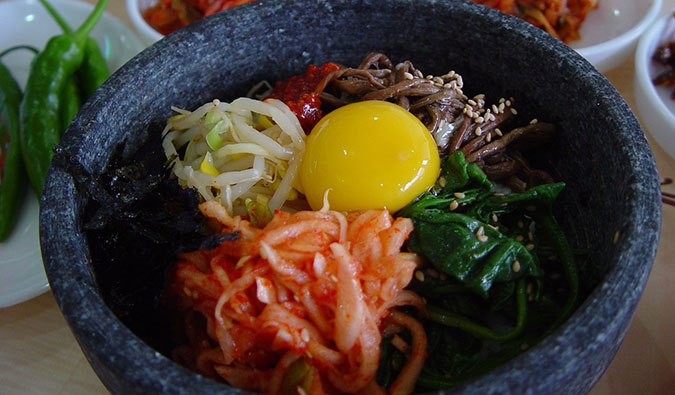
A bowl of vegetarian korean foodTraveling with dietary restrictions can be challenging, but it shouldn’t stop you from seeing the world — even on a backpacker’s budget. Blogger and food tour leader Akila McConnell has been a devoted vegetarian her entire life. In this guest post, Akila offers unconventional tips and practical advice for traveling the world as a vegetarian backpacker.
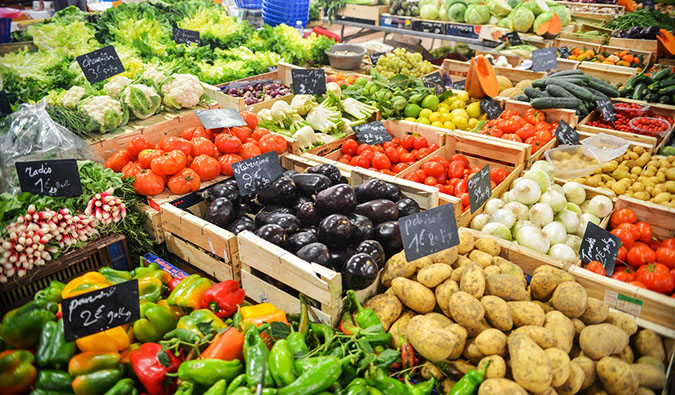
When we tell people that we’re traveling around the world, the first question I get is, “But, how do you eat?”

I was raised a vegetarian, stuck with my vegetarianism through college in the South (the land of vegetables boiled with ham hocks), and wasn’t going to change my eating habits because of our round-the-world trip. At the same time, eating is one of the main reasons we travel, so one year of boring salads and convenience store packaged foods wasn’t going to cut it. The good news is that after eight months on the road, I’m still a happy vegetarian backpacker because I follow these four rules:

1. Learn the local language.

Many languages have a word that means “vegetarian,” but I’ve often found that term is not used. For example, we’re currently in Japan, where “bejetarian” means “vegetarian,” but I’ve received many blank looks because Japanese people don’t use that word. On the other hand, if I ask for “yasai” dishes, they’ll offer me vegetable-based meals.

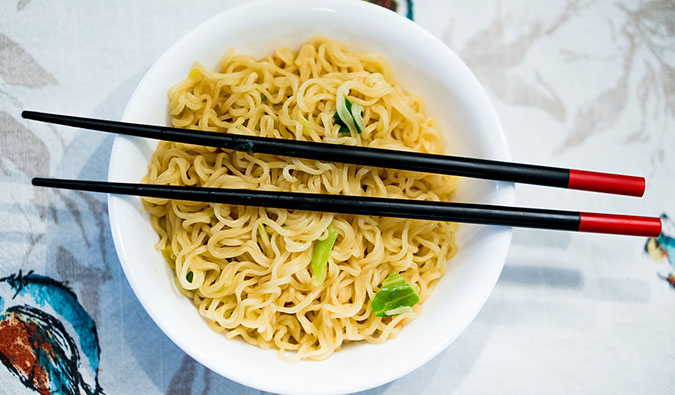
Japanese vegetarian ramen in a white bowl with chopsticks

“Vegetarian” also means different things in different countries. In Thailand, the translation for vegetarian can also mean fish stock. If you say “jai ka,” the restaurant will offer you Buddhist vegetarian meals, which don’t include any meat products or onions or garlic.

To make sure your dietary concerns are understood, write down a few phrases before you go. “I cannot eat fish. I cannot eat meat.” Translate these into the local language so you can show them to the staff at the restaurant. That way you can communicate clearly and make sure everyone is on the same page. Conversely, if you’re traveling with a smartphone and access to data, you can download the local language and use the Google Translate app to communicate.

2. Do some research

HappyCow.net contains a listing of vegetarian restaurants across the world, and most guidebooks provide a “vegetarian listing.” I highly recommend finding locals who speak English to ask for recommendations. In Florence, our hotel owner recommended La Cipolla Rossa, a restaurant that specialized in creative Italian dishes. My husband ate a perfectly cooked steak while I was served a beautiful vegetarian entrée consisting of grilled vegetables and cheese.

For additional restaurant tips, use an app like Couchsurfing to talk with locals. You can filter local hosts by words like “vegetarian” or “vegan” so just do a local search and then message anyone who shares your diet. What are their favorite local restaurants? Are there any local hidden gems that might now be on Happy Cow? By reaching out to locals you’ll not only get great tips but you might be able to find someone to join you!

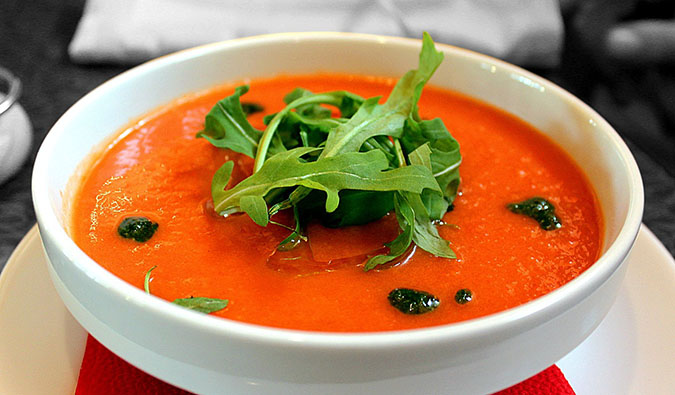
In addition to searching for specific restaurants, research local specialties. Nearly every country specializes in some vegetarian item, like tofu and tsukemono (pickled vegetables) in Japan, amarillos (fried plantains) in Puerto Rico, gazpacho in Spain, and bibimbap (a medley of rice, vegetables, and eggs) in Korea. At the same time, in certain countries, vegetarian specialties have “hidden” meat products; for example, most Thai and Cambodian recipes are made with fish sauce, so it’s important to specify no fish sauce when ordering those dishes.

a vegetarian bowl of soup with a fancy garnish

3. Be willing to move on

Unlike high-end restaurants that can afford English-speaking staff and an abundance of options, mom-and-pop restaurants frequented by backpackers may not have the ingredients available to cook vegetarian meals. If you talk to the wait staff and they can’t make anything, thank them for the trouble and move on to a different restaurant. Often you might end up eating a dish without meat but that has been cooked with an animal-based product simply due to miscommunication. This might not seem like a big deal for some, but not eating meat for some time will make it hard for your body to digest. Chances are you’ll end up sick (or with a stomach ache at the very least). Don’t risk your health, just politely say thanks and move on.

4. Carry backup supplies

On our last night camping in Australia, I was offered a baked potato and potato chips for dinner while the rest of the group ate grilled chicken and baked potatoes. I supplemented that inadequate carb-heavy meal with my backup stash of granola bars. We always carry one day’s worth of healthy snack items, which we restock in major cities.

Finding vegetarian products in big cities is usually fairly easy: granola bars, trail mix, nuts, and packets of dried fruit are available in supermarkets and convenience stores. In small towns where packaged produce may not be as readily available, we haunt the neighborhood markets for fresh fruits and vegetables. If you’re going somewhere that might not have the snacks you need or want, bring them with you before you leave home.

a farmer's market full of fresh produce

I admit that it’s a little more difficult to find options for me than for my omnivorous husband. Yet you can always find vegetarian food if you think creatively. In Italy, most first courses or primi piatti are vegetarian-based pasta dishes, so I often ordered two first courses rather than a first course and a main course. Though most Irish meals consist of some type of beef, soups and baked potatoes are served in nearly every pub. In Japan, a famously seafood-driven society, most Buddhist and Shinto temples offer a reasonably priced vegetarian meal for lunch. For the vegetarian traveler, eating on the road doesn’t have to be all salads, but it does take a bit more thought and work.

Akila’s mind (and waistline) expands as she travels and eats across the world. She is currently based in Atlanta and owns the food tour company, Atlanta Food Walks, a food tour that highlights Atlanta’s undiscovered neighborhoods, restaurants, and art It even contains recipes for healthy and easy-to-make dishes. When she isn’t busy leading tours, she’s writing and blogging about food.

  • My 18 Current Favorite Restaurants in Europe

Tapas buffet in Europe restaurantAs I buried my face into the piping hot crêpe, I couldn’t help but realize how much I eat when I visit Europe. After gorging on Nutella, cheese, sausage, beer, pasta, goulash, or whatever else is put in front of me as I traverse the continent every summer, my bikini body needs some work. Europe has just too many world-class places to eat, drink, and be merry!
But, as I took that second bite, I thought, “Screw it. Bring me a second crêpe. You only live once!”

And so I continue eating my way across the continent.

A few years ago, I listed my favorite restaurants in Europe, but since that time, I’ve eaten a lot of food at a lot of new restaurants. I’ve been to new cities, countries, and locales that deserve some culinary attention, so today, it’s time to share a second list of eateries in Europe that — while they may ruin your bikini body — will bring you a lifetime of bliss and memories:

Le Dit Vin (68 Rue Blanche, Paris)
I stumbled across this restaurant while looking for a place to eat near my Airbnb. I spied lots of wine bottles on the wall and someone eating cheese and thought “PERFECT!” It was an incredible find. The prices are reasonable (under 15 euros [$16 USD] for a meal), there is a large wine selection (it’s Paris, of course!), and the food is rich, savory, and delicious. The menu changes daily depending on what’s fresh, so all I can really recommend as a constant is the cheese plate.

Moeders (Rozengracht 251, Amsterdam)
Meaning “mothers” in Dutch, this restaurant is famous for serving traditional Dutch cuisine. It’s a small place (you’ll want to make reservations) filled with portraits of people’s mothers (feel free to add to their collection!) with outdoor seating in the summer. The best value is the Dutch sampler for two, where you can sample a heaping of traditional Dutch food, including lots of potatoes, cabbage, and meat. The fish of the day is always a winner, as is their carpaccio, spare ribs, and hotchpotch (a thick stew with vegetables and meat). A main will set you back 15-20 euros ($16-22 USD) but it’s worth the price!

U Medvídku (Na Perštýn 7, Prague)
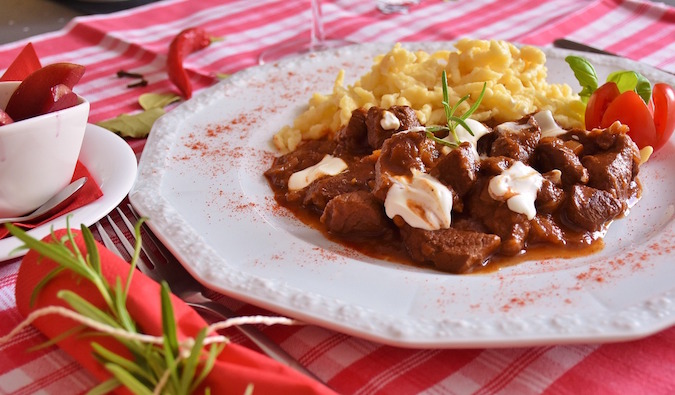
This restaurant is one of the oldest in the city and somewhere I take my tour groups every year. Czech food is heavy on the meat and potatoes, and this spot is no exception. Here you can find a mouthwatering selection of home-brewed beer, heavy goulash, thick potato dumplings, duck, and perfectly cooked pork. Portions are huge (the pork knee is really for two). Prices are 120-200 CZK for a meal. (Another excellent place that serves traditional food is Kravin (Námstí Míru 109/18, Prague), which is a popular after work drinks destinations).

Eastern European goulash dinner - Prague

The Naschmarkt Vienna
Centrally located near the main ring road of Vienna, this outdoor market is lined with restaurants, cafés, and wine bars and is popular with locals and — thanks to lots of mentions in guides and blogs — tourists alike (yes, I’m doing my part!). You’ll be able to choose from a selection of kebab vendors, snack shops, and vegetarian restaurants. (You’ll also find food stalls selling vegetables and deli goods, but prices are higher than other markets in town so I wouldn’t recommend getting those things here.) On a warm day, I love coming here and eating outside and having a glass of wine.

Der Wiener Deewan (Liechtensteinstraße 10, Vienna)
This all-you-can-eat, pay-what-you-want Pakistani restaurant is popular with students (and cheapos like me; most people pay 5-10 euros for their meal). It’s also insanely tasty, serving up daal, naan, salads, chicken, chutney, and at least a few other dishes (usually around six total) each night. Because it is so cheap and tasty, it is always crowded, so if you’re a big group or going during peak eating hours, you’ll most likely need to wait for a seat. I visit every time I’m in Vienna.

Aneka Rasa (Warmoesstraat 25-29, Amsterdam)
There’s a lot of Indonesian food in Amsterdam, given their past colonization of the country. While there are many options in the city, I like this one the best because you get a lot of food for your money and it’s a great place for groups. You can order the sampler platter (about 10 dishes) for 20 euros ($21 USD) per person. You’ll leave full and with leftovers for later. I’m especially addicted to the rice cakes they bring out as an appetizer.

Leo Burdock (4 Crown Alley, Temple Bar, Dublin)
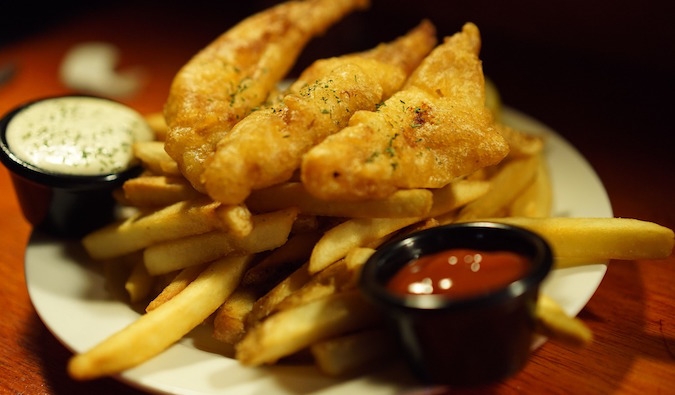
This well-established restaurant (over 100 years old!) serves fantastic fish and chips. It’s simple, easy, and delicious. Unlike a lot of other fish-and-chips shops, I didn’t find the food here too oily; it was perfectly fried and crisp. They don’t have an extensive menu, instead focusing on making a few dishes incredibly well. At 10 euros ($11 USD) for fish and chips, it’s a delicious place for an affordable and filling lunch. There are four Leo Burdock locations in and around Dublin.

Fish and chips close up Ireland

The Laundromat Café (Austurstræti 9, Reykjavík)
This cute café right on the main drag is famous and serves what I can only call American fare: burgers, pasta, sandwiches, and salads. While expensive (it’s Iceland, yo!), it’s also damn tasty. They offer excellent coffee and pastries, and you’ll find lots of people reading and writing in their comfy chairs and at tables.

Sægreifinn – The Sea Baron (Geirsgata 8, Reykjavík)
Turns out one of my readers in Iceland happens to be a government official, and when she took me here, I knew it had to be good. This tiny, hole-in-the-wall seafood place serves thick lobster soup with huge chunks of lobster and nice creamy broth. I’ve since heard it’s pretty famous, but when we went, there were no crowds and only Icelanders there. Regardless of who frequents it now, it’s delicious and shouldn’t be skipped.

Berlin’s Thai Market
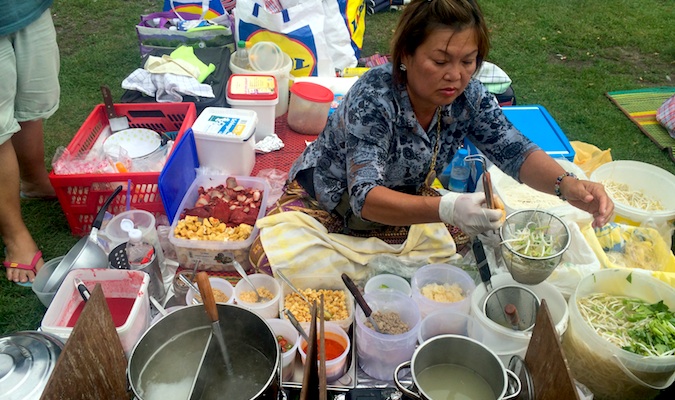
I’ve been a Thai food snob ever since living in Thailand. Even the best places in the world make me go “meh,” but this weekend food market (though there are some weekday vendors) sees Thais setting up mini stalls and selling street stall–style food just like they do back home, unencumbered by German regulation. It’s the most authentic Thai food I’ve found outside Thailand (and it’s super cheap at only a few euros per dish). Here you can gorge on pork noodle soup, som tam, Thai ice tea, and real street-style pad gra pow! Heaven!

Thai lady serving thai food in a market in Berlin

Vinograf Míšenská (Míšenská 8, Prague)
More of a wine bar (featuring hundreds of Czech vintners), they make the list because they do serve a yummy cheese and meat plate, too! The small, intimate setting with walls covered in wine bottles offers a quite respite from the noise of the streets.

Txalaka (Carrer Bonastruc de Porta, Girona, Spain)
Oddly located near a big car park and away from the town’s downtown, this restaurant serves buffet-style tapas: you just go and pick what you want. Most dishes are only a few euros and the selection is extraordinary — it’s pretty much every tapa you can imagine (I especially liked the shrimp). Grab some food, sit out side with your friends, drink a glass of wine, and eat at one of the best spots in the city.

Hermans (Katarina, Sofia Fjällgatan 23B, Stockholm)
This is an all-you-can-eat vegetarian buffet overlooking the harbor. Even though meat isn’t on the menu, the food is worth coming for. You have a wide selection of ever-changing options: healthy salads, home-cooked warm breads, hot dishes, a smorgasbord of fruits, and lots of desserts. Their 100 SEK ($11.50 USD) lunch buffet is extremely popular and fills up fast. Get there early. If you have a large group, you’ll need to make reservations. During the summer months, there’s outdoor seating.

La Crêperie des Arts (27 Rue Saint-André des Arts, Paris)
Located on the Left Bank near the Saint-Michel–Notre-Dame train station, this tiny to-go crêperie is the best one in all of Paris (in my opinion). The banana Nutella crêpe is my favorite. Cheap, savory, and with large portions — you can’t go wrong here.

Sweet strawberry crepe with powdered sugar

Pancakes! (Berenstraat 38, Amsterdam)
This spot serves traditional Dutch pancakes: large thin, crêpelike pancakes with tons of tasty toppings (I’m a big fan of the strawberries and whipped cream!). It’s small, so try to avoid peak eating times as the wait can get quite long. Large portions make this place worth your time and money. Most pancakes are around 8 euros ($8.50 USD).

Café de Jaren (Nieuwe Doelenstraat 20-22, Amsterdam)
Serving typical café food (soups, salads, sandwiches), this place is located on the main Amstel canal, with an incredible view of the city. It has an awesome outdoor area, serves beer, and has Wi-Fi in case you want to work! I love coming here to sit, relax, and enjoy the view!

Jeanne A (42 Rue Jean-Pierre Timbaud, Paris)
This eat-in épicerie and wine shop offers country-style food (especially meats and cheeses) and is my favorite spot in Paris. The prix-fixe menu offers the best value at 30 euros ($32 USD) for dinner with an appetizer and main dish. Be sure to try their lamb and duck — they are famous for it!

Café Père & Fils (86 Rue Montmartre, Paris)
Located in the heart of Paris, this is a Parisian brasserie and coffee shop with outdoor seating for lunch and drinks. It gets busy on warm, sunny days when all the nearby office workers take over the patio for lunch. There are daily happy hours and brunch on Sunday.

I’m no food writer, so my descriptions may not conjure up images worth salivating over, but trust me when I say these places are worth a visit. When I travel, I eat at a lot of random, suggested, and guidebook-listed restaurants. Not every one is a winner and, even if it’s good, it may not knock my socks off. These, though, knock both my socks off, put them back on, and knock them off again.

Most Beautiful Places to Visit in Oman

0

Oman isn’t a country that many people consider visiting, which is a shame as it has a lot to offer and is one of the safest countries in the Middle East. In Oman you can visit forts and deserts, mountains and beaches, mosques and souqs, and swim in stunning wadis.

These are our favourite places to visit in Oman:

Contents

  • 1) Sultan Qaboos Grand Mosque, Muscat
  • 2) Mutrah Corniche, Muscat
  • 3) Jabrin Fort
  • 4) Nizwa Fort
  • 5) Jebel Akhdar
  • 6) Misfat al Abryeen
  • 7) Jebel Shams
  • 8) Wahiba Sands
  • 9) Wadi Bani Khalid
  • 10) Sur
  • 11) Wadi Shab

1) Sultan Qaboos Grand Mosque, Muscat

The main prayer hall of the Grand Mosque in Muscat, one of the most beautiful places to visit in Oman

Most trips to Oman begin in the capital Muscat and high on everyone’s list is a visit to the Sultan Qaboos Grand Mosque. It’s a stunning modern mosque that lives up to its name with space for 20,000 worshippers. The extravagant main prayer hall features a massive chandelier, intricately detailed blue mosaic tiles, and the second largest handmade Iranian rug in the world—it took 600 women four years to weave.

The mosque’s grounds are a serene place to wander and enjoy the harmonious lines and archways of the various buildings and beautiful gardens. On our visit a rare rain shower turned the marble floors into a reflective pool.

Where to Stay: Beach Bay Hotel has comfortable rooms, a great breakfast, and is only a two-minute walk from Qurum Beach in the diplomatic area of Muscat. You can use the Grand Hyatt’s pool next door for a small fee.

2) Mutrah Corniche, Muscat

Mutrah Corniche in Muscat, Oman

Before sunset head to the other side of Muscat to the Mutrah Corniche. Join the locals for a stroll along the lovely seafront where white buildings and mosques are backed by rocky mountains and forts that glow golden in the late afternoon light.

Nearby you can shop in the narrow lanes of the Mutrah Souq, one of the oldest markets in Oman, for frankincense and myrrh, ceramic incense burners, silver jewellery, pashminas, turbans, genie lamps, fluffy camels, and much more.

Where to Stay: You could stay at Beach Bay Hotel (above), but Mutrah Hotel is within walking distance of Mutrah Corniche and is cheaper (but a bit more basic).

3) Jabrin Fort

Jabrin Fort (or Jabreen Castle), Oman

From Muscat we recommend taking a trip inland to the Nizwa area where you can explore forts, mountains, and ancient villages.

Jabrin Fort (also known as Jabreen Castle) dates back to 1675 and looks like a sand castle amidst an oasis of date palms. You can wander through the labyrinth of rooms and see the defensive methods used like the murder holes, gaps in the floor where they used to pour boiling date oil on enemies.

Where to Stay: Nizwa is a good base. Our self-catering apartment at Al Karam Apartment Hotel was spacious, comfortable, and affordable.

Back to Contents

4) Nizwa Fort

Nizwa Fort, Oman

Another popular fort to visit is the 17th-century Nizwa Fort with its massive circular tower which you can climb for views of the mosque, souq, distant rocky mountains, and the date palms that surround this oasis city.

Nizwa Fort has recently been refurbished and there are now historical items on display like jewellery, tools, and a timeline of the area’s history. You can also watch women making crafts and baking bread over an open fire. Look out for the murder holes here too.

Where to Stay: We stayed at Al Karam Apartment Hotel—see above.

Back to Contents

5) Jebel Akhdar

Jebel Akhdar, Oman

Jebel Akhdar means Green Mountain but you might wonder why as you ascend its slate grey and burnt orange sides, barren except for a few thorny dried up bushes. The green refers to the villages of the Saiq Plateau, 2000m above sea level, where abundant rainfall allows the growth of pomegranates, grapes, peaches, apricots, and roses for the rose water that’s used in Omani sweets and as perfume. Spring is the best time to visit when the roses are in bloom and the terrace plantations are a vibrant green.

Jebel Akhdar is an easy day trip from Nizwa (or even Muscat), but you do need a 4WD to ascend the steep winding road (we hired a driver at the police checkpoint). The views from the top of the villages surrounded by jagged peaks are spectacular, and the cold air is a relief from the hot plains.

Where to Stay: We stayed at Al Karam Apartment Hotel, a 15-minute drive from the base of the mountain in Birkat al Mawz. If you can afford it, the new Alila Jabal Akhdar high up in the mountains looks stunning.

Back to Contents

6) Misfat al Abryeen

Misfat Al Abriyeen, Oman

Most of the old villages in Oman have been abandoned, but Misfat al Abryeen is still inhabited and is one of the most picturesque in Oman. It’s a maze-like village of crumbling mud houses in narrow passageways sloping down the mountainside. Below the village you can follow the falaj irrigation channels and walk through the lush date and banana plantations—it’s shockingly green after the desert.

Where to Stay: We visited Misfat between Nizwa and Jebel Shams. For an interesting local experience and home-cooked food, you can stay at the Misfah Old House guesthouse.

Back to Contents

7) Jebel Shams

The view on the Balcony Walk at Jebel Shams, one of the best things to do in Oman

It’s a long drive on steep, rough roads to the top of Jebel Shams, Oman’s highest mountain, but it’s worth it for the stunning views deep down into Wadi Ghul, known as the Grand Canyon of Arabia. It’s one of the most beautiful places in Oman.

Our highlight was the Balcony Walk, a fairly easy but dramatic 2.5-hour hike which winds around the cliffs halfway up the rim of the canyon to the abandoned village of As Sab. Tiny stone and mud houses perch precariously on the edge of the ravine under a ledge of rock—an insane place to live.

Where to Stay: Jebel Shams Resort is the nicest of the two hotels at the top of the mountain. We had a good view from our sunset chalet and it was convenient for the viewpoint and Balcony Walk.

Back to Contents

8) Wahiba Sands

Wahiba Sands, Oman

For the true desert experience head to Wahiba Sands for rolling sand dunes, camel rides, and 4WD adventures. We spent a night in a rustic goat-hair Bedouin tent at the foot of a huge dune which we climbed for sunset and sunrise. We watched camels wandering past, drank tea by the fire, and gazed at the sky lit up with stars. It was wonderfully peaceful.

Where to Stay: Desert Retreat Camp was the most interesting place we stayed in Oman. We liked the simple tents, excellent Indian food, and peaceful location.

Back to Contents

9) Wadi Bani Khalid

Wadi Bani Khalid in Oman

One of our favourite things about Oman were the wadis, rocky ravines or dry riverbeds that only contain water at certain times of the year, but many have pools you can swim in.

Wadi Bani Khalid is a stunning oasis in the desert with crystal clear green water surrounded by date palms and rugged mountains. The pools are huge and swimming in them is so refreshing in the desert heat. It’s the perfect place for a relaxing afternoon.

Read more about Wadi Bani Khalid.

Where to Stay: We visited Wadi Bani Khalid on our way from Wahiba Sands to Sur. The Oriental Nights Rest House is one of the nearest hotels if you want to stay nearby.

10) Sur

Sur, Oman

At Sur the desert meets the sea. You’ll find long empty beaches, the picturesque fishing village of Al Ayjah, a dhow boat building yard, and just north, the turtle reserve at Ras Al Jinz. (Sadly there were no turtles on the beach when we visited for the 5 am tour).

Where to Stay: To visit the turtle reserve we stayed at the Ras Al Hadd Guest House (much cheaper than the reserve itself) and then moved to the basic Sur Hotel in the centre of Sur. Both were inexpensive and convenient.

Back to Contents

11) Wadi Shab

Wadi Shab, one of the best things to do in Oman

While Wadi Bani Khalid is all about relaxation, Wadi Shab is about adventure. You take a boat across the river, hike for 45 minutes through a stunning valley, then swim through a series of pools to reach a cave which contains a waterfall. It’s gorgeous and one of the best things to do in Oman.


Stunning deserts, ancient forts and a pristine coastline. Check out some of Oman’s must-visit locations in this intriguing desert kingdom. Travel blogger Joāo Leitão lists some of his favourite spots.

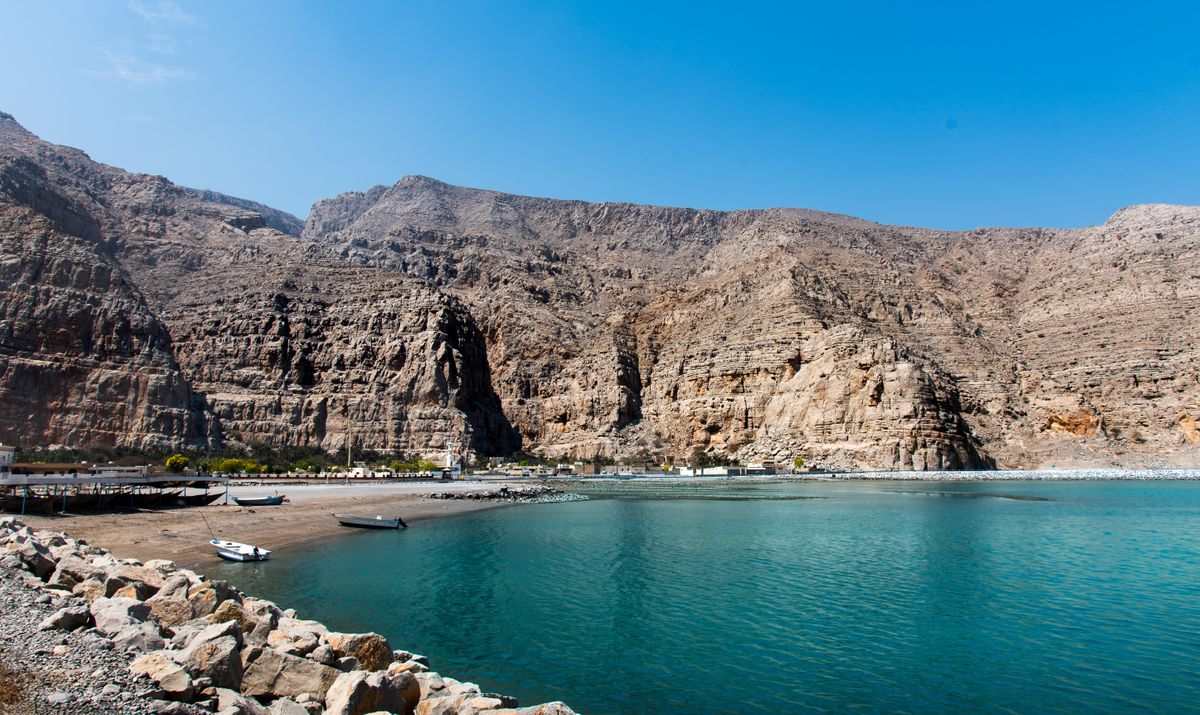
1. Musandam fjords

Musandam fjords. (Dreamstime)

Musandam fjords. (Dreamstime)

Musandam peninsula is separated from the rest of the country – it’s an enclave in the United Arab Emirates. It’s famous for its breathtaking fjords, desert mountains and waters of a beautiful shade of blue.

2. Khasab fortress

Khasab fortress, Oman. (Dreamstime)

Khasab fortress, Oman. (Dreamstime)

The capital of the Musandam region is the city of Khasab. To get there you can take a fast ferry boat, connecting to the capital Muscat.

3. Muscat

Muscat, Oman. (Dreamstime)

Muscat, Oman. (Dreamstime)

Muscat, the capital of Oman, has a beautiful historic district. Buildings with East African-style wooden balconies, and several seafront fortresses make Muscat a picturesque and relaxing destination. It’s worth spending a couple of days there, and visiting the markets, museums, forts, mosques and areas near the sea.

4. Masirah Island

Masirah Island, Oman. (Dreamstime)

Masirah Island, Oman. (Dreamstime)

Masirah Island is a desolate and deserted destination. If you like the feeling of being in the middle of nowhere, and in a place where hardly anyone goes, then you’ll love this island off Oman’s coast in the Indian Ocean. There are several deserted beaches where you can see turtles laying eggs.

5. Jebel Akhdar

Jebel Akhdar, Oman. (Dreamstime)

Jebel Akhdar, Oman. (Dreamstime)

Crossing the Jebel Akhdar was one of the best moments of my Oman trip. I drove up, departing from Al Hamra until Ar Rustaq, on the far side of the mountain. I drove a normal city car, but a 4WD is recommended. The landscape is amazing.

6. Tomb of Job

Tomb of Job. (Joāo Leitão)

Tomb of Job. (Joāo Leitão)

Job is a religious figure, known as Ayyub in Islam, Iyov in Judaism and Job in Christianity. You can visit his tomb and, in the outer zone, you’ll find a small box which protects his footprint (people say it’s enormous). The whole area is a site of Muslim pilgrimage.

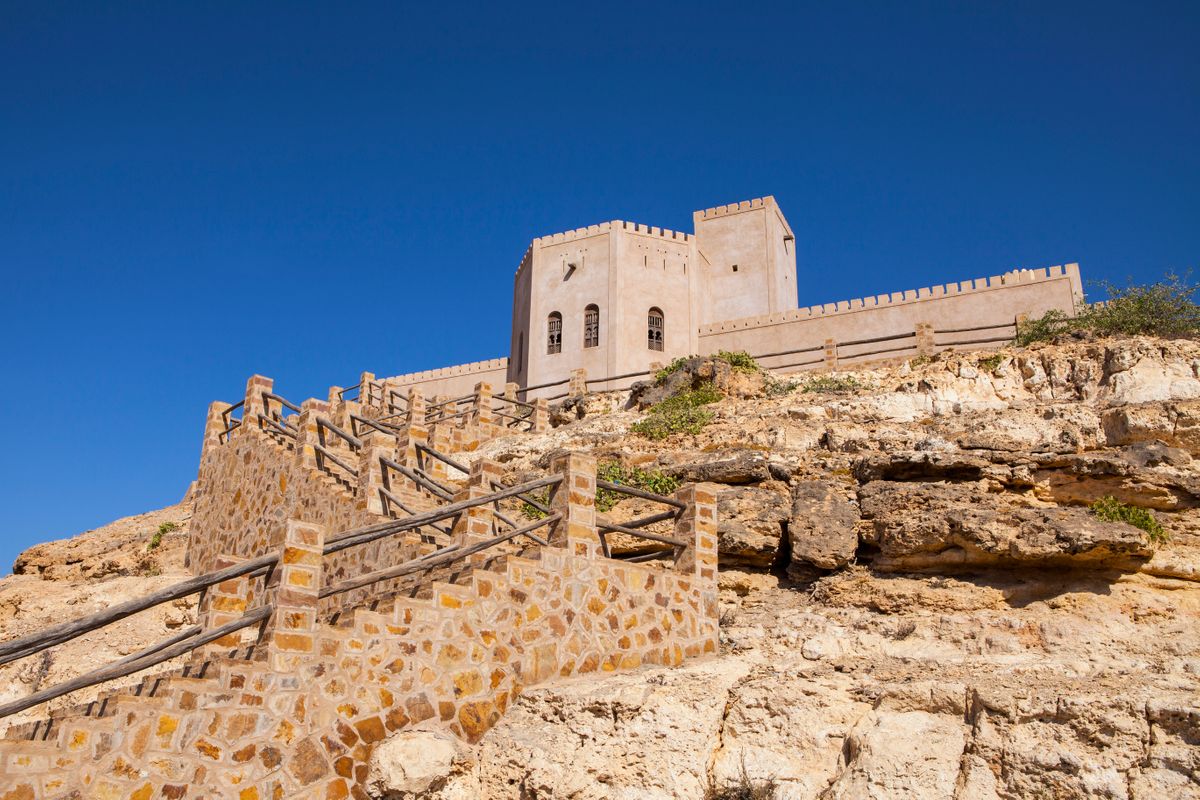
7. Taqah Castle, Mirbat

Taqah Castle. (Dreamstime)

Taqah Castle. (Dreamstime)

Taqah Castle dates back to the 19th century, and is situated at the entrance of Mirbat. It was built to be the permanent residence of Sheikh Ali bin Al Ma’shani Timman. It’s very well preserved, and houses a very interesting ethnographic museum, showing various aspects of life and culture from the region.

Six smartphone apps for budget travel and The dos and don’ts of flying etiquette from a frequent traveller

0

Whether it’s spending hours pouring over airfare, sleeping in noisy hostels or battling through the red-eye squished in coach, traveling on a budget can feel like a hustle. Thankfully there are a handful of travel apps that can help save a few bucks on your dream trip – and help you plan for your next one. These are six of our favorite apps for budget travel.

A backpacker waiting for a train while looking at a smartphone; best apps for budget travel
These smartphone apps can shave hundreds off your next trip

Tripcoin

The best way to save on travel is to know where your money is going. Tripcoin is an expense-tracking app that works offline, which is great for international travelers who aren’t buying a local SIM card. A geo-location feature breaks expenses down by country, and a currency converter automatically converts new expenses into your home currency. Helpful graphs also outline daily expenditures, and you can create unlimited trips to track how much each jaunt costs.

Product shot of Skiplagged's homepage; best apps for budget travel Skiplagged’s clever airfare loophole has drawn the ire of airlines © Image courtesy of Skiplagged

Skiplagged

Skiplagged capitalizes on a loophole airlines hate: hidden-city ticketing. It works like this: sometimes booking a flight beyond your intended destination is cheaper than simply booking a nonstop flight. For example, say you want to fly from San Francisco to Washington, DC. A regular round-trip ticket would cost $340, but a route from San Francisco to New York, with a layover in DC, is $140. You simply walk off the plane in DC. Airlines have gone to great lengths to put a stop to it (United sued Skiplagged in 2018, and lost). Skiplagged advises not tying any purchases to frequent flier accounts, as airlines have been known to invalidate air miles you’ve accrued with them.

Splitwise

If you’re traveling with friends, Splitwise can help keep track of who owes what to whom. The app keeps a running total of IOUs, so everyone gets paid back at once, rather in than a bunch of smaller transactions. Automatic email reminders keep the misers in check, and integration with PayPal and Venmo (US only) makes settling up friendly debts a breeze.

Product shots of Hopper interface; best apps for budget travel
Hopper can analyze when it’s the best time to book your flight 

Hopper

There are several apps that analyze historical airfare data to determine whether it’s the right time to buy your airfare, but few of them are as cleanly presented and feature-packed as Hopper. Features like notifications when the airfare for a specific route drops, price prediction advice that gives you an idea when it’s the right time to buy, and an option for flexible dates give Hopper a leg up on airfare deals. Put in your home city and destination and Hopper displays a calendar for the year ahead, with color-coded dates indicating when prices should be at their lowest.

HotelTonight

HotelTonight allows travelers to arrange last-minute accommodations, often at prices lower than if they’d booked in advance. These last-minute reservations often have deep discounts so hotels can increase occupancy on rooms they weren’t able to book in advance. A ‘Daily Deal’ feature also unlocks a reduced-priced hotel that must be booked within 15 minutes. If you don’t mind waiting until the day before or day of to book your hotel, this app can save bundles on accommodation.

Product shot of AirHelp interface; best apps for budget travel
When something goes wrong, AirHelp streamlines the process for claiming your compensation

AirHelp

Lost luggage and delayed or canceled flights can be a costly experience, but many travelers are eligible for compensation when something goes wrong. Often, however, there are dozens of hoops to jump through – forms to fill out, phone numbers to call and lines to wait in. AirHelp takes care of most of the process: you add your trip details, AirHelp determines if the airline owes you money, and then they send you the money. The catch: AirHelp takes a cut of the compensation as the price for convenience.

Talking about manners on planes always makes me feel like a doddering inhabitant of Downton Abbey, gasping sniffily about how standards are slipping to my equally doddering friends. But let’s be real: these days flying is more akin to a local bus than a transatlantic voyage on the Queen Elizabeth 2, so comparing some notional golden age of travel when flying was only for the super rich is unfair. There are, however, still a few ways in which flying would be better if we could all just be a little more thoughtful, a little more mindful of flying etiquette, and realize how our own behaviour affects others when travelling.

Young man is standing near window at the airport and watching plane before departure. He is standing and carrying luggage. Focus on his back; flying etiquette
If everyone followed a few simple flying etiquette tips, flying would be a much more enjoyable experience

Bags: know what you’re allowed and don’t be a binhog

Marshalling carry-on bags is a colossal headache for everyone, and airlines don’t help since it feels like every single one has a different policy. So read the ticket rules carefully, and make sure you know what you’re allowed to bring.

If you’re allowed just a ‘small personal item,’ don’t try and chance it on the size, especially on low-cost airlines where the infamous bag sizer comes out.

Carry-on luggage in overhead storage compartment on commercial airplane; The dos and don'ts of flying etiquette
We can do better, people

If you get a bag plus a personal item, then your bag should go overhead and your personal item should go underneath the seat in front of you. (Not, for the love of Howard Hughes, underneath your neighbour’s seat.) Don’t take up all the bin space with your coat either.

If you’re in the aisle or window seat, perhaps don’t get all your stuff out during boarding until anyone who might need to get past you has boarded. Consider using the time you’re waiting to board on the jetway to have your reading material, phone charger or whatever else you might need handy so you’re not blocking the aisles.

And consider whether it might be easier – and better flying etiquette – to check a bag. Yes, I’m one of those weird frequent travellers who often checks a piece of luggage: since I travel so much internationally rather than domestically I rarely find that I have much of a wait after immigration and customs, and I just can’t abide either the plastic waste of buying little bottles of all my toiletries or decanting them from bigger bottles before I leave.

Armrests: there’s one simple rule

In economy, the middle seat passenger gets both armrests. Thank you for coming to my TED Talk.

Aisle passengers, though, be aware: your aisle-side armrest may well slide up by pressing a switch or flipping a catch that’s hidden somewhere near the mechanism. This not only gives you a bit of extra wiggle room, it lets you rotate at the waist to let the middle and/or window seat passenger slip past without having to get up into the aisle.

Feet: keep them secret, keep them safe

Nobody, repeat nobody, wants to see your toes up close. If you must take your shoes off on a longer flight, keep your socks on and ideally bring a fresh pair as a courtesy to everyone around you. Bear in mind also that you can cause offense in many cultures by pointing your feet or showing parts of them, so just keep ‘em socked and on the floor. (And oh my, not on the bulkhead wall like some sort of animal cocking its leg.)

Interior view of a commercial airplane and its legroom in between seats; the dos and don'ts of flying etiquette
Keep the shoes (or at least socks) on to keep your seatmates happy

And keep them to yourself! This is especially important for those of us flying in economy class. I’ve lost track of the number of appalled faces I’ve seen online where travellers discover an errant foot snaking, unsocked, behind their seat to rest on the rear of their armrest.

Look, planes are pretty gross, germwise, and the floors are the worst. If you must come in open-toed shoes, whether it’s resort-wear sandals or a fun little wedge for the weekend, please keep them on: it’s not just that your feet are gross, it’s that they’ve probably picked up some additional horror from the floors. And perhaps consider whether a light athleisure combo shoe — terrible name, great idea — might suit your travels better than that gladiator sandal.

Clothes: let’s be realistic

It’s 2019, and it’s unreasonable to expect a three-piece suit or a formal two-piece in wrinkle-resistent Crimplene from the days of chateaubriand-and-caviar flying in today’s peanuts-if-you’re-lucky.

Leggings are pants, shorts are fine in summer, and nobody should be fainting over the shocking sight of an uncovered shoulder. (Qantas is still likely to say you can’t come in the lounge wearing the footwear variously known as flipflops, thongs or jandals, though, and I can’t recommend wearing these to fly for reasons of safety and hygiene.)

That said, let’s try to be as courteous to other passengers as we would like them to be towards us. Perhaps choose a short that goes all the way down the thigh to avoid spending several hours with the side of your bare leg pressed up against that of your closest neighbour. Let’s travel in our second-nicest pair of shorts rather than our second-rattiest. But, in general, let’s just keep our own thoughts about other people’s bodies to ourselves, shall we?


Where to go in September for culture

0

Autumn flourishes transform the northern hemisphere with fiery foliage, temperate climes and (for the most part) fewer crowds, making September a prime time for sightseeing and soaking up some culture.

Visit delightful Dublin for history, humour and cosy evenings at the pub; travel back in time and discover Beijing’s ancient treasures; spark the imagination at Tibet’s magical Buddhist sites; and take a peaceful stroll through England’s postcard-perfect villages.

The Ha'penny Bridge over the River Liffey with colourful buildings lining the riverside Dublin comes to life under sunny September skies

Get a taste of Dublin in its mellowest season

Dublin in September, often the sunniest month, sees a diminishing numbers of tourists, after the crowds of July and August have dispersed. This city is many things to many people. Yes, you’ll find lively pubs (and they deserve detailed examination), historic marvels, humour and national pride, but Dublin is also a cultural powerhouse, boasting magnificent galleries and museums, notably the Chester Beatty Library in Dublin Castle, one of Europe’s finest. During September, too, the Irish capital welcomes hundreds of arts performances during the fortnight-long Dublin Fringe Festival.

  • Trip plan: Wander the genteel streets of the Georgian Southside, admiring the ancient illuminated Book of Kells (and the spectacular library in which it’s displayed) in Trinity College, mighty Dublin Castle and the arts-and-bars hub of Temple Bar, then sample the Guinness in one (or more) of the famed music-filled bars to experience a night of legendary Irish bonhomie. Repeat till you’re out of time, money or stamina…
  • Need to know: If there’s an event on at Croke Park, you can expect it to be very busy in the area. The All-Ireland championship finals of Gaelic football are sometimes held at the start of September.
  • Other months: Mar–May: rainy; Jun–Aug: warmest, dry; Sep–Oct: cooler, fairly dry; Nov–Feb: cold.

Introducing Beijing

Start exploring Beijing with Lonely Planet’s video guide to getting around, when to go and the top things to do while you’re there.

Admire old Beijing and an even older wall in the autumn

The people of Beijing have an epithet describing this season: tian gao qi shuang – ‘The sky is high and the air is fresh’. After the steamy heat of summer, September brings relief with mellowing temperatures and falling humidity, a window of calm between summer and the national holiday in the first week of October. So get out now to wander its traditional hútòng (alleys), perhaps watching old men crouched around a table battling it out with mah-jong or cards, and to explore the city’s treasures: the Forbidden City’s gates, halls and museums, Tian’anmen Sq, the Summer Palace, and the many temples and parks.

Autumn is the perfect time to visit the Great Wall, too, when maples are in their fiery fall finery; busy Badaling is picturesque, but other wall sections at Mutianyu, Simtai and Huanghua are quieter and also rewarding.

  • Trip plan: Beijing’s varied sights – old and startlingly modern – merit several days. Regular departures to various wall sections run from Dongzhimen Bus Station.
  • Need to know: To avoid crowds, visit the wall on a weekday. Mid-Autumn Festival (late September) is also busy with mooncake-munching holidaymakers.
  • Other months: Mar–May: windy, sandstorms; Jun–Aug: hot, humid; Sep–Oct: cooler, dry; Nov–Feb: very cold.

A road over a stone bridge leads to traditional cottages with pointed roofs and chimneys with autumn foliage all around Journey a little way out from villages like Castle Combe and you’ll have the English countryside all to yourself

Walk between some of England’s loveliest villages in Autumn sunshine

In the golden autumn light of September the Cotswolds seem to simply ooze honey. This land of rolling hills – ‘wolds’ – hiding wool towns and stone hamlets in their clefts and valleys has long attracted urbanites seeking an English idyll. Visit in September not just to miss the heaviest onslaughts of coach parties, but also to enjoy the countryside at its finest, and to admire the flaming hues at the wonderful arboreta at Westonbirt and Batsford.

True, this is hardly an undiscovered gem; chocolate-box favourites such as Castle Combe and Bourton-on-the-Water can be thronging with tourists. But it’s not hard to find peace, especially if you’re prepared to stretch your legs: a comprehensive network of footpaths laces the region, while the 102-mile (164 km) Cotswold Way runs along the escarpment, linking charming sites between Chipping Campden and Bath.

  • Trip plan: If you’re not hiking, choose a base from which to explore: Broadway in the north, perhaps, for quirky Snowshill Manor, Batsford Arboretum and peaceful, stunning Stanway; or Tetbury in the south, for antiques, historic Malmesbury and Westonbirt.
  • Need to know: Many attractions, particularly those managed by the National Trust, close or have reduced opening hours November to April.
  • Other months: Apr–Oct: mostly mild; Nov–Mar: colder (some facilities closed, villages pretty and quiet in winter).

Clouds ripple across the sky above the opulent gold roof of Jokhang Temple, with the courtyard below The courtyard at Jokhang temple in Lhasa 

Visit holy Buddhist sites in some of Tibet’s best weather

The roof of the world, a land of soaring snow-capped peaks, remote valleys, turquoise lakes and monasteries echoing with Buddhist chants – no wonder Tibet captures the imagination of so many adventurers. It’s not the easiest place to travel, physically or politically – special permits may be required on top of a Chinese visa, and journeys can be long and arduous – but the rewards are spectacular, from the imposing bulk of Lhasa’s Potala Palace and Jokhang temple complex to remote stupas and jaw-dropping Himalayan vistas.

Travel in September to enjoy warm days after the summer rains have eased, prime time for trekking – perhaps the kora (pilgrimage circuit) of holy Mt Kailash, ‘navel of the world’ – before snow arrives in October.

  • Trip plan: The classic overland journey from Lhasa to Kathmandu runs via the ancient monasteries of Sera, Gyantse, Ganden, Samye, Tashilhunpo and Rongphu, with its mesmerising views of the north face of Everest. The drive should take about a week, though the Nepal– China border is prone to closure.
  • Need to know: On first arriving, take time to acclimatise to the high altitude (over 11,500ft; 3500m), and bring warm clothes – temperatures can plummet during a single day.
  • Other months: Apr–May: warmer, dry; Jun–Aug: warm, increasing rain; Sep–Oct: sunny, dry; Nov–Mar: cold, wind rising.

The 8 Best Day Trips from Tallinn, Estonia visit now with travelomama

0
Indian Railway New Train List 2020
Narva and Ivangorod fortresses | © Tony Bowden/Flickr
Narva and Ivangorod fortresses


Tallinn is the top tourist destination in Estonia because of its wonderful and unique architecture, lovely people and lively bars. However, there are also so many other spectacular places to see in the country, which can be reached from Tallinn in a nick of time. Here are the best day trips from Tallinn for everyone’s taste

Lahemaa National Park

Lahemaa National Park, located only 50 kilometers away from Tallinn, is one of the most beautiful national parks in Estonia, where you can see various species of animal, including moose, lynxes, and brown bears. Nature is also extremely diverse in Lahemaa National Park, so you can choose to wander through magical forests, explore bogs, or even walk on sandy beaches. It is perfect for a day trip, but people who want to experience even more of Estonia’s countryside should consider staying in Lahemaa even longer.

Lahemaa National Park, Estonia

Lahemaa National Park |

Haapsalu

Haapsalu resort town is located on the west coast of Estonia, only one hour and 20 minutes away from Tallin. This small town is a must-visit place if you want to learn more about the unique culture of Estonia and relax on the most beautiful white sand beaches. People who love mechanics and technology should visit the Estonian train museum, which is located in Haapsalu train station, often nominated as the most beautiful of its kind in the whole country.

Haapsalu, Lääne County, Estonia

Blue train in Haapsalu |

Helsinki

It might sound crazy but you can reach Helsinki from Tallinn in under two hours. There are plenty of ferries which can take you to the capital of Finland. There are way too many things to do in Helsinki to list them all, but one thing is for sure – everyone can find something they love in Helsinki, from visiting historic museums to hitting local bars to walking around stunning streets to experiencing Finnish saunas.

Helsinki, Finland

Helsinki |

Tartu

Tartu is the capital of students in Estonia, so the best time to visit this city is autumn when all the students rush in for the new academic year and the city comes to life. Visit the oldest university in Estonia, learn more about the country’s dramatic past in the KGB museum, or bring your kids to see some old toys in Tartu toy museum. There are also plenty of wonderful restaurants and bars to try some delicious and traditional Estonian food.

Tartu, Estonia

Tartu University |

Parnu

If you want to take your other half on a romantic date, Parnu is definitely the place to go. The beaches are stunning and there are various activities you can choose from, including windsurfing and playing mini-golf. Also, the food is extremely delicious in Parnu and some locals even come here just for the pizza, arguably the best in Estonia.

Parnu, Pärnu County, Estonia

Parnu |

Narva

People who want to see how the Soviet Union once looked, should consider visiting Narva. Most of the buildings were built during the Soviet era and nothing has changed much since, creating a unique atmosphere of older times. People also come to see two huge fortresses, which are only separated by Narva River. The first one, Narva fortress, stands in Narva and belongs to Estonia, while the other one, Ivangorod fortress, is already in the Russian territory.

Narva, Estonia

Narva waterfalls

Soomaa National Park

Soomaa National Park has a wonderful infrastructure, including stroller accessible trails, and is open all year long. During the rainy season, the park floods to the point that it can only be accessed via canoes and boats, adding even more color to the whole experience. People who want to see beavers and their dams can hike the special Beaver Trail.

Soomaa National Park, Estonia,

Soomaa National Park |

Prangli Island

Prangli Island is the only permanently inhabited island in Estonia’s north, inviting its visitors for a unique and unforgettable experience. You can visit the local fishermen villages, try traditional fish dishes, walk around sandy beaches and pine forests, and meet the locals to learn more about their customs and culture.

Prangli, Harju County, Estonia

Prangli Island

Travel trends for 2019 in june : road trips go electric with travelomama

0

Classic road trips are evolving into something more fully charged. As countries and rental companies make the electric leap, choosing to reduce your carbon footprint with an EV has never been easier.

A car drives through a green forest © Dale Johnson / 500px Electric vehicles are better for the environment you’re road-tripping to see

The EV revolution is coming

Electric vehicles (EVs) are a technology on the verge. However, the mass adoption of this eco-friendly option has faced a classic chicken-and-egg struggle: what comes first, EV owners or widespread public charging stations? Travellers who want to take one for a spin while on vacation face an additional barrier, as many rental-car companies have been slow to introduce EVs as an option.

A car drives along a straight road surrounded by trees in Australia © Fly Film / Getty Images Australia is becoming increasingly equipped for electric road trips

There’s hope on the horizon, though. Many countries are rolling out ambitious plans to install charging stations, while car companies that produce EVs are adding infrastructure to support their uptake. Though EVs are often seen as more practical for urban exploration, the addition of chargers along rural routes has brought opportunities to get out on the open road. While in many countries an electric road trip is a distant dream, there are a number of EV-ready destinations that might surprise you.

Whether you’re trying to go green or want something new, an EV road trip is the perfect adventure for travellers who love a challenge. So, as the stars align for an electrically charged getaway, be part of a group of pioneers hitting the road without the drone of a gas-guzzling engine.

A car drives around a bend in an arid landscape © Paolo Trovo / Shutterstock Plan ahead to avoid losing power on long journeys

Embrace your range anxiety

In the age of GPS and Google Maps, it’s becoming harder and harder to take a wrong turn. Sure, you’ll get to your destination faster, but you might miss out on the sort of adventure that comes from (accidentally) taking the road less travelled.

EV drivers often experience ‘range anxiety’: the fear of being too far away from a charging station. While that’s natural, even among the experienced, once you turn that anxiety into the fuel for your trip, the thrill of the charging chase can begin, even along a scenic detour.

Planning for an EV adventure is a challenge that comes with its own rewards. EV drivers look after their own and there are plenty of online resources, forums and apps mapping EV chargers around the world. When you get behind the wheel of an EV, you’re joining a community ready to explore the world in a new way, and they will help you do the same.

Road sign reading 'electric vehicle parking only' © Jeff Gynane / Alamy EVs allow for unexpected pitstops

It’s not about the destination…

Not all EV chargers are created equally and you may find yourself stopped for a while – even hours – to recharge. Take a cue from your vehicle and rest up a while, perhaps in a place you never imagined. Public chargers have been rolled out differently by cities, countries and businesses. You could find yourself outside a college campus, at a spa along a stunning coastline, or in an out-of-the-way strip mall in a town you’ve never heard of.

EV road-tripping will force you to stop and smell the roses, so ignore anyone who tells you this is a downside. In reality, this presents the perfect opportunity to explore someplace you may never have stopped if a petrol station was handy. Your EV has made you a new kind of adventurer – embrace it.

Drive the Golden Route in Japan © Kanuman / Shutterstock Drive the Golden Route in Japan, without adding to the fumes

10 great places for electric road-tripping

West Coast Green Highway, North America: Cruise from British Columbia to California, waving to fellow EV drivers along the way.

National Tourist Route Hardangervidda, Norway: Journey from Bergen to see the waterfalls and mountains in Hardangervidda National Park.

Barbados: Leave no beach untouched while making the most of the island-wide charging system.

Madeira, Portugal: Exploring Madeira in an EV? Find one that can fit your hiking gear and a surfboard.

United Arab Emirates and Oman: Hit all seven emirates and stop in Muscat and Sohar without worrying about your charge.

Golden Route, Japan: Take this busy route past Mt Fuji from Tokyo to Kyoto without adding to the fumes.

North Coast 500, Scotland: Travel the Scottish Highlands – but you still can’t get behind the wheel after sampling from the local distilleries!

Queensland’s Electric Super Highway, Australia: Cruising from Cairns to Coolangatta has never been such a breeze.

Route 66, USA: Like Bob Dylan before it, this US classic has gone electric (but with more public blessing).

Black Forest, Germany: Drive into a fairy tale on one of the most environmentally friendly routes in Germany.


Hidden Marrakesh: a guide to the city’s best-kept secrets with travelomama

0

Marrakesh is a city that fizzes with life, where the default-blue of the sky sings against peach-gold architecture. Whether it’s your first visit or your 15th, the technicolor souqs and the street theatrics of Djemaa El Fna, the city’s main square that’s perpetually filled with movement no matter the time of day, exert a magnetic pull.

But there are many other surprises to discover in this mysterious, magical city, and nowhere else quite lends itself so much to happenstance, to getting lost in the tumult of the crowd, diving off into hidden alleyways and uncovering the unexpected.

Woman walking through Cactus Thiemann, a cactus farm outside Marrakesh, Morocco. She is wearing a floppy straw hat and a navy jumper, with her back to the camera walking through very tall cacti. Wander amongst giants at Cactus Thiemann, Africa’s largest cactus farm

Explore the cactus sea of Cactus Thiemann

On the outskirts of Marrakesh is the spiky sculptural expanse of Cactus Thiemann, which offers the rare experience of wandering amid cacti as tall as buildings. More than 150 varieties of cacti grow here, some ablaze with startlingly bright and alien-seeming flowers. This is a little known sight, yet it is Africa’s largest cactus farm, in a beautiful setting backed by the muscular Atlas Mountains. The farm was started by visiting German engineer Hans Thiemann, who came to Morocco in the 1960s to pursue his passion for the plants, and is now run by his descendants.

To visit, make an appointment by email (cactusthiemann@gmail.com); guided tours last 45 minutes and cost Dh150; they will give you the number of a taxi driver who knows the road when you book as it’s tricky to find.

Mint tea in an ornate silver teapot and bread in a straw basket on a colourful, tiled table in the cafe courtyard at Amal, Marrakesh, Morocco. The tables are shaded by leafy trees and white umbrellas and have cast-iron chairs to sit on. Enjoy a quiet mint tea in the courtyard of the Amal Center

Feasting with a conscience

Off the beaten track, the tree-shaded, sun-dappled courtyard restaurant of the Amal Center is much more than meets the eye. At first glance, it’s traditional home-cooked food in a lovely setting, but Amal is not only about eating. Founded by Nora Belahcen Fitzgerald after meeting a single mother begging on the streets of Marrakesh, this nonprofit organisation sets out to empower local women. The restaurant provides free six-month training courses for women in financial difficulties so that they’re able to go on to find work. You can also take recommended cookery courses at the restaurant, where you’ll learn to cook a mean tajine and get to eat it at the end too.

Marrakesh’s female founder

Few visitors realise that a powerful woman was instrumental in Marrakesh’s founding more than 1000 years ago. Zaynab an-Nafzawiyyah, an alpha Berber queen, was the brilliant de-facto co-ruler of the Almoravid Empire, which spanned through modern-day Morocco, Algeria and Spain’s Andalusia, beside her husband, Yusuf ibn Tashfin. Discover the history of Zaynab and the role of other illustrious Moroccan women at Musée de la Femme.

An inside view of the Lazama Synagogue, the oldest synagogue in the old Jewish quarter of Marrakesh, Morocco. Cushioned, wooden chairs sit on patterned red carpets. Peek inside the Lazama Synagogue, the oldest in the Jewish quarter of Marrakesh

City within a city

Wandering through Marrakesh’s Jewish quarter, called the mellah, feels like you’ve stumbled onto a secret. Even though it’s only a few paces from the centre, the mellah has an atmosphere all of its own, with Stars of David etched above doorways and shaded balconies overlooking the narrow lanes. You can visit the Lazama Synagogue, which is still in use for its 400-strong congregation, explore the Mellah Market, renowned for its fabric, and visit the eerie Miaara Jewish Cemetery, a city of the dead stretching out into the distance with uniform rounded tombs, some whitewashed and some topped with stars or Hebrew inscriptions.

Vendor selling slow-roasted lamb along Marrakesh's 'mechoui alley'. The man leans over a counter top to tend to the meat while people walk along the cobbled alleyway. There is a tin teapot on the counter also. The shops along ‘mechoui alley’ serve up slow-roasted lamb

Underground ovens

Not one for the fainthearted (there are disembodied sheep heads, dear reader), Mechoui Alley in the medina (the old walled city) behind the olive market is where those in the know head to dine on fragrant slow-roasted lamb. Each shop has a pit in the ground, into which lamb is lowered to slow roast on wood fires until it falls off the bone. The hole-in-the-wall food stands are staffed by white-robed men and run by generations of the same families. The menu is limited: tanjia (slow-cooked stew), mechoui and roasted sheep’s head, but it’s worth spending a lunchtime on a seat behind the counter, where you can dine on the delicious cumin-scented meat, drink mint tea and watch the world go by.

Marrakesh’s Warhol

Hassan Hajjaj is an artist and sculptor with an international reputation for his photographs of locals in fabulous traditional dress, ablaze with pop-art colour and in rock-star poses against the russet-pink walls of the medina. Nicknamed Marrakesh’s Andy Warhol, Hajjaj’s work is no secret, having had a recent retrospective at London’s Courtauld Institute, but savvy visitors can visit his gallery, tea room and shop at the beautifully decorated Riad Yima. It’s so alight with colour that it’s like stepping into one of his photographs, and this gallery is designed to be hands-on, eschewing the don’t-touch ethic of regular art shows.

Courtyard of Dar Bellarj, Marrakesh, Morocco. A small stone fountain is in the foreground, behind it two women look at a camera, framed by the archway of a tall decorated door. Through the door it appears that clay teapots are suspended in the air. Brush up on local art at Dar Bellarj

Hidden cultural hub

One of the many secrets of Marrakesh’s maze-like Medina is Dar Bellarj. If you didn’t know, you’d walk past it, tucked away as it is beside Ali Ben Youssef Medersa. Enter the doorway, and you’re in a riad, a traditional house centred on a gracious, shady courtyard, with alcoves off the white-washed looping colonnades of the inner courtyard. This is an arts centre celebrating living culture, with changing exhibitions on everything from Berber tattoos, photographic portraits and local weaving. Besides the always-worth-a-look exhibits, it’s an ideal hidden escape from the frenetic souqs and a serene place for a pick-me-up cup of Berber whiskey (mint tea).

Ancient recipes

The medina harbours many restaurants, but Riad Farnatchi’s Le Trou Au Mur (‘hole in the wall’ in French) has a menu that steps outside the regular offerings of tajine and couscous. This place, lined in stucco and portraits lent from the nearby Maison de la Photographie, feels truly hidden away – you’ll plunge into the labyrinth of medina streets to find the doorway off a narrow lane. The owners and chefs have set out to revive ancient cooking techniques and ingredients, with out-of-the-ordinary dishes such as tihane, stuffed offal with spiced kefta (meatballs), olives and preserved lemon; velvety mechoui from the restaurant’s oven; and fish baked with vermicelli and preserved lemons.

Amizmiz, a small village of atlas in Marrakesh, Morocco. Yellow and terracotta coloured square buildings sit behind green leafy trees. The snow-capped Atlas mountains are in the background, beneath a cloudy, grey sky. Amizmiz is nestled at the base of the Atlas Mountains 

A Berber escape

Occasionally you may crave a breather from the intensity of the city, and it only takes a short trip outside Marrakesh to reach another world, a Berber village in the foothills of Atlas Mountains. Amizmiz is a small settlement, only 55km south of the city. Time your visit for a Tuesday and you’ll get to experience the town’s traditional weekly market, when Berber villagers descend from miles around to sell their crafts, produce and spices. You can also take a walk out into the lush countryside, with snow-dusted mountains in the distance.

Interior of the Chabi Chic homeware store in Sidi Ghanem District of Marrakesh, Morocco True shopaholics leave the chaos of the medina for the artists workshops in Sidi Ghanem © Chris Griffiths / Lonely Planet

Secret shopping

The shiny brassware and traditional Berber rugs of the souqs may be calling you, but where do seriously savvy shoppers in Marrakesh go to seek out contemporary design? The industrial area of Sidi Ghanem. It’s around 4km from the centre, and you can take a round-trip taxi trip here to check out the workshops, outlets and showrooms that specialise in the art of life, such as artisanal candles at Cote Bougie, the scents and creams of Les Sens de Marrakech or the work-of-art ceramics of LRNCE.

Going it alone: top trips for solo travel

0

The notion of travelling solo can be a daunting one for the first-timer, raising a number of unsettling questions: will I be safe? What route should I follow? Who will take photos of me staring off into the distance atop scenic vantage points?

A major factor in mastering the art of solo travel is selecting the right destination. Whether it be a multi-country trip or a city break, some regions are more suited to the solo-travel experience than others; but with a plethora of possibilities, it’s hard to know where to start.

Fortunately, to celebrate the release of The Solo Travel Handbook, we’ve compiled a list of 10 sure-fire destinations for lone travellers, categorised by interest. So whether you’re into raves, reiki, cycling or sightseeing, these spots are certain to ensure your solo-travel experience starts off on the right foot.

A cyclist rides on Bolivia's Death Road. In the background a condor circles over the scene. Biking Bolivia’s Death Road is one of South America’s most challenging solo experiences

Best for adventure: South America

With mountains to climb, rivers to raft, ancient ruins to uncover and jungles to explore, South America is the ultimate adventure destination. Don’t let its size daunt you – South America is more conducive to solo travel than you may think.

An epic solo adventure in South America

South America is a fantastic continent to discover as a solo traveller, with mountains to climb, rivers to raft, ancient ruins to uncover – and the opportunity to meet other adventurers along the way. Here’s how to do it.Lonely Planet’s Solo Travel Handbook is packed with practical tips and ideas for a safe, fun and fearless trip.

The well-worn Gringo Trail, which encompasses the continent’s most popular destinations along a vertical path, promotes recurring rendezvous with fellow adventurers and, for those inclined, provides ample opportunities to buddy up with travellers heading in the same direction. This, paired with the general warmth of local people and the continent’s premium hostel network, makes travel relatively simple, leaving you to focus your anxieties on the likelihood of long-dormant El Misti erupting during your morning ascent.

Epic solo travel experience: Mountain biking down Bolivia’s infamous Death Road and debriefing with your fellow riders over a few beers afterwards.

Overhead view of street market in Can Tho, Vietnam Vietnam’s culinary pedigree is a major draw for foodie travellers

Best for food: Vietnam

Don’t tell Thailand, but if only one Southeast Asian food nation can be crowned the crème de la crème, it’s Vietnam. Subtle in its flavours and outstanding in its diversity, Vietnamese cooking is a huge draw for travellers, who’re lured into lingering at cramped tables swapping travel tales over a fifth plate of bánh cuốn.

Vietnam for solo travellers

Thinking about travelling solo in Southeast Asia? From trekking with hill tribes and kayaking past karst peaks to exploring energetic cities, Vietnam has plenty to keep you busy. Ready to go? Lonely Planet’s Solo Travel Handbook is packed with practical tips and ideas for a safe, fun and fearless trip.

All over the country, you can mingle with villagers, sample local dishes and sip rice wine in Vietnam’s many regional markets, while a myriad of street-food tours and cooking schools foster social environments in major cities. Those seeking respite from the crowds should make for the hill treks around Sapa (fear not, voracious voyagers – a pho is never far away).

Epic solo travel experience: Learning how to cook a Vietnamese feast; highly recommended is Hoi An’s Green Bamboo Cooking School.

Pura Taman Saraswati temple in Ubud, Bali. Ubud’s ubiquitous temples add to the town’s spiritual feel

Best for self-reflection: Ubud, Indonesia

Whether you loved or loathed Elizabeth Gilbert’s seminal solo travel memoir Eat, Pray, Love, there’s no denying it: Bali’s artistic and spiritual centre – where the author found love (and presumably ate and prayed) – remains a wonderful place for solo travellers to relax, reflect and recharge.

Nestled among emerald rice fields ringed by mist-wrapped mountains, Ubud is a magical place. Solo travel is extremely common here, meaning no more probing glances upon arrival at a morning yoga class or when dining at one of the town’s salubrious vegetarian cafes. To really harness the healing power of Ubud (and for some serious solitude), check yourself into one of the many health retreats that dot the verdant hills surrounding the village.

Epic solo travel experience: Indulging in one of the area’s holistic classes, from yoga to reiki. Classes are offered at several establishments, including Taksu Healing Haven.

Revellers congregating on the banks of the Spree River at dusk in Berlin Mitte district Berlin’s diverse nightlife draws partygoers from around the world

Best for nightlife: Berlin, Germany

Some say you are more likely to get into Berghain, Berlin’s most famous nightclub, if you arrive alone. Whether or not that’s the case, the rumour typifies the German capital’s penchant for solo travellers, who are drawn by its deserved reputation as one of the friendliest, most inclusive cities in Europe.

Of course Berlin is currently the place to party, offering a collection of colossal clubs and graffiti-bespattered beer gardens, but the city’s attractions aren’t reserved for the hedonistic holidaymaker. The sense of history surrounds you, from the Brandenburg Gate to the Holocaust Memorial, while quirky cafes, cool boutiques, weekend flea markets and a growing food cart scene offer more leisurely delights; visit alone or as part of a walking tour.

Epic solo travel experience: Heading out to a bar or nightclub and seeing where the night takes you.

A lion cub snoozes on a fallen tree trunk in the Serengeti National Park A small group tour can really take the stress out of a trip to East Africa

Best for a group tour: East Africa

Have you always dreamed of viewing gorillas in the jungles of Rwanda, meeting a Maasai chief in Kenya, or spotting the ‘Big Five’ in Tanzania – but lack the confidence to tackle East Africa independently? A group tour can simplify the experience of visiting this exacting region.

While East Africa’s tourism infrastructure is more developed than that in many other parts of the continent, it’s not always easy – or safe – to navigate public transport or self-drive. By opting for an organised tour, you can bypass this stress and simply enjoy yourself. Encompassing a number of bucket-list destinations, the tours attract a diverse group of travellers, meaning you’re unlikely to be the only solo traveller sandwiched between canoodling couples.

Epic solo travel experience: Cruising past hippos, elephants and crocs along the Kazinga Channel in Uganda’s Queen Elizabeth National Park.

View from the walkway on The Supertree Grove at Gardens by the Bay, Singapore The otherworldly Gardens by the Bay is one of many Singapore sights suited to solo exploration

Best for a solo stopover: Singapore

With a plethora of cultural attractions to explore, a growing offering of city hostels and one of the world’s best public transport systems (including excellent airport links), there are few more stress-free solo travel experiences than finding yourself in Singapore on a sunny afternoon.

Whether you choose to amble with an audio guide through the Chinatown Heritage Centre, gawp at the otherworldly Gardens by the Bay or plunge into a lavish rooftop pool, the city feels well-suited to solo travel. And then there’s the food; the city is famed for its hawker stalls, where visitors and locals nudge elbows around rickety tables, bonding over bowls of steaming laksa.

Epic solo travel experience: Checking out the cosy cafes and quirky boutiques in the gentrified 1930s housing estate of Tiong Bahru.

Interior of Rome's Colosseum with crowds of tourists Rome’s Colosseum helps draw 14 million-odd tourists to this cultural hub each year

Best for culture: Rome, Italy

From ancient icons like the Colosseum and the Roman Forum to the towering masterpiece of Renaissance architecture that is St Peter’s Basilica, Rome’s cityscape is a kaleidoscopic canvas of artistic flair, architectural wonderment and historical marvels.

Whether you’re visiting for two days or two weeks, there is so much to see that there is little risk of becoming bored, and, though English is not by any means ubiquitous, it’s hard to feel lonely among the 14 million-odd other tourists that visit this cultural hub each year. But don’t spread your itinerary too finely, as Rome rewards relaxation; mingling with strangers over a glass of vino is an essential pastime in The Eternal City.

Epic solo travel experience: Visiting St Peter’s Basilica and walking the 7km of halls that comprise the Vatican Museums.

A young woman orders food from a food cart pod in Portland, Oregon. Portland’s numerous food carts offer a sociable dining experience

Best for a city break: Portland, Oregon

One of America’s coolest cities, Portland has all the cultural advantages of a major metropolis, but the intimacy of a small town. This sense of affability reverberates from the town’s urban wineries, microbreweries and coffee roasters, where conversation flows quicker than the drinks are poured.

But there’s plenty more to this bastion of counterculture than its love of a good chinwag, with a host of whimsical attractions highlighting its quirky streak, from a museum dedicated to vacuum cleaners to an urban herd of goats. It’s also a cinch to navigate, with good public transport and a bike-share initiative. And while the city is famous for its artisan restaurants, a more social – and undeniably more fun – way to dine is at one of the city’s 500 street food carts.

Epic solo travel experience: Exploring the Alberta Arts District; time your visit to coincide with the Last Thursday art walk.

Palm trees and colourful houses line one of Caye Caulker's sandy beaches Caye Caulker’s relaxed, backpacker vibe makes it perfect for solo sunseekers

Best for a tropical island escape: Caye Caulker, Belize

Enchanting atolls aren’t reserved for honeymooners; pastel-hued, car-free Caye Caulker has always been a great place for solo travellers thanks to its compact size and easy-going, backpacker-friendly vibe, which draws a relaxed, international crowd in search of a slice of paradise.

It’s easy to lose days lounging at The Split, the island’s premier beach, but there are plenty of other activities on offer, from snorkelling and diving over variegated reefs, to kayaking to lesser-visited parts of the island – keeping a beady eye out for crocs! Join other travellers at local reggae bars during the afternoon happy hour before sampling Creole-style street food come nightfall; arguably the greatest blessing of solo travel? You don’t have to share your shrimps.

Epic solo travel experience: Snorkelling or diving in the Caye Caulker Marine Reserve, which teems with turtles and sharks.

Action shot of car driving along a sandy beach on Fraser Island, Queensland, Australia Exploring Australia’s East Coast on four wheels can help solo travellers get off the beaten path

Best for road-tripping: East Coast Australia

It’s difficult to explore the East Coast of Australia alone; so many travellers plough the snaking stretch of road that runs from Sydney to Cairns – seduced, in part, by stories of late-night revelry – that solitude is often harder to find than companionship.

But it’s not just the good-time vibe that makes this stretch of coastline so spectacular. The classic road trip route is studded with bucket-list attractions, whether that be lolling on Sydney’s iconic Bondi Beach, rambling through the ancient Daintree Rainforest or bobbing in the Great Barrier Reef. Though the most memorable moments will likely come from interactions with locals in coastal towns and windswept villages, or simply the cathartic sight of the single road stretching out ahead of you.

How to spend a perfect weekend in Seattle

0

Considering its rather young age, the city of Seattle has had many identities since it was incorporated as a frontier logging town in 1869. It’s been a gold rush launchpad, airplane and computer manufacturing hub, grunge and counterculture home, politically progressive capitol and a hotbed of innovation – the ribbon that ties those disparate parts together. Even if you only have a couple of days on the ground, we can help you get a satisfying sampling of this multifaceted city with the perfect weekend in Seattle.

Modern couches and a coffee table are set up on a glass-walled, open air patio on top of a tall building on the Seattle waterfront. Perfect weekend in Seattle The view from The Nest in Seattle is about as good as it gets 

Friday Afternoon/Evening

When you arrive downtown head straight to the Nest, preferably before 5 pm when the marketing managers and junior associates kick off of work and take all the good seats. This rooftop bar will give you a wide-open view of the city and – if it’s a clear day – Mt Rainier in the distance. Sip a few cocktails and settle up: it’s time for the real fun to begin.

One block over on Pine St, catch the No. 11 bus for a 10-minute ride to Capitol Hill. This is the heart of Seattle’s nightlife and even early in the evening you’ll see groups of revelers adhering to Seattle’s ultra-casual dress code on a bar crawl. Take in the sites of the Pine-Pike corridor, once a neighborhood of radicals living in the ruins of auto shops and factories, now more gentrified with clothing boutiques and wine bars.

A large wall mural shows interesting anatomical drawings of flowers, fruit and bugs. Perfect weekend in Seattle The Capitol Hill area of Seattle is the heart of street art and nightlife in the city

When you’re ready to eat, zip over to Sitka & Spruce. This is considered by many to be Seattle’s finest restaurant, and it’s a great place to experience one of the city’s most treasured dining traditions: subtle, yet exquisite, seasonal dishes constructed using locally sourced farm-to-table ingredients.

With dinner out of the way it’s time to get the full Capitol Hill experience. Make sure you’re at multi-level LGBTQ+ club R Place before 9:30, the start of its weekly Friday night drag cabaret ‘Lashes.’ Watch in awe as the queens perform wild lip-sync routines (it’s a tight venue so watch out for the high kicks and death drops). Bring plenty of cash to tip and be prepared to get brought on stage for some playful ribbing.

After the show you can stay on for the dance party that follows, or head to Lost Lake, a half-diner, half-tavern homage to David Lynch’s seminal Pacific Northwest-set TV show ‘Twin Peaks.’ It’s open 24 hours a day, 7 days a week, and has you covered whether you stumble in for a nightcap or some 3 am emergency french fries.

Light shines through some clouds over the Seattle waterfront. Perfect weekend in Seattle The waterfront is the epicenter of activity in downtown Seattle for visitors

Saturday Morning

Get up as early as you can manage and fill your hangover prescription for good coffee and greasy carbs at Biscuit Bitch, adjacent to the Pike Place Market. The line might be long, but the biscuits smothered in sausage gravy will be worth it. When you’re done eating, explore the market before jumping on the No. 40 bus bound for Ballard.

Get off in the part of the neighborhood known colloquially as ‘Old Ballard,’ where the industrial remnants of the once separate city’s fishing industry sit. The blocks around Leary Ave NW are worth walking for their red brick architecture and the fabulous shopping the area is known for. Pop into Gold Dogs for vintage cowboy boots, Lucca Great Finds for cards and gifts emblematic of the Pacific Northwest, and Ballyhoo for strange and wonderful antiques.

Exhibits dedicated to Norway and Denmark show clothes and artifacts from those countries in a museum showcase. Perfect weekend in Seattle Exhibits in the Nordic Museum in Ballard cover a wide range of history from the settlers’ home countries

Saturday Afternoon

Now that you’ve worked up an appetite, head directly to the most out-of-place building in the area: a wooden whitewashed single-family home stuck between two towering multipurpose buildings. This historic house is now home to San Fermo, which serves appropriately rustic Italian fare. Down a bowl of carbonara made with thick noodles, pungent pecorino and gooey egg yolk.

You’ve got one more stop in Ballard: the Nordic Museum, which moved in 2018 from its quaint former home in an old schoolhouse to a proper museum complex on the neighborhood’s main drag of NW Market St. Here the history and culture of the Nordic people, the largest immigrant group to settle in the neighborhood, are given a deep dive thanks to innovative exhibits combining artifacts, interior design, documentary film and storytelling.

We see two people having drinks in a bar through the large front window, with the name Bookstore written on it. Perfect weekend in Seattle The Bookstore Bar has an intimate ambiance and literary theme

Saturday Evening

Treat yourself to a taxi back downtown and get ready for dinner at Heartwood Provisions, a buzzy restaurant and bar that puts expertly balanced craft cocktails front and center. Splurge on a pre-dinner drink but don’t overdo it: each of the items on the restaurant’s new-American-meets-southeast-Asian menu (think seared halibut with shimeji mushrooms and ponzu butter) comes with an optional cocktail pairing. Head down the street to Bookstore Bar for a mellow nightcap in the library themed seating area.

A brick archway leads to a wooden wall with an old wooden sign that says Sam's leaning nearby. Perfect weekend in Seattle Under the modern city of Seattle are the remnants of old wooden structures from the 1920s

Sunday Morning

Start your day with a coffee from Storyville, a relative newcomer to Seattle’s robust offering of local café chains. It has already made a huge impression since its 2013 opening with bold espresso and expertly crafted lattes. Sip it on your way to meet up with your Seattle Underground Tour in nearby Pioneer Square.

After the great fire of 1889 parts of Seattle were regraded when burnt wooden buildings were replaced with new fire-resistant brick ones that give Pioneer Square its distinct look today. The result was a time capsule of a city buried under the sidewalks, one that is still there now and explored by curious tourists and locals alike on daily subterranean tours.

One last stop before you end your weekend in Seattle: trek over to the International District where you’ll find some of the city’s best brunch, specifically the dim sum service at Jade Garden. Grab a table (or join a stranger at theirs) and watch the carts full of steamed pork buns go by.

The skyline of seattle is seen in early evening, with lights on the space needle and various other buildings. Perfect weekend in Seattle Seattle is a multifaceted city that has gone through many changes in its relatively short history

Where to Stay

A non-proverbial stone’s throw from the Pike Place Market, Palihotel (opened in 2018) is a brilliant union of historic charm and modern amenities. There’s a lot of early 20th century romantic nostalgia in the hunter green walls and overstuffed leather chairs, but the fully renovated bathrooms and absurdly comfortable beds are distinctly of our era. It’s the perfect place to stay for a perfect weekend in Seattle.

Introducing Seattle

Start exploring Seattle with Lonely Planet’s video guide to getting around, when to go and the top things to do while you’re there.

Start exploring Seattle with Lonely Planet’s video guide to getting around, when to go and the top things to do while you’re there.

How To Get There

SeaTac Airport is fifteen miles outside of the city. If you’re arriving by train or bus, you’ll arrive at King Street Station in the International District near downtown.