Home Blog Page 80

FLYTE UPDATE: HERE’S WHAT HAPPENED TO THE STUDENTS WE SENT TO COLOMBIA

0

When I started my nonprofit Foundation for Learning and Youth Travel Education (FLYTE), my goal was to make international travel accessible to low-income youth across the country, who are incredibly passionate and smart but would never have the opportunity to travel abroad otherwise.

Earlier this year, we raised $15,000 to send a group of kids from Envision Academy to Colombia.

Located in Oakland California, Envision Academy uses an innovative project-based learning model to ensure that its students — the majority of whom live below the poverty line — are ready for post-secondary education and beyond. (Most are first-generation immigrants and will be the first in their family to go to college.)

Last month, they returned from their exciting trip to the country so I wanted to share some of what they did and learned, so you can see what your support accomplished. For most of the students, it was their first time in another country and, needless to say, it had a big impact on them.

Our group started in Bogotá, where they climbed to the top of Cerro de Monserrate and explored Plaza Bolívar, where Jeremy, the teacher leading the trip, gave a cross-curricular lecture about Simon Bolívar, Colombia’s history during the drug cartel years, and the architecture around them. They also went on a street art tour led by two local artists, on which they learned all about art techniques and the political climate that prompted many of the pieces that they saw.

the political climate that prompted many of the pieces that they saw.

the FLYTE students enjoying a street art tour in Colombia

The students immediately started seeing commonalities between Oakland and Colombia. Darrilyn, a fifteen year old sophomore, remarked that this trip, her first time out of the country, “changed my perceptions and preconceived notions of Colombia a lot, and I saw that it’s more like home than I previously thought.” She also “really enjoyed this walking tour because I like art and I like graffiti because it’s unconventional art and it tells the story of a person.”

Afterward, the group headed to Cartagena. They got a perfect intro to the city on a walking tour through our partner, Context Travel, during which they learned a lot about Cartagena’s history as a port for enslaved people. This resonated with the students, who stressed how important it was for more people to have this knowledge. Kai, whose new passport got its first stamp on this trip, had the realization that “when people think about Latin America, they often don’t think about people of African descent.”

the FLYTE students on a tour around Cartagena with Context Tours

Myani, who’s 17 and just graduated from Envision Academy, was equally moved: “It’s inspiring in a way because even though our ancestors were enslaved, they made the city what it is. You can see their value to the community. Even though there’s an oppressive connotation, because they were enslaved, flip it and make it a powerful lesson. Make it your own: My ancestors built this city.”

On top of all this, the students immersed themselves in Colombian cuisine by taking a street food tour with Cartagena Connections. They tried everything from ajiaco and arepas to bandeja paisa, mango biche, and a bubble gum soda.

One of the highlights of the trip was visiting Cartagena’s Barrio San Francisco with Alex Rocha from Experience Real Cartagena, whose tours are designed to make deeper connections with the marginalized communities of Colombia. (Alex’s company also operates as a social enterprise, and so the proceeds fund an after-school program for the local community.) Our students had an opportunity to connect with some of these youth through activities like drawing, dancing, and soccer, as well as through honest conversations about their shared experiences.

the FLYTE students in Colombia

Aliza, a sophomore and president of the student council who had never left the US before, felt that this was the highlight of her trip because she was able to “see the kids and understand their environment and how they live every day.” Jany, who is seventeen and served as the de-facto translator for our Spanish-speaking parents, reflected on how the kids she met “make the best out of what they have. They’re grateful and humble and always try to find something positive.”

Tayvion, a 14-year-old who also was traveling abroad for the first time, had a deep conversation with one of the Colombian kids about police brutality. When Tayvion asked if they had guns, his new friend replied, “Yes, but they never shoot.” Having drawn parallels and distinctions with his own community, Tayvion shared his devastating realization: “It made me think about how, for officers in the U.S., their first instinct is just to shoot.” (To me, that’s a sad statement coming from a kid and just shows you up much police violence is an everyday fact for many people in this country.)

the FLYTE students on a walking tour in Colombia

Throughout this entire journey, the group took part in daily reflections. They shared their experiences, learned from one another, and bonded over how they’d changed throughout the trip.

Joshua, a sophomore who had never even left California before this trip, said that the biggest lessons he’d learned were: “Do not take the things you have for granted. Do not be afraid to try new things. Finally, don’t be scared to learn about new people.”

Waldo, who is a junior, shared that, “we should be open-minded about other cultures and people ’cause we might find some similarities between us and them. We shouldn’t judge a people or culture based on their past alone.”

the FLYTE students on a walking tour in Colombia

These new experiences not only shifted their mindset, but they also made the students think about their future and goals. Yasmeen told us, “I have a lot of dreams. There are so many benefits in the US, and I’m not going to waste my time. I should travel more and learn about different cultures.”

In addition to the knowledge that she gained, Veronica shared that her “goals are to help my community with any of the work that I do. I think this trip is going to help me achieve that because I’ve realized how similar my community is with the community of Cartagena. We can use other cities from different countries to help each other with the issues we are going through.”

Similarly, Ronald, a student who was excited to relay his experiences with his stepmom (who’s from Colombia), shared that “this trip made me open-minded to different cultures and makes me propose solidarity within communities in Oakland.”

And, in a quote I especially love, Darrilyn said of her time in Colombia: “My hopes and dreams are to be a political analyst and to travel the world. This trip showed me there is no fear to travel.”

This is why FLYTE exists: to create moments and lessons like this for students so they can see the world outside their borders and dream big.

the FLYTE students at the airport leaving for Colombia

The experiences these students had in Colombia left an indelible mark on them. Most of them had never been on a plane before their trip to Colombia. Not only did they learn about the culture and history of another country but they also discovered how a community can rise up in times of adversity.

On the last days of their trip, the students started planning how they’re going to take action back home. One of their ideas was to create a mural, much like the ones they saw in Colombia, to educate others about how Oakland continues to overcome its struggles.

Because of this trip, these youth now have a bigger understanding of the world and the power they each have to change it for the better.

***
And, so, our mission continues!

I want to thank you for helping make this happen! It takes an entire network of passionate individuals and businesses to run one of these trips, and we wanted to celebrate some of our partners who made this trip such an unforgettable experience for our students:

  • World Nomads, which donated all of our travel insurance. Knowing that they had us covered for any unforeseen circumstances, like lost luggage, gave us such peace of mind.
  • Selian Hostel in Cartegena for providing tours and breakfast for the students free of charge.
  • Javier from MYGHT travel, who made the daunting process of booking flights for a group of 20+ a seamless and stress-free experience.
  • Context Travel, which worked with us to craft unique, immersive experiences (at a discount!) for our students.
  • Alex Rocha from Experience Real Cartagena for opening up his community to us and providing us with a deep connection to the amazing people of Barrio San Francisco.
  • Bluffworks, one of our newest corporate partners, which covered the costs of three students to take this journey of a lifetime.
  • Allyson and the team from wikiHow, who highlighted us on their platform and sponsored one student on this trip.
  • The International TEFL Academy, for donating 50% of the proceeds from its Teach Abroad Film Festival to FLYTE.
  • Lo & Sons, for matching donations during our wildly successful #GivingTuesday campaign and sharing our story with their audience.
  • Lia from Practical Wanderlust, who paid her own way to join the trip and captured so many incredible photos and videos. She was also the mastermind behind FLYTE’s IG stories during the trip! We love how she was able to document the students’ experience in such an authentic, powerful, and unintrusive way.

Last, but certainly not least, many thanks to the thousands of you that donated to FLYTE. Your generosity over the years has sent 70 students on life-changing journeys abroad. The impact of these trips extends beyond just these youth. Because of you, the wave of positive change will ripple through their communities and the world at large. With them taking the lead, I know without a doubt that our future is bright. Thank you all for making such an immeasurable impact!

As the world builds walls, we’re helping tear them down and showing a new generation that there is more that brings us together than tears us apart.


An ’80s cult classic returns with a Netflix prequel and London exhibit

0

Ahead of its global Netflix debut on 30 August, The Dark Crystal: Age of Resistance is getting the royal treatment at London’s BFI Southbank.

DK2J0104.jpg
The Netflix series introduces an array of new characters, including Deet, voiced by Nathalie Emma. 

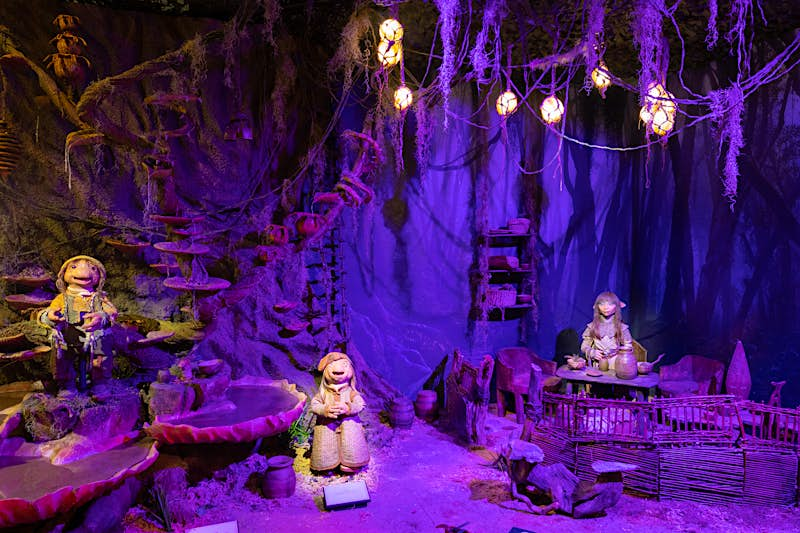
On from now through 6 September, The Dark Crystal: Age of Resistance Exhibition features character studies, original puppets and props, and recreated sets from the 1982 cult classic.

DK2J0111.jpg
Fresh off his portrayal of Elton John in Rocketman, Taron Egerton voices the Gelfling Rian (right). 

Directed by Jim Henson and Frank Oz, the fantasy film takes place in Thra, a world populated by heroic Gelflings, villainous Skeksis, and wise Mystics, and the ten-episode series returns to that strange land, before the events of the original, when Gelflings Jen and Kira sought to repair the crystal that would bring balance to the universe.

DK2J0129.jpg
The Chamberlain is another new character, a Skeksis voiced by Simon Pegg. Image courtesy Netflix

“What Jim wanted to do, and it was totally his vision, was to get back to the darkness of the original Grimm’s fairy tales. He thought it was fine to scare children. He didn’t think it was healthy for children to always feel safe,” Oz told SFGate in 2007, when the film enjoyed a brief theatrical return. “It was an incredible undertaking. It was massive.”

DK2J0178.jpg
The sets on display are colorful, creative, and befitting of the movie’s legacy. Image courtesy Netflix

Among the sets recreated for the BFI Southbank exhibit is the Stone-in-the-Wood’s Brew Trough, where the Gelflings meet to quaff a brew or two—and to give the location the extra breath of life, craft brewery Verdant have created a pale ale especially for the occasion. There are also screenings, workshops, and special events leading up to the show’s premiere.

DK1J0235.jpg
In the original film, Kira and Jen were on a quest to repair the crystal that would bring balance to the universe.
The movie starred an all-puppeteer cast of primarily unknowns, but this new chapter is a veritable who’s who of Hollywood royalty, from Game of Thrones alumni Lena Heady and Natalie Dormer to Kingsman stars Taron Egerton and Mark Strong to talent like Alicia Vikander, Helena Bonham Carter, and Eddie Izzard voice as an array of Gelflings, while professional funny folks like Keegan-Michael Key, Simon Pegg, Andy Samberg, and Awkwafina play Skeksis and Mystics.
DK1J0204.jpg
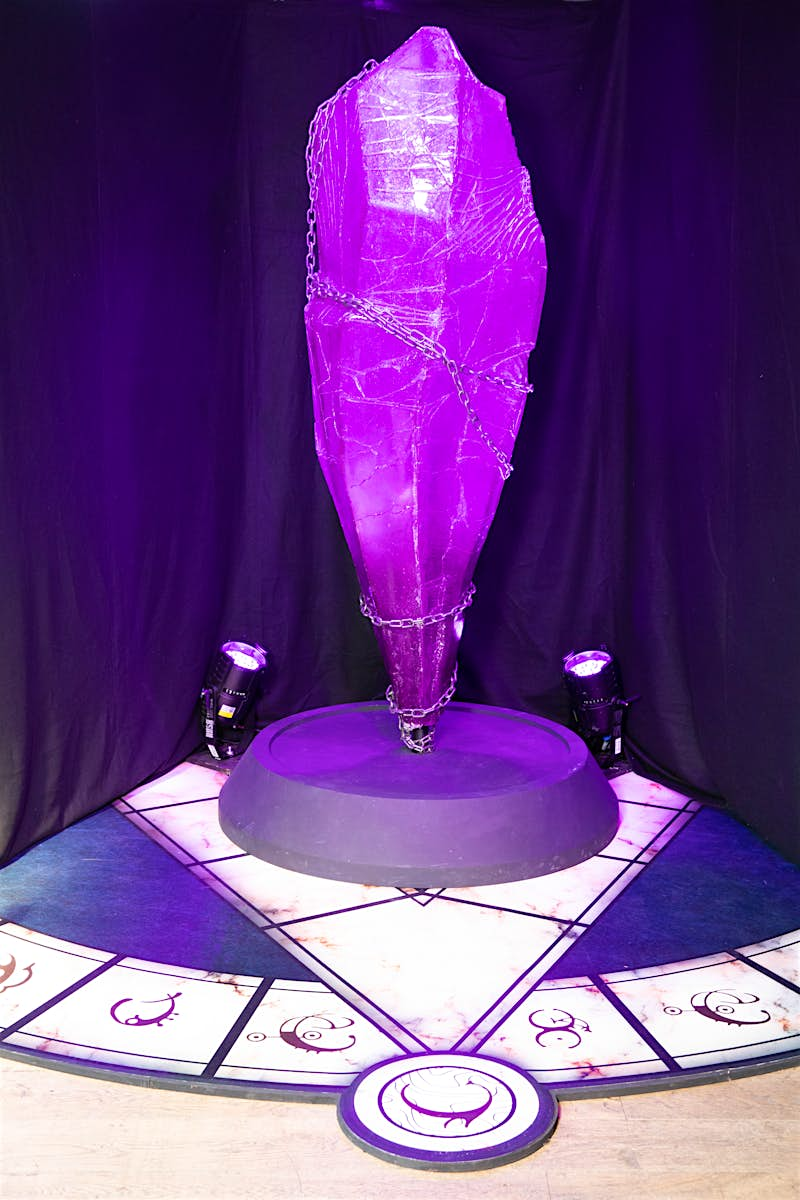
The eponymous dark crystal. Image courtesy Netflix

Tickets for the exhibit are free, but booking is recommended. For more information, see whatson.bfi.org.uk.

7 places around the world that will pay you to move there

0

Sometimes the call of a new adventure – or simply a chance at relocating your job to a new place – can be too tempting to resist. If you’ve been thinking about packing it in to start over again, these places will make it easier by paying you to move there.

Antikythera, Greece

Greek beach
Antikythera is one of the Ionian Islands, much like the bigger island of Lefkada. 

A sun-dappled fantasy island of sweeping beaches, clear waters and just one village, the Greek island of Antikythera is keen to enhance its population. Despite its beauty and close proximity to Crete, only 40 permanent residents live here. So in order to reverse its declining fortunes, a repopulation campaign was launched earlier in the hope of luring new families. Those who are selected receive a house, a small patch of land and a monthly cheque of €500 for the first three years of residence. While it may sound too good to be true, the initiative has already attracted four families from Athens this year, which caused the island’s only schoolhouse to finally reopen its doors after years of inactivity.

Vermont, USA

Travel News - vermont relocation remote workers
Pretty Vermont has long been a favorite of weekend visitors 

You’d be surprised that Vermont, with its lakes, forests and blushing fall colours, would need to lure residents with cash. But that’s exactly what it’s doing. The second-least populated state – after Wyoming – Vermont is trying to enhance its workforce with a relocation scheme that launched in January of this year. Operating on a first-come, first-served basis, successful applicants are eligible to receive up to $5000 annually for two years of living there in order to cover the costs of relocation. According to the Remote Worker Grant Program applicants will still retain their employment with an out-of-state job.

Tulsa, Oklahoma, USA

Downtown Tulsa
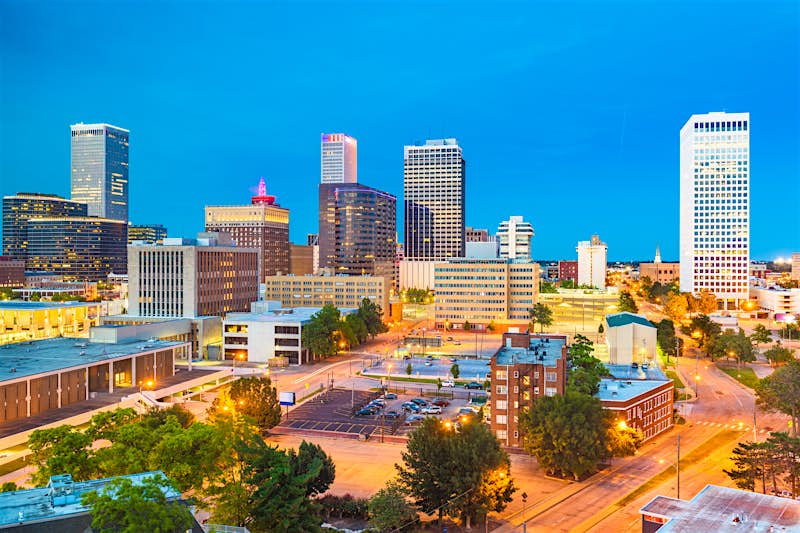
Downtown Tulsa at dusk 

Like Vermont, Oklahoma has a population problem but it appears to be a notable issue in Tulsa. Oklahoma’s second city is looking for remote workers to pack up and move there with the Tulsa Remote program. If you apply and make the cut, you’ll receive a payment of $10,000 to get you on your feet. You’ll also get a desk at 36 Degrees North, a co-working space in Downtown Tulsa, as well as a free housing stipend. The 2019 scheme is already full but applications are open for 2020.

Candela, Italy

The town of Candela
The town of Candela in Puglia will pay people to move there EyeEm

Candela in Puglia used to be referred to as “Little Naples,” due to its crowded and animated streets. Not so long ago, the 1990s in fact, the town was home to 8000 residents. Today, that number is closer to 2700. Its maze of cobbled streets are quiet and the rolling hills of pristine forests that surround it echo with silence. Nicola Gatta, the mayor, wants to revive Candela by offering up to €2000 to people who are willing to relocate: €800 for singles, €1200 for couples, €1500 to €1800 for three-member families and €2000 for families of four to five people. To be eligible, you must take up residency in Candela, rent a house and have a job with a salary of at least €7500 per year.

Santiago, Chile

Santiago at sunsent
The tech industry in Santiago is booming 

The Chilean government is transforming its capital Santiago into a tech hub by offering entrepreneurs $40,000 to move there and launch their business. The program, called Start-Up Chile, was launched in 2010. It offers two programs, one for startups with female founders and another for startups less than three-years-old. Those who are selected into the program are granted year-long work visas, as well as a complementary co-working space and a network of contacts. Squeezed between the Andes and the Pacific and boasting a strong and stable economy, Santiago is a pretty attractive place to live and work. This year’s program attracted entrepreneurs from 12 different countries. Applications for next year open in December.

Sicily, Italy

Sicilian town
If you’d love to live in a beautiful small Sicilian town much like this one, then Sambuca’s offer is what you were looking for 

The small town of Sambuca di Sicilia, about an hour’s drive from Sicily’s capital Palermo, is selling homes for less than the price of an espresso. In 2016, it was named the most beautiful town in Italy but that doesn’t appear to be enough reason to keep residents there. Its population of 6000 is in rapid decline as residents move to bigger cities. Giuseppe Cacioppo, Sambuca’s deputy mayor and tourist councillor, is trying to prevent the town from going under by putting vacant homes on the market for €1. There is a catch, though – new owners must commit to refurbishing their property within three years, at a cost starting from €15,000 (the homes are pretty run down) and will need a €5000 security deposit, which will be returned once the renovation is complete.

Maine, USA

Portland, Maine
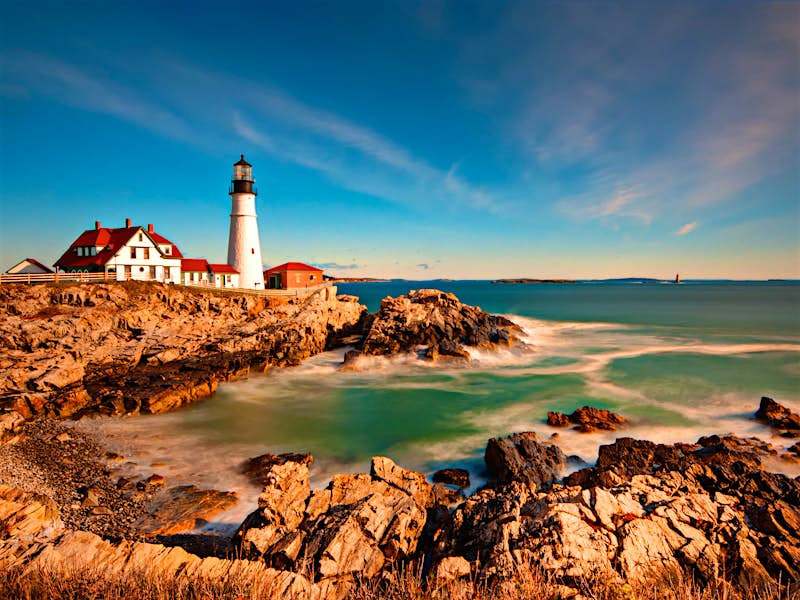
Maine is offering tax relief on student debts to recent graduates who are willing to live and work there 

Maine isn’t paying people to move there exactly. What it’s doing instead is offering a tax relief on student debts. The northeastern state has one of the oldest populations in the US so in order to attract a younger workforce, its providing tax credits to recent graduates who are happy to relocate there. If you move to Maine, whatever money you spend on your student loans each year is subtracted from your state income taxes. So, if you paid $2000 of your student loan debt that year and owe the state $2500 in tax, you will only have to pay $500 in taxes. To sweeten the deal even further, those who studied in STEM programs – science, technology, engineering and math – could receive money back from the government if they pay more off their loan than their taxes.

Star Wars: Galaxy’s Edge has opened at Walt Disney World – here’s what you need to know

0

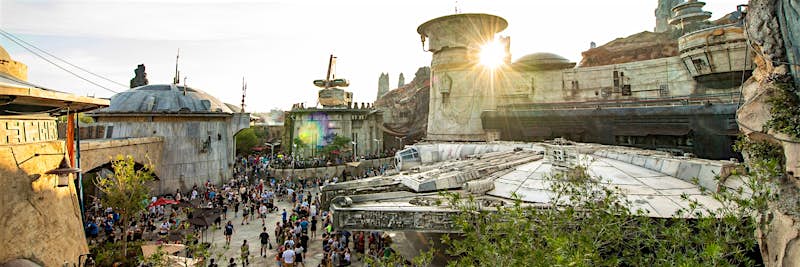
Amid great excitement, the long-anticipated Star Wars: Galaxy’s Edge has opened at Walt Disney World Resort  in Florida. The 14-acre new land is located inside Disney’s Hollywood Studios, and it allows guests to live their own Star Wars adventures. Here’s a guide to what is on offer.

A young guest talks with Chewbacca on opening day of Star Wars: Galaxy’s Edge
Along the way, guests may encounter some familiar faces, including Chewbacca. Image: Matt Stroshane/Disney

Guests at Star Wars: Galaxy’s Edge will be transported to a galaxy far, far away on a journey to Batuu, a far-flung destination along the galaxy’s Outer Rim, on the frontier of Wild Space. They will become part of the story as it unfolds around them and can take the controls of the most famous ship in the galaxy aboard Millennium Falcon: Smugglers Run. Some will be pilots, some gunners and some engineers, creating multiple ways for guests to engage with the attraction in an experience that responds in real time to the actions they take.

The first guests arriving before sunrise at Disney’s Hollywood Studios
The first guests arriving before sunrise at Disney’s Hollywood Studios. Image: Matt Stroshane/Disney

Batuu is home to Black Spire Outpost, an infamous port for smugglers, traders and adventurers wishing to avoid any unnecessary entanglementswith the First Order. When guests arrive at Black Spire Outpost, they will come across aliens, droids and other inhabitants of this planet as they search for rare and unique goods, discover unusual food and drink, or join a crew seeking adventures. They may choose to aid a smuggler, join the Resistance or pledge their loyalty to the First Order, and their interactions with the Play Disney Parks mobile app will deepen their engagement with the land.

A view of Star Wars: Galaxys Edge in Walt Disney World Resort
Guests can take the controls of the most famous ship in the galaxy aboard Millennium Falcon: Smugglers Run. Image: David Roark/Disney

Along the way, guests may encounter some familiar faces, including Rey, Chewbacca or even Supreme Leader Kylo Ren and his Stormtroopers. A second attraction, Star Wars: Rise of the Resistance, will open on 5 December and it will place guests in the middle of a climactic battle between the First Order and the Resistance, including a face-off with Kylo Ren. The journey takes them aboard a full-size transport shuttle and into a nearby Star Destroyer on a harrowing and thrilling adventure that blurs the lines between fantasy and reality.

The first guests arriving at Star Wars: Galay's Edge in Florida.
The first guests arriving at Star Wars: Galaxy’s Edge in Florida. Image: Matt Stroshane/Disney

Guests at Star Wars: Galaxy’s Edgecanexperience galactic food and beverages, such as the iconic Blue Milk and Green Milk. They can craft their own lightsabers or build their own droids in immersive, interactive retail experiences. “With the opening of Star WarsGalaxy’s Edge, we’ve set a new standard for the most immersive storytelling in the galaxy,” said Bob Chapek, chairman of Disney Parks, Experiences and Products. “Every experience in Batuu – from piloting the Millennium Falcon to building your own droid – puts guests deeper into their own Star Wars story.”

Star Wars: Galaxy's Edge in Walt Disney World in Florida.
Star Wars: Galaxy’s Edge has opened at Walt Disney World in Florida. Image: David Roark/Disney

While an opening date has yet to be announced, a new Star Wars hotel is planned for the resort. Designed to look like a spaceship,Star Wars: Galactic Starcruiser will be staffed entirely by friendly aliens and further information on that is available here.


Is Vancouver the world’s greenest city?

0

Eyebrows were raised in 2011 when Vancouver, western Canada’s mountain-fringed metropolis, announced it would be the most eco-friendly city on the planet by the end of the decade. With its Greenest City 2020 Action Planabout to hit the titular target date, how close has the coastal community of 675,000 come to realizing its lofty objective – and what does it mean for visitors?

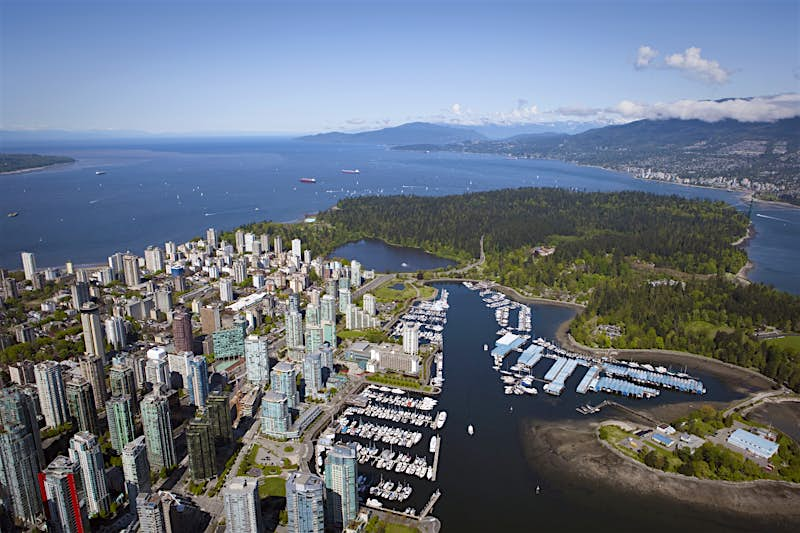
An aerial view of the city of Vancouver and Stanley Park, with harbors and buildings on one side connected to a wooded island with the sound in the background. The Vancouver Greenest City 2020 Action Plan is coming up on its target date.
Vancouver set a goal to be the greenest city in the world by 2020, with ramifications for residents and travelers alike 

What was the plan?

‘It was very un-Canadian to jump up and down and tell everyone we we’re going to be the best,’ says Doug Smith, the City of Vancouver’s director of sustainability. ‘But we wanted people to question what it means to be the greenest city – we were trying to create a dialogue.’

It wasn’t just talk, though. The plan contained a series of concrete goals designed to push Vancouver toward a ‘bright green’ future. These areas – each with specific targets – covered everything from transportation to food systems and from waste management to building codes.

‘We knew we needed to do something dramatic to get locals on board with tackling climate change. And the ‘world’s greenest city’ label helped make the project more inspiring and aspirational,’ says Smith.

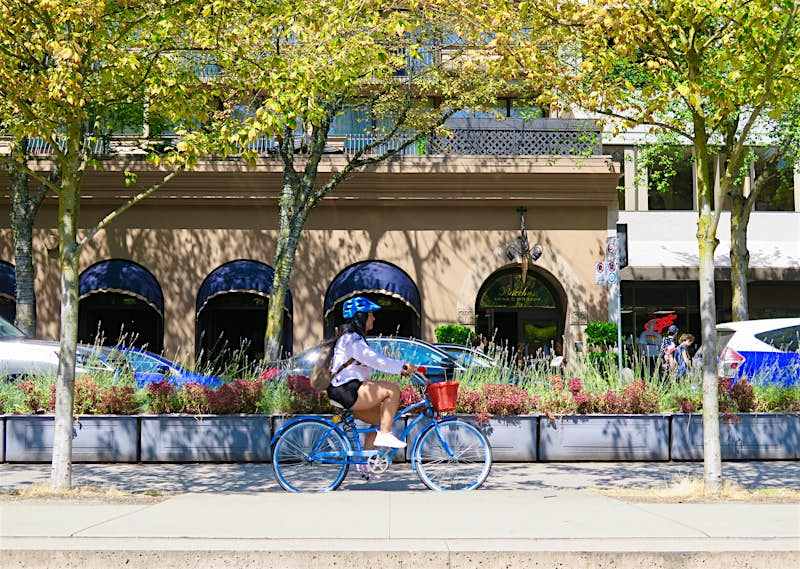
A biker on a bright blue bike, with a bright blue helmet and a basket on the handlebars, rides along a street separated from cars
Separated bike lanes have attracted many more cyclists to Vancouver’s streets 

How has it gone?

The latest City figures show what’s been achieved since 2011 – and what hasn’t. More than 50 per cent of all local trips are now made by transit, bike or on foot. Vancouverites have also jumped on board with trash reduction, cutting solid waste landfill and incineration disposal by 28 percent. And the city is still on track to make all new building projects carbon neutral from 2020.

But not everything has gone as well. Greenhouse gas emissions have only fallen by 12 percent, despite a 33 percent target. There are several reasons for this, says Smith. ‘It’s great that more people are using transit. But the cars people use now are also bigger – and tackling fossil fuel industries isn’t easy.’

So, with 2020 looming on the horizon, can Vancouver call itself the world’s greenest city? ‘We’re not there yet,’ admits Smith. ‘But I would say it’s been wildly successful so far – we’ve hit two-thirds of our targets. And we’ve moved the conversation in the right direction. There’s an expectation now that Vancouver leads on green issues.’

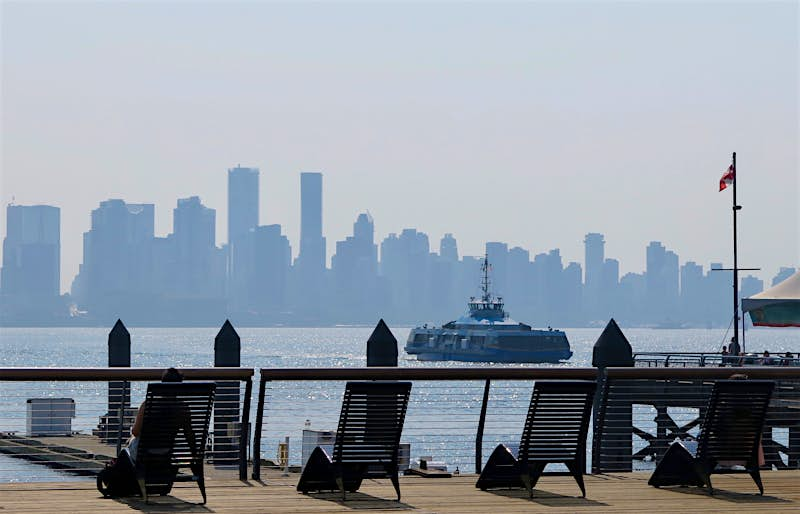
A woman sits in a reclining lounge chair next to a railing overlooking a waterway in Vancouver. A ferry sails through the waterway toward the far shore which is dominated by skyscrapers.
The SeaBus is an iconic mode of public transit for both residents of Vancouver and visitors to the city. 

Green visiting

The Action Plan hasn’t just been about changing local habits. The initiative has also impacted visitors – both in how they explore the city and in what they do here. Which, for a destination Tourism Vancouver says receives more than 10 million annual visits, is crucial for any sustainability drive.

Transport-wise, it’s never been easier for visitors to get around without a car. Vancouver’s user-friendly transit system has expanded exponentially since 2011, providing more bus and SkyTrain rapid-rail services while increasing SeaBus ferry frequency across Burrard Inlet. Transit’s all-access $10.25 DayPass has proved hugely popular with visitors.

And when Vancouver launched its Mobi bike share scheme, more than 400,000 rides were registered in the first year, many of them curious out-of-towners. One reason for the swift uptake? The creation of 450km of separated bike lanes on local roads.

‘Our bike paths are safe, connected and scenic so the journey is as much fun as the destination,’ says Josh Bloomfield, founder of Cycle City Tours, a rental and tour operator located alongside downtown’s Hornby Street bike lane.

‘We see more and more travellers using our bike infrastructure to visit neighbourhoods and attractions,’ he says, adding that many are pedalling out to East Vancouver breweries or further-afield attractions like the Museum of Anthropology. His favourite routes? The Stanley Park trails beyond the Seawall plus the West Side parks and beaches out to the University of British Columbia.

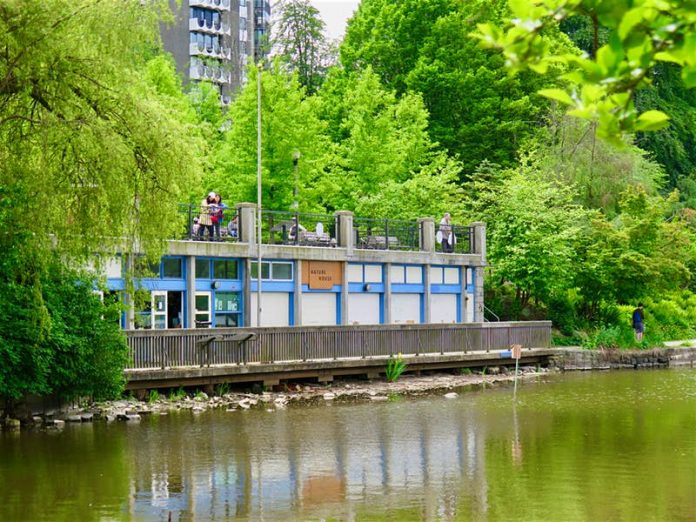
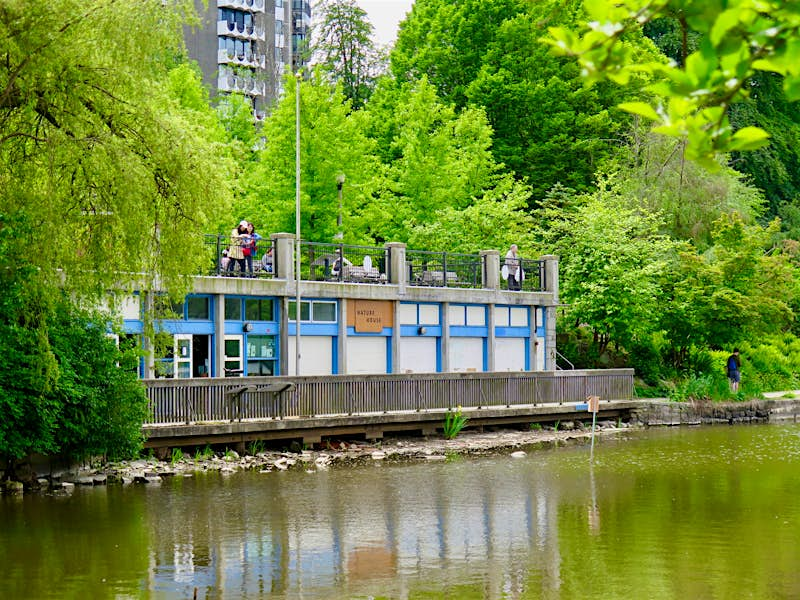
People stand on top of a boxy building set over a marshy water area with a sign that reads Nature House in Vancouver
The Stanley Park Nature House is just one way to explore the natural surroundings Vancouver has to offer 

More places to go

The Action Plan also called for better access to nature. And while improved areas include a saltmarsh at New Brighton Park and a bee-friendly zone at Jericho Beach Park, Vancouver’s best new green attraction may be a repurposed railway line.

The City acquired the old Kitsilano-to-Marpole spur in 2016, quickly removing the rails to create the 8.5km-long Arbutus Greenway. Aiming to be Vancouver’s version of New York City’s High Line, landscaping features are still being planned – but the wildflower-flanked route has already proved hugely popular with walkers and bikers.

The Greenway joins parks and attractions sought-out by many eco-minded Vancouver visitors, including Pacific Spirit Regional Park, Stanley Park Nature House and the UBC Botanical Garden, where the popular Greenheart TreeWalk weaves through the leafy canopy on swaying footbridges.

A top-down look at red strawberries sitting  in a small basket on a table with a red tablecloth.
British Columbia strawberries are on display at local Vancouver farmers’ market 

Eating your greens

The Action Plan also tackled food, aiming to strengthen city access to resources such as urban farms and community garden plots. The latest figures report a 49 per cent increase in these ‘local food assets’ since 2011 – including the thriving farmers’ markets many visitors search out here.

There’s a full menu of seasonal farmers’ markets in Vancouver, mostly running from late spring to early fall. Crammed with fresh-picked BC produce – from cherries to strawberries and from peaches to apples – they include Saturday’s Trout Lake market and Sunday’s Kitsilano market.

‘Our markets directly connect Vancouverites to the people who grow their food,’ says Jen Candela, spokesperson for Vancouver Farmers Markets, which organizes many of the city’s weekly produce pop-ups. Buying from local growers also helps keep the region’s farmland productive and sustainable, she adds.

For visitors, says Candela, the trick to a successful market visit is to arrive early. ‘Bring your own bags and shop around before you buy. And don’t forget to check out all of the different markets – each is as unique as the neighbourhood hosting it!’

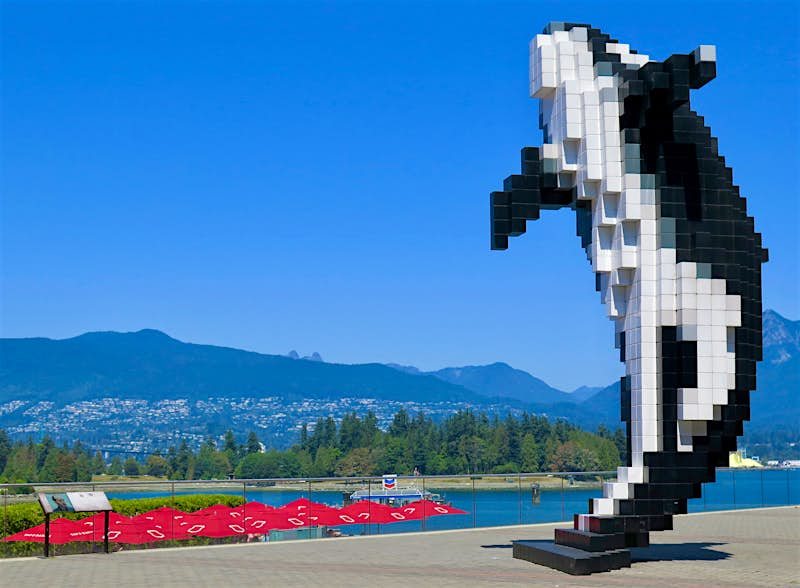
A large sculpture in Vancouver looks like an 8-bit, or Lego, representation of an orca leaping out of the water
Even public art has an eco edge in Vancouver, which is working hard to become the greenest city in the world 

What next?

The Greenest City Action Plan ostensibly culminates in 2020. But Vancouver has already recommitted to meeting its goals, while also setting higher targets under a new Climate Emergency Response. This accelerated drive aims to tackle zero emission vehicles, walkable communities, local ecosystems and more.

These next steps call for some tough conversations with Vancouverites, says Smith. ‘We need to ask ourselves what do want to be as a city over the coming decades. We’re aiming for zero emissions by 2050, for example, but that means the vast majority of people need to be walking, cycling or taking transit.’

The upside, Smith adds, is that Vancouver – where Greenpeace was founded in 1971 – started these conversations at a grassroots level many years ago. ‘There’s a strong connection to nature here. And the community knows that we need to seriously challenge ourselves to change.’


Why carbon offsetting is not going to solve the problem of climate change

0

There has been a fair bit of uproar about Prince Harry and Meghan Markle’s high-carbon travel habits recently. They have faced accusations of hypocrisy following their pronouncements about the urgency of climate change and the importance of our individual behaviours.

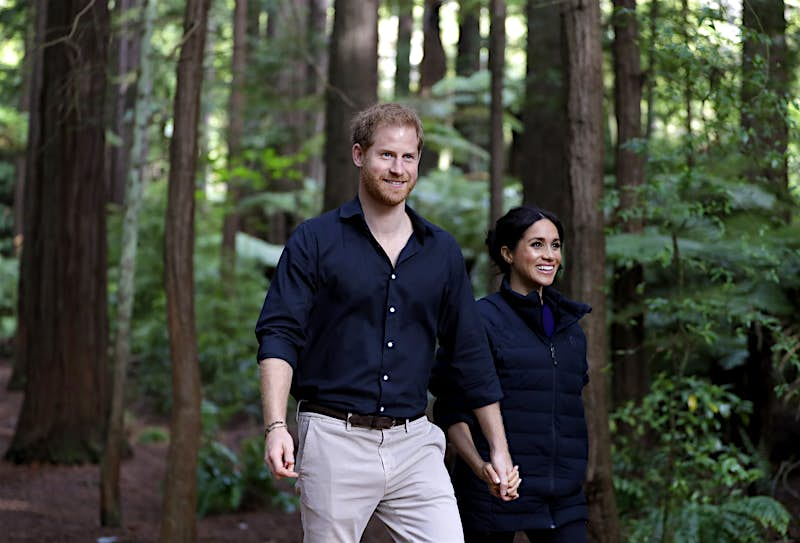
Prince Harry and Meghan Markle walk hand-in-hand in a redwood forest.
Harry and Meghan’s recent carbon offsetting has ignited interest in whether it’s effective 

Much of this ‘outrage’ probably has more to do with prejudices about certain members of the royal family than with genuine environmental concern. However, along with Elton John’s justification for their flights –  he bought carbon offsets for them – the story has been helpful in re-kindling a debate about air travel, its contribution to global warming, and what we ought to do about it.

This is a debate close to my heart. Now aged 37, I’ve flown quite a lot over my life. Like many relatively well-off Brits of my generation, I’ve worked abroad and have done my share of backpacking, often clutching a Lonely Planet guide along the way. Yet as I became more aware of flying’s huge and growing impact on the environmentduring my PhD studies, I became increasingly uncomfortable with air travel. As a vegetarian, cyclist, and someone who tries to consume ethically, my flying didn’t seem to fit alongside my desire to minimise my contribution to climate change.
For a few years I actively cut back on flights, and bought carbon offsets when I did fly. But when last year’s IPCC report suggested the window of opportunity for avoiding irreversible climate change may close in just ten years, something changed for me. Carbon offsetting, which had for a while seemed to be a viable solution to the problem of aviation emission, now seemed increasingly inadequate in terms of time, effectiveness, and ethics.

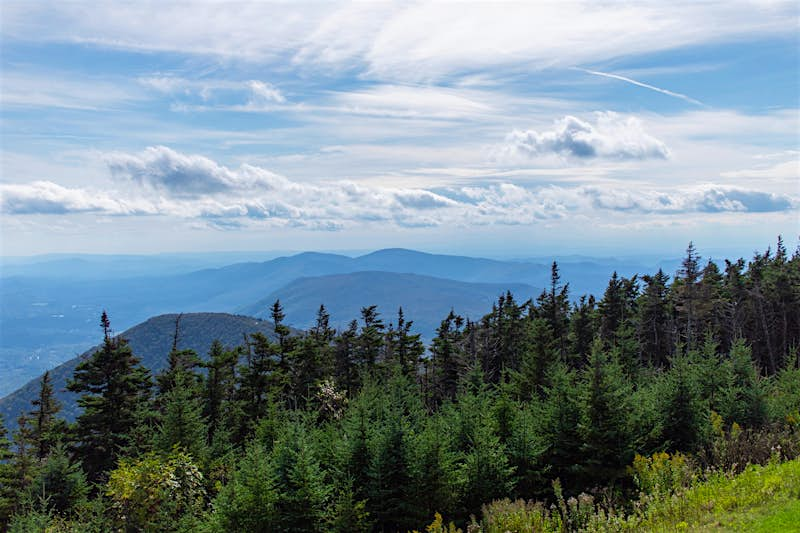
A view of a forest and mountains in Vermont.
New trees can take years to remove carbon 

A plane that flies today emits carbon today. Trees take years to plant, grow and remove carbon dioxide, and time is one thing we don’t have. In terms of effectiveness, a recent EU study found 85% of offset projects studied failed to produce the promised carbon reductions. Ethically, carbon offsets seem a way to avoid taking responsibility for our own behaviour. Many offset schemes have great intentions, but should probably be seen as another form of charity rather than a scientific means of being ‘carbon neutral’. Other charities or campaigns could well be a more effective use of a passengers’ money.

After reading through the IPCC report, I soon signed the Flight Free UK pledge not to fly in 2019, and I recently pledged again for 2020. Changing my flying behaviour, which for most of us easily comprises the largest part of our individual carbon footprint, felt an appropriately ‘dramatic’ response to potential climate breakdown, which would affect the world’s poor – people who will never have the means to fly on a backpacker’s holiday – the hardest. In one sense, quitting flying seems dramatic and radical, a sacrifice. Yet it is, for me and many others, quite banal.

A lot of it depends on geography, viable alternatives to flying, and personal circumstances. The UK, where I live, is relatively well-connected by a range of ferry services, the channel tunnel and, via the Eurostar, to the rest of Europe’s vast train network and beyond. Earlier this year I travelled to China by train for a research fieldtrip, and can attest to the amazing rail infrastructure that exists all across Eurasia.

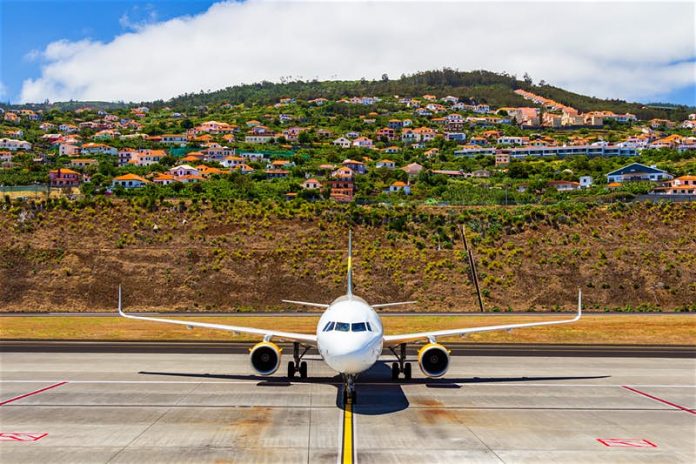
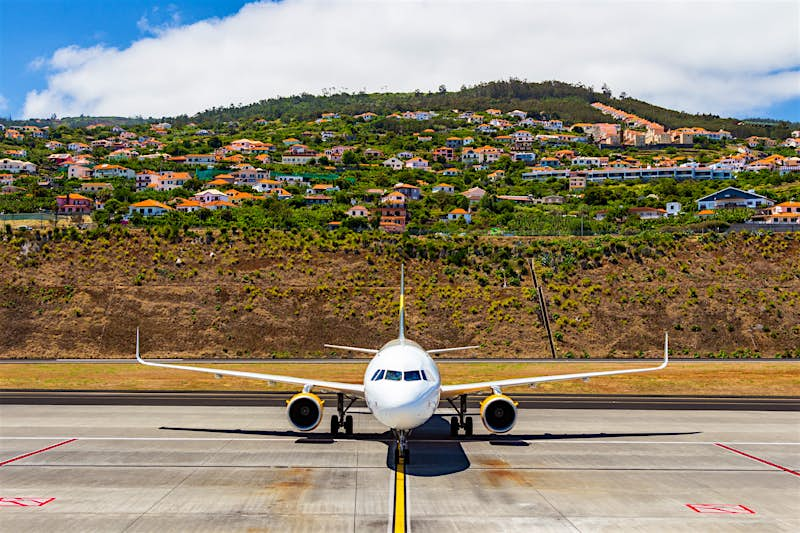
Passenger jet on the airport tarmac with Agua de Pena village in the background in Madeira, Portugal
Jet fuel still enjoys tax-free status 

Yet for people who live in more remote countries like New Zealand or countries with poor rail infrastructure like the United States, I concede that non-flying options may be far more constricted, before we even consider those with family dispersed across the world for whom flying is unavoidable. But in the UK at least there are many flights which likely only take off because of cheap prices stimulating demand. Amazingly, in 2018 more Brits flew abroad than any other nationality with the vast majority of those flights being short-haul leisure trips. The ultimate game must be to change the pricing signals so that flying, the most polluting transport mode per kilometre, is not also the cheapest travel mode per kilometre.

In terms of policies, that means three things. Firstly, building an international consensus to amend the so-called ‘Chicago convention’ which, since the late 1940s has meant that international jet fuel has enjoyed tax-free status. This has enabled very cheap fares and given aviation a huge advantage over alternative modes, meaning that night trains in Europe, for example, are unable to compete on price and many have been cancelled in recent years.

Secondly, it means national governments introducing a Frequent Flyer Levy (FFL) so that those who fly most, pay most. Currently, in the UK just 15% of passengers account for 70% of UK flights. A FFL would ensure that the less well-off can still enjoy a family holiday once a year while the international jetset of CEOs, royalty and pop stars who want to fly frequently pay their way. Thirdly, it means investing the revenues raised from these taxes and levies into high-speed rail and sleeper trains and into boosting research into sustainable fuels for aviation, which have so far been unable to gain traction when competing with cheap and untaxed jet fuel.

The world’s most amazing scenic train journeys

The world’s most amazing scenic train journeys

From the varied terrain aboard the Trans-Siberian Railway to the endless green Scottish Highlands views on the Jacobite, see more of the world by train on these scenic train journeys.

In the meantime, I believe we ought to strive to minimise flying wherever possible, rather than just relying on offsets to clear up the mess from our travel. Not only can reducing flying demand actually result in airlines cutting back flights (as has happened in Sweden this year), it can also send a cultural signal to our peers and a political message to politicians that there is an appetite for the brave decisions necessary to properly regulate emissions from aviation.

If Harry and Meghan have shone a light on this topic, then that can only be a positive thing. Rather than simply bash the rich and powerful for their ‘hypocrisy’, we might look at ourselves and realise that, in a global relative sense, those of us with the means to travel internationally are also ‘rich’ and ‘powerful’. With that power must surely come responsibility.

Architect must pay Venice for designing a bridge that isn’t tourist-friendly

0

A world-renowned architect was fined by an Italian court for designing a bridge over the Grand Canal in Venice that was seemingly unequipped to handle the city’s volume of tourists.

GettyImages-144843184.jpg
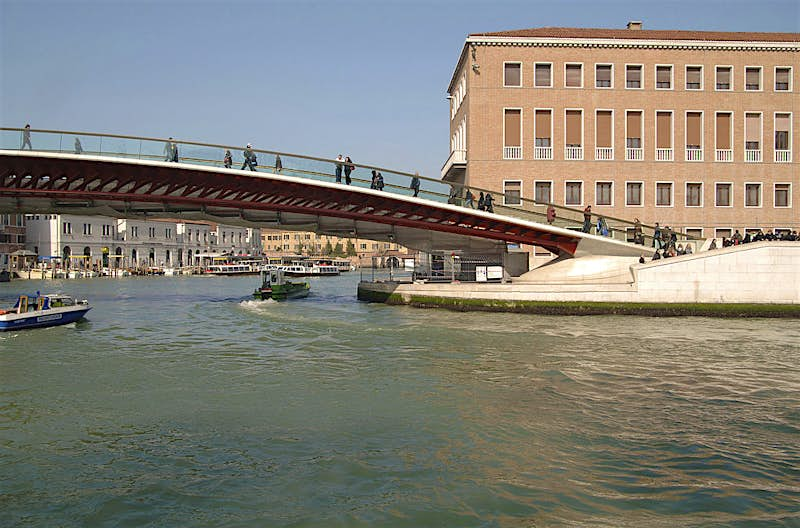
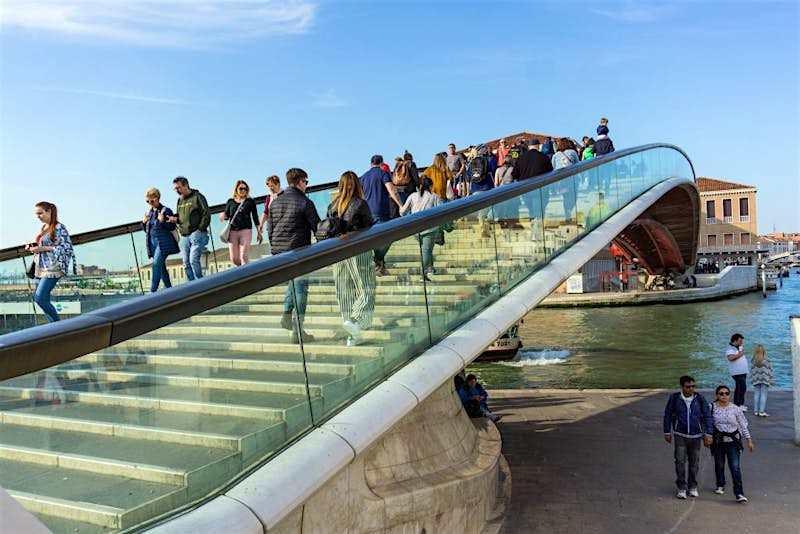
Venice’s Ponte della Costituzione has proved ill-equipped to deal with the volume of tourists and their luggage who cross it daily 

Spanish architect Santiago Calatrava was fined for “macroscopic negligence” when designing the Ponte della Costituzione(Constitution Bridge) over Venice’s famous Grand Canal. The sweeping glass and steel bridge was installed in 2008 but has been marred in controversy since. Namely, for not being wheelchair accessible when it first opened (a lift has since been installed) and for being ill-equipped to handle the wear and tear from the large number of tourists who cross it daily en route to the nearby train and bus stations, dragging wheeled suitcases over the tempered glass surface.

Ponte della Costituzione
Its glass surface has proved slippery and has been worn out by luggage

According to the New York Times, the Court of Auditors in Rome ruled this month that Calatrava should have foreseen these issues – considering Venice’s tourism problem is well known and Calatrava has experience in designing bridges, including in Dallas, Texas and Calgary, Alberta – and fined him €78,000 for alleged errors. The court said the steps wore out too quickly and the 94-metre-long bridge required constant maintenance.

Ponte della Costituzione
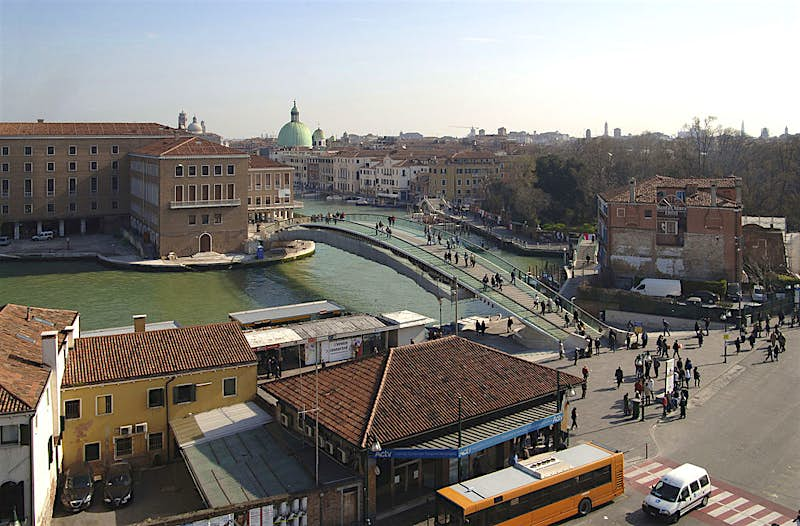
Venice’s landmark Ponte della Costituzione bridge 

Ponte della Costituzione is the fourth bridge to be built over the famous 16th century canal and the first to be built in central Venice for 125 years. The bridge has many nicknames (‘fishtail’ and ‘glass tongue’) but it was officially named in honour of the 60th anniversary of the Italian constitution in 2008. It links Santa Lucia train station with Piazzale Roma – a large square that acts as the main bus station for Venice with parking and drop-off points for buses, trams and taxis.

Qantas tests 19-hour flights to see how people will cope with direct New York-to-Sydney route

0

Can the human body cope with being in the air for what is essentially a day? We’ll soon find out as Qantas begins testing its new direct New York-to-Sydney route.

Qantas test flight
Qantas will soon start testing its London and New York-to-Sydney routes ©Getty

Qantas Airways is now testing 19- and 20-hour flights from New York and London to Sydney to gauge how the human body fares with what will be the world’s longest flights or ultra-long haul flights as they’re being called. The trial of marathon voyages – known as Project Sunrise – will take place on Boeing 787-9 planes and will feature a team of 40 people made up of pilots, staff and a handful of passengers. Carbon emissions, we’re being told, will be fully offset.

Aerial view of Sydney
The flight will give international visitors easier access to Australia’s east coast 

Before they take to the air, the team will undergo a series of medical checks. Then, when they’re onboard, scientists and medical experts from Monash University will monitor how they fare in the air for such a long period of time. They’ll be fitted with wearable technology that monitors sleep patterns, food and drink consumption, lighting, physical movement and inflight entertainment to assess the impact on health, wellbeing and body clock. Pilots will wear an EEG (electroencephalogram) device that tracks brain wave patterns and monitors alertness.

Qantas staff celebrate new route
Last year Qantas launched a nonstop service between Perth and London

“For customers, the key will be minimising jet lag and creating an environment where they are looking forward to a restful, enjoyable flight,” CEO Alan Joyce said. “For crew, it’s about using scientific research to determine the best opportunities to promote alertness when they are on duty and maximise their rest during their down-time on these flights.”

Qantas already operates 17-hour flights from Perth to London but the Project Sunrise flights, slated to begin in October, will become the world’s longest, taking the title away from Singapore Airlines’s direct New York-to-Singapore flight (18 hours and 45 minutes). Joyce describes the service as the “final frontier in aviation.” If the test flights are successful, Qantas hopes to launch a commercial service as early as 2020, though the airline will need to secure regulatory approvals first.

The world’s friendliest cities… did your favourite destination make the list?

0

Vancouver has long been rated as one of the world’s most liveable cities but it’s just been recognised as the world’s friendliest in a new international survey.

Travel News - Friendliest cities
Vancouver, Canada was ranked as the world’s friendliest city in a new poll. 

Vancouver is dripping in charms from dazzling skylines to coastlines and now its multicultural population has been singled out for its exceptionally good nature. A poll published this week from Big 7 Travel asked its 1.5 million followers to decide the friendliest city for tourists and expats and Vancouver came out on top. Locals were praised for being “quick to offer assistance to tourists” and authors complimented the city’s “community vibe” which makes “socialising in Vancouver simple.”

Travel News - Friendliest cities
New York City made the list, thanks to its diverse and welcoming neighbourhoods. 

New Yorkers might often be accused of being cold but it appears that reputation is beginning to thaw as it made the cut in 47th place. While it’s true that things move pretty fast in Manhattan, authors noted that there’s more of a community feel in the neighbourhoods of each borough and a melting pot of cultures, which invites people in. But according to the poll, it’s not as friendly as Charleston, South Carolina (33rd) or Houston, Texas (19th) and it doesn’t have a patch on Nashville, Tennessee (8th), which was declared the friendliest city in the US. Why? Because it boasts Southern charm by the bucketloads, a lively music scene and friendly locals with a “buzzing attitude and an eagerness to show off their city to out-of-towners.”

A party bike in Downtown Nashville. 

With regards to the top five, Kuala Lumpur’s “friendliness towards visitors” drove the Malaysian capital into the second spot, while Bruges’s “charming atmosphere” and “locals who go the extra mile to welcome tourists” placed the Belgian city in third. Taipei, Taiwanwas recognised as one of Asia’s most LGBTQ+ friendly cities in fourth place, while Hamburg, Germany’s “family-friendly feel” pushed it into the fifth spot.

Travel News - Friendliest cities
Taipei’s tolerant attitude made it a natural fit for the top five.

You can view the poll’s top 10 friendliest cities below and the full top 50 list here.

10th. Glasgow, Scotland
9th. São Paulo, Brazil
8th. Nashville, Tennessee,USA
7th. Christchurch, New Zealand
6th. Dublin, Ireland
5th. Hamburg, Germany
4th. Taipei, Taiwan
3rd. Bruges, Belgium
2nd. Kuala Lumpur, Malaysia
1st. Vancouver, Canada

How Sweet It Is: Sugar Beach Resort in St. Lucia

0

Sugar Beach, A Viceroy Resort
What do you mean, you don’t want to go to the Caribbean for the art?

You mean you want to go to the Caribbean for the solitude and escape you can only find on a beach lounger under an umbrella along a white sand beach, engrossing novel in one hand, cool rum cocktail in the other? For the calm bay to swim and kayak and paddleboard in? For the one hundred acres of tropical rain forest surrounding you and the picture-perfect mountains in the background? For the nearby waterfalls, botanical gardens, drive-in volcano, and hot springs, in case you want to go exploring? For the rainforest spa and its treehouse treatment rooms? For the serene, all-white bedroom suites with garden and Caribbean views? For the impressive kids’ club that will make you wish you could be the toddler ditching your parents for the afternoon?

Well, you’ll find all of the above and more at Sugar Beach, A Viceroy Resort, nestled between the dramatic Piton Mountains, an UNESCO World Heritage Site, on the southwestern coast of St. Lucia.

And, yes, you’ll also find killer art throughout the main house and in the rooms.

Much of it comes from the private collection of Roger Meyers, who, in addition to owning Sugar Beach, was once the accountant for the Rolling Stones. (Talk about using your salary the right way.) The work of local Caribbean artists hang alongside a Matisse print and a Vivienne Westwood photo project. When I visited the hotel, I was especially struck by sculptures that appeared to be climbing up the wall in the Great House.

Sugar Beach, Saint Lucia
The reception area.
Sugar Beach, Saint Lucia
Artwork in the Great House.
Sugar Beach, Saint Lucia
The pool.

We first wrote about Sugar Beach when it opened to raves in 2012, shortly after the multi-million dollar renovation that transformed it from the Jalousie Plantation (long before that in the 18th century, this was a working sugar plantation), and have watched closely as it’s gotten better with time, adding more residential cottages (many are also privately owned) and, most recently, two large modern villas. We’ve sent several Fathom Concierge clients to the Sugar Beach — a family for spring break, two couples in need of R&R. The family has already gone back for a second trip. Sugar Beach is the kind of place you check into when you want to forget about everything else.

Book It

Rates change seasonally and start at $470. Click here for reservations. Or get in touch with the Fathom Travel Concierge and we can plan your trip for you.

Sugar Beach, Saint Lucia
A superior luxury cottage.
Sugar Beach, Saint Lucia
A grand luxury villa.
Sugar Beach, Saint Lucia
A luxury villa bedroom.
Sugar Beach, Saint Lucia
The deck in a luxury beachfront bungalow.
Sugar Beach, Saint Lucia
A luxury cottage bedroom.

At a Glance

The Vibe
Secluded Caribbean escapism that’s at once family-friendly, refined, and relaxed. The resort is on one hundred acres and it feels like it: You need the golf carts to get around among the cottages, spa, Great House, and beach areas. But you won’t be working hard: This is the kind of place where you can happily spend your days reading a book, playing bocce, and splashing in the sea.

Standout Detail
The artwork on site is striking and clearly made a strong (and unexpected!) impression on me, but the real standout is the take-your-breath-away setting at the base of Petit Piton mountain.

This Place Is Perfect For
Families who are not on a budget. Friends who want to totally unplug. Given the strong family vibe, it may not be as perfect when romance tops the agenda.

Rooms
96 total: 77 luxury villas and luxury cottages, 8 luxury beachfront bungalows, and 11 luxury Sugar Mill rooms. Sugar Mill rooms are located near the mountain and have plunge pools, a garden, and plantation styling in the furnishings. Superior rooms also have rooftop terraces. The villas are clustered and have four-poster beds, claw-foot bathtubs, and plunge pools. Residences are available in one- to four-bedroom configurations, and include the two new Beachfront Collection homes with modern décor.

Sugar Beach, Saint Lucia
The Rainforest spa.
Sugar Beach, Saint Lucia
The pool at dusk.

Sugar Beach, Saint Lucia
The kids clubhouse.
Sugar Beach, Saint Lucia.
Get on a boat.

On Site
You’re here for the beach, right? Because the sea is the thing here. Complimentary water activities include windsurfing, sailing, kayaks, Hobie Cats, pedalos, youth sailing (aged 10-17), waterskiing, wakeboarding, tubing, Banana Boats, and snorkeling (a daily $2 fee supports local reef conservation — just one way that Sugar Reef Gives Back). Also available: full PADI courses and certification, PADI Open Water, and SNUBA, a snorkel-scuba hybrid. (Need a nap yet?)

If you’re not a sea swimmer, hop into one of the pools. The main beach area is well tended, with food and drink service, but if you want something quieter, go to the adult beach area closer to the time shares. It’s windier but more secluded, and the swimming is great.

Out of the water, you can fill the hours with tennis, beach volleyball, table tennis, walks, or at classes at the gym.

This is a very family-friendly resort. Sugar Club is the supervised and complimentary program for children aged 4 to 12, with treasure hunts, dance, storytelling, and crafts. Activities are free, fun, and (don’t tell the kids) often educational. I don’t have kids and it’s been a few decades since I was one, but I thought the clubhouse was really, really cool. Spice Club for tweens and teens offers croquet, billiards, kayaking, paddleboarding, tennis, and sailing. (And video games, too, but you want their noses out of the digitals, right?) Babysitting is available at an additional cost. Changing stations are located throughout.

At the Rainforest Spa, treatments, which often incorporate local elements and practices, are performed in six atmospheric tree house gazebos, though the best treatment may be done in the Temascal, an earthen steam room where they do Ameriritual.

Sugar Beach, Saint Lucia
Bayside Bar.
Sugar Beach, Saint Lucia
The Cane Bar.

Food + Drink
There are several drinking and dining options, ranging from casual to gourmet. The Terrace in the Great House serves breakfast and becomes the pop-up, family-style French bistro Machou for dinner on Mondays and Saturdays seasonally. Bayside Restaurant serves lunch and dinner in an open-air, seaside setting. The magnificent views of the Pitons are included. The fine dining option is the Great Room, which serves a Caribbean-influenced menu in a candlelit colonial setting.

Bayside Bar serves drinks until 11 p.m., as well as a tapas-style menu. The Pier Bar on Glenconner Beach serves casual fare (burgers and coconut shrimp) from the morning through late afternoon. At the sleek Cane Bar, the “rummelier” can help you work your way through the extensive rum options on offer. Cane also serves a sushi menu that gets really high marks from Fathom travelers.

Sugar Beach, Saint Lucia
An aerial view of the resort.

What to Do Nearby

It’s unlikely that you’ll want to leave the resort, and you shouldn’t feel bad about that. But if you do want to go exploring, the town of Soufriere is just three miles away, where you’ll find local cafes and galleries, though nothing fancy. Nature sites nearby include a drive-in volcano, botanical gardens, and waterfalls. Also nearby is a hot spring where people like to go for mud baths. If you see tourists getting out of taxis covered in dried mud, that’s where they’ve been. The hotel can arrange guides for all this and more. If you are feeling adventurous, you can arrange to hike Gros Piton, where trails have varying degrees of intensity. For a real insider look at Saint Lucia, ask the hotel to give you one of the guides whose ancestors were among the black freedom fighters who used the mountain as a haven during the slave rebellion of 1748.